












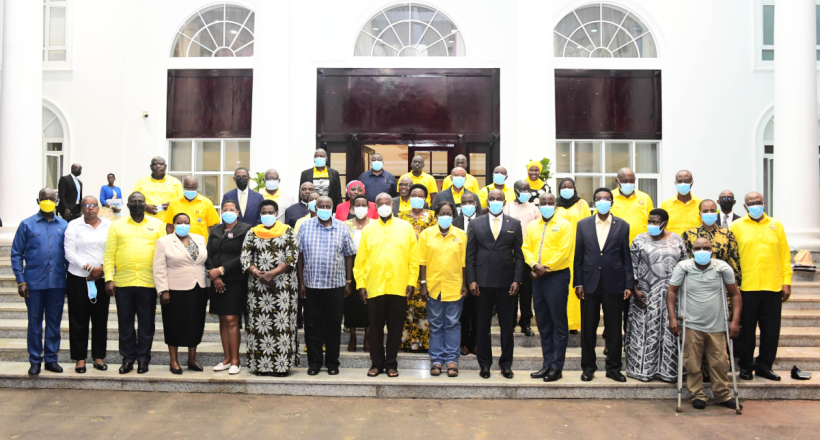
On Monday 25th May,2026 529 Members of Parliament will enter the chamber to elect a Speaker for the 12th Parliament in what has become a contest shaped by Sun Tzu’s final chapters, where Chapter 12, Attack by Fire, collides with Chapter 13, The Use of Spies, and the Constitution’s secret ballot ensures that the real war remains invisible to the public eye.
The National Resistance Movement (NRM) Central Executive Committee (CEC) met on Friday 22 May 2026 at State House Entebbe and attempted to subdue the enemy without fighting by endorsing a candidate and presenting the outcome as settled, yet the law vests the election in the MPs themselves and the ballot they will cast in private allows an individual to applaud on Friday and vote differently on Monday without ever being known.
That tension between public display and private choice has turned what appeared to be a walkover into a three-way contest in which establishment force, opposition strategy, and cross-party patience will be tested against one another under Uganda’s unicameral system, where there is no second chamber to review or dilute the decision.
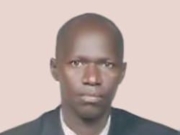
The race opened early in the week then climaxed on Friday when veteran politician Hon. Paul Mwiru of Jinja South East constituency fired the first shot by declaring his candidature with a 1,252-word manifesto and the official endorsement of the National Unity Platform, a move that recast the Speaker’s election from coronation to contest and forced the House to confront questions of transparency, budget discipline, and institutional independence that had been muted under previous leadership.
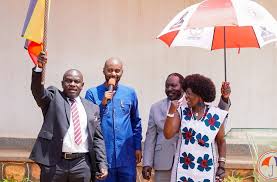
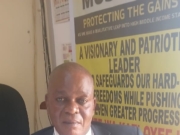
Hon Mwiru, a lawyer by profession, told MPs and the country that Parliament must be rediscovered after a period defined by lavish spending, secret budgets, and corruption allegations against an institution constitutionally mandated to guard public funds, and he promised a public disclosure policy that would publish Parliament’s outputs and costs while shifting resources from CSR and donations to committees and substantive social investments.
He has asked whether Ugandans want billions spent on luxury vehicles like Rolls Royce while hospitals lack medicine, insisted that the Ten-Fold Growth Strategy must be matched with funding for health, schools, and the Parish Development Model, and said that under his watch corruption would attract severe sanctions and the Rules of Procedure would be adapted to entrench transparency.
NUP, whose leader/former presidential candidate Hon. Robert Kyagulanyi alias Bobi Wine remains outside the country, endorsed Hon Mwiru and enters the 12th Parliament with 50 MPs, down from the 57 it held in 2021. This still makes it the largest opposition bloc but also means Mwiru must look beyond his caucus to reach the 265 votes needed to win in a House of 529 members.
Into the same contest has stepped former Defense Minister/West Budama Central constituency in Tororo district Hon Jacob Oboth Oboth, who is being rallied by Uganda’s Chief of defense Forces(CDF) Gen. Muhoozi Kainerugaba, founder of the Patriotic League of Uganda, after the fall of Rt. Hon. Anette Anita Among, who was forced out by a corruption and abuse-of-office probe after serving a single term and thereby broke the unwritten formula that had carried Rt Hon Edward Ssekandi and Rt Hon Rebecca Alitwala Kadaga through ten-year tenures.
Hon Oboth is now positioned as the establishment choice with backing from PLU and elements inside NRM, and he is waging Sun Tzu’s Attack by Fire by showing overwhelming strength early, using CEC’s Friday endorsement at Entebbe, military visibility, and the memory of party discipline to burn momentum and signal that resistance will carry the cost of lost committees, funding, and future tickets.

That strategy seeks to win without a fight, yet it risks provoking the very rebellion it aims to prevent, as happened in 2011 when Rebecca Kadaga defied NRM CEC and won the speakership with 302 votes against FDC’s Nathan Nandala Mafabi’s 72 after the party’s endorsed candidate Edward Kiwanuka Ssekandi withdrew.
The secret ballot freed MPs to act on private judgment rather than public instruction.
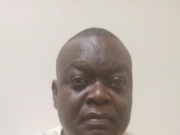
Hon. Nobert Mao, the former Justice Minister and DP president, is also in the contest and is not written off, because in a secret ballot a candidate who appears marginal on Friday can become decisive on Monday and Mao’s two decades of cross-party relationships give him access to the quiet networks that Sun Tzu describes in Chapter 13.
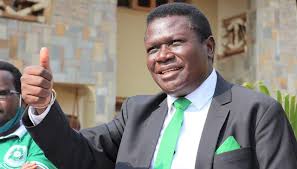
Hon Mao is running the Empty Fort Strategy, appearing weak with a small DP presence while his alliances work beneath the surface, and he does not need to win the noise but rather a split between Hon Oboth and Hon Mwiru that forces a run-off where his bridge-building and appeal to independents and disillusioned NRM MPs can become decisive.
Sun Tzu’s advice to wait at ease while the enemy is toiling and struggling fits Hon Mao’s posture, since he benefits if the two larger forces exhaust each other and the vote proceeds to a second round.
Uganda’s unicameral system intensifies the stakes because there is no Senate or Upper House to check or balance the Speaker’s authority, and the 1995 Constitution entrenched a single Parliament of 529 MPs built on the British common law tradition mixed with statute, so that a Bill is introduced, debated, and passed in the same House.
Under Article 82 of the Constitution the Speaker presides over all sittings, interprets the Rules of Procedure with finality, certifies Money Bills, chairs the Parliamentary Commission which controls Parliament’s budget and staff, represents Parliament to the President, Chief Justice, and foreign parliaments, sits on the National Security Council, and can act as President for up to fourteen days if the President and Vice President are unavailable, which places the Speaker third in the Order of Precedence of 1999 after the President and Vice President and ahead of the Chief Justice and Prime Minister.
In bicameral systems those powers are divided, but in Uganda they are fused in one office, which is why Monday’s vote is the single most consequential act of the new Parliament and why the Speaker elected will preside over all legislation, committee appointments, and disciplinary matters for five years without a second chance.
The law governing the election is straightforward yet decisive, requiring that a candidate be a Ugandan citizen qualified to be an MP, allowing a non-MP to stand but forcing them to vacate their seat if elected from within the House, and mandating that nominations be submitted to the Clerk to Parliament and seconded, after which the Clerk presides until a speaker is sworn in.
Voting is by secret ballot of MPs present and voting, and a candidate needs more than half of all votes cast, which means 265 if all 529 members vote, and if no one reaches that mark the top two proceed to a run-off, with the term set at five years and renewable and no constitutional limit on the number of terms.
For more than twenty years NRM operated on the expectation of ten-year tenures for Speaker and Deputy, a formula that ended with Among’s single term and the corruption probe that removed her, leaving behind a precedent that automatic succession is no longer assured and that the secret ballot can override party instruction.
The vote arithmetic reflects the House’s composition, with NRM holding about 372 seats including constituency MPs, district woman MPs, and NRM-aligned independents, which means that CEC’s endorsement at Entebbe on Friday should give its candidate an advantage if the whip holds, while NUP’s 50 MPs back Mwiru, independents make up about 68 seats, and UPDF and special interest MPs hold the remainder and are traditionally aligned with the establishment but are not legally bound.
Mwiru therefore needs all 50 of NUP, a majority of independents, and at least 130 NRM defectors to reach 265, Oboth needs to keep NRM intact and pick up a handful of independents, and Mao needs a coalition of opposition, independents, and NRM MPs disillusioned by the Among probe and tired of the old formula, and because the ballot is secret none of those calculations can be verified until the Clerk announces the result.
CEC’s decision on Friday, which endorsed Hon Oboth Oboth and Hon Thomas Tayebwa was political rather than legal, and an MP who attended and publicly supported the party’s choice at State House Entebbe may still vote differently on Monday, a reality that explains why “it is not over until it is over” and “never say never” circulate among members who understand that defying CEC carries internal cost but remains constitutionally protected.
Because Uganda has no Upper House, the Speaker elected on Monday will control the entire legislative agenda for five years, and the three strategies on display map directly onto Sun Tzu’s last two chapters.
Hon Oboth is using fire to prevent a fight, Hon Mwiru is using spies to turn the enemy’s discontent into votes, and Mao is using patience and the empty fort to profit from a split.
The old ten-year formula is dead, the one-term precedent is fresh, and the secret ballot erases certainty. Parliament meets on Monday to elect the Speaker of the 12th Parliament for 2026 to 2031, CEC spoke on Friday at Entebbe, the manifestos have circulated, and the whips have done their work, but only the 529 MPs in the chamber will decide, and in a unicameral system, as in Sun Tzu’s final chapters, that decision is the beginning and the end of the matter.
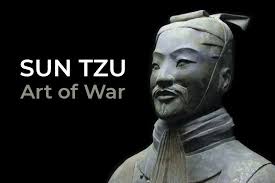
TEU Explainer: Who is Sun Tzu?
If you have seen “Sun Tzu” or “Tsu Sun” quoted in our Speaker race story, here’s who he is and why he matters to Monday’s vote.
The Person. Sun Tzu was a Chinese military general, strategist, and philosopher who lived around 500 BC during the Spring and Autumn period.
Tsu Sun is the same name, just an older way of writing it in English.
He was not a king or emperor, but was an advisor. His job was to teach leaders how to win wars without destroying their own army.
The Book: The Art of War.
Around 2,500 years ago he wrote The Art of War. It’s 13 short chapters.
It’s not about swords. It’s about strategy: how to read your opponent, how to use information, when to attack, when to wait.
It’s now used by armies, CEOs, lawyers, politicians and journalists because the rules do not change whether the battlefield is China in 500 BC or Parliament in Kampala in 2026.
Why TEU is Using Him for the Speaker Race.
Uganda’s Speaker election on Monday is not just about who has more MPs. It’s about strategy under a secret ballot. Sun Tzu’s last 2 chapters explain it best:
Chapter 12: Attack by Fire.
Idea: Show overwhelming force so the enemy gives up before you fight.
In Parliament: That’s CEC meeting Friday 22 May at State House Entebbe, endorsing a candidate, and using party discipline.
The message: “Don’t fight, you’ll lose committees and funding.” Goal win without a vote.
Chapter 13: The Use of Spies.
Idea: Real victory comes from secret information. What people say in public is not what they’ll do in private.
In Parliament: That’s the secret ballot. An MP can stand with CEC on Friday and vote differently on Monday. Nobody knows until the Clerk announces the result. The “spy” is the private vote.
The 2 Quotes We Used. All warfare is based on deception in Ch. 13
For TEU readers: CEC’s Friday endorsement is public. The real decision is hidden until Monday. Don’t trust the noise.
“The supreme art of war is to subdue the enemy without fighting.” in Ch. 3
For our readers: If Oboth/CEC can scare enough MPs into line, they win without counting 265 votes. If they fail, there’s a rebellion like 2011.
Monday decides who understood Sun Tzu better.
We Expose. You Decide.