












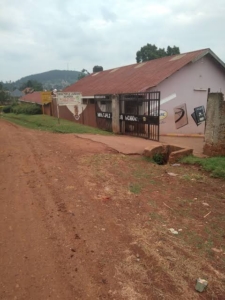
The Jinja City Education Office has directed the Senior Inspector of Schools to conduct an immediate unannounced inspection of Multiple Junior School on Mvule Crescent, Southern Division, over allegations of illegal corporal punishment and persistent refusal by management to cooperate with regulators.
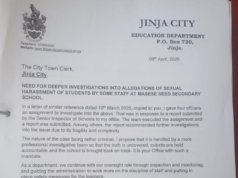
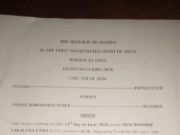
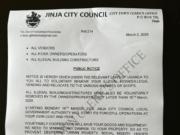
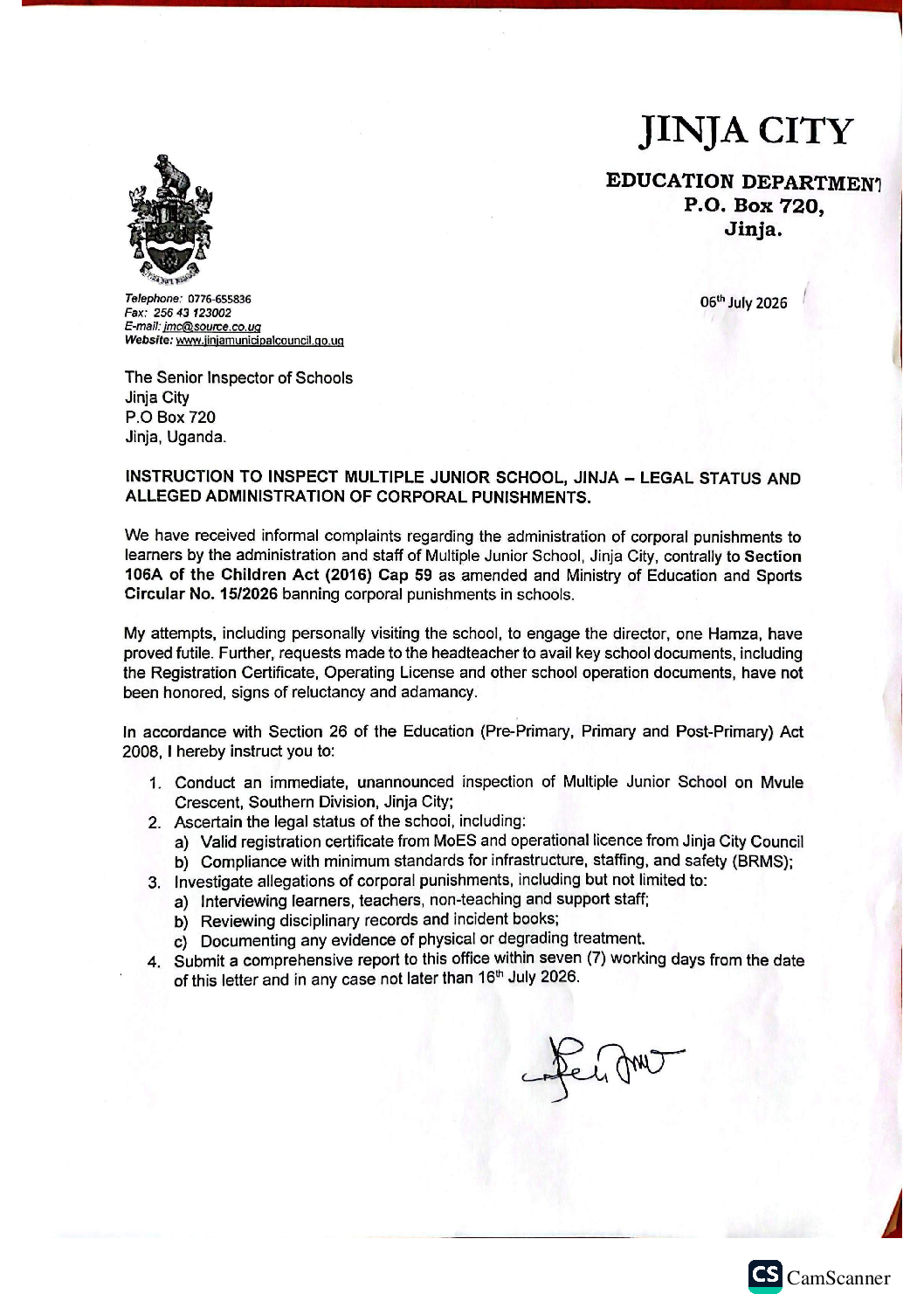
In a directive dated 6th July 2026, City Education Officer Baliraine Paul Mugaju instructed the Senior Inspector of Schools Ms. Mutesi Amina to ascertain the school’s legal status and to investigate claims that learners are being caned and subjected to degrading treatment.

The letter, copied to Town Clerk Geoffrey B. Kiseka, Senior Education Officer Southern Division, Haruna Mulopa and the Director Hamza Kizitu and Headteacher of Multiple Junior School, authorizes inspectors to access all school premises and documents. It further states that security support should be sought in case of obstruction.
“Aware that as a school inspector you are authorized to access any school premises and documents, hesitate not to seek for security(police) help in case you encounter obstruction…” reads part of the Baliraine-authored two-page letter.
The inspection is to be conducted under Section 26 of the Education (Pre-Primary, Primary and Post-Primary) Act, 2008, which empowers the City Education Officer to verify registration with the Ministry of Education and Sports, an operational license from Jinja City Council, and compliance with Basic Requirements and Minimum Standards (BRMS) on infrastructure, staffing and safety.
For context-BRMS are the set of rules and benchmarks set by the Ministry of Education and Sports that every school (government or private) must meet to be registered and to keep operating. They exist to make sure children learn in safe, healthy and quality environments.
The main areas BRMS cover are: infrastructure which covers safe classrooms, desks, toilets, clean water, playground and disaster safety.
There is also the issue of staffing looking at trained and qualified teachers, proper teacher-pupil ratio, headteacher qualifications, and support staff.
Thirdly it looks at management and governance question with school management committee, records, finances and compliance with education laws.
BRMS also considers safety and child protection stressing no corporal punishment and that first aid, child protection policies and a safe learning environment are adhered to.
Schools must also adhere strictly to the approved curriculum and learning materials like syllabus, textbooks and teaching aids.
The team will also investigate under Section 106A of the Children (Amendment) Act, 2016 and Ministry of Education and Sports Circular No. 15/2026, which reaffirms a total ban on corporal punishment in all schools.
A comprehensive report is expected within seven working days and not later than 16th July 2026.
The directive comes days after three teachers from Multiple Junior School were remanded to Kirinya Prison over alleged Aggravated Torture of a pupil. Photos of the child with visible scarred buttocks circulated widely on social media and sparked public outrage.
The assault was first reported on 29th June 2026 at CPS Jinja vide SD Ref: 106/29/06/2026.
Ms. Jennifer Mushabe, mother of the victim, a minor whose name is withheld, alleges that 8 teachers beat the tender-aged pupil in turns over reasons yet to be established issue.
“The victim says he knows and remembers the names of all the teachers who allegedly turned him into their drum on that fateful day,” Ms. Musabe who is now considering transferring her son to another school said.
According to the police reference, incomplete names of the suspects were recorded as Teacher Alex, Teacher Vicky, Teacher Benjamin, Teacher Benson, Headteacher Fred and Teacher Aisha. Reports indicate only 3 names appeared on the charge sheet and the rest were left off.
The Law and The Penalty.
If proven, the teachers face prosecution under the Anti-Torture Act.
Under the Act, a person convicted of torture faces up to 15 years imprisonment or a fine of Shs 7 million, or both.
For aggravated torture – which includes cases involving children, extreme cruelty, or permanent injury – the penalty is life imprisonment.
The Act considers torture “aggravated” when it is committed against a child, by a person in authority, or with extreme cruelty.
Failed Attempts to Engage School Leadership.
According to the City Education Office, several efforts to engage the school have been ignored.
“My attempts including personally visiting the school to engage the director, a one Hamza, have proved futile. Requests to the headteacher to avail key school documents have not been honored,” Mr. Mugaju wrote, describing the response as reluctance and adamancy.
When contacted on his known phone contact 0751623414 by TEU, the School Director Hamza Kizito reacted angrily by referring us to his lawyer whom he neither provided the name nor law firm or phone contact.
Close associates claim Kizito always detests any media person seeking a comment over an incident about the school arguing that journalists have nothing to do with his business where he has invested heavily and no media was there when he started the private project.
City officials pushed back.
“Whereas the school is private, the children there are not private, they are children and citizens of Uganda. You do not operate in isolation because even a simple kiosk of tomatoes and egg plants must operate under regulatory framework,” a Town Hall official said.
Child Rights and The Soul of Teaching.
The case has reignited debate on corporal punishment, which continues unabated in many schools. In most staffrooms, teachers still keep sticks to cane what they call “big headed and cheeky” pupils “whose ears are in the buttocks.”
“Article 34 of our Constitution guarantees every child dignity and protection from abuse. A classroom must be a place of learning, not a place of fear. Violence teaches children that might is right. That is the opposite of education,” a child rights advocate said.
Educationists have also condemned the use of canes as a sign of failed pedagogy.
“The work of a teacher is to shape minds, not to break bodies. Discipline is about guidance, correction and love. If your only tool is a stick, then you have failed as an educator. You cannot beat knowledge into a child,” a senior teacher in one of the big private schools in Jinja said.
“Parents do not send their children to school to be butchered, no education investor, no matter how connected or wealthy, is above the law because a classroom is not an abattoir,” an advocate stated.
The Media Is Not the Problem.
More often the media is mistaken, misunderstood, or even wrongly punished for doing its job. The role of the media is not to attack business or frustrate investors. The role of the media is to inform, to educate, to investigate, and to hold power to account, especially when children cannot speak for themselves.
The media is the watchdog of society, when a child is beaten in a classroom and the school refuses to open its books, it is the duty of journalists to ask questions. That is not interference, that is public service and it must be very clear to everyone.
Journalists are protected and mandated by law to seek and share information in the public interest.
Section 5 of the Access to Information Act, 2005 provides that:
“Every citizen has a right of access to information in the possession of the State or any other public body or organization… subject to the provisions of this Act.”
This is reinforced by Article 41(1) of the Constitution of Uganda which guarantees every citizen the right to access information.
When a school receives public learners, employs teachers, and operates under a license issued by government, it ceases to be a “private matter.” It becomes a matter of public concern, parents, regulators, and the community have a right to know.
A school director may invest money, but he does not buy the right to hide abuse. A journalist who exposes cruelty is not the enemy of education. The enemy of education is violence in classrooms.
The media will continue to do its job: to amplify the voices of children, to document facts, to publish inspection findings, and to ensure that no child is sacrificed on the altar of profit or pride.
TEU will publish the full inspection report once it is submitted to the City Education Office.
We are The Exposure Uganda (TEU): We Expose, You Decide.