








Proverb Meets Patrol at CPS Jinja.
“A good watchman does not sleep on duty, even when the night is quiet.” That African proverb is playing out at CPS Jinja, where police have placed a man holding a Kenyan passport under microscopic scrutiny following his arrest in the tourism and business city.
The arrest has reawakened Crime Intelligence and the Defense Intelligence and Security (DIS), formerly Chieftaincy of Military Intelligence (CMI), as investigators ask how a foreigner slipped through Uganda’s borders and headed straight for one of Jinja’s most strategic vantage points.
Masese Tank Hill and the Vantage Point Puzzle.
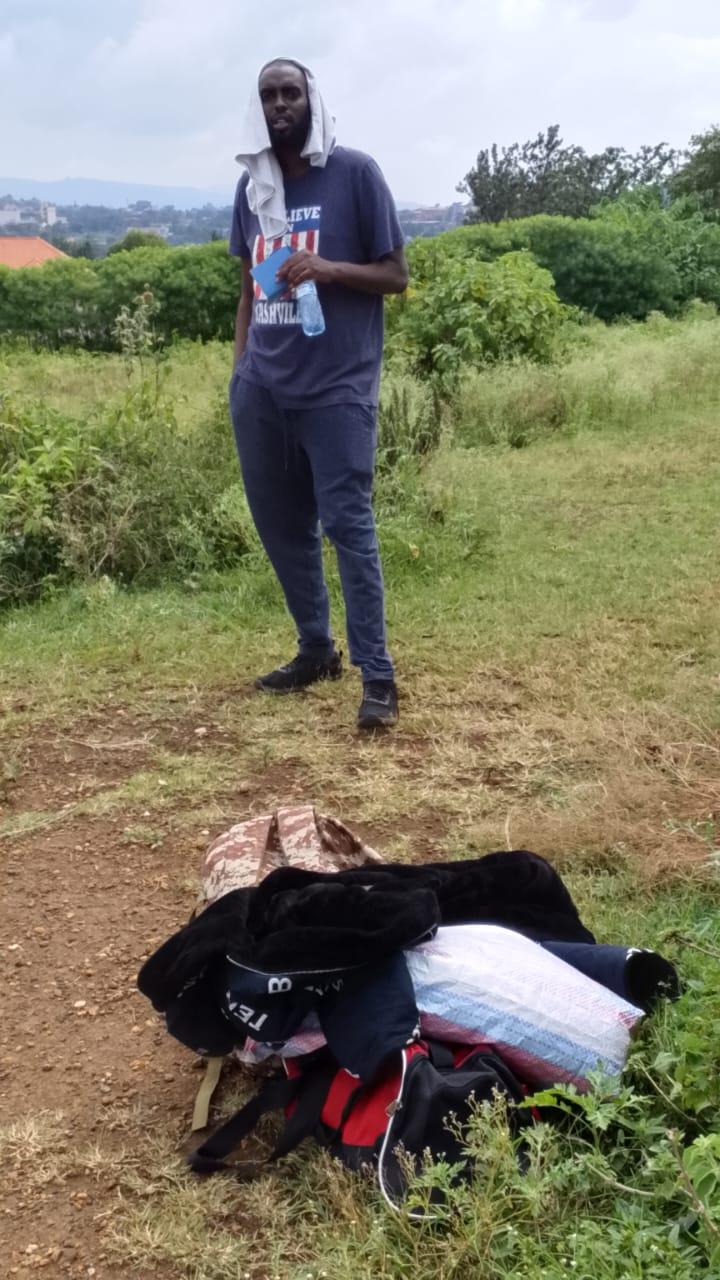
The man was reportedly picked from Masese Tank Hill in Masese Ward, Southern Division, Jinja City. From that elevation one can scan the Nile Bridge, Owen Falls Dam, Jinja Barracks, the industrial park, and the Lake Victoria shoreline.
Masese Hill is located in Masese I village, Southern Division, Jinja City with an average elevation of 1,132 meters above sea level, peaking at about 1,147 meters.
The broader Masese locality is recorded at 1,146 meters, making Masese Tank Hill one of the highest natural vantage points on Jinja’s southern ridge. From that height, the hill commands a clear line of sight across the Nile Bridge, Owen Falls dam, Jinja barracks, the southern industrial area and the Lake Victoria shoreline.
At over 1.1 km elevation, the site offers panoramic surveillance of both civilian and security infrastructure without exposure, which is why detectives are treating a tented camp there as more than casual. In a city averaging 1,187 meters, Masese Tank Hill’s elevation gives it strategic value far beyond its quiet residential surroundings.
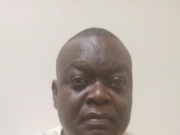
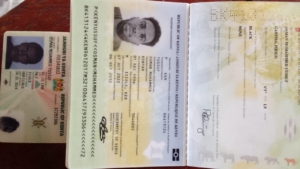
Security sources say the location gave him a clear view of Jinja’s security and economic architecture, raising questions about intent. The seven feet tall man, the suspect has been identified as Osman Mohammed Yusuf, born 1st December 1996, but issued a Kenyan National Identity Card on 18th January 2019. At arrest he was found with less than Shs 500, a Kenyan passport, and an EAC Kenyan passport. Carrying minimal local currency while operating far from home raises immediate red flags for detectives.
The Border Entry Mystery.
According to flawless sources, his entry into Uganda and subsequent movements are now the subject of intense detective work as they piece together why he was in Jinja and who he was meeting.
The first red flag is his passport bears no entry stamp from Busia or Malaba Immigration offices, the two main border points between Kenya and Uganda. That suggests he passed through one of the porous illegal routes commonly known in both countries as ‘panya roads.
Immigration officials at formal posts, if they indeed declined to stamp his passport as he claims, are now under scrutiny themselves. If they suspected anything irregular, protocol demands they alert police and security immediately. The question detectives are asking is why that did not happen, or whether he bypassed them entirely.
Timing, Defiance and the Tent.
Impeccable sources say at the time of his arrest following a tip from vigilant residents, the seemingly stubborn and defiant Osman refused to sit down and told security personnel and local leaders that it was his right to stand against orders to sit.
He was arrested in the evening when PSG hammered Arsenal in the UEFA Champions League final, a time when residents countrywide, especially soccer fans, were glued to cinema halls, hotels and joints watching the match. The timing of his entry and attempt to camp at Masese Tank Hill during a national distraction “speaks a lot” because security agencies know hostile actors often use such moments as cover for movement and reconnaissance. Perhaps most puzzling for detectives is what he was carrying.
The man was found with a new tent. That has triggered a basic but critical question: why couldn’t he sleep in a hotel or even a cheap guest house in Jinja town? And how would a first-time foreigner, with no prior record of travel in Uganda, know that Masese Tank Hill was the best place to set up camp and observe the city? Before Masese, investigators will ask whether he already scanned other spots of interest like the Source of the Nile or the dams. Treating him as a mental health suspect is easily ruled out, sources say. By looks and patterns, he presents as a very organized man who knew where to go and what to avoid.
The Sudan-Tanzania Detour.
Under interrogation, the man told detectives he first left Kenya for Sudan but then suddenly changed course and moved to Tanzania before entering Uganda. On why his passport was not stamped, he reportedly claimed immigration officials declined, but quickly added he had a “plan B” and managed to enter Uganda using his own ways.
The suspect remains in custody at Central Police Station Jinja as investigations continue, with security agencies treating the case with heightened vigilance given Jinja’s status as a key gateway to the Eastern region and Lake Victoria basin.
Kiira Regional Police spokesperson SP James Mubi was cagey when contacted and told this investigative reporter in a brief telephone call that the suspect was still being interrogated and that an official statement would be released at the appropriate time.
The man’s presence and arrest has put Crime Intelligence of the Uganda Police Force and DIS on alert, with officers “scratching their heads” why his signal was not picked from the border. Incidentally, he was found with an MTN phone number which sources say is currently dysfunctional, and that too is part of ongoing investigations.
What Intelligence Is Now Probing.
If Osman Mohammed Yusuf is found to have links with wrong elements including terrorism, espionage, or organized smuggling networks, DIS and Crime Intelligence will focus on tradecraft indicators.
They will trace which ‘panya route’ was used and who the facilitators are, and whether he used counter-surveillance tactics like night movement or changing phones to avoid detection at Busia or Malaba.
They will examine why he carried both a Kenyan passport and an EAC passport and whether biometrics are consistent across both documents, with forensic checks for chip tampering or duplicate issuance. Finance and logistics will come under the lens because operating in Jinja with under Shs 500 raises the question of who funded the new tent, cross-border travel and upkeep, and whether any mobile money, crypto or hawala trails are tied to the dysfunctional MTN line. Communications experts will pull call data records and IMEI history for the MTN number even if it is currently inactive, and check for SIM swaps, burner phones, encrypted apps or VPN use.
Reconnaissance intent will be central since from Masese Tank Hill critical infrastructure is visible, and investigators will ask whether he took photos, GPS waypoints or sketches, and why he chose to camp instead of using a hotel to avoid CCTV and registration.
Behavior during arrest will also be analyzed because refusing to sit and citing a “right to stand” while being picked during a major football final suggests awareness of crowd distraction and reduced police visibility, patterns often studied by organized wrong elements.
The Citizen Watch and the President’s Cheeky Truth.
As CPS Jinja holds him and DIS joins interrogation, the case has become a test of Uganda’s border vigilance. Yet there is also a deeper layer of security that runs beyond police posts and intelligence files.
President Museveni once made a cheeky but truthful statement that in Uganda even a fool can survive without working because of extended families where one can decide to visit all close relatives under the guise of “I have come to see you people, I have missed you a lot” and enjoy free food for two to three months before relocating to another home and the trend continues from January to December.
That social fabric, he argued, makes survival possible. The flip side of that same truth is what makes it hard for any terrorist or agent to survive in Uganda where citizens are alert twenty-four seven, with government and leadership presence everywhere from LC1 down, and where people are used to party after party enjoying life.
Everyone has some kind of business they do not want anything or anyone to disrupt, and it is one reason demonstrations or strikes or protests hardly take shape because people have eaten and are full and want to protect both the individual and national gains in terms of peace and stability. It was that same vigilance of ordinary residents in Jinja that tipped off security and led to Osman’s arrest. Because as the proverb warns, the watchman’s job begins when the night looks quiet, and in Uganda the watchmen are not just in uniform.
We Expose, You Decide.