













“Train up a child in the way he should go; even when he is old he will not depart from it.” — Proverbs 22:6 That verse is walking on two legs at Kings College Budo.
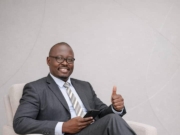
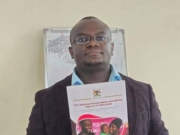
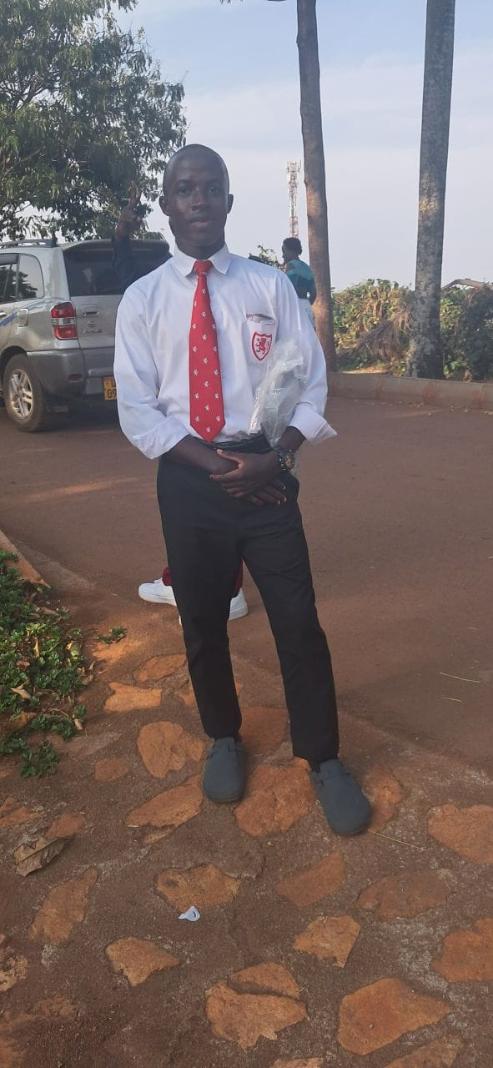
Israel Y.K. Lubogo, a Senior Five Arts student pursuing HEL/M — History, Economics, Literature in English, and Mathematics — and firstborn of three children to Prof. Isaac Christopher Lubogo, has been named a recipient of the Rising Star Award at the Scholar Media Group Africa Excellence Awards 2026.

He will receive the honor during the 2nd Annual International Scholar Media Africa Conference from 5th to 7th August 2026 at Safari Park Hotel, Nairobi, Kenya.
About SMEGA: Raising Africa’s Thinkers.
The award is presented by Scholar Media Group Africa (SMEGA), a pan-African institution committed to documenting, amplifying and celebrating scholarship across the continent.
Vision: A self-aware, knowledge-driven Africa where African ideas, research and voices shape the continent’s future and influence the global conversation.
Mission: To identify, platform and promote emerging and established scholars, researchers, policy thinkers and institutions whose work advances academic excellence, governance, innovation and African solutions to African problems.
Core Values: Excellence-Upholding the highest standards in scholarship and integrity.
Pan-Africanism-Celebrating unity in diversity and building intellectual bridges across African nations.
Integrity-Truth, transparency and ethical engagement in research and public discourse.
Mentorship-Investing in the next generation of African thinkers and leaders.
Impact-Ensuring that scholarship translates into policy, community transformation and national development.
Through conferences, publications, awards and media, SMEGA seeks to ensure that African scholarship is not buried in journals, but is seen, heard and applied for the good of the continent.
A Name with Weight.
There is something prophetic in the name this young man carries. As William Shakespeare (1564-1616) asked in Romeo and Juliet: “what’s in a name? That which we call a rose by any other name would smell sweet”
But with Israel Lubogo, the name does more than identity, it announces and a special announcement not ordinary one. Israel who wrestles, who is tested and who prevails. A name given to a first born, in a home of scholarship and service, and now carried to Nairobi by a Budo student whose school motto is “So Little Done, So Much To Do”.
In the Bible, Israel was not a place first, it was a man. Jacob wrestled with God at Peniel and would not let go until he was blessed. God changed his name from Jacob — the supplanter — to Israel, meaning “He struggles with God” or “God prevails” — Genesis 32:28.
From that one man came a nation. Israel became the name of a people chosen, called, and set apart. A small nation of about 9 million people today, yet one of the most resilient and highly developed nations on earth. Out of proportion to its size, it has given the world advances in agriculture, technology, medicine, and theology.
It is a nation that has been exiled, attacked, rebuilt, and refined. And still it stands. That is the nature of the name: chosen, tested, and unbroken.
To be named Israel is to carry a reminder that purpose is not measured by size, but by calling. That struggle can produce blessing, that God can take one family and make of it a nation that impacts the world.
Rooted In Budo’s Legacy.
That burden now sits on the shoulders of a 17-year-old in Budo.
Kings College Budo is Uganda’s premier Church of Uganda school. It was established on 29th March 1906 on land happily and generously donated by the Kabaka of Buganda. For 120 years it has formed the minds and character of Uganda’s leaders.
The school motto, “Gakyali Mabaga”, comes from Luganda and means “So Little Done, So Much More To Do.” According to antiquities, it was chosen in 1908 by the founder, Henry Walter Weatherhead. It is a lifelong call to humility, purpose, and continuous improvement.
In that house, Israel is studying HEL/M. It is the same combination of subjects that forms historians who remember, economists who build, writers who interpret life, and mathematicians who bring order. It is training for a mind that wants to serve.
Like Father, Like Son.
The Scriptures are clear about legacy. Deuteronomy 6:6-7 tells parents to teach diligently. 2 Timothy 1:5 celebrates faith passed from Lois to Eunice to Timothy. Proverbs 13:22 says a good man leaves an inheritance.
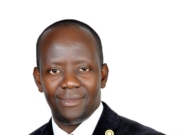
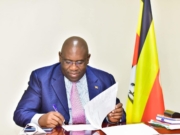
Prof. Isaac Christopher Lubogo is known nationally for scholarship in law, governance, and public theology. Now that same love for ideas and nation is evident in his firstborn.
“Like father, like son” is not about titles. It is about burden. Adam to Seth. David to Solomon. Paul to Timothy. One generation handing the next the tools to build.
According to SMEGA, the Rising Star Award celebrates young Africans demonstrating exceptional intellectual engagement, research potential, and commitment to shaping law, policy and transformative thought.
“This is not just about one student,” a SMEGA citation noted, it is about amplifying the voice of the next generation of African thinkers.”
Why This Matters Now. Uganda is in a season of asking hard questions about education, leadership, and Africa’s place in the world. This recognition answers part of that question.
It says our classrooms can produce minds that compete continentally.
It says a boy from Budo can stand on a stage in Nairobi with scholars and researchers and not be out of place.
It says that academic excellence, regional integration, and the elevation of African voices are not slogans. They are happening. For parents, it is a reminder that character and scholarship can be passed on. For students, it is proof that diligence is seen. For the nation, it is a call to invest in the mind, because the mind builds the nation.
The Road Ahead.
As Israel travels to Nairobi, he carries two things: a name and a motto, a name that means chosen by God, tested, and prevailing.
A motto that means we have done little, there is much more to do.
May he, and the thousands of young Ugandans watching, remember both. That we are called, that we will be tested, and that we must never settle.
Because from Budo to Nairobi, from one home to a continent, the story is the same: God is still raising Israels. Chosen people, for such a time as this.
TEU Editorial Conclusion.
This is more than the story of one boy, one award, one trip to Nairobi.
It is the story of what becomes possible when a home teaches discipline, when a school teaches excellence, and when a continent decides to see its young people.
The media has a sacred duty in this moment. Not just to report events, but to shape the imagination of a generation.
As the great 19th century editor John Bonner Bogart (1842-1921) once said: “When a dog bites a man, that is not news. But when a man bites a dog, that is news.”
For too long we have lived by that rule. We chase scandal, conflict, and failure because they are loud. But the ancient Greek philosopher Plato (428-347 BC), a student of Socrates reminded us: “The society that separates its scholars from its warriors will have its thinking done by cowards and its fighting done by fools.”
We cannot afford that separation anymore.
Development journalism calls us to a higher standard. As Kenyan scholar Prof. George Nyabuga notes “The role of the African media is not only to inform, but to inspire, to educate, and to mobilize for transformation.” Consider the warning from Walter Lippmann (1889-1974), a man revered as the father of modern journalism, that: “What the press does is to plant in the minds of the public the images of the world.”
So what images are we planting in the minds of Ugandan and East African children today? If we only show them corruption, violence, and despair, we should not be surprised when they believe that is all there is. But if we show them Israel, a Budo boy who reads, who works, who carries a biblical name and a school motto that says “So Little Done, So Much More To Do”, then we plant a different image, an image of possibility.
We at The Exposure Uganda (TEU), therefore respectfully call upon all media houses in Uganda, Kenya, Tanzania, Rwanda, Burundi and across East Africa to cover and amplify this event.
Go to Nairobi, witness the event, take notes and the photos ask questions and tell the story from an informed perspective and context.
Let a boy from the Naggalabi Hill-based King’s College Budo be on the front page, not the back, let diligence trend, not just drama, let parents in Wakiso, Kampala, Jinja and Mbarara and Gulu and Lira or West Nile, teachers in Arusha, and students in Kigali and Bujumbura see that excellence is noticed, that hard work travels, and that Africa is watching its young thinkers.
Because when we concentrate more to celebrate “the man who bites the dog”, then the one who defies the norm by choosing books over shortcuts, service over cynicism, ideas over idleness, we end up teaching thousands more to do the same.
The Exposure Uganda (TEU) Explainer:
For Context: Proverbs is a book of wisdom sayings written largely by King Solomon around 950BC.It is not law, and it is not a promise with a guarantee is wisdom literature and general truths about how life tends to work when we live God’s way.
Chapter 22 is full of practical parenting, community and character advice. Verses around it talk about rich and poor both made by God, humility and fear of God bring wealth, honor and life.
They also talk about training children, that folly is bound up a child but discipline drives it away. So, Verse 6 sits in a section about raising people of character in a community. What the words actually mean: train up equals to Hebrew’s chanak which is to dedicate, to start well, to put something into a child’s mouth like tasting honey. It is about early, intentional formation not just scolding but modelling.
In a nutshell Solomon is saying what you pour in early shapes later life: home, church, school, football pitch, other spaces and media are all trainers and that if we train with discipline, faith, diligence and truth early enough that becomes the default the child returns to.