






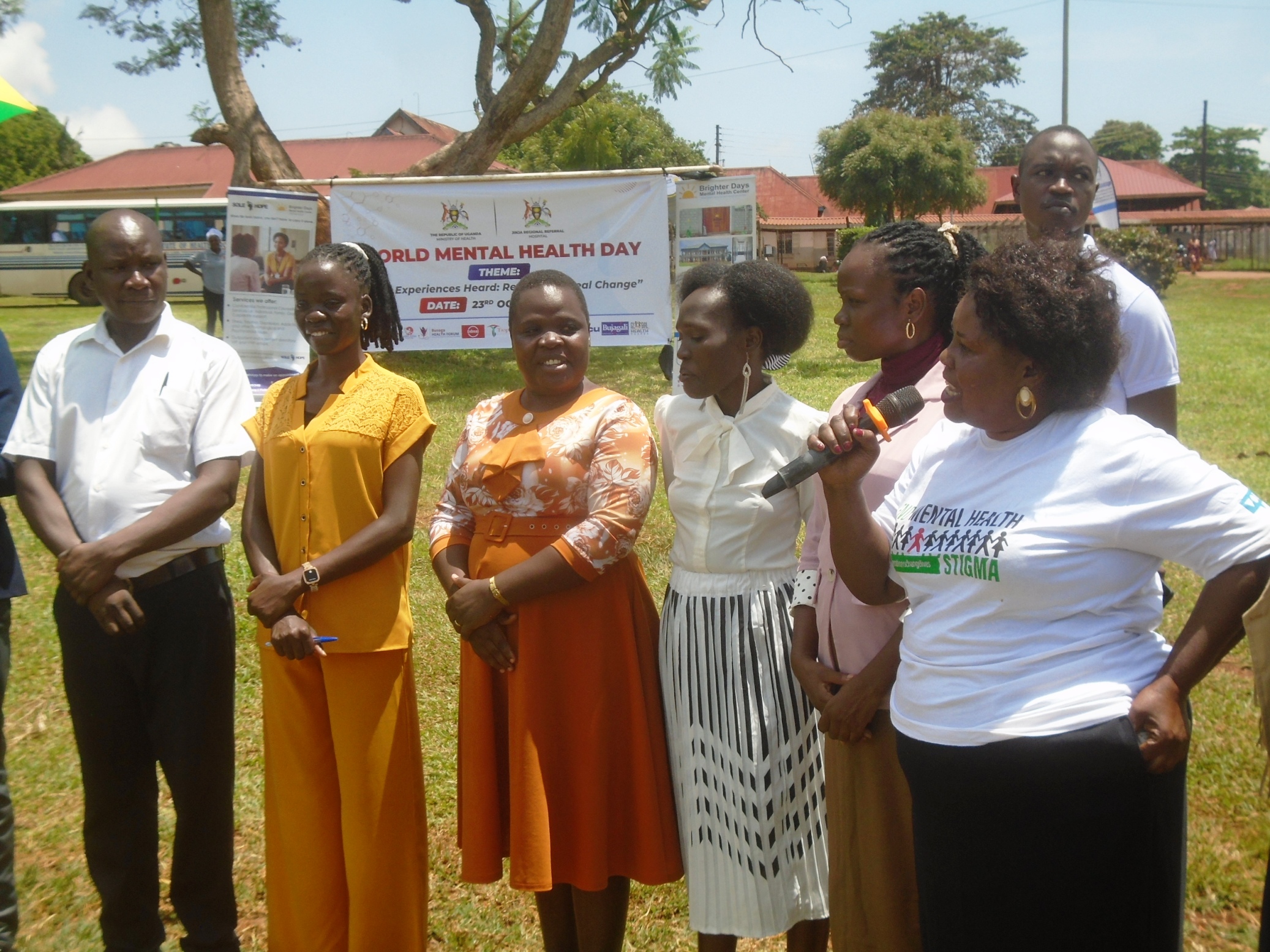
Health workers in Jinja have asked government to prioritize recruitment of Psychiatric Clinical Officers across all health facilities, from Health Centre III to the national referral hospital, in a bid to improve response to the rising cases of mental health illnesses in the country.
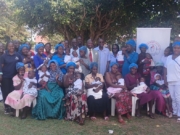
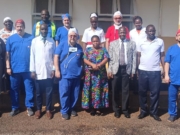
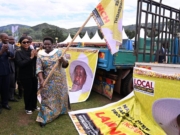
The call was made during commemoration of World Mental Health Day organized by Jinja Regional Referral Hospital on Saturday October 24, 2026, at the hospital’s mental health unit.
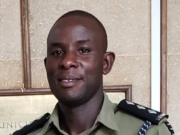
Speaking at the event held under the theme “Lived Experiences Heard: Real Voices, Real Change,” Sam Sabagereka, President of the Uganda National Association of Psychiatric Clinical Officers (UNAPCO), said bringing mental health experts closer to communities would enable early detection, improve recovery and reduce expenses for patients and their families.
“By bringing them closer to communities, we could reduce people’s vulnerability. Also, we hope this will improve recovery of patients and reduce expenses on treatment as their challenges will be detected and tackled early,” Sabagereka said.
He explained that currently, services of psychiatric clinical officers are mostly accessed at regional referral hospitals and at Mulago, the national referral hospital, while lower facilities that are nearest to the population remain without expertise.
“It would make a great impact if we had these experts deployed even at the lowest health units, which are closest to the community people,” he said.
World Mental Health Day is celebrated globally every October 10, but Uganda held its national celebration on October 11 this year, while Jinja held its district event on October 24 to allow participation of schools and partners across Busoga.
Dr. Kenneth Kalani, a consultant psychiatrist and senior medical officer at the Ministry of Health who was chief guest, said government structure provides for at least a psychiatric clinical officer from Health Centre IV upwards while Health Centre IIIs have psychiatric nurses.
He advised districts and cities to prioritize these professionals during their recruitment exercises, noting that recruitment is now decentralized and districts often focus on other cadres.
He added that government has embarked on a re-training exercise of general health workers, during which they are equipped with skills to recognize patients with mental illness through the WHO Mental Health Gap Action Programme (mhGAP).
According to Dr Kalani, some of the factors driving mental illness include stressful factors such as struggle to get basic needs and unemployment which results in poverty.
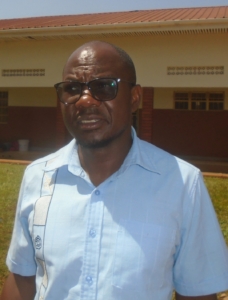
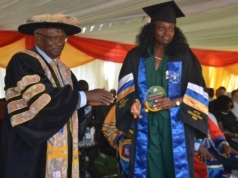
Noah Suubi, a parent whose son developed mental illness while studying electrical engineering at university in 2019, said they initially thought it was a spiritual issue and prayed over it without success before being advised to visit Jinja hospital where he was put on treatment and has since improved, resumed studies and graduated.
Moses Waiswa, another parent whose child had a mental challenge, decried discrimination in society and lack of medicine for mental illnesses at most health facilities, calling upon policy makers to put in place laws to protect these people and link them to development partners like it is with people living with HIV/AIDS.
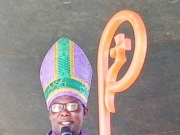
Jinja Hospital Senior Executive Consultant (SEC (, Dr. Alfred Yayi, in a speech read by Dr. Michael Mulowooza, said mental health must be everyone’s concern as it affects people of all ages, backgrounds and status, stressing that seeking help is an act of courage and recovery is possible.
The Staffing Gap And What Needs To Be Done.
Jinja Regional Referral Hospital serves more than twelve districts in Busoga with a combined population of over six million people, yet it operates with less than five psychiatric clinical officers, two psychiatric nurses and one visiting consultant psychiatrist.
Nationally, Uganda has less than 50 psychiatrists for over 45 million people, which translates into one psychiatrist for every 900,000 people against the WHO recommended ratio of one for every 10,000, while about 800 Psychiatric Clinical Officers have been trained but only about 400 are in government service.
According to UNAPCO, more than 70 percent of established posts for psychiatric clinical officers at Health Centre IV and psychiatric nurses at Health Centre III remain vacant, forcing patients to travel long distances to Jinja, Mbale or Mulago at a cost of between Shs 50,000 and Shs 150,000.
At the end of the commemoration, participants called upon government through the Ministry of Public Service to create and fill posts for psychiatric clinical officers at all Health Centre IIIs and IVs, urged district service commissions to prioritize mental health cadres, asked National Medical Stores to ensure consistent supply of mental health medicines, and appealed to Parliament to fully operationalize the Mental Health Act of 2019 to protect rights of patients.
For health workers in Jinja, the message remains that bringing experts closer to communities will bring healing closer to home, because without mental health, there can be no complete health.
TEU Explainer: What Mental Health Really Is.
For many families in Jinja and across Busoga, the phrase mental health still evokes only one image, that of a violent person on the street who must be taken to Butabika or Jinja hospital’s psychiatric ward, yet that image is incomplete and misleading.
According to the World Health Organization, mental health is a state of well-being in which an individual realizes his or her own abilities, can cope with normal stresses of life, can work productively and is able to contribute to his or her community.
In simple terms, mental health is the health of the mind, just as physical health is the health of the body, and it exists on a continuum where most people move between wellness and illness at different points in life.
At Jinja Regional Referral Hospital, for example, records show that out of 60 to 80 patients who visit the mental health unit daily, with numbers rising beyond 120 on Mondays, less than ten percent present with severe psychosis that makes them violent or disorganized, while the majority come with depression, anxiety, substance use disorders, bipolar disorder and epilepsy, all of which are treatable when detected early.
This means that a student who has failed to sleep for two weeks before exams, a mother who cries daily and has lost interest in her business, or a young man who has resorted to alcohol and marijuana to cope with unemployment, are all experiencing mental health challenges that need professional attention, not stigma.
TEU Explainer: Why Witchcraft Blame &Wrong Prayers Make It Worse.
It is very common in many Ugandan families to explain mental illness through witchcraft, especially when the affected person was previously known to be bright, successful or well-behaved at school.
In such cases, relatives often say that boy was very bright at school so jealous people have bewitched him, or that he stole something and was bewitched as punishment, or that jealous relatives sent amayembe or kifaro and that is why he is like that.
Once that narrative takes hold, the family embarks on a long journey from one traditional healer to another, spending months and large sums of money on rituals and herbs, while the underlying medical condition continues to worsen without treatment.
In other instances, families turn to men and women of God who, despite good intentions, have no training in clinical psychology or psychiatry, and spend days and weeks shouting over the patient in the name of exorcism, declaring “I rebuke you in the name of Jesus, I command you in the name of Jesus, get out of him,” while the patient is denied food, sleep and medication.
In many of these cases, the prolonged shouting, fasting and chaining only worsens the situation, leaving the patient exhausted, dehydrated and more distressed than before.
The Exposure Uganda is not dismissing spiritual or divine healing through prayers, because faith and prayer remain important sources of comfort, hope and resilience for many patients and families, and many people draw strength from their religious beliefs during recovery.
What health workers emphasize, however, is that prayer should complement medical care rather than replace it, and that genuine spiritual support, when offered calmly, respectfully and alongside professional assessment, counselling and medication, can be part of holistic recovery, whereas shouting, condemnation and prolonged exorcism without referral only delays healing and increases suffering.