


























TEU Preamble: A Book, A Mirror, And an Altar Call.
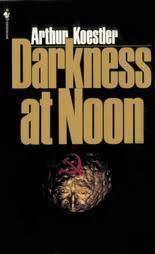
Arthur Koestler’s Darkness At Noon is not a small book. It interrogates ideology, loyalty, truth, revolution, the individual versus the state, and the moral cost of power. It has many themes, and all of them matter.
This piece chooses to focus on one: how the abandonment of principle in pursuit of “the greater good” allows corruption to harden into culture. The focus is deliberate. It is not to suggest that the other themes are irrelevant, but to allow for a sharper, more honest reflection on the wound that is bleeding our country today.
We are not targeting individuals. We are examining a system of thinking. A system of thinking is simply the set of rules your brain uses to decide what is true, right, and important before you act.
Philosophy asks: how do we know what is true? What is right? How should we live together? A system of thinking is that. Koestler in Darkness At Noon was doing political philosophy by asking, “What code makes good people confess to crimes they did not commit?”
Plato called it The Republic. Immanuel Kant called it The Categorical Imperative. In Economics, they say people respond to incentives. Change what pays, and you change behavior.
Like scripture (Bible), which was written in specific political, economic, social, and religious contexts, its truths travel across time. One does not read Paul, Peter, James, or John and respond with anger at the messenger. When a text convicts, the response is introspection and change. That is why the clergy make altar calls.
Consider this a civic altar call. An invitation to name what is wrong, to turn from it, and to choose a different way of doing public business. The two scenarios that follow are not about David or James as persons. They are archetypes. They are the lived experience of thousands of Ugandans, and they are the clearest illustration of what happens when merit is replaced by connection.
To see the fracture, look no further than two young men who sat in the same lecture rooms, wrote the same examinations and graduated in the same year. One of them left with connections, the other left with a First Class.
Today, one is being driven to work in a government vehicle, the other is still waiting for a call back. Their stories are not exceptions but are reflection of what happens when merit is replaced by connection.
Scenario One: The Connected Graduate.
David graduates from Makerere University with a Second Class Upper. He is a decent student, but not exceptional. What he has, however, is access. His father sits on several boards and serves as a senior officer in one of the MDAs. His uncle is an MP and minister.
Before David even puts on his gown, his HR letter is already signed. While his classmates are still printing CVs and buying data to apply online, he is being shown his new office, introduced to his driver, and handed the keys to a government vehicle.
The process did not test his competence. It confirmed his connections. And in doing so, it quietly told every other graduate that the rules are not the same for everyone.
Scenario Two: The Unconnected Graduate.
James graduates from the same university, in the same course, in the same year. He leaves with a First Class. For four years he was top of his class. His mother is a widow and a market vendor in an upcountry urban center. He has no relative in Parliament. He has no “godfather” in any ministry, and not even in his district local government.
For the last 18 months James has walked the corridors of offices across Kampala and upcountry. He has sat on plastic chairs in District Service Commission offices waiting to be called. He has responded to nearly every newspaper advertisement, filled every online form, paid for every application, and rehearsed every interview question.
He keeps a phone book full of contacts of people deemed “useful.” Each time he calls, the answer is the same: “Oh James, sorry I am in a meeting, I will call you back.” The call back never comes. The more he persists, the more his number is quietly blacklisted.
The only message he receives with consistency is: “Congrats for the good paper.” The corresponding good job always goes to the “right and good boy” who is connected.
Two young men. One country. Two different rules. This is not just unfair. This is what Arthur Koestler warned about 86 years ago in Darkness At Noon.
The Book That Saw Our Future.
Arthur Koestler was not an outsider looking in. In the 1930s he was a loyal member of the Communist Party. He believed in the big promise of his time: egalitarianism.
Egalitarianism is a concept from political philosophy and sociology. At its core it means that all human beings deserve equal moral worth, equal rights, and equal opportunity regardless of birth, class, or connections. It is the idea that a peasant’s son and a general’s son should stand before the law and before opportunity as equals.
That was the dream the Party sold. “All are equal. All will eat. History is on our side.” But Koestler watched that dream rot. He watched the Party become a new aristocracy. He watched old revolutionaries arrested by the state they built.
So, he wrote Darkness At Noon to expose one dangerous way of thinking: the belief that the goal is so important that the method does not matter. He called it “Historical Necessity.” He called it “The Greater Good.”
Koestler was not writing about Uganda. He was writing about Moscow in 1938. But power has very few scripts, and Uganda today is reading from the same one. We cannot pretend the book is meaningless to us.
When The Roles Reversed: From Fearing Cars To Fearing Mobs.
There was a time when the relationship between citizens and power was clear, even on the road. When we were young, we feared vehicles. Every term, teachers made us memorize road safety measures printed behind the cover of every exercise book: “Look left, look right, cross carefully.”
Upon seeing an oncoming vehicle, we would step backwards into the grass to allow it to pass. The car was big, fast, and owned by the state or by “big people.” We were small. We gave way and prayed we too would one day drive and pour dust on others.
Funnily, we even liked the smell of fuel, and we would eat our cassava while running through the thick dust left behind as if it were sauce — “When I was a child, I thought and acted like a child. But now I am an adult.”
Today the roles have reversed. Now vehicles fear people, and drivers must fear any pedestrian who decides to walk slowly in the middle of the road, especially in a trading center.
Because a slight scratch, a minor accident, or even a simple and rightful hoot can land you in serious trouble. Within minutes, a crowd gathers, fuel is poured, and both the car and the body are torched. No police, no investigation, no due process. Just fire.
This is Darkness At Noon on tarmac. It is what happens when people lose faith in institutions. When the police are seen as buyers and sellers of justice, citizens create their own court on the roadside. When the law is slow, expensive, and for sale, people choose speed, and they choose fire.
The tragedy is that both eras are dangerous. Then, we were powerless and had to jump into the grass. Now, we are lawless and we burn first and ask later. Both come from the same root: a breakdown of trust between the state and the citizen.
The Omelette And The Cut.
In Koestler’s book, the interrogators tell the prisoner: “You cannot make an omelette without breaking eggs.” It meant that to build the future, you must sacrifice people now.
In Uganda today, the omelette is called “development.” It also means that the political interests or ambitions of some persons can override those of others who must be sacrificed.
It is the contractor willing to give a CUT — usually baptized as “milk” or “mugati bofolo for the children” — to people in the ministry or city council who will eventually be awarded the tender.
They will say: “There is some milk and bofolo for the children in the other car parked behind the big tree.” Technical proposals, experience, and price come after. First, the contractor must show he is “ready and cooperating.” That means the members of the contracts committee, procurement, and evaluation must be “taken care of.” If you are not willing, your bid dies in a drawer no matter how good it is.
The same logic has swallowed politics. Can the candidate facilitate the returning officers, their supervisors, and the polling officials? If yes, then you can be declared the winner even if you were last in votes. The numbers are simply adjusted to fit a decision that was made long before election day.
And when the loser goes to court, he is met with the final line from the book: “Go to court, we will follow you there.” In those courtrooms, money and connections beat evidence. Cases are delayed, downgraded, and dismissed on “procedure.”
No wonder Ugandans now say, “Politics is not for the weak, because you must have six eyes and six legs.” Six eyes to watch who to pay. Six legs to run to every office. The system was not designed for ordinary citizens. It was designed for those who understand the tribe.
When Corruption Becomes A Tribe.
A tribe has language, rituals, and elders. Corruption in Uganda now has all three.
The language is “facilitation,” “appreciation,” and “mobilization.” The ritual is the envelope passed under the table, or the mobile money sent at midnight. The elders are the officers who have been in the ministry for 20 years and know “how to move files.” The initiation is your first bribe. After that, you are inside.
That is why efforts to name and shame often fail to land. Right now, Local Government ministers Hon. Balaam Barugahara and Hon. Justine Nameere have taken the anti-corruption campaign to the districts nationwide.


They are visiting and standing in sub-county halls, health centers, school assembly grounds, and district headquarters, pointing at ghost projects and inflated contracts. The intention is to break the silence and tell citizens: you are not powerless, speak.
But to those inside the system, it does not sound like patriotism. It sounds like an attack on the tribe. And the response is not debate. It is procedure. “Let us follow due process.” “We must respect law and order.” “This matter is before the relevant committee.” Even engineers under their umbrella body have issued a stern protest and warning on why professionals like them are being humiliated before cameras.
These are good words, but in this context, they function as a delay tactic. Because in a system built for speed for insiders, slowness is a weapon against outsiders. Delay for six months and you can eat for another six months.
Some went further and mocked openly: “You are not the first ministers. We have seen many. And who are you to think you can end corruption, which is now a new tribe and culture in Uganda?”
That sentence is pure Darkness At Noon. “You are not the first” means we have survived purges before. “Who are you” means you are not from our tribe. “End corruption” means you are naive, because this is no longer a crime. It is culture.
The Cost We Are Paying.
The price of this system is not just money. It is trust, time, and people. Trust dies when a nurse sees drugs meant for her health center being sold in town. It dies when a parent sees UPE money disappear or pupil numbers inflated and government continues to pay ghosts.
It dies when audit reports show hundreds of billions lost and few people go to jail, and suspects are transferred to other friendly environments away from inquisitive eyes. It dies when a journalist reports a crime and is told to pay for justice, and yet the police have always referred to the Fourth Estate as ‘ally.’ It dies when a driver would rather burn than face the police.
The future is mortgaged when money meant for PDM, seeds, textbooks, and medicine is eaten before it reaches the ground. We are not just stealing shillings. We are stealing years from our children.
And the individual is erased. When James walks the corridors, pays for ads, sits in DSC waiting rooms, and only gets “Congrats for the good paper” while the job goes to the connected “good boy,” the message to every young Ugandan is clear: merit does not matter, connection does.
A country that tells millions of its young people “you are a nobody” is preparing its own instability.
Can The Sun Rise Again?
Koestler offered no 10-point plan. He offered an X-Ray and a choice. An X-Ray is a medical scan that uses radiation to see inside the body without cutting it open. It reveals what is hidden, it diagnoses the real problem, and it forces treatment, not cover-ups. Doctors do not use X-Rays to admire you. They use them to expose what is wrong so that they can fix it. That is exactly what Koestler’s book does to our contemporary society, Uganda inclusive.
The X-Ray demands that we stop treating swelling and start treating fractures. For years we have been rubbing the bruise. We call a bribe “facilitation” and hope the pain goes away. We call theft “administrative error” and take a painkiller.
The Rotation of Consequences.
There is a new treatment we have invented for financial fractures: rotation, not surgery.
A Town Clerk or CAO who has served as Accounting Officer is found to have mismanaged public funds. The Ministry withdraws the vote. The Accounting Officer (AO) role is stripped and handed to a junior staff member. But the Town Clerk remains the overall administrator, the Chief Executive, with office, car, and protocol intact.
Then we go loud on radio, in WhatsApp groups, and in council chambers declaring it “a new normal.” We cite Jinja, we cite Mbale, Mayuge and others, we cite 2018 and 2021 to prove this is how we have always done it. As if failure, once repeated, becomes policy.
The X-Ray film shows why this happens. In several of these cases, the affected Accounting Officers are reportedly the same ones who recruited staff without clearance from the Ministry of Finance.
Here is how that fracture works. By law, no local government can recruit unless the Ministry of Public Service and Ministry of Finance first issue a “clearance to recruit.” That clearance confirms two things: that the wage bill can carry the new staff, and that the positions are funded in the budget.
When a Town Clerk or CAO bypasses that and recruits anyway, he creates “ghost capacity” — teachers, health workers, engineers, and enforcement officers on payroll with no budget line to pay them.
For three months, six months, a year or more, the city or district runs on promises. Then arrears pile up. Then the district starts “reallocating” funds meant for drugs, roads, and PDM to pay salaries. Then the audit query comes. Then the vote is withdrawn.
So, the punishment is not jail. It is not interdiction. It is demotion by procedure. The officer keeps power, sits in office and issues circulars as if nothing has happened, but loses the signature on the cheque book, and we call it accountability.
Where do contractors or civil servants take their documents for approval and payment.
This is the bone being set wrong. You do not cure a fracture by moving the X-Ray machine to the next room. You cure it by setting the bone. Real accountability would mean interdiction, recovery of funds, and a ban from holding accounting roles again. Instead, we rotate the consequence to a junior and keep the principal.
That is how a tribe protects its own. Not by denying the crime, but by redefining the punishment until it means nothing.
The mirror demands that we call things by their name. Stop calling a bribe “facilitation.” Stop calling theft “administrative error.” Stop calling delay “due process.” Stop calling mob justice “community policing.” A lie repeated a thousand times does not become truth. It just becomes normal.
The choice demands that we protect the individual. Build a system where the law works for the person with no uncle. Where a widow can report a case and it is investigated because it is a case. Where a graduate is hired on paper, not on pedigree. Where a contractor wins on capacity, not on cut. Where a driver can have an accident and trust that the law, not the mob, will judge him.
This will be uncomfortable, because it asks people inside the system to act against their own interest. That is why the resistance to people like Hon Barugahara and Hon Nameere is so fierce. They are asking a tribe to vote against its own paycheck.
But cultures do change. Slavery was once a culture. Child marriage was once a culture. They changed because a few people refused to call night “day.”
The mockery of “we have seen many ministers” is both a shield and a challenge. It admits that past efforts failed. The question now is whether this effort will be different. Will it end in arrests, in recovery, in jail? Or will it be absorbed by “procedure”?
Final Word.
Arthur Koestler took his title from the Bible: Isaiah 59:10 and Amos 8:9. “We grope for the wall like the blind… we stumble at noonday as in the night” and “I will cause the sun to go down at noon, and I will darken the earth in the clear day.” It is the image of a world inverted, where light looks like darkness.
Uganda is at that hour. We have the language of democracy and the language of development. But underneath, we have a parallel system where tenders go to the one who offers the cut, elections are won by the one who facilitates the returning officer, jobs go to the one who knows someone, justice goes to the one who pays the IO, and disputes on the road are settled by fire.
The sun has not set yet. But the shadows are long. If we continue to call a bribe facilitation, a thief an administrator, and fire justice, then Amos’ prophecy will be complete in our time. But if we still believe that one First Class James is worth more than a thousand connected Davids, then we must act now.
Not with slogans, but with arrests. Not with committees, but with convictions. Not with procedure, but with principle. Because a nation that chooses truth over tribe at noon, will see its sun rise again.