

















The Kiira Regional Police Command has issued a stern warning to leaders in Buwenge Town Council following violent clashes that erupted during LC1 elections on Tuesday, July 28, 2026, leaving two people dead and several others injured.
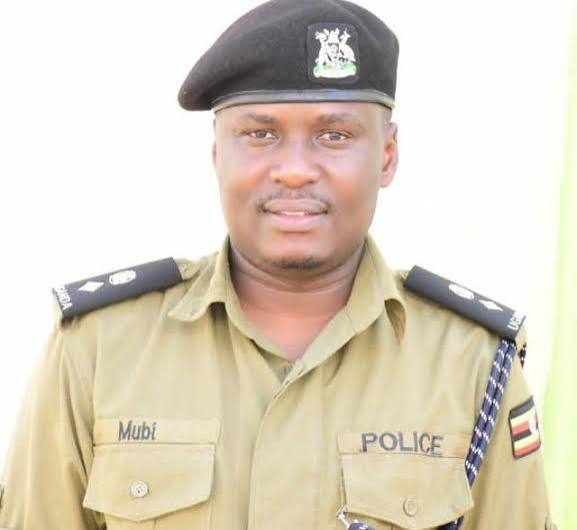
According to the Kiira Regional Police Spokesperson, SP James Mubi, the violence occurred at Buwenge Progressive Academy polling station in Kabi Zone, Buwenge Town Council, at around 11:21am.
How The Violence Erupted.
SP Mubi,in a press statement said trouble started after the EC Returning Officer declared Nabikamba Muzamiru winner of the LC1 Chairperson race for Kabi Zone.
He said Richard Kakande, who had also contested for the same seat, together with his supporters allegedly boycotted the exercise. Moments after the results were announced, Kakande and a group of youths stormed the polling station.
The group was led by three ring leaders identified as Richard Kakande, Fred Kalulu, 19, and Latibu Ikaali, 23, all residents of Market Zone in Buwenge Town Council.
“They attacked EC officials and security officers who were guarding the polling station, disrupting an otherwise smooth voting exercise,” SP Mubi stated in a press release issued Tuesday.
In the process of restoring order, police fired bullets in the air. A stray bullet hit Fred Kalulu, killing him instantly. Latibu Ikaali was also hit and rushed to Jinja Regional Referral Hospital, JRRH, where he later succumbed to his injuries.
The bodies of the deceased were taken to JRRH mortuary pending postmortem examination.
Police Declare Suspects Wanted.
SP Mubi confirmed that Richard Kakande, Bosco, and others involved in the attack are still at large. They have been declared wanted persons by CPS Buwenge and Kiira North Police Division.
“We are pursuing all those who instigated and participated in this act of lawlessness. No one is above the law,” he said.
In his official statement, SP James Mubi, PRO Kiira Region, said:
“Election is a competition like any other, and competition can generate emotions and create conflict. But we urge the public to exercise restraint, avoid inflammatory statements, and not incite or intoxicate the youth into violence”.
He said leaders must stop instigating youths into violence. Violence begets violence. Politics of hate has no place in our communities.
“Let us choose leaders through the ballot, not through chaos. Elections are about service, not bloodshed”, the police loudspeaker appealed.
The Regional Police Commander, Kiira Region, SSP Charles Nsaba, has called upon communities in Buwenge Town Council and surrounding areas including Namulesa, Bugembe, Wanyange, Lake, Mafubira, Masese, and Polota to reject radicalized violence.
From Village Role To National Contest.
Local leaders and analysts observed that the gravity of this year’s LC1 elections was different from the past.
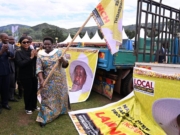
“In the past, the position of LC1 Chairperson was treated as a purely community role. But this time, campaigns took on a national shape and character. Candidates moved door-to-door, used public address systems mounted on trucks, organized street processions, and even visited places of worship to market their candidacy. Each promised effective service delivery, development, and unity. As a result, what was once a village contest has become a high-stakes political battle,” a community observer noted.
Experts: Why Local Elections Often Turn Violent.
Security analysts and governance experts note that while elections are a normal democratic exercise, they often breed tension because of what is at stake.
According to the UNDP Report on Youth and Elections in Africa, 2016, young people are the most targeted for mobilization during elections because they are energetic, unemployed, and vulnerable to inflammatory language. When leaders use hate speech, youth easily become tools of violence.
Prof. Mahmood Mamdani, the Ugandan scholar and Herbert Lehman Professor of Government at Columbia University, in his authoritative work Citizen and Subject: Contemporary Africa and the Legacy of Late Colonialism (1996), explains that Uganda’s local government system inherited a colonial structure of “decentralized despotism.”
He argues that at LC1 level, the contest is rarely just about leadership. The chairperson controls access to government services, recommendation letters, and community resources through state-appointed local authorities. As a result, the fight becomes about daily survival, and emotions run high. See: Mamdani, M. Citizen and Subject, Princeton University Press, 1996. Case study: Rural Uganda.