























It started at 9:47pm on a Tuesday on a WhatsApp group called HIIRE PLATFORM.
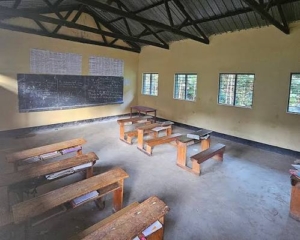
Someone posted a photo of a Primary Seven class in Mayuge. Eight desks were empty. The caption underneath read: “All gone to cut cane, apparently to look for money for fees and food. Fees are due next week.” By midnight there were 200 comments.
By the following morning, some radio stations had opened phone lines for two hours straight when the issue was a topic of hot debate. By Friday, comedians in Jinja were doing skits about “sugarcane boys” and boda-boda riders were arguing about it at different stages. The question was the same everywhere: has sugarcane made Busoga rich, or has it made Busoga poor?
You cannot tell the story of Busoga without the River Nile cutting through it. You cannot tell it without Lake Victoria the largest fresh water body washing its southern edge. You cannot tell it without Igenge Hill, where the Kyabazinga HRH William Wilberforce Kadhumbula Nadiope Gabula IV holds court and ushers in visitors from within and out. And now, whether we planned it or not, you cannot tell it without sugarcane.
Busoga’s own anthem tells you how we see ourselves. Stanza 3, composed in the 1990s by Arthur Musulube when he was a lecturer at Busoga University, goes:
“Ye nga twesiimye
N’inhaife Busoga, n’eitaala lya Uganda
Era ensulo ya Uganda
Bw’oidha mu Uganda
N’otatuukaku mu Idhindha
Enkuni ya Uganda
Oba ogisubiibwa.”
A loose translation is: “How grateful we are, our mother Busoga, the Light of Uganda and when you come to Uganda and you do not reach Jinja, the Fountain of Uganda, then you are missing something.”
Arthur Musulube wrote it because Buganda had an anthem and Basoga felt they needed one too. He also composed the national schools anthem “We Young Women and Men of Uganda.” That third stanza was meant to plant pride. Today it reads like a reminder of what we risk losing.
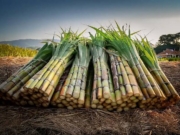
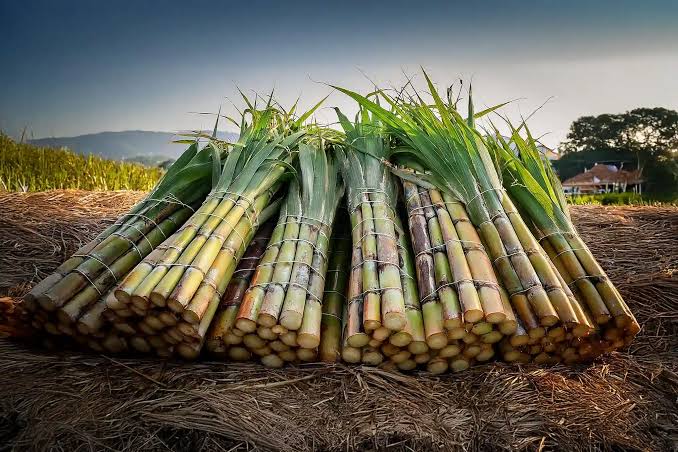
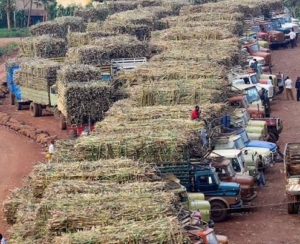
Drive from Jinja through Iganga, Luuka to Mayuge to Bugiri, to Busia and Malaba and for hours the view does not change. It is cane, wall to wall. Trucks loaded high, moving slowly, dripping juice onto the tarmac.
The mixed farms your grandparents knew or the maize, beans, cassava, cotton, groundnuts, with mvule and mahogany standing like sentinels that you studied from textbooks in the 1970s and 80s have been pushed to the margins.
According to the 2024 Uganda National Census, Busoga is home to about 4.5 million people across 10 districts. It is also, by every measure, the sugar capital of Uganda. The sub-region hosts 35 percent of the country’s total sugar milling capacity.
As of 2025, seven factories are operational: Kakira Sugar Works in Jinja, Mayuge Sugar Factory in Mayuge, Kamuli Sugar Ltd in Kamuli, Kaliro Sugar Ltd in Kaliro, GM Sugar in Buikwe, Bugiri Sugar Ltd in Bugiri, and Kidera Sugar in Buyende. CN Sugar in Namayingo is still under construction.
On 19th December 2025, the Ministry of Trade sat with six millers in Kampala. The single agenda item was cane prices, they were near collapse.
After hours of negotiation, government and millers agreed on a minimum price of Shs125,000 per tonne. At the same meeting, officials were told that crushing capacity in Busoga had doubled in five years to 26,000 tonnes per day. Yet the mills are still crying for cane. Farmers are estimated to have about 10 million tonnes of cane standing in fields across the sub-region, waiting for trucks that are not coming fast enough.
That is the paradox we are living in, too much cane, and still not enough money.
The Money Story & The Hunger Story.
There is no denying that sugar brings money and that the world drinks it. The global sugar trade is worth over $90 billion a year. For Uganda, it is serious foreign exchange. Uganda Bureau of Statistics data shows Uganda exported sugar worth $68.3 million in 2023.
Inside Busoga, the mills employ thousands directly. The trucks that haul cane, the mechanics who repair them, the input dealers selling fertilizer and herbicides, the women selling food at factory gates — all of them eat from sugar.
And yes, there are success stories. In Kamuli and Mayuge you will meet out growers who will tell you cane paid for university. A son is now an engineer in Kampala. A daughter is a nurse in Mbale. They planned. They planted 10 acres, waited the full 18 to 22 months, kept 2 acres for food, and sold when prices were good. Those families exist.
But they are not the majority story.
Walk through Kamuli Town, through Kaliro, through Mayuge and Bugiri. Look at the stores. Twenty years ago, a “store” (granary) in a Busoga home meant bags of maize, beans, groundnuts, and cassava flour stacked to the roof. Today, many of those rooms are empty. Others have been converted to keep chickens.
The reason is simple arithmetic: Cane pays once every 18 to 22 months. Life demands money every month. School fees come three times a year. Medical bills do not wait. When a parent is broke in February and the cane will be ready in August, the child comes out of school.
Head teachers in Busedde, Butagaya or Buyengo and Imanyiro or Butansi told us off record that dropout spikes happen in P6, P7, and S2 — the years just before national exams.
Sugar As Security, Sugar as Social Life.
For all the problems, sugar also holds homes together in a very basic way.
In many Busoga homes, sugar is not treated as a luxury. It is security and stability. A home without sugar is often a home full of quarrels. Tea with sugar in the morning makes the wife happy. Porridge with sugar makes the children joyous and ready for school. When that tin runs out mid-month, tension walks in.
Beyond the home, sugar keeps Busoga’s social life alive.
In the evenings, friends and contemporaries sit at Space Cafe along the Main Street in Jinja City, Igar Cafe, Hon Daudi Migereko’s Source of the Nile Hotel, Mzee Francis Otile’s Sunset Hotel International, Paradise Hotel, or Daniel Mugulusi’s Pearl on the Nile Hotel. Over sugar-laced coffee or a cappuccino, they talk about everything.
They talk about spouse issues and side chicks. They debate politics, Hon. Balaam Barugahara and Justine Nameere, and the latest stories from MK’s basement visits where you learn a new language for free, though not always by choice.
They talk business deals and land transactions. And they argue football with the passion of a derby: Arsenal vs Manchester United, Liverpool vs Real Madrid, the usual suspects.
It is the sugar in the coffee that keeps their hearts and minds alert. It is the sugar that keeps the conversation going until late. Remove sugar from that equation and you remove the buffer that makes hard conversations softer.
That is why the current crisis bites twice. When cane prices fall, it is not just income that disappears. It is also the small dignity of being able to buy a kilo of sugar, sit with friends, and feel normal.
A 2024 report by the Busoga Health Forum (BHF) put it plainly: in sub-counties with the highest cane acreage, there has been no deliberate effort to reserve land for food production, yet most households have no alternative source of income. The consequence, the report warned, is collapsing dietary diversity.
That warning is now showing up in health data. District health teams in 2024 reported stunting rates above 30% in some of the cane-heavy areas. This is not famine. This is chronic malnutrition. Children are growing up without enough protein because the beans and groundnuts have been replaced.
A 2023 study by Makerere University School of Public Health surveyed 1,200 households across Jinja, Iganga, Kamuli and Bugiri. The finding was stark. Households that derived more than 70% of their income from sugarcane were 2.3 times more likely to experience food insecurity in the three months before harvest compared to households that practiced mixed farming.
Hon Mrs. Florence Mutyabule, the Senior Presidential Advisor on Poverty Alleviation for Busoga, acknowledged in a recent address in Jinja that falling cane prices and oversupply were worsening household financial stress.
Many farmers, she said, were now harvesting as little as 30 tonnes per acre instead of the agronomic potential of 60 tonnes, because they were cutting immature cane out of desperation.
Charles Ocici, Director General of Enterprise Uganda, told farmers in Jinja in July 2025: “If you depend on one source of income and that one source faces challenges, the entire region suffers.” Busoga is testing that theory in real time.
The Land Is Talking Back.
Sugarcane is not a forgiving crop. Agronomists will tell you it needs between 1,500 and 2,500 millimeters of rainfall and a full 18 to 22 months to mature properly. It also takes a lot from the soil.
In 2025, Florence Tiwaku, the Iganga District Environment Officer, stood before the district council and linked the severe heatwaves and the erratic rains Iganga had experienced to land use change. Her words: large-scale cane expansion and wetland encroachment are changing the local climate.
A 2024 soil fertility assessment by the National Agricultural Research Organization (NARO) in Kaliro and Bugiri looked at fields that had been under continuous cane for more than 10 years.
Organic matter had dropped by up to 40 percent. The reason is the chemicals. To push yield, farmers use more fertilizer and herbicides. With no fallow period, the soil hardens. Once you clear cane, it costs a lot to bring that land back to food.
Hydrologists are saying the same thing about water. The small streams that used to run even in January are now dry gullies by December. In the 1990s, you could dig a shallow well in many villages and get water. Today you dig and find dust.
If we continue at this rate, parts of Busoga will look semi-arid in 20 years. The irony is painful. The anthem calls Busoga “the timber of Uganda” because of the mvule and mahogany. Those trees are being cleared to make way for more cane.
How We Got from Structure to Chaos.
Hajji Mohammed Beswari Kezaala, former Jinja Mayor who now serves as Deputy Head of Mission in Doha, Qatar weighs in:
Sugarcane in Busoga is not new. Contract farming arrangements date back to the 1920s when Indian firms took over estates left by European planters and began buying cane from local farmers.
After the expulsion of Asians in 1972 and their return in the late 1980s, millers experimented with nucleus estates where they grew their own cane. That model failed amid resistance and labor disputes, and by the early 1990s the industry returned to out growers.
That old model worked because it was regulated. There were extension officers. There were cooperative societies that checked quality. There was an understanding of how much land each mill could draw from.
That structure is gone. Today, because every new mill is desperate for cane, village weighbridges have multiplied. A farmer with one acre can harvest and sell. Transport is cheap because the mills are close. The incentive to plant cane is very high.
But the quality has collapsed. Mills now test for Brix — sugar content. If you cut at 14 months instead of 20, the Brix is low and they pay you less. Farmers then accuse the mills, many of them Indian-owned, of exploitation. Yet the labs are simply paying for what was delivered.
This practice is also hurting Uganda’s export reputation. If our sugar quality slips, the $68.3 million export market UBOS recorded in 2023 will shrink.
The Law We Passed And Ignored.
Parliament anticipated this crisis. In 2020, they passed the Sugar Act.
The most important provision for Busoga is Section 27 on zoning. It states that no new sugar factory should be licensed within 25 kilometers of an existing one. The idea was to prevent destructive competition for the same pool of out growers.
The Act also created a Sugar Board to license mills, arbitrate disputes, and regulate the industry.
Three things have gone wrong.
First, the Board has never been fully operational. In its place, government tabled the Sugar Amendment Bill in December 2023. It was debated in February 2024 and then deferred. As of the December 2025 meeting in Kampala, the proposed Uganda Sugar Industry Stakeholders Council was still not in place.
Second, licensing has continued. Ministry of Trade records indicate that 11 manufacturers are at various stages of licensing for Busoga’s 10 districts. Land use modeling shows those mills would require more than 53% of all agricultural land in Busoga just to feed them. There would be virtually no land left for food.
Third, there is still no statutory pricing formula. The Amendment Bill proposes pricing based on sucrose content, similar to Brazil and India. Until it becomes law, prices are set by negotiation, which is why government had to intervene in December 2025 to set a floor price.
Even President Museveni, speaking during Tarehe Sita(6th February) celebrations in Bugweri in February 2024, advised that smallholders with less than four acres should avoid cane because it cannot lift them out of poverty.
The tools to regulate exist. What is missing is implementation.
What Brazil, India And Thailand Did.
We do not need to guess. Countries that dominate sugar have already regulated it.
Brazil, the world’s largest producer, enforces a 30-kilometer distance between mills. It pays farmers based on sucrose content, not tonnage. It also has federal guidelines that require a portion of farm land to remain under food crops.
India announces a Fair and Remunerative Price before the planting season. Mills are legally required to pay farmers within 14 days. State governments promote intercropping cane with pulses in the early months.
Thailand uses a national Sugarcane and Sugar Board to cap the number of mills, provide crop insurance, and fund extension services for soil and water management.
The common thread is clear: regulate first, then expand. Busoga expanded first, and is now trying to regulate after the damage.
What Must Happen Now.
This is not a call to ban sugar, Uganda needs sugar because the jobs are real. The foreign exchange is real. The by-products — molasses, bagasse, ethanol — power other industries.
But Busoga needs food first. It needs children in school. It needs water. It needs soil that will grow the next crop.
Here is what must happen, and it is not complicated.
The 25-kilometer zoning in the Sugar Act 2020 must be enforced immediately and no new mill licenses should be issued in Busoga until the Sugar Council is operational. Village weighbridges that encourage micro-plots of cane should be phased out. Government, millers and farmer groups should return to structured contract farming with input credit and guaranteed markets.
Financial products are also needed. Farmers need affordable credit for both food and cash crops through PDM and SACCOs, not just loans for cane.
Local governments must invest in rural roads so that maize and beans can get to market as easily as cane does. And there must be a deliberate policy, enforced at village level, to ensure every household reserves land for food.
It may sound old-fashioned, but it worked. The old muluka chief system, for all its faults, ensured that every homestead had a store(granary), that pit latrines were dug, that coffee was dried properly, and that land was rested. We dismissed it as interference. Today we call the absence of it a crisis.
The Conversation That Started On Hiire Platform.
The sugar debate that started on HIIRE PLATFORM did not stop at agriculture. It spilled into a bigger national conversation about discipline and accountability.
Some argued that only a firm hand can stop the mess. That is risky after we have tasted democracy. But the point about impunity is valid.
While the focus is often on “big fish” corruption in Kampala, the daily leakage in local governments — ghost workers, incomplete roads, missing medicines — is what erodes services in Busoga. If service delivery at district and sub-county level is fixed, more money will reach schools and clinics than any single anti-graft operation can recover.
Conclusion: The Choice Before Us.
Uganda will continue to need sugar. The world will continue to drink it. But Busoga has to decide what kind of region it wants to be in 10 years.
Do we want to be a region with full warehouses of sugar and empty stores in homes? Do we want a generation that knows how to cut cane but not how to grow beans? Do we want to explain to our children why the mvule and mahogany that Arthur Musulube called “the timber of Uganda” in Stanza 3 of our anthem no longer have room to grow?
The Sugar Act 2020 gave us the legal framework. Research from Makerere, NARO, Enterprise Uganda and the Busoga Health Forum has given us the data. The stories from farmers in Bugiri, Kamuli, Mayuge and Kaliro have given us the human cost.
If we act now to regulate, Busoga can still correct course. If we delay, we will wake up to a region with warehouses full of sugar and households with empty stores.
That would be the greatest betrayal of the people the Kyabazinga leads, and of the pride Musulube put into verse 30 years ago.
The Exposure Uganda (TEU)Editorial: Food First, Always.
Busoga is not poor because it has sugar. Busoga is struggling because it put sugar ahead of food.
To the young person listening to this on radio in Namutumba and Kaliro or reading it on a phone in Mayuge or Luuka: your life is not defined by cane. Do not let the urgency of cutting today steal the possibility of building tomorrow.
Keep a garden. Stay in school. The factory will still be there in five years. Your exams will not wait.
To Parliament: pass the Sugar Amendment Bill. To government: operationalize the Sugar Council. To district leaders: enforce zoning and protect food land.
Uganda needs sugar. But Busoga needs to eat. Let us regulate today, so that tomorrow we do not have to explain to our children why we traded the “flower of Uganda” and “the timber of Uganda” for cane.
At The Exposure Uganda, we believe a story is not finished until the people at the center of it have all the facts. Busoga’s sugar story is not about being anti-development, it is about balance.
We will keep asking the hard questions on various platforms, in council halls and in the fields anywhere in Busoga not to tear down but to build better.
We Expose, You Decide.