

























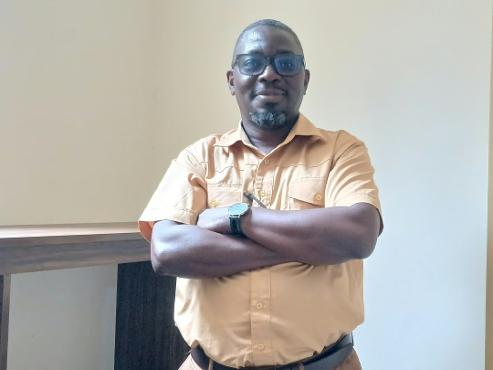
By Percy Mulamba Munawankyo.
In Kampala, Jinja and most cities and towns today, you will find toilets locked inside iron cages like suspected criminals, bank pens chained like dogs on a leash, and hotel sandals deliberately mismatched because a matching pair will never see the next morning.
That is not a joke from a comedy show, it is how businesses are surviving bad manners in Uganda, and it is the blunt picture social commentator Mercy Mulamba Munwankyo has painted in her viral article titled What Happened To Our Manners that every Ugandan needs to read before entering the next public washroom or bank hall.
What is striking, Mercy Mulamba argues in her piece, is that this is not about poverty or lack of education, but about a slow collapse of consideration for the next person, and it is visible in the smallest places.
It all started with a toilet, or more precisely with what she found inside it when no one thought anyone was watching.
Mercy Mulamba says he walked into a spotlessly clean washroom of a beautiful hotel in Kampala, where the tiles were shining, the air smelled fresh and the tissue was neatly packed, only to open the inner door and find a scene that looked like two people had fought inside that small cubicle and the toilet had lost, an experience so jarring that it pushed her to sit down and write.
That single experience forced him to ask a bigger question, because in his view, the bathroom is just the mirror, the real problem shows up everywhere else once you start looking closely.
He highlights that the simplest duty of flushing has become a serious problem because people use a public toilet and walk away as if pressing a button requires too much energy, leaving their waste seated there for the next person, yet flushing is not a favour you do for the hotel but basic respect for whoever will enter after you.
And if you think that is the worst of it, Mercy Mulamba then turns to what he calls the disappearing act.
Like they say in Luganda, “Akabwa keeko akaluma omwami,” it is the small dog that bites the owner, and in this case, it is the small shameful thefts that are bleeding businesses slowly without ever making police headlines.
Toilet rolls are rolled into handbags, air fresheners are plucked off walls, liquid soap bottles and small towels vanish from washrooms, while in restaurants toothpicks, serviettes, spoons and forks are pocketed, and in hotels, towels, bedsheets and pillowcases are folded neatly into suitcases as if they were part of the booking.
“Some people, once they see a small security gap, will pick anything,” Mercy Mulamba writes, explaining why many hotels now deliberately provide sandals of different colors and sizes in the same room, one blue and one brown, not because they failed to buy matching pairs but because they have learned that a matching pair will be carried away.
It does not end in hotels either, he observes, because the same sticky fingers have followed us to places, we consider serious.
He says it is the same reason banks now chain pens on a small string, handcuffing a pen to the counter, not for decoration but because management knows that if the pen is left free, even a respectable looking customer will use it and slip it into a pocket, and by the end of the year the losses become a real cost that finance officers have to explain.
From pens to porcelain, the story only gets more absurd, he writes.
In her article, he singles out the most shocking illustration from The Forest Mall in Lugogo, where management was forced to weld iron cages around toilet cisterns and taps, putting actual iron bars around a toilet like a police cell, because people were dismantling the entire flushing system and walking away with it.
Yet beyond stealing, Mercy Mulamba is also troubled by how we use what we do not steal.
He captures her own views on squatting on toilet seats, especially among ladies who fear infections, which she dismisses as misplaced because medical professionals have clarified that a clean, dry toilet seat does not transmit sexually transmitted infections, advising that if one is uncomfortable, the decent thing is to lay tissue on the seat rather than climbing with shoes.
And just when you think you have heard it all, there is more on the floor and in the basin.
He mentions spitting on washroom floors and washing feet inside hand-washing basins, noting that while we all respect prayer and cleanliness, the hand basin is meant for hands only and serious mosques and malls have provided proper designated places for ablution.
From the washroom, Mercy Mulamba walks us straight into our noisiest habit, the phone.
He turns to phone manners, a part of her commentary that has struck a chord with many Ugandans who travel in taxis or attend meetings and weddings, because everyone has met that one person who turns a public space into his private sitting room.
“You are in a taxi or bus, a meeting, a conference or a hotel lobby, and someone’s phone rings and the whole place must stop to listen because he shouts as if he is on a radio call commanding troops on a frontline,” he writes, describing how business deals and family quarrels are broadcast on loudspeaker, when lowering the voice and stepping outside would have been enough.
If loud phones invade our ears, Mercy Mulamba adds, careless seating invades everyone else’s space.
On seating manners, Mercy Mulamba says some people walk into a hotel lounge, remove their shoes and throw their feet on the table or spread across three chairs, forgetting that the table is where someone else will eat and the chair where they placed shoes is where another guest will sit.
And as if that was not enough to worry about, the disrespect has spilled into queues and offices.
Mercy Mulamba also touches on queuing culture and office behavior, where people jump lines at clinics and banks with the excuse of being busy, and where colleagues in open offices play music loudly without earphones or eat strong-smelling food at their desks without caring about neighbors, forgetting that shared space requires shared consideration and patience.
Finally, he brings the conversation to places where we are supposed to be at our best.
He mentions littering and church and mosque etiquette, where people drop sweet wrappers and water bottles in clean compounds even when bins are close, or arrive late and push through a silent congregation, making noise and stepping on feet, as if courtesy ends at the church gate or the mosque entrance.
Why Etiquette Still Matters and Why It Costs Nothing But Buys Everything.
But Mercy Mulamba does not end her piece with complaints, she ends it with a reminder that lands harder than the shame.
In his powerful conclusion as a man who has covered hospitality and public spaces in Kampala for years, she reminds Ugandans that good manners are not a Western import or a sign of being overly strict, but a universal language of respect that the whole world understands from Kigali to Singapore and from Nairobi to New York.
Etiquette matters because public spaces are shared property, and the way we treat a shared toilet, a shared pen, a shared chair or shared air in a taxi determines whether that space remains usable for everyone or collapses under selfishness and a mindset that says someone else will clean up after me.
There is an old wise saying that civility costs nothing but buys you everything, and Mercy says it is true in ways we often ignore when we think being rude, loud or aggressive shows we are powerful or well-connected in society.
Civility costs nothing because you do not need a receipt to flush, to say please, to say sorry, to say thank you, to lower your voice, to keep your feet off the table, or to leave the hotel towel where you found it, yet that same civility buys you respect without you having to demand it, it buys you trust when people see you leave a place cleaner than you found it, it buys you opportunities because no serious investor, employer or tourist wants to return to a hotel where towels disappear or to a mall where toilets are locked in iron cages.
Above all, civility buys you dignity, the quiet dignity of knowing you behaved well even when nobody was watching, the dignity that makes a stranger want to help you, employ you or recommend you, and that dignity cannot be bought with money, borrowed from a friend or faked with an expensive suit and a foreign accent.
Uganda wants to be a middle-income country, we want tourists to come to Jinja to see the source of the Nile and to Bwindi to see gorillas, we want to host international conferences in Munyonyo and attract factories in Namanve, yet tourists write reviews about missing bedsheets and caged cisterns, and delegates complain about shouting in boardrooms and sandals that do not match.
We cannot drive big SUVs, wear expensive suits and speak fluent English with an accent while failing to flush a toilet or return a simple pen, because civilization is not measured by what you drive, where you live or what you wear, but by what you do when the door is closed behind you and you think no one is looking.
Mercy Mulamba ends his piece with a simple appeal that each Ugandan should carry home training back into public spaces by flushing every time, leaving toilet paper and air fresheners where they belong, leaving towels and bank pens untouched, refusing to squat on toilet seats, lowering the voice on phone calls, joining the queue patiently and keeping feet off tables and chairs.
“A public toilet is not your supermarket, a hotel is not your boutique, a bank counter is not a pen shop and a taxi is not your sitting room,” he writes, adding that while the message is embarrassing and uncomfortable to hear, it is necessary if Uganda is to become the pleasant, respectful and civilized country we all claim we want on social media but often betray with our daily behavior.