














One of Uganda’s reputable NGOs announces it has launched a National Financial Literacy Movement and Campaign 2026–2036 aimed at reaching 35 million Ugandans about 70% of the population by 2036. The drive comes as government policy under NDP IV sets a target of 100% formal financial inclusion by 2030.
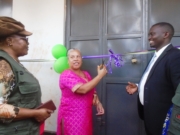
The Movement was unveiled in Jinja City,80km east of Kampala by the AGAK Entrepreneurship Academy in partnership with the Financial Literacy Awareness Foundation USA.
It will provide practical training in budgeting, saving, investment, credit, insurance, tax, retirement, and digital finance across schools, universities, TVET institutions, SACCOs, VSLAs, markets, and workplaces.
Who is Behind the Campaign?
AGAK Entrepreneurship Academy is a Uganda-based institution that advances entrepreneurship, leadership development, financial education, and economic empowerment through training, mentorship, research, and community outreach.
The Academy is led by Dr. Okello Ejedio, Founder and Chairman, who also serves as Lead TFAF Ambassador for Uganda and a member of the TFAF Advisory Board. AGAK will act as Uganda’s anchor and implementation lead.
According to a press release distributed to media houses, the campaign is being delivered with two international partners. The Financial Awareness Foundation – TFAF, based in the United States, is providing the global framework and the Your Financial Partner personal money management curriculum.
The Center for Financial Literacy Education Africa (CFLE-Africa) is providing regional alignment and knowledge-sharing across African contexts.
What the 10-year Plan will Do.
The release signed by Dr Ejedio Okello says the strategy is built around education, research, and scale. AGAK plans to train 50,000 community financial ambassadors to deliver lessons nationwide. Priority groups include 12 million youth and 13 million women, alongside farmers, MSMEs, SACCO members, market vendors, persons with disabilities, refugees, civil servants, and educators.
A National Financial Literacy Research Centre and Regional and District Research Centers will be established to collect data, develop locally adapted curricula, and monitor impact.
The curriculum will be based on TFAF’s Smart Money Principles, adapted for Uganda. This cover getting organized, understanding assets and net worth, budgeting and cashflow, income and entrepreneurship, goal-setting, investment basics, tax responsibilities, insurance and risk, and intergenerational planning.
AGAK says the long-term objective is that every learner graduating from secondary school, TVET, college, or university should have completed a practical personal money management course and be able to prepare a simple financial plan.
Why Uganda needs it Now.
Access to financial services has grown rapidly, but money-management gaps remain. According to the FinScope Uganda 2023 Survey conducted by Bank of Uganda, Ministry of Finance, Financial Sector Deepening Uganda, Agri-Business Initiative, and UBOS, financial inclusion stands at 81%, up from 77% in 2018.
The same survey found that seven out of 10 Ugandans were operating a personal budget deficit and many lacked confidences in long-term financial planning.
Research also shows the link to poverty and growth. A study by the Center for Social Development at Washington University in St. Louis, using InterMedia Financial Inclusion Insights Program Wave 5 data from 3,001 Ugandan households, found that a unit increase in financial literacy reduced the probability of poverty by 4.2 percentage points in Uganda.
Other studies have found that financial literacy training is associated with better micro-enterprise performance, including higher sales, profits, and survival rates, and that financial literacy is a significant determinant of economic growth and financial inclusion.
Alignment with NDP IV
The Movement is aligned to Uganda Vision 2040, the Sustainable Development Goals, and NDP IV 2025/2026 – 2029/2030.
NDP IV lists full monetization and private sector growth as core objectives and projects that the proportion of financially included adults will rise from 81% to 86% by 2029/2030, with formal financial inclusion targeted at 100%.
“This is not just training, it is nation-building because a financially informed Uganda is a Uganda that saves, invests, insures, and creates wealth from the village to the boardroom,” said Dr. Ejedio at the launch.
Asked whether there is any correlation with the government priorities, the talkative Okello Ejedio who was recently awarded an honorary doctorate degree from one of the Pentecostal universities says the movement aligns directly with PDM, Emyooga and OWC.
“We are teaching households how to plan for the money coming through those and other programmes, protect it from fraud, and grow it into enterprises, savings and assets and that is how we kick poverty out of households and the country”, he said.
He says NDPIV 2025/26-2029/2030 reinforces the link. The plan targets 100 percent formal financial inclusion and projects adult financial inclusion to rise from 81 percent to 86 by 2030.
Government agencies, financial institutions, development partners, academia, media, and communities have been invited to partner in rolling out the Movement.