
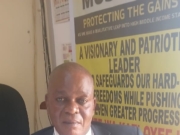



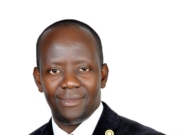

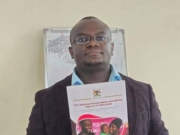

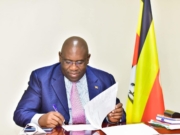




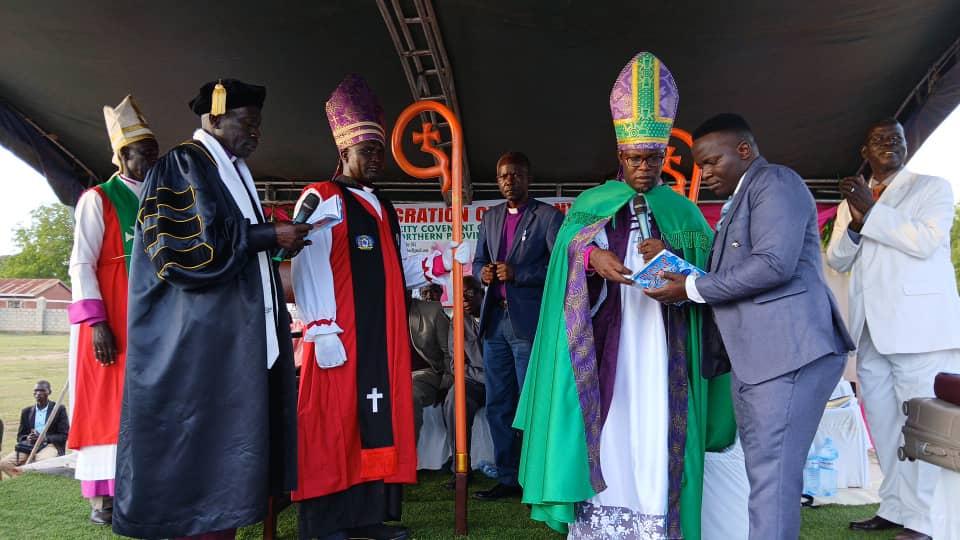
“Uganda’s soil is sacred ground, and it is time the Church treated it that way,” declared Archbishop Elect Professor Mugume Bagambaki Richard, Ecclesiastical Patriarch of the Five-Fold Episcopal World Federation and Archbishop of Upper City Covenant Churches, as he addressed church leaders, pastors, and believers across Uganda on the eve of the International Day of the Tropics, 29 June.
His message was direct: the Church must return to the land with the same zeal it brings to the pulpit, because true Christianity is not idle waiting but diligent work carried out while watching for God.
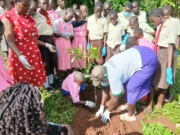
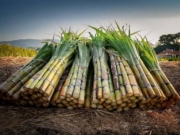
Archbishop Bagambaki was not speaking to politicians or technocrats, but to the household of faith, calling parishes to open church land for demonstration farms, families to turn idle time into planting time, and young people to see agriculture and agro-processing as honor rather than shame, so that Uganda can model the dignity of labor and rise as the prosperous nation God designed her to be.
The Biblical Theology Of Work.
This call does not suggest that prayer is bad, because Uganda’s strength has long been its devotion through morning fellowships, overnights, crusades, and street preaching that form character and dependence on God.
Scripture, however, never separates prayer from work, but joins them, and Archbishop Bagambaki anchored his message in 2 Thessalonians 3:10: “If anyone is not willing to work, let him not eat,” explaining that Paul was not condemning the sick, the elderly, or widows whom the Church must care for, but confronting believers who had abandoned work out of misplaced expectation of Christ’s immediate return.
Paul himself modeled responsibility, saying, “We worked night and day… so as not to be a burden to any of you,” and the Bible’s language confirms the link, since the Hebrew avodah and Greek ergon mean to till, to keep, and to serve, the same words used for Eden’s mandate “to work it and keep it” and for priestly service in the Tabernacle, which means farming and worship are not rivals but two expressions of stewardship, and therefore “the soil is an altar,” the Archbishop said, “and when we plant in faith and work with excellence, we harvest both bread and blessing.”
‘Rich Lands, Poor People’: The Tropics Paradox.
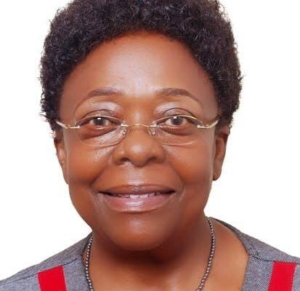
The Archbishop’s call coincides with the International Day of the Tropics, established in 2016 after the State of the Tropics Report to highlight the opportunities and challenges facing tropical regions, and Gertrude Kamya Othieno, Political Sociologist and Founder of the Global People’s Network, GPN, argues that the day exposes a painful paradox because the Tropics hold almost half the world’s population along with the greatest biodiversity, minerals, fertile soils, sunshine, and strategic waterways, yet many tropical countries remain among the poorest.
“Raw materials leave the Tropics cheaply. Finished products return expensively. The wealth flows outward. Dependency remains,” Kamya wrote, pointing to cocoa from Ghana, coffee from Uganda, Ethiopia, Colombia and Brazil, palm oil, coltan, timber, and oil that feed global industries while farmers and communities receive the smallest share.
What Do We Mean by The Tropics?
The Tropics are the region of the earth between the Tropic of cancer at 23.5 degrees North and the Tropic of Capricorn at 23.5 degrees south- a warm belt around the equator where Uganda lies.
Countries in the Tropics share hot climates, two rain seasons, rich biodiversity, fertile soils and year-round sunshine. The belt includes most of Africa, Latin America, South and Southeast Asia and the Pacific and is home to nearly half the world’s population.
It is also the region most dependent on agriculture and raw commodity exports, which is why the ‘rich lands, poor people’ paradox keeps appearing in development debates.
“For centuries, colonial systems organized tropical economies around extraction, and political independence did not always change that, so we continue to export what we do not consume and consume what we do not produce. The result is a paradox: rich lands, poor people,” she added.
Museveni: ‘Stop Donating Money Through Raw Exports’
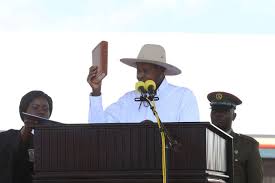
That analysis echoes a point President Yoweri Museveni has made for decades, warning against “donating money and jobs abroad” by exporting unprocessed commodities, because when Ugandans ship raw coffee, cocoa, or minerals, European and American factories capture the jobs, the by-products, and the profits, then roast, package, and brand the goods before selling them back to Africans at a higher price.
“You hear someone say, ‘I like UK Coffee’ or ‘American Coffee,’” the President has said, “yet that coffee came from Uganda. We grew it. But we gave away the jobs and the value.” His consistent demand has been for value addition: process, roast, and package in Uganda so that jobs, skills, and wealth remain here.
Where Church, Society, and State Meet?
Therefore, Archbishop Bagambaki’s appeal is both spiritual and economic, urging the Church to lead by example because it cannot preach self-reliance and live in dependency, while GPN calls for a shift from exporting raw materials to creating value, from being objects of research to producers of knowledge, and from being subjects of global narratives to authors of our own stories, insisting that “the greatest resource of the Tropics is not beneath the soil or hidden in the forests, but the people themselves.”
“As we commemorate the International Day of the Tropics, perhaps we should ask not simply how to save the Tropics, but rather: Who has benefited most from the Tropics—and who has paid the price?” Kamya concluded.
For Uganda, the message converges in three voices: the Church says work is worship, civil society says value must stay here, and the State says stop donating jobs abroad, which means the pulpit forms character, the soil releases provision, prayer invites God’s hand, and work puts our hand to His creation, so that when all three are honored, faith becomes food and dependency gives way to dignity.