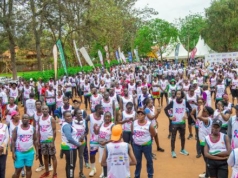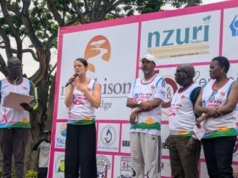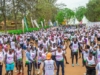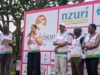







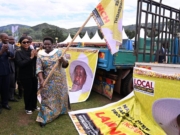
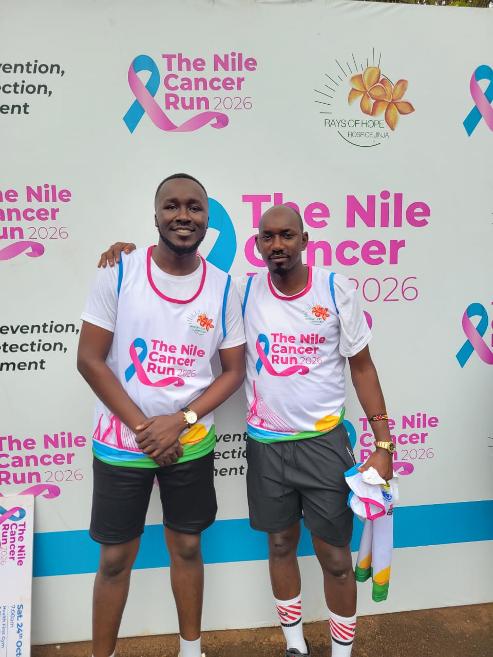
The t-shirts/vests have been folded, the banners have been pulled down, the loudspeakers that echoed across Jinja City on Saturday have been switched off, and the thousands who thronged the streets for the Nile Cancer Run have returned to their offices, shops, classrooms and homes.
For many individuals, companies and organizations, the logical conclusion is that the event is over, and therefore the cause can rest until next October when another date is announced, another theme is unveiled, and another round of mobilization begins.
That conclusion, while understandable from a calendar perspective, is dangerously misleading because cancer, unlike our organized events, does not observe seasons, does not respect financial years, and does not wait for the next run to attack, and the same disease that we ran against last Saturday morning is, at this very moment, quietly eating into the breast of a mother in Bugembe, silently blocking the throat of a father in Butagaya, and slowly taking root in the cervix of a young housewife in Mayuge who has never heard of HPV vaccination and thinks bleeding after intimacy is normal.
Cancer works like a rat in the night, as our elders in Busoga say, nibbling at the toes of its victim so gently, so persistently, that the victim only wakes up in the morning to find wounds that have already become septic and impossible to clean.
This is precisely how families in our communities discover cancer, not at the first sign of a small painless lump or slight abnormal bleeding, but when the bleeding has become uncontrollable and foul-smelling, when the lump has burst through the skin and become a wound, when the pain can no longer be masked by herbs, shrine visits and prolonged prayers.
This is the brutal reality that Rays of Hope Hospice Jinja(RHHJ) lives with every single day, long after the running kits have stopped selling and the ceremonial guests have flown back to Kampala, because while the public sees the glamour of a well-organized run, the hospice staff see the daily queue of patients who have sold everything and still cannot afford a full course of treatment, and whose only remaining hope is early detection for their children and pain relief for themselves.
An entity like Rays of Hope Hospice Jinja can only help when people like you support it, and anyone who imagines that palliative care, cancer screening, community awareness, and prevention can be sustained by good intentions alone has not understood how health systems work anywhere in the world, from Jinja to Johannesburg, from Kampala to Canada, because compassion without facilitation is just sympathy that cannot buy a litre of fuel or a screening kit.
Globally, there is no single government, no matter how rich, powerful or well-intentioned, that has defeated cancer alone through Ministry of Health budgets, and the success stories we admire from afar, whether it is the American Cancer Society in the United States, Macmillan Cancer Support in the United Kingdom, or the Uganda Cancer Institute itself, were all built on the same principle that now sustains Rays of Hope: that ordinary people, small businesses, large corporations, schools, churches, mosques, youth/women associations and individual families decided that they would not leave the fight to government alone and that they would create a parallel community insurance through sustained giving.
In the United States, the Relay for Life did not end cancer, but the dollars raised from community runs and cake sales pay for the research that discovers new drugs, for the patient transport that ensures a poor mother does not miss her appointment, and for the free accommodation that allows a patient from a distant village to stay in hospital for six weeks of radiotherapy, while in the United Kingdom, the charity shops run by Macmillan on every high street are what pay for the specialist nurses who visit dying patients at home to change wounds and administer morphine, because governments pay for hospitals, but communities pay for dignity, for access, and for humanity.
Rays of Hope Hospice Jinja is operating on that exact global model, but with far fewer resources and against far greater odds, because while a patient in London worries about the side effects of chemotherapy and whether she will lose her hair, a patient in Jinja worries about whether she will afford the taxi fare to get to chemotherapy, whether her children will be chased from school while she is away in Kampala, and whether she will have morphine to sleep at night without screaming and waking the entire village.
The organization you saw organizing the run is, for the rest of the year, running a far more difficult and less glamorous marathon, one that involves fueling vehicles to trace patients who have defaulted from treatment because they had no transport money, buying colostomy bags for patients who cannot afford them and are using old polythene bags, training village health teams to talk about prostate cancer to men who consider discussion of private parts taboo, mobilizing and vaccinating 35,152 girls against HPV with support from partners, screening 4,090 women for cervical cancer and 3,557 for breast cancer, and, perhaps most painfully, sitting with families in small mud-walled houses to help them accept that their loved one will die, and ensuring that death happens with less pain, more peace, and a little more dignity.
None of that work stops because the run is over, and in fact, the period after the run is when the work intensifies rather than reduces, because the awareness created by the run generates massive demand, as more women come asking to be screened, more schools call asking for health talks, more men quietly approach the offices situated on plot 18B Kiira road, asking if they can be checked for prostate cancer without their wives knowing, and if there is no money, no fuel, no test kits, no staff facilitation, that demand quickly turns into disappointment, and disappointment turns back into the dangerous silence where cancer thrives and kills without ever being reported.
Therefore, to argue that we will wait until next October is to knowingly sentence another cohort of patients to late diagnosis and preventable death, and it is to fundamentally misunderstand what supporting a cause means, because authentic support is not an event, it is a commitment that lives beyond the event, and it is measured not by how loudly we cheered on the day of the run, but by how quietly we continue to give when no one is watching.
This is why the call must now shift from running to walking, driving, calling, and emailing Rays of Hope with whatever package you can to sustain the cause, and no contribution should be dismissed as too small to be meaningless, nor should any be considered too big to be unnecessary, because in the economy of saving lives, every shilling has a name and a face attached to it.
If you are a company that did not manage to sponsor before the run due to budget cycles or late information, your finance department can still wire support for a specific and measurable component, such as sponsoring 100 cervical cancer screenings at 20,000 shillings each, or fueling the community outreach van for a month, or printing health education materials in Lusoga and English, or adopting a school for HPV awareness, and if you are a school that missed the run, you can invite the RHHJ team to speak to your senior girls and staff, and pay for their transport and lunch as your humble contribution.
If you are an individual who did not buy a kit because you were upcountry or financially constrained, you can still walk to their offices , or drive there, or simply call or email them and ask, “What do you need this month, and how can I be part of it?” because what is needed is not always money, as they need volunteers to pack kits, they need public address systems for community outreaches, they need community mobilizers who know the local language, they need a church that will allow them to screen mothers after Sunday service, and they need a mosque that will allow them to talk to men after Juma prayers without judgment.
The most authoritative truth about cancer control, documented by the World Health Organization and evidenced in every country that has made tangible progress against the disease, is that early detection, prevention, and palliative care are community-owned functions, not hospital-owned functions, and hospitals will always wait for patients to come when it is already too late, while community organizations like Rays of Hope Hospice Jinja go to where patients are before it is too late, but they can only go if you fuel them, support them, and believe in them.
It is intellectually and spiritually dishonest to post dozens of Bible verses about being your brother’s keeper on social media, to quote the Quoran about saving one life as if you have saved all of humanity, and then to remain indifferent when the very organization that lives those verses daily, without quoting them, is struggling to keep its programs alive because the community that ran one day has gone back to sleep for 364 days, waiting for another reason to wake up.
Faith without works is dead, charity without consistency is public relations, and quoting scripture without practicing it is noise, whereas true support is what happens when the cameras are gone, when the MC has gone home, when there are no certificates to be awarded, and when the only reward is the quiet knowledge that somewhere, a stranger you may never meet is alive or is dying without pain because you cared.
Rays of Hope Hospice Jinja has proven, year after year since 2018 when this initiative started as the Fight Women’s Cancer Run and has now grown into the Nile Cancer Run embracing prostate cancer screening alongside the continuing focus on cervical and breast cancer, that a local organization with local leadership can rally an entire city, attract partners from Murchison River Lodge to Bank of Africa to small community schools like Mother Kevin, Jinja SSS, PMM Girls, Goodheart SS, Kamuli Community SS, and turn that rally into measurable results that save lives, but that proof will mean nothing if we treat it as a one-day festival rather than a year-long movement.
Cancer is running its own relentless marathon in Busoga, and it is not taking a break, it is not resting, it is not waiting for funding, which means those of us who claim to care cannot afford to take a break either, and the next person to sit on that simple wooden bench at RHHJ, waiting for results that will change their family forever, may be your most loyal employee, your best customer, your most disciplined student, your beloved sister, or you yourself.
To Our Broadcasters & Journalists: We Want Some More.
To our broadcasters and journalists who played a part by intensifying and amplifying the campaign, who carried the message from the hospice gates to the furthest villages in Busoga and beyond through your airwaves, your cameras, your pens and your social media platforms, you cannot be thanked enough, because you turned a local run into a regional conversation and forced cancer into the public discourse where it belongs.
But like that boy in Charles Dickens’ unforgettable novel Oliver Twist, who after being given a small bowl of porridge timidly held out his empty bowl and whispered the famous words, “Please, sir, I want some more,” Rays of Hope Hospice Jinja and the general population that you serve are today holding out their bowls and asking for more.
The run may be over, but the cancer story is far from over, and we humbly and strongly appeal to you to continue generating more cancer awareness-related skits in your programme segments and talk shows, to initiate debates on early screening and prevention, to host survivors and health workers who can speak in Lusoga, Luganda and English, to post more educative content on your social media pages where the youth spend their time, and to write more investigative and human-interest stories in your papers that expose the gaps and celebrate the progress.
A jingle played once is easily forgotten, a poster seen once is easily ignored, but a message repeated consistently through drama, through talk shows, through news, and through social media becomes a culture, and you as media have the unparalleled power to turn cancer from a whispered fear in bedrooms into a normal public conversation in markets, schools, and places of worship, and we need that power every day, not just in October.
Please, we want some more.
A Sincere Appreciation &An Open Door.
As we make this passionate call for sustained support beyond the run, it would be a grave omission not to pause and sincerely appreciate everyone who made this year’s Nile Cancer Run a resounding success and a powerful demonstration of community solidarity.
Rays of Hope Hospice Jinja extends its heartfelt gratitude to all participants who bought a kit, woke up early, braved the morning chill, and ran, walked, and sweated for a cause bigger than themselves, because your presence alone was a powerful message that Busoga is waking up to the reality of cancer and that silence is no longer an option.
We thank our partners and sponsors who lent a hand by way of cash and material donations, logistical support, publicity, and mobilization, because your generosity has already been translated into vaccines, screenings, awareness sessions, and comfort for patients who would otherwise have nowhere to turn and no one to turn to.
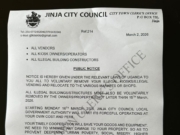
In a special way, we appreciate: Murchison River Lodge, Bank of Uganda, Bank of Africa, Arken Farm, Nzuri Timber, Nilus Group Limited, Sanlam, Yalelo Uganda, Cavendish University, St. Francis Health Care Services Njeru, Grace Laboratories, Asante International School, Mother Kevin Secondary School, His Heart for Africa, Jinja City Council, JIPRA, Health First Gym & Fitness Centre, APCA, Smart FM, NBS FM, Busoga One Radio, Bridge FM, Baba FM, International Institute of Health Sciences, Bank of Africa, AJK Group Limited, JPC 2 Friends, and the many individuals, families, and small businesses who purchased kits for themselves and their families and encouraged others to do the same.
You did not just sponsor an event; you invested in life, you invested in early detection, and you invested in the dignity of a dying patient who wants to leave this world without unbearable pain.
And to those who, for one reason or another, did not make it this year, whether due to competing commitments, financial constraints, late information, or simply being undecided, the door is still open. It has not closed, it will not close, and it is deliberately left open because cancer has not closed its own door.
Rays of Hope Hospice Jinja is still here in Jinja City its offices are open, its phones are on, its vehicles are ready to move, and its need for your partnership is even greater now that the run is over and the real work of following up on the awareness created has begun.
Cancer did not end on Saturday. Therefore, your chance to help did not end on Saturday either.
You can still walk in. You can still drive in. You can still call. You can still email. You can still send whatever package you have, cash or in-kind, and it will be received with profound gratitude and put to immediate use where it matters most: saving a life, reducing pain, and giving hope where there was none.
Thank you for running. Thank you for giving. And thank you in advance for continuing to stand with us until Busoga is free from late cancer presentation.