
























There is an old popular wise saying that the higher you go, the cooler it becomes.
It is a saying that every child in Busoga and other parts of Uganda has heard, a saying that farmers know when they climb a hill in the morning, a saying that travelers know when they leave the heat of the valley and feel the fresh breeze on the hilltop, and a saying that is both physical truth and life wisdom, because as you climb higher, the air becomes cooler, the dust settles, the view becomes clearer, and the noise of the low ground fades away.
No single person coined it, because it belongs to the wisdom of generations, and science later confirmed what our grandparents already knew, which is that temperature falls as altitude rises, while life also teaches the same lesson, which is that those who rise through discipline, education and hard work find a cooler, calmer and clearer place in life.
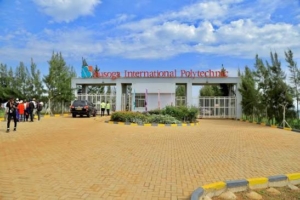
Nowhere in Jinja does that saying feel truer than at Busoga International Polytechnic (BIP), which sits proudly on Igenge Hill, opposite the official palace of the Busoga Kingdom, Kyabazinga His Majesty William Wilberforce Kadhumbula Nadiope Gabula IV, high above the heat, the dust and the noise of the town below, in a cool, clean and serene environment where learning feels like breathing fresh air.
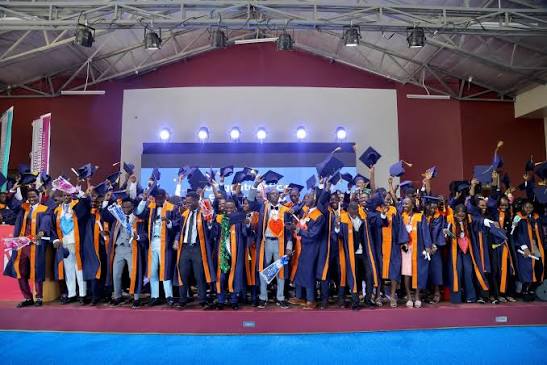
And on Saturday, November 28, 2026, that hill will be cooler still, and higher still, because Busoga International Polytechnic (BIP) will hold its 4th graduation ceremony, in what officials describe as the institution’s most significant graduation since its founding, because for the first time it will graduate Level 3 students alongside a new cohort of internationally certified oil and gas trainees.
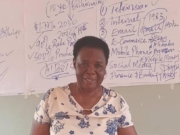
The announcement was made by the BIP Director, Ms Reham Mustafa, who told reporters that a total of 113 students will graduate in Engineering Level 2 and 3 and Construction Level 2 and 3, a milestone that marks the institution’s growth from a young vocational centre into a leading provider of engineering training in Busoga and Uganda as a whole, while also confirming that the graduation will include students who have been undergoing a certificate course in the Offshore Petroleum Industry Training Organisation, widely known as OPITO, which is widely required before being employed on offshore oil, gas and renewable energy installations.
A Historic Day For Busoga And Uganda
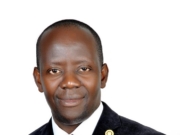
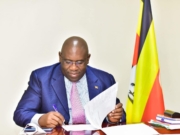
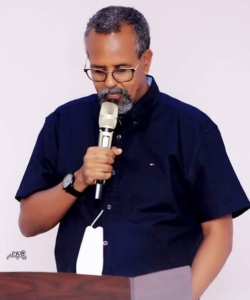
Addressing a news conference at the neat institution, which is acclaimed for its great ambience, Reham Mustafa told reporters that the guest of honour will be Innocent Kemigisha Mukooli, a Senior Technical and Vocational Education and Training (TVET) officer and Consultant at the Ministry of Education and Sports, whose presence is expected to underline the national importance of the ceremony and the growing place of BIP in Uganda’s TVET reforms.
Ms. Innocent Kemigisha is an acclaimed educationist whose roles and responsibilities include being a desk officer representing TVET institutions in the Central region, while she also handles policy implementation and is actively championing the rollout of Uganda’s TVET Act 2025, which restructures vocational education to be employer-led and separates policy development, training delivery and regulation, a reform that places institutions like BIP at the center of Uganda’s skills revolution.
Reham Mustafa also disclosed that 21 students offering OPITO will graduate, a number that reflects the growing demand for internationally recognized safety and maintenance skills as Uganda prepares for oil production and as young Ugandans seek opportunities in the global oil, gas and renewable energy industry.
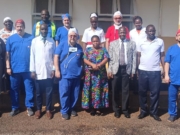
Flanked by the BIP Programmes Manager, Nabikamba Colline, and the Administrator, Ms. Victoria Mukoda, the Director said Busoga Kingdom officials led by the Prime Minister, Katukiro Dr Joseph Muvawala, and the Second Deputy Prime Minister, Hajji Ahmed Noor Osman, who heads partnerships, among others, will grace the ceremony, a presence that reflects the deep bond between the institution and the Kingdom that donated the land on which it stands.

From Sharjah to Igenge Hill: How BIP Was Born.
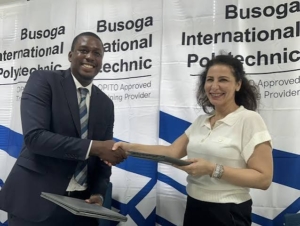
That bond goes back to November 2017, when during President Yoweri Kaguta Museveni’s visit to the United Arab Emirates, President Museveni held a jovial meeting with the Ruler of Sharjah, His Highness Sultan Bin Mohammed Al-Qasimi, where the two leaders discussed cooperation in areas of education, health and vocational training, and His Highness Sultan Bin Mohammed Al-Qasimi generously offered to donate the construction of a vocational institute, while President Museveni, through the Kingdom of Busoga, pledged to provide the land.
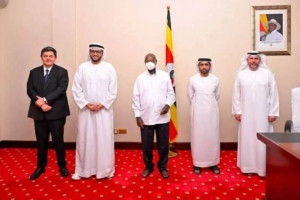
Subsequently, the Ministry of Education and Sports, represented by the Honorable First Lady and Minister of Education and Sports, Mama Janet Kataha Museveni, and the Kingdom of Busoga signed a Memorandum of Understanding with the Sharjah Chamber of Commerce and Industry, UAE, on the relationship between the two countries to extend bridges of cooperation by establishing the Busoga Institute of Technology, to be specialized in vocational and technical training in Uganda, with the aim of addressing the shortage of skilled labour in key industries in the province of Busoga in particular and Uganda in general, thus addressing one of the main reasons for high unemployment and low productivity, and by establishing a vocational training centre in the town of Jinja, the supply of adequate labour force will be addressed in industries with a high potential for growth, namely oil and gas, manufacturing and construction.
That vision is now bearing fruit, because Busoga International Polytechnic has grown into a leading vocational centre specializing in engineering training and education, committed to equipping individuals with the industry skills, qualifications and practical experience necessary to excel in the dynamic field of engineering, with a personalized approach, industry partnerships and a focus on emerging and crucial engineering fields, striving to meet the demands of both aspiring engineering technicians and the industry as a whole.
Mission, Vision And What BIP Teaches.
Ms. Reham Mustafa says the mission of the institution is to provide high-quality engineering training and education that prepares individuals for successful careers in the industry, aiming to bridge the gap between theoretical knowledge and practical skills by offering hands-on experiences, industry partnerships and recognized qualifications, through which it empowers individuals to contribute to the growth and innovation of the engineering sector, while its vision is to be a leading institution in engineering training, recognized for excellence, innovation and industry relevance, striving to create a positive impact on individuals, industries and the community by producing highly skilled engineering professionals capable of meeting the evolving challenges of the field.
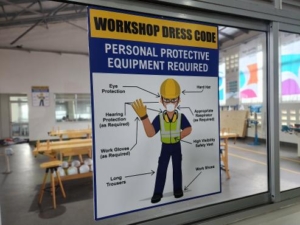
At BIP, students are offered comprehensive and tailored engineering training programmes designed to meet the specific needs of aspiring engineering technicians, with programmes covering a wide range of disciplines, including Mechanical, Electrical, Fluid Mechanics and Construction, enabling individuals to pursue their interests and career aspirations, and the current programmes include Pearson BTEC Level 2 and 3 Qualifications in Engineering, Pearson BTEC Level 2 Qualifications in Construction, and the OPITO Global 1 Training Certificate in Basic Maintenance Practices.
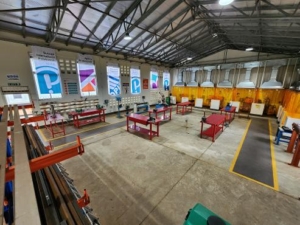
The institution’s industrial workshops provide students with real-life engineering experiences, allowing them to apply their theoretical knowledge in practical settings, and these workshops enhance their skills, problem-solving abilities and adaptability to real-world engineering challenges, while its OPITO recognition, as a recognized OPITO Approved Centre, underscores the relevance and credibility of its qualifications, giving students confidence in their industry applicability and enabling them to pursue their specific areas of interest and career aspirations.
The OPITO Global programmes combine classroom instruction with competence training, leading to a recognized international Oil and Gas qualification and opening doors to further career opportunities locally and abroad, while as a recognized centre by Pearson BTEC, a renowned UK awarding body, BIP provides qualifications that are valued and respected by the industry, and its partnership with Pearson BTEC ensures that its programmes meet rigorous quality standards and align with industry requirements.
BIP believes in a personalized approach to learning, tailoring its programmes to meet the unique needs and aspirations of its students, with extra practical hours, individualized mentorship and a supportive learning environment, ensuring that industry skills are a key factor in the learning experience, while it fosters strong partnerships with leading local and international entities, promoting knowledge and technology transfers, increasing productivity and creating high-value added jobs, collaborations that ensure its training programmes remain relevant and aligned with industry trends and demands.
Why This Training Is Now Strategic For Uganda And The World.
The training offered at BIP is no longer merely important, it is now crucial and strategic, because the whole world is shifting, and Uganda is shifting with it, from an economy that rewards certificates alone to an economy that rewards proven, practical, safety-tested competence.
Globally, the energy industry is in transition, with oil and gas still powering economies while renewable energy, offshore wind, hydrogen and green manufacturing expand rapidly, and employers in all these sectors now demand the same thing, which is technicians who can work safely offshore, maintain complex equipment, read drawings, follow procedures, and solve problems under pressure, and that is exactly what OPITO and BTEC training is designed to produce.
In Uganda, the shift is even sharper, because the country is moving from oil discovery to oil production, from imported labour to local content, and from theoretical education to employer-led TVET under the TVET Act 2025, which means companies operating in Tilenga, Kingfisher, the East African Crude Oil Pipeline and the wider industrial parks will be legally and commercially required to employ Ugandans, yet they will only employ Ugandans who meet international safety and competence standards, and institutions like BIP are therefore not just schools, they are national strategic assets.
The same shift is happening in construction and manufacturing, where Uganda’s growing cities, roads, factories, housing estates and industrial parks need technicians who can build to standard, install to standard, maintain to standard and inspect to standard, rather than workers who learn by trial and error, and the global labour market is also opening up, because certified technicians from Uganda can now compete for jobs in the Gulf, in East Africa and in offshore energy projects, provided their qualifications are internationally recognized, which is why Pearson BTEC and OPITO matter so much.
In short, the world no longer asks what you studied, it asks what you can safely do, and BIP is training young people to answer that question with confidence, with evidence and with hands-on proof.
An Institution That Feels Different From The Gate.
Beyond the qualifications, what strikes a first-time visitor to BIP is the environment itself, because all rooms and facilities are air-conditioned, offering a cool and comfortable learning atmosphere that allows students to concentrate fully on their practical and theoretical work, even on the hottest Jinja afternoon.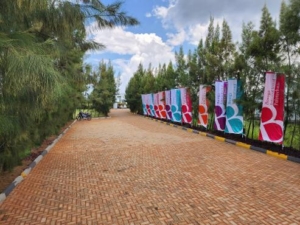
It is almost a miracle to see any piece of litter anywhere on the campus, because the compound is kept spotlessly clean, with no dust, no scattered papers and no neglected corners, while the walls look as if they were painted the very day you are stepping in, giving the whole institution a fresh, bright and welcoming appearance that reflects discipline, order and pride.
From the gate, manned by private security guards who are alert, courteous and professional, to the front desk, where the jolly-looking Victoria Mukoda’s demeanor will make you want to stay even longer, the institution offers a high level of hospitality and professionalism that is rare in many training centres, and as a welcome gesture, coffee and water are offered to quench your thirst, a small act that speaks volumes about the culture of care at BIP.
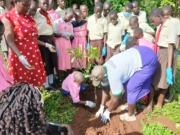
The paved compound, decorated with trees and flowers, completes the picture, creating a calm, green and inspiring environment where learning feels like a pleasure rather than a burden, and where parents, guests and employers who visit for the graduation will immediately understand why students speak so proudly of their institution.
What Saturday Means For The Graduands.
For the 113 graduands, Saturday 28th November will therefore be more than a ceremony, because it will be the celebration of years of discipline, practical training, mentorship and sacrifice, and for the first Level 3 graduands in particular, it will be a historic moment, proving that BIP has matured into an institution that can take a student from foundation level to advanced technician level without leaving Busoga.
For the 21 OPITO graduands, the day will carry an even wider meaning, because they will leave Igenge Hill not only with a certificate but with an international passport to work on offshore installations, in oil and gas, and in renewable energy, at a time when Uganda’s oil sector is opening new opportunities and when global energy companies are searching for trained, safety-conscious technicians.
For Busoga Kingdom, the graduation will be a moment of pride, because the land donated by the Kingdom has now produced engineers, builders and oil and gas technicians who will serve Busoga, Uganda and the world, while for the Ministry of Education and Sports, the ceremony will be a living example of what the TVET Act 2025 intends to achieve, which is employer-led, practical, and internationally competitive vocational education.
A Powerful Warning: Without A Strong Foundation, Even The Best Training Will Fail.
As Jinja prepares to host parents, kingdom officials, ministry officials, employers and well-wishers on Saturday, November 28, 2026, all eyes will be on Igenge Hill, opposite the palace of the Kyabazinga, where a small institution with a big vision will once again show that when you combine clean facilities, disciplined training, international qualifications and genuine hospitality, you do not just graduate students, you graduate the builders of a nation.
Yet the graduation must also carry a powerful warning to Uganda, because the future that BIP represents will only be open to those who build a strong foundation from primary to secondary school, and many young people apply for these life-changing opportunities but always fail, not because they lack talent, not because they lack ambition, and not because they lack hard work, but because of poor English language and poor Mathematics.
Engineering is the language of measurement, calculation, safety and precision, and a technician who cannot read instructions in English, write a clear report in English, understand a safety manual in English, or calculate load, current, pressure, volume and cost in Mathematics cannot be trusted offshore, cannot be trusted on a construction site, and cannot be trusted in a factory, however willing he or she may be.
That is why parents, teachers, school managers and government must treat primary and secondary education not as a formality to be passed, but as the foundation on which every engineering, construction and oil and gas career must stand, because if the foundation is weak, the building will crack, and if English and Mathematics are weak, the dream of becoming a certified engineer, a builder or an OPITO technician will collapse at the interview, at the entrance test, or at the first safety assessment.
BIP has shown what is possible when training is done properly, with discipline, with international standards and with genuine care, and the 113 graduands of Saturday are proof that Busoga’s children can compete with the world, provided they arrive prepared, and the greatest tribute Uganda can pay to this graduation is not just to celebrate the 113 who made it, but to ensure that the thousands who will apply next year arrive with strong English, strong Mathematics, strong discipline and strong foundations, so that no talented child is ever again locked out of the future because the foundation was neglected.
The future now belongs to those who can build it, maintain it and keep it safe, and that future begins, not at Igenge Hill, but in the primary classroom where a child first learns to read, to count, to reason and to dream.