









Somewhere in Jinja City this week, files are being opened that were never meant to be opened, phones are ringing that no one wants to answer, names are being whispered in a corridor, signatures are being studied under a lamp, and titles are being checked, then checked again, as if looking at them longer will change what they say.
That is what a seven-day ultimatum does. It does not just order paperwork. It unsettles people.
The Letter That Landed Like A Surprise Drone Attack.
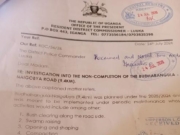
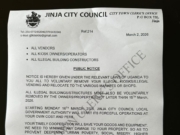
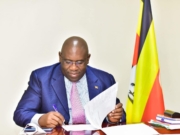
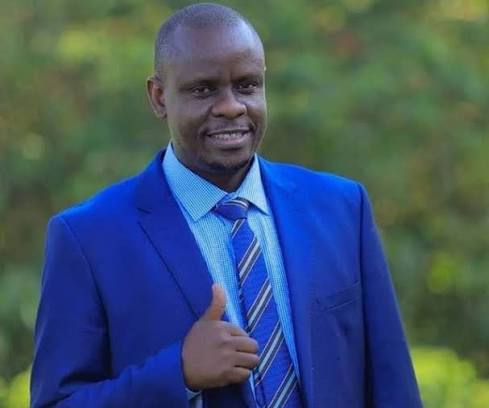
On November 20, 2026, a letter from the Minister of Local Government landed in Jinja City like a surprise drone attack from an unexpected direction, with no warning, no public rally, and no press conference. It was just a two-page letter addressed to one man, Jinja City Town Clerk Godfrey Kisekka, but meant for many more.
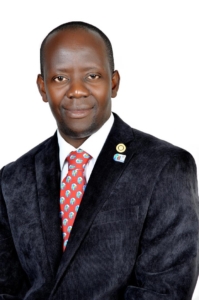
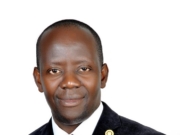
Minister Balaam Barugahara Ateenyi gave Kisekka seven days to resolve a disputed land title connected to the Lions Club property, to name everyone involved in how that title was processed, and to begin the legal process to have it cancelled if it was irregularly issued.
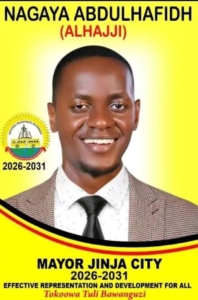
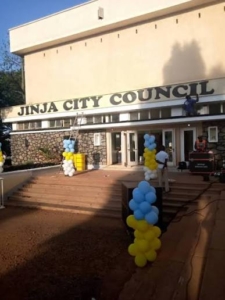
It was not a suggestion but an ultimatum, copied to the Mayor of Jinja City, Abdulhafidh Nagaya, the city’s Members of Parliament, all city councilors, the Speaker of Jinja City Council, Juma ssozi, the Chairperson of the Jinja City Land Board, Jamil Mukama Ssanyu, the Resident City Commissioner, Salim Komakech, the City Internal Security Officer, James Kaawa, the Inspectorate of Government, the State House Anti-Corruption Unit, the Director of Criminal Investigations, and the Commissioner for Land Registration.
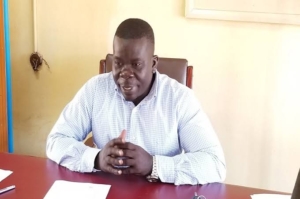
The tone of the letter, as supplied to this desk, is blunt and unmistakable because the Minister directs Kisekka to establish how the title was issued, identify everyone involved, and pursue cancellation through the Commissioner for Land Registration if irregularity is proved.
He then widens the net far beyond Lions Club, ordering a comprehensive inventory of all Jinja City Council properties, covering titles, certificates, leases, survey plans, locations, acreage, occupancy, encumbrances and disputes. And he closes the accountability loop with a warning that, where credible evidence of wrongdoing is established, those involved, including councillors, should be arrested and prosecuted in accordance with the law.
In his own words, the Minister put it this way:
“You are hereby directed to establish the circumstances under which the said title was issued, identify all officers and individuals involved in the process, and initiate corrective action to secure the cancellation of the title through the Commissioner for Land Registration and other competent authorities, in accordance with the law, if it is established to have been irregularly issued.”
That single sentence captures the whole assignment: investigate, name names, and correct the record through lawful channels.
The seven days, the Minister made clear, would run from the date the Town Clerk received the letter. Before the Minister visits Jinja City, he expects the dispute to have been addressed and the land documentation to be ready.
The Minister did not stop at Lions Club. By ordering a full inventory, he was, in effect, asking Jinja to prove, on paper, what it actually owns.
That is a profound demand for a city whose land administration has for years been associated with missing files, double allocations, competing titles, and more than 100 civil suits.
If the inventory is done honestly, it could become the first true asset register Jinja City has ever had. If it is done casually, it will become another document that raises more questions than it answers.
The letter also raises the question of political involvement, because the Minister expressed concern about the possible involvement of public officials and councilors in the irregular processing of the disputed title.
He directed the Town Clerk to identify all officers and other individuals, including councilors, who participated in, facilitated or authorized the transaction.
No individual has yet been declared guilty. That determination must follow investigation and due process.
What Could Come Next: The Thunder After The Lightning.
And here is where the speculation begins, because those who know Balaam Barugahara’s modus operandi know that a sudden strike is rarely the end. It is usually the warning shot before the heavier blow.
The first letter finds the target. The second action finishes the job. And that second action, in Balaam’s world, is often swift, devastating, and administrative: interdiction.
It is now openly speculated in Jinja that this letter may only be the first blow, and that the next blow could be far more devastating. Those who have watched the Minister operate in other districts say he has, before, ordered the interdiction of the whole workforce of a district — not one officer, not two, not a committee, but everyone — leaving an office hollowed out, paralyzed, and waiting for investigations to decide who returns and who never returns.
If he applies that same modus operandi in Jinja, a city has many interests and acquaintances, it would not be surprising if everyone at Jinja Town Hall is interdicted — from the Town Clerk’s office down through the technical departments — leaving only the casual workers like cleaners and tea girls and tea boys to open doors, sweep floors, and boil water in an empty building while investigators take over the files.
That is speculation, but it is speculation grounded in pattern, not fantasy, and it explains the fear now gripping City Hall.
Right now, Kisekka could be doing what any accounting officer does when a Minister writes in that tone: locking down files, calling in the physical planner, the surveyor, the land officer, the legal officer, and the records officer, and asking one brutal question — where is the complete file for Plot 18-22 Grant Road?
He could also be tracing who handled the disputed Lions Club title, who minuted what, who signed what, and who stayed silent when silence was convenient, while preparing a report that will either clear his administration or implicate people he works with every day.
According to jokes among commentators familiar with Town Hall dynamics, Kisekka whose methods have always involved locking himself in the office will this time put double locks just to focus on the specific task.
At the same time, Jinja City Land Board headed by the sober-headed Counsel Jamil Ssanyu Mukama, supported by another celebrated lawyer, Alex Luganda, and other men and women of integrity, are doing their best to avoid such heart-piercing letters.
They have been working quietly, carefully, and with due diligence to the dot, to ensure that the Land Board’s house is in order before the Minister’s visit turns into a public reckoning.
Mayor Abdulhafidh Nagaya could be weighing what this means for the political leadership of the city, knowing that he is copied on a letter that speaks of arrests and prosecution.
The city’s MPs — Dr. Timothy Batuwa Lusala for Jinja South West, Paul Mwiru for Jinja South East, Sarah Lwansasula as Jinja City Woman MP, and Hussein Muyonjo, alias Swengere, for Jinja North — could be preparing to ask, in Parliament and in Jinja, whether seven days will produce truth or theatre.
The Resident City Commissioner (RCC) Salim Komakech and City Internal Security Officer James Kaawa could be watching the security and political temperature, aware that land in Jinja has never been just about land, but has always been about power, money, and who controls the future of the city.
And somewhere, those who may have benefited from the confusion — in Council, in the registry, in business, or behind a charity badge — could be doing the most telling thing of all: trying to get ahead of the paper trail before the paper trail gets to them.
To understand why a single plot on Grant Road could provoke such a strike, one must leave 2026 for a moment and go back to where the story began.
Background: The Land That Was Never Meant To Be Sold-A Promise Made In 1969
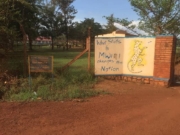
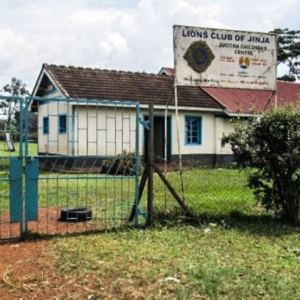
In 1969, Jinja was still a municipality, still a town built on trust, on community, and on the belief that some things belong to children forever. In that year, the Lions Club of Jinja did not sell the land. It did not abandon it. It offered it to the town, on one condition.
On August 6, 1969, the Club wrote to the Jinja Town Clerk, through Visana, Raichura and Singh, asking Council to give a written undertaking. The words, quoted from that letter, deserve to be read slowly, because they are the foundation of everything that followed:
“We are instructed to request you to give us an undertaking that the said plots shall be preserved exclusively and perpetually for Lions Children’s Park and that the council shall not, now or in future, lease them to any other person.”
It was a gift to children, not to politicians, not to investors, not to any individual, with a condition of permanence and language that was absolute: exclusively, perpetually, and never to any other person.
Five months later, on January 16, 1970, that gift was made public in a ceremony witnessed by several stakeholders, including the Deputy Mayor, when the Lions Club formally handed over the Lions Children’s Park to the Jinja Municipal Council.
Six days later, on January 22, 1970, Club President Indrakant S. Patel wrote to the Town Clerk confirming the handing-over. That letter, referenced “Lions Club Children’s Park Handing-Over Ceremony on 16 January 1970,” was copied to B.S. Gill, R.L. Kisaja and Dr. G.N. Khatri, and bore the Council’s official stamp as proof of receipt.
In it, Patel thanked the Council for arranging the Deputy Mayor’s presence (whose name was not mentioned), while also raising a complaint about Council enforcement officers who had allegedly used abusive language towards Club members, a small detail that shows the relationship between Lions and Council was already complicated, even in a moment of generosity.
Those two letters: the 1969 undertaking and the 1970 handing-over, have defined the dispute ever since. For Council, the handing-over proves Lions surrendered the land.
For Lions, the 1969 letter proves the surrender was conditional, and that the condition has never been lifted. For anyone who reads both, the question is unavoidable: if the land was given for children forever, how can it now be given to anyone else?
For decades, that question was left unanswered, and the land remained in quiet use, until the paper trail changed everything.
Forward To 2022: The Title & The Deal That Ignited The Storm.
On January 4, 2022, under Instrument No. JJA 00027308, a lease registration title for the 0.8400-hectare plot was issued placing Jinja City Council as owner, with use as open space.
The original title is recorded as Leasehold Registration Volume 267 Folio 1. That should have settled ownership. Instead, it set the stage for a new fight over who could dispose of the land, and how.
On May 25, 2022, Jinja City Council endorsed a recommendation by the city executive then led by former Mayor Alton Peter Kasolo Okocha to lease the same land to a private investor, Grand Royale Impex Ltd, to develop it in line with its title covenant as a Children’s Park.
When the decision leaked, Lions protested. The Club had applied for a title through the Jinja District Land Board, only for the application to be rejected on jurisdictional grounds — the land is municipal property, so the District Land Board had no mandate over it.
Faced with the threat of eviction, Lions petitioned the Inspector General of Government to investigate and block the lease, a petition that kept the file in legal uncertainty for years.
The then Mayor of Southern Division, Nasser Ashraf, who was said to be associated with the deal, also distanced himself, saying some officials at City Hall were fronting the investor. Those claims have not been proven in court, but they have continued to shape public suspicion.
This is why the background matters because this is not a dispute that began with a title in 2022, but one that began with a promise in 1969, with a public ceremony in 1970, and with children. Any resolution that ignores that history will not hold, in law, in politics, or in the conscience of Jinja.
The Eye Hospital That Everyone Supports.
Out of that storm came a new proposal that almost everyone in Jinja supports: allow Lions Club to use the land to build a specialised Eye Hospital for Jinja City and the wider Busoga sub-region. The need is not in doubt, because thousands in Busoga live with preventable blindness, and a Lions Eye Hospital would be a major public good that honors the original spirit of the land: service to the vulnerable.
That is why Jinja Resident City Commissioner Salim Komakech, speaking on November 1, 2026, as reported by The Exposure Uganda (TEU), said the project enjoyed city-wide goodwill but insisted that public land could not be allocated outside the law, when he declared: “Consensus among the leaders and stakeholders in the city is that Lions Club should get it and use it to build an eye hospital in Jinja City. No one disputes that. It is a noble cause. What we are saying is that giving out public land takes process.”
He added: “This is not bureaucracy for its own sake. This is the shield that protects the investor. If we give land through a letter today, tomorrow someone will go to court and the court will nullify it for illegality.” That distinction — between supporting a noble project and following lawful process — is now at the centre of the Minister’s intervention, because a hospital built on contested land could spend years in court, while a hospital built on lawfully secured land can serve generations.
It is also why the Minister’s letter cannot be read as a simple attack on Lions, or as a simple defence of Council, but as an attempt to force the city to produce the documents that should have settled the matter long ago.
Are Some People Hiding Behind The Name Lions Club?
Beneath the applause for charity, however, there is a harder and more uncomfortable question that commentators in Jinja are now asking, namely whether some people are using, or have been using, the name Lions Club purportedly to show they care about charity, yet in actual sense they are also dealers wearing a suit marked “Lions Club,” using a noble badge as a shield for private interest, for access to prime land, for influence in Council corridors, and for protection from scrutiny.
That is the question that will not go away. According to commentators, it is precisely what Minister Balaam Barugahara Ateenyi should dig deeper into, as opposed to playing in the gallery where sentiments and lopsided voices are louder than reason and intelligence, where applause drowns out documents, and where whoever shouts “charity” loudest is assumed to be innocent.
The Lion’s Club name is powerful because it carries 56 years of goodwill, eye camps, wheelchairs, food for the hungry, service to children, and that goodwill, commentators warn, can be weaponized, because once a person wraps himself in the Lions badge, every question becomes an attack on charity, every audit becomes an attack on the blind, and every demand for a title becomes an act of cruelty.
But charity does not exempt anyone from the law, and a suit marked Lions Club does not make a land deal lawful. If the Minister is serious, say the commentators, he must separate the genuine Lions, the men and women who have served without pay, who have given glasses, who have buried the dead, who have fed the hungry, from the dealers who may have learned to speak the language of service while pursuing the logic of business.
He must ask who signed what, who benefited from which transaction, who introduced Grand Royale Impex Ltd, who sat in which meeting, who received what facilitation, and who is now using public sympathy to block a lawful audit.
Until those questions are answered with documents and not with emotions, Jinja will keep mistaking noise for truth, and sentiment for justice. In short, Balaam must not be seduced by the gallery, and he must not be frightened by it either. He must follow the paper trail, follow the money, follow the minutes, and follow the titles, and let reason and intelligence, not lopsided voices, decide who is a servant and who is a dealer in a Lions suit.
Who Was Copied, And Why The List Matters?
The political leadership of Jinja will not be able to watch this from a distance, because the Minister copied his letter to the city’s MPs, and they will now be expected to follow up, both in Parliament and in Jinja.
Those MPs are Dr. Timothy Batuwa Lusala for Jinja South West, Paul Mwiru for Jinja South East, Sarah Lwansasula as Jinja City Woman MP, and Hussein Muyonjo, alias Swengere, for Jinja North. All four won their seats in the January 2026 general elections on the National Unity Platform ticket, giving NUP a clean sweep of Jinja City’s parliamentary representation, and their inclusion means voters will now watch whether parliamentary oversight translates into concrete answers on the ground.
The Mayor of Jinja City, Abdulhafidh Nagaya of the NRM, whose election was also upheld by the High Court in Jinja on November 5, 2026, is likewise a recipient. The political leadership of the city, across party lines, is therefore squarely within the accountability process, and cannot claim it did not know.
A City Haunted By Land Controversies.
None of this happened in a vacuum, because Jinja’s land troubles have a history, and the Lions dispute sits within that history. One of the most prominent cases involved Spire Road Primary School, where allegations of illegal subdivision and allocation of school land triggered investigations by the State House Anti-Corruption Unit, the Internal Security Organization and police in July 2022, when several city officials were arrested over allegations that portions of school land had been subdivided and allocated to private developers, while Lakeside Primary School was also drawn into investigations over encroachment on its playground and titling of land occupied by school infrastructure.
Those were allegations under investigation, not proof of guilt against every person named, but they exposed how vulnerable public institutional land becomes when safeguards fail.
The Spire Road matter had already drawn ministerial attention in February 2019, when the then Ministers of State for Lands and Primary Education intervened over titles reportedly issued on school land, raising a wider question that has never been fully answered: how could land reserved for public services become the subject of competing private claims?
The Missing Land Board And The Double-Allocation Problem
A major institutional weakness followed Jinja’s elevation to city status, because by January 2024, Jinja City had gone approximately three years without a functional City Land Board, a situation the city’s leadership linked to revenue losses and administrative complications.
In that vacuum, uncertainty grew over who could lawfully allocate land and under what authority, and when a new Board finally came into place, it inherited a difficult situation, with complaints involving double allocations, questionable titles and fraudulent transactions, and reports indicating the city was grappling with more than 100 civil suits connected to land disputes.
The question that followed was troubling: how many public properties had been exposed to competing claims, and how many innocent buyers had acquired land without knowing the underlying transaction was disputed? For a growing urban centre where land is a major economic asset, such uncertainty undermines investment, discourages development, and exposes households to costly litigation.
What The Directive Means for Town Clerk Godfrey Kisekka.
For Kisekka, the test is both personal and institutional, because as Town Clerk, he is the chief administrative and accounting officer of the city, responsible for coordinating technical departments, implementing Council decisions, supervising administrative processes, and safeguarding public resources.
It should be noted that while in Hoima a couple of weeks ago, the same Balaam verbally and publicly ordered the interdiction of the former Town Clerk who is actually Kisekka, and this makes life even harder for Kisekka now.
The Minister’s letter places those responsibilities under direct scrutiny, even as it does not establish that Kisekka personally participated in, authorized or benefited from the disputed transaction.
What it does establish is that he must now reconstruct, in seven days, the file Jinja has failed to produce in four years: the 1969 undertaking, the 1970 handing-over letter, the Council minutes of May 25, 2022, the Grand Royale Impex Ltd application, the Land Board minutes, the survey plans, and the correspondence with the Commissioner for Land Registration. At the same time, he must deliver something even larger, the full inventory of Jinja City’s properties, which must capture titles and certificates, leases, survey plans and locations, acreage, occupants, encumbrances, litigation and disputes.
Done properly, it could reveal encroached properties, missing documents, improperly transferred assets, and occupancy that differs from official records. Done poorly, it will deepen the very mistrust it is meant to cure.
What It Means For Jinja City Residents.
For ordinary residents, the Minister’s intervention is not an abstract administrative exercise, because land in Jinja is the foundation for homes, businesses, schools, hospitals, roads and future urban development, and when public land becomes vulnerable to fraudulent allocations, the consequences extend far beyond those directly involved.
Residents face the risk of losing investments, because the history of double allocations and disputed titles means people who buy land in good faith may find themselves in expensive legal battles, paying for land, obtaining documents, beginning construction, only to discover a competing title or an irregular original allocation. Such disputes can tie up household savings and business capital for years.
The Minister’s directive, if implemented comprehensively, could help identify questionable transactions and establish a more reliable record of ownership. Residents should not, however, assume every existing title is invalid because an audit has been announced, since each disputed property must be examined on its own documentary and legal merits.
There is also the protection of public institutions, because the disputes involving Spire Road and Lakeside Primary Schools show why land reserved for schools, hospitals, roads and playgrounds is not ordinary disposable property.
Its loss deprives future generations of essential services and forces government to spend public money acquiring alternative land or defending litigation. There are financial implications for taxpayers as well, because legal fees, court awards, compensation claims, investigations and recovery of improperly allocated properties can consume resources that would otherwise finance roads, drainage, sanitation, education and healthcare. With more than 100 civil suits previously reported against the city over land, the financial burden is not theoretical, but a real threat to the city’s development agenda.
Can An Irregular Title Simply Be Cancelled?
Under the Registration of Titles Act, registration confers important legal protections on registered proprietors. A registered title is not, however, beyond legal challenge in circumstances recognised by law, including fraud or other legally established grounds. Cancellation or rectification must follow the applicable legal framework, because the city cannot resolve the dispute through political pronouncements or unilateral administrative action that disregards the rights of registered proprietors.
The evidence must establish whether the land was lawfully available for allocation, whether necessary approvals were obtained, and whether any fraudulent representations were made.
Where competing claims exist, statutory and judicial mechanisms must be followed. That distinction is critical: the Minister’s directive is not itself a court judgment declaring the Lions Club title fraudulent, but an instruction to investigate the circumstances of issuance and pursue cancellation if irregularity is established. That distinction protects the credibility of the investigation, and protects the rights of anyone who may hold a competing claim in good faith.
Who Was Supposed To Protect Jinja’s Land?
Beyond the Lions case, the Minister’s intervention raises a wider question about who was supposed to protect Jinja’s land in the first place. Jinja City’s land administration involves several institutions, the City Land Board, the Ministry of Lands and its zonal office, the Commissioner for Land Registration, and the city technical administration, each with different but interconnected responsibilities.
The City Land Board has statutory responsibilities for administration and allocation of land within its jurisdiction, while the land registry is responsible for registration and maintenance of records, and the city administration must safeguard municipal assets and ensure transactions comply with the law. The mayor and councilors have political and oversight responsibilities, which must not be confused with the technical and statutory functions of land administration.
The decision to copy the Inspectorate of Government, the State House Anti-Corruption Unit and the Criminal Investigations Directorate is one of the strongest signals in the Minister’s letter, because it communicates that public land is not the personal property of politicians, civil servants, councilors or influential individuals. Any official entrusted with public assets is expected to exercise that responsibility in accordance with the law. It also places pressure on investigative institutions to establish whether the disputed transaction involved isolated administrative mistakes, systemic weaknesses, or deliberate wrongdoing.
If evidence of corruption is established, the public will expect more than transfers, suspensions or administrative explanations. There will be demands for accountability through legal processes. At the same time, investigations must be impartial, because political influence, personal relationships and institutional rivalries should not determine who is investigated or prosecuted.
What Happens Next Will Decide Everything.
What happens next will determine whether the seven-day ultimatum becomes a turning point or another round of official statements. The city administration must first secure all files relating to the Lions Club property: original allocation documents, minutes, survey records, lease documentation and correspondence with the Ministry of Lands.
The City Land Board and relevant technical officers must then establish the legal history and current status of the land, from the 1969 undertaking, to the 1970 handing-over, to the 2022 title, to the 2022 Grand Royale decision, to the disputed title now under investigation.
The Commissioner for Land Registration must be engaged to examine the circumstances surrounding the disputed title and determine the appropriate legal procedure.
The city must undertake the comprehensive property inventory ordered by the Minister, covering all public assets rather than concentrating only on Lions Club.
Any evidence of criminal conduct must be referred to the appropriate investigative authorities, while the city should publish an appropriately detailed account of its findings, subject to legitimate confidentiality and legal restrictions, so residents can understand what happened and what corrective action has been taken.
For Kisekka, the assignment is to account. For investigative institutions, it is to establish the truth. For Jinja’s residents, it is to finally see an end to uncertainty over the ownership and protection of their city’s land.
The proposed Lions Club eye hospital should not become another casualty of Jinja’s land controversies, and nor should public interest in the project become an excuse for bypassing the law, because the city needs both: a lawful resolution of the ownership dispute and a transparent process that protects the integrity of public land.