

























There are graduations that pass quietly, and there are graduations that mark a turning point in the life of a nation. The 17th Graduation Ceremony of the Hotel and Tourism Training College (HTTC) in Jinja, held on Friday, November 20, 2026, belonged firmly to the second kind.
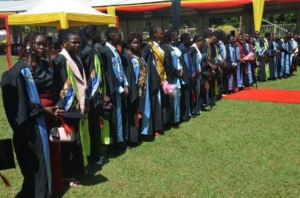
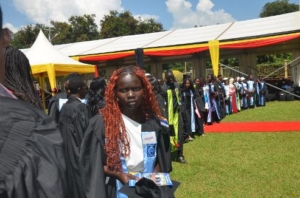
As 782 young Ugandans walked across the stage in their gowns, to ululation, tears, and thunderous applause, it was impossible not to feel that something larger than a ceremony was happening.
This was not merely the largest graduation in the history of the College. It was a declaration — that Uganda is no longer content to admire its beauty from a distance, but is now deliberately training the men and women who will turn that beauty into livelihoods, dignity, and national pride.
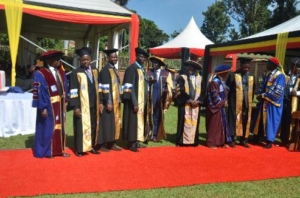
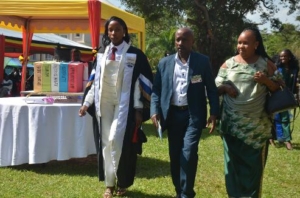
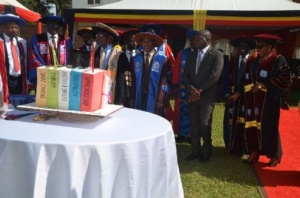
Presiding over the ceremony was the Honourable Minister of Tourism, Wildlife and Antiquities, Col. (Rtd) Tom Butime, flanked by the Permanent Secretary, the Executive Director of the Uganda Wildlife Authority, representatives of Government Ministries, Departments and Agencies, development partners, industry stakeholders, members of the diplomatic community, parents, guardians, staff, students and the media.
Held under the theme, “Advancing Service Excellence and Innovation for Africa’s Hospitality and Tourism Future,” the ceremony brought together all the forces that shape Uganda’s tourism destiny.
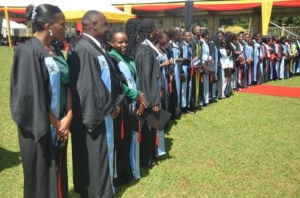
Yet at its heart were the graduands themselves — 782 stories of sacrifice, resilience, and transformation, drawn from two-year diplomas, certificates, and six-to-twelve-month apprenticeship programmes in hotel and tourism management, tour guiding, front office operations, food production, housekeeping, and pastry and bakery.
That this historic moment unfolded in Jinja was no accident of geography. It was a homecoming in the truest sense. Jinja is no ordinary city. It is the city where the River Nile begins its majestic journey to the Mediterranean, where the Source of the Nile draws pilgrims, explorers, and tourists from every corner of the earth.
It is the city that cradles the northern shores of Lake Victoria, Africa’s largest lake, and carries in its landscape the living memory of Uganda’s industrial ambition — from the Owen Falls Dam, now Nalubaale, to Kiira Dam, and the thunder of the once-mighty Ripon Falls and Bujagali Falls that once powered a nation’s dreams.
Jinja City is at once a tourism city and a commercial city, a rare place where nature and industry meet in the same breath. With dozens of hotels and guesthouses of every class, from boutique lodges overlooking the Nile to welcoming budget stays for backpackers, with more than 100 factories humming along its industrial corridor, and with international schools and modern hospitals serving a cosmopolitan population, Jinja is not just a location for a tourism college. It is a living classroom. To train for hospitality in Jinja is to learn at the source — literally and figuratively.
Hon Tom Butime Takes The Stage.
Minister Butime rose to deliver his full address, and he did not waste a moment.
He began by celebrating what the day represented: 782 graduands, up from 366 last year, an increase of more than 113 percent, graduating under a theme that demands excellence and innovation for Africa’s future. For the Minister, that surge was not just a college achievement. It was a national achievement, proof that Uganda is finally investing at the scale its tourism potential demands.
Tourism Is Uganda’s Lifeline.
Tourism, he reminded the nation in full, now contributes about 6.6 percent of Uganda’s Gross Domestic Product and supports more than 803,000 jobs. It is the livelihood of the guide on the Nile, the chef in a Kampala hotel, the housekeeper in a lakeside lodge, the craft seller at a cultural village, and the conservationist guarding the mountain gorilla. It is the thread that connects Uganda’s breathtaking natural endowment — its lakes, its falls, its forests, its wildlife, its culture — to the daily dignity of hundreds of thousands of families, and it is for that reason that the quality of those who serve in it matters so profoundly.
Every graduand, the Minister said, must therefore understand the weight of the trust placed in them. They are not just job seekers. They are brand ambassadors for Uganda. They are custodians of heritage. They are the first smile a visitor meets, the first meal a visitor tastes, the first story a visitor hears about this country. The manner in which they serve will shape what the world believes about Uganda.
When Partnership Works, No Talent Is Wasted.
The Minister then turned, in full, to the question of sponsorship and inclusion. Of the 782 graduands, 553 benefited from sponsorship arrangements involving the ILO, the Ministry, Inter-Seed and the Enabel-supported WeWork project, while 229 were conventional students. That, he said, is what partnership looks like when it works — Government, development partners, and the private sector joining hands to ensure that no talented young Ugandan is locked out by poverty. He thanked the partners for standing with HTTC and urged them to continue, because the demand for skilled hospitality workers is only growing.
More Than Buildings: Factories Of Dignity.
On infrastructure, the Minister spoke with equal clarity and commitment. He pointed to the ongoing construction of the 600-capacity girls’ hostel as a concrete sign of Government’s commitment to safety, access, and dignity for female students, alongside continued investment in training equipment, ICT, and practical facilities. These are not buildings for show, he argued, but factories of dignity, where a young person from a vulnerable background walk in with nothing but hope and walks out with a skill the world will pay for.
A Hard Truth: Excellence Needs Both Sons And Daughters.
Yet even in celebration, the Minister did not shy away from the hard truths that must shape the next chapter, and he addressed them head-on. Of the 782 graduands, 561 were female, representing about 72 percent, while 221 were male, representing about 28 percent.
While he celebrated the remarkable rise of women who now dominate and dignify Uganda’s service economy, he sounded a clear alarm over low male enrolment and called for deliberate sensitization to draw more boys and young men into tourism and hospitality. Service excellence, he insisted, cannot be built by half a nation, and Uganda needs all its sons and daughters to take their place in this national enterprise.
Excellence Has Names.
That call for balance was matched by a celebration of brilliance that brought the entire campus to its feet, for excellence at HTTC this year was not abstract. It had names, faces, and stories that will be remembered long after the gowns are folded away.
At the summit of the class stood Ms Ssembatya Anna Maria, crowned Overall Best Graduand with a Cumulative Grade Point Average of 4.86 — a figure that speaks not of luck, but of long nights, discipline, and an unrelenting refusal to settle for average. In a class of 782, to rise above all is no small feat, and when her name was called, it was as if every parent in the crowd saw their own child in her triumph.
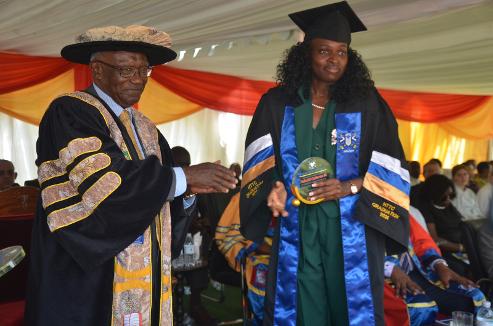
Beside her, in a moment that drew thunderous applause, stood Catherine Nabutiti, named Best Graduand in the Diploma Category with a CGPA of 4.84, receiving her award directly from the hands of Minister Butime himself. The image of that moment — the Minister handing the award to a beaming Nabutiti — has since become one of the defining photographs of the day, a symbol of what happens when talent meets opportunity and hard work meets recognition.
In their achievement, the College saw proof of its deepest conviction: that excellence is not imported, but homegrown, nurtured in Jinja by Ugandan lecturers, Ugandan discipline, and Ugandan dreams.
What, then, awaits these 782 young professionals? If the College’s graduate tracer surveys are anything to go by, a future far brighter than the national average. Seventy-four percent of HTTC alumni secure employment within three to six months of completing their studies, a figure that speaks volumes about the power of skills-first training in a country where youth unemployment continues to trouble thousands of university graduates.
HTTC does not train its students merely to memorise, but to do — to cook, to serve, to guide, to manage, to create — and it is that practical grounding that makes them employable the moment they leave the campus.
Do Not Just Seek Jobs, Create Them.
Minister Butime closed his address with fatherly firmness: Be professional. Be disciplined. Be entrepreneurial. Do not merely seek jobs, but create them. Open the bakery, start the tour company, build the guesthouse, employ your neighbour, and let Uganda’s tourism story be written by Ugandans themselves.
That was the Minister’s message in full — and it set the tone for everything that followed.
Principal Kawere Welcomes The Nation.
From the moment the Principal rose to welcome the gathering, the day had unfolded as one seamless story — a story of transformation, partnership, excellence, and promise.
In his welcome address, Principal Richard Kawere did not speak in generalities. He spoke in numbers that carried the weight of a revolution.
“The College’s enrolment has increased from 500 students to over 1,300 students,” he told the gathering. “This represents a vote of confidence in the quality, relevance and practical orientation of our training programmes.”
That growth, he explained, had translated directly into the day’s historic harvest. “This year, we are graduating 782 students compared to 366 last year, representing an increase of more than 113 per cent.”
And this, the Principal insisted, was no accident. “This achievement is intentional and is as a result of deliberate investment in infrastructure, academic programmes, human resource capacity, partnerships and improved institutional visibility. It also reflects the growing recognition of hospitality and tourism as important avenues for employment, entrepreneurship and national development.”
For HTTC, Uganda’s only government-owned institution for tourism and hospitality training, that intentional growth is the story of an institution that has refused to remain small. Once known as the Uganda Hotel and Tourism Training Institute, it now stands as the lone state college charged with building the workforce for an entire sector — and it is building it at scale.
A College With Its Eyes On The World.
If enrolment told the story of quantity, the Principal’s next revelation told the story of quality — and ambition. As HTTC pursues its vision of becoming a premier centre of excellence in hospitality and tourism training in Africa, international recognition and professional standards have become central to its strategy.
The College has strengthened its engagement with the American Hotel and Lodging Educational Institute (AHLEI), through which 29 staff have attained professional certifications — a milestone that is directly raising the professional capacity of instructors and aligning training with internationally recognised hospitality standards.
Beyond AHLEI, the College is deepening its engagement with the Council on Hotel, Restaurant and Institutional Education (CHRIE), which opens doors to academic networking, knowledge exchange, research, and exposure to international developments in hospitality and tourism education. It is also strengthening its place in the EUHOFA International Association of Hotel Schools, through which it seeks to strengthen institutional linkages, exchange best practices, and expose students and staff to global standards.
And then there was a partnership that brought a human face to the international agenda. Through the Japan International Cooperation Agency (JICA), Ms Yuka Nakamula has spent the last three months at the College training students in Asian cuisines — a living example of how HTTC is preparing its graduates not just for Uganda, but for the world.
These engagements complement other partnerships with institutions such as BOMA International Hospitality College, Kenya Utalii College, ITH Salzburg, and the Association of European Hotel and Tourism Schools. The intention, he said, is unmistakable: to ensure that an HTTC graduate is not only competent within the Ugandan labour market but is also equipped with the skills and professional standards required to compete in the international hospitality and tourism industry.
That ambition is already bearing fruit on the world stage. Joel Makongo won a Bronze Medal at the WorldSkills Competition in Belgium in 2023. Brenda Alanyo and Terran Lugobe won the Best Designer category and 2nd Runners-up in the Culinary category at the Ladha Za Afrika Culinary Competition in Nairobi.
Terran went on to represent Uganda at the WorldSkills Competition in China, where he won a Medal of Excellence in the Culinary category. “These achievements demonstrate the talent within our institution and the commitment of our instructors to nurturing world-class professionals,” Kawere said.
Behind that talent stands a deep investment in the teachers themselves. Six members of staff are currently pursuing PhD programmes, while 13 are undertaking Master’s programmes — an investment intended to strengthen teaching capacity, research, innovation, and institutional leadership.
Building The Future, Brick By Brick.
From international standards, the Principal turned to the ground on which that excellence is built — infrastructure. With gratitude to the Government of Uganda and the World Bank for supporting infrastructure development, improvement of training facilities, and strengthening of capacity to deliver quality technical and vocational training, Kawere announced that the College’s training environment has significantly improved.
At the centre of that transformation is the Crested Crane Hotel — the College’s application hotel — whose development is progressing towards operationalisation. Its official opening, Kawere said, will mark another important milestone in the history of the institution.
The hotel will provide a practical training environment for students while also serving the hospitality needs of the wider community, enabling learners to gain hands-on experience in hotel operations, restaurant management, food and beverage service, accommodation management, and other hospitality functions.
Looking ahead, the College is also looking forward to the construction of a modern health club and swimming pool, currently at the design phase. Construction is expected to commence soon.
And for parents and guardians, there was reassuring news on the girls’ hostel. The funding required to complete this important facility has been availed, Kawere announced, and preparatory and implementation activities are already underway.
“The hostel will improve accommodation capacity, enhance the safety and welfare of female students and create a more conducive environment for learning,” he said.
Partnerships That Open Doors.
No training institution, Kawere reminded the gathering, can achieve excellence in isolation. Its partnerships with the International Labour Organisation (ILO), the Ministry of Tourism, Wildlife and Antiquities, and Inter-Seed Sector Development under the Enabel-supported WeWork project have expanded access to practical skills training for young people, particularly those from vulnerable communities.
Of the 782 graduands, 553 benefited from sponsorship arrangements under various programmes, while 229 are conventional students enrolled under the College’s regular training programmes. That balance, Kawere said, demonstrates the importance of partnerships in expanding access to skills development and improving employability.
At the regional level, the College continues to strengthen its relationships with other hospitality training institutions, most recently through collaboration with Kenya Utalii College. Beyond the main campus, that partnership spirit has reached even further.
Through Enabel and ISSD Uganda, HTTC has extended its hand to 500 vulnerable Primary Seven school dropouts, young people whom society had almost written off, with the first cohort of 250 already having completed training. In their quiet triumph lies perhaps the most moving testimony of the day — that a nation which invests in second chances invests in its own future.
The Principal’s Final Charge.
To the 782 graduands, Principal Kawere said: today is a moment of great pride and accomplishment. You have now acquired the knowledge and practical competencies needed to make a meaningful contribution to the hospitality and tourism industry. Become exemplary ambassadors of this institution. Uphold professionalism, innovativeness, integrity, teamwork, service excellence and sustainability. Remember that hospitality is about people. The manner in which you welcome a guest, respond to a concern, prepare a meal or deliver a service can make a lasting impression.
Do not be afraid to explore entrepreneurship, he urged. The hospitality and tourism industry presents numerous opportunities for starting businesses, creating employment and contributing to community development. Pursue further studies and professional certifications. Your graduation should not mark the end of your learning journey. Continue acquiring new knowledge, developing your skills and adapting to emerging opportunities.
A Promise For Uganda.
As the caps were tossed and the dancing began, as lecturers were embraced and parents wept openly, it became clear that Jinja had witnessed more than a graduation. It had witnessed a promise — that Uganda is no longer waiting for the future of tourism, but training it, nurturing it, and sending it out, 782 strong, to serve the nation and the continent. And if this year is any indication, the best is yet to come.