


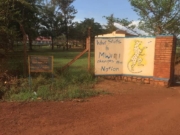



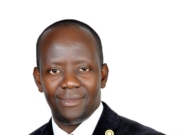

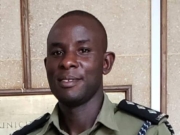


The nation is in mourning after police confirmed that 20 pupils and one adult Tadeo Ssekadde, the director of King David Junior School Ndejje in Makindye Division, Kampala, died in a tragic bus accident at around 8 pm in Kapchorwa District.
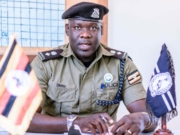
According to SP Michael Kananura, Spokesperson for the Directorate of Traffic and Road Safety, the crash occurred in Chekwatit Village, Kimawa Parish, Kawowo Sub County. The pupils were returning from an educational tour to Sipi Falls aboard an Isuzu bus registration UA 108BQ when the driver reportedly lost control. The vehicle veered off the road, struck a large stone and overturned.
For context, Sipi Falls is one of Uganda’s most iconic natural attractions. Located on the foothills of Mount Elgon in Kapchorwa district, about 280 km from Kampala, Sipi Falls are actually a series of three dramatic water falls with the main cascade dropping over 100 meters.
The area is known for cool weather, lush coffee farms, hiking trails and panoramic views of the Karamoja plains. It draws both local and international tourists year-round and has become a popular destination for school study tours, adventure trips and cultural visits.
However, the same rugged terrain that makes Sipi Falls beautiful also makes access challenging. The roads leading to the falls are steep, narrow and often slippery during the rainy season. Traffic safety experts and the Uganda Police Directorate of Traffic have flagged the Kapchorwa-Sipi route as high-risk, especially for large vehicles like school buses.
In a statement posted on his official X handle, SP Kananura confirmed the deaths and said investigations are ongoing.
“You Cannot Build Vision 2040 On Broken Hearts”
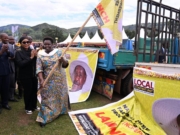
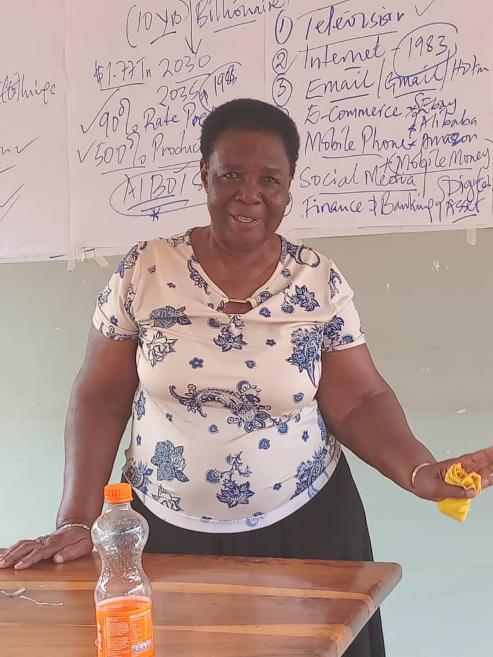
Hon. Florence Mutyabule, the Senior Presidential Advisor on Poverty Alleviation (SPA) in Busoga has called for urgent reforms, saying the tragedy is a direct attack on Uganda’s future.
In her condolence statement, the SPA said the Kapchorwa tragedy is more than a road accident but a direct threat to Uganda’s long-term development.
“Vision 2040 is not built with cement and steel alone. It is built with children. Healthy, educated, and alive children. Every child we lose on a school trip is a doctor we will never have, a teacher we will never train, an engineer we will never produce. You cannot build Vision 2040 on broken hearts and empty classrooms,” she said.
Mrs. Mutyabule extended heartfelt condolences to the bereaved families of King David Junior School and the entire Ndejje community, and expressed solidarity with learners still receiving treatment.
“To the parents, I feel your pain, to the children fighting to get well, we are praying with you. This nation is holding you up,” she said.
When Parental Trust Begins To Crack.
Speaking with the weight of a mother and veteran educator, Mrs. Mutyabule warned that recurring accidents are eroding confidence in the education system and in the fight against poverty.
“We have spent years encouraging parents to send children to school, and to support activities like study tours because they expose learners to the practical world. But now parents are asking with tears: ‘Did my money and my permission send my child to their death?’ That guilt and fear will make parents withdraw. And when parents withdraw, enrollment falls, dreams die, and poverty wins,” she said.
She noted that beyond trauma, such tragedies plunge families into deeper economic vulnerability. With school fees already a heavy burden, the added cost of medical bills and funerals reverses the gains made in household poverty alleviation.
A Stern Word To School Leadership.
Mrs. Mutyabule issued a direct caution to school directors and headteachers, calling for urgent reforms.
“Do not turn learner transport into a business calculation. I am hearing of schools chasing the cheapest buses, overloading children, and ignoring vehicle conditions just to cut costs and protect margins. That is not administration, it is gambling with lives.
A child’s life is not an item in a budget, any savings made at the expense of safety is blood money. As educators, our first product is not grades. Our first product is a child who returns home safely,” she said.
The Safety Standard Being Called For.
She urged schools to institutionalize risk-based travel protocols anchored on diligence and transparency.
Buses must have valid inspection certificates from the Ministry of Works and Transport with documented pre-trip checks. Drivers should be licensed, experienced in defensive driving, and well-rested. Schools must contract reputable transport companies with proper insurance, and cost should never override safety.
Every trip should have Board and parental approval through clear consent forms and risk assessments. Routes must be planned to avoid night travel and dangerous roads. Each bus should carry first-aid kits, emergency contacts, and a passenger manifest filed with the school.
On board, there must be adequate teacher supervision with adults trained in first aid and evacuation. Learners should be seated, and overloading, speeding, and driver phone use must attract zero tolerance. Parents deserve real-time updates, and any incident must be reported immediately to police, the Ministry of Education, and families.
“Let us turn our grief into policy and our mourning into action, the fight against poverty is not just about income, it is about protecting human capital, our children are that capital. We owe it to them, and to the parents who sacrifice daily, to ensure they travel safely and return safely. When we protect one child, we protect the future of a nation”, she urged.
Government Suspends All School Trips.
In a swift response, the Ministry of Education and Sports has suspended all school trips and educational excursions with immediate effect following a series of fatal road accidents involving learners.
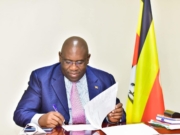
The Acting Minister of Education and Sports Dr. John Chrysostom Muyingo announced the suspension on Friday morning, describing it as a precautionary measure to protect children as the government reviews existing guidelines.
“As an immediate precautionary measure, all school trips and educational excursions are hereby suspended with immediate effect until further notice. This temporary suspension will remain in force as the Ministry conducts a comprehensive review of the existing school trip and excursion guidelines and introduces strengthened safety measures to safeguard the lives and well-being of learners,” Dr. Muyingo said.
He expressed condolences to families affected by recent school trip accidents and wished the injured learners a quick recovery.
Mrs. Mutyabule welcomed the Ministry’s action, saying it gives stakeholders time to develop a more organized and risk-free protocol.
She noted that cases of road accidents involving school buses have been increasing during the second term, causing deep concern among parents who are often issued strong circulars to sponsor the trips.
She has called on the Ministry of Education and Sports, Ministry of Works and Transport, Uganda Police, and school proprietors to work together to enforce the new standards before trips resume.
The Wider Toll: Family, Community And Nation.
The effects of road accidents extend far beyond the crash site. At family level, the impact is immediate and long-lasting.
According to the World Health Organization (2022), households that lose a member to road traffic injuries are at a significantly higher risk of prolonged grief, depression and financial instability, with bereaved families often spending more on medical care, funerals and legal processes than their annual income.
The Uganda Bureau of Statistics (2023) further notes that the death or disability of a breadwinner pushes many households back into poverty within months, reversing years of investment in education and livelihoods.
At community level, the loss is both human and social. A study by Makerere University School of Public Health (2021) on school transport tragedies found that a single fatal crash can lead to a 15 to 20 percent drop in enrollment the following year, as parents withdraw children out of fear.
The Ministry of Health (2024) also reports that road traffic injuries are the third leading cause of hospital admissions in Uganda, placing immense pressure on district health facilities and diverting resources from other essential services.
Beyond health, communities lose productive time as families attend burials, court proceedings, and caregiving, weakening local economic activity and social cohesion.
Nationally, the cost is measured in lives, money, and lost development. The World Bank (2022) estimates that road crashes cost low- and middle-income countries between 3 and 5 percent of Gross Domestic Product annually.
For Uganda, this translates to trillions of shillings lost to treatment, lost productivity, vehicle damage, and administration each year.
Data from the Uganda Police Force Annual Crime Report (2024) shows that road traffic crashes continue to claim lives at alarming rate. In 2024, police recorded 25,270 road accidents nationwide. Of these, 5,144 people were killed and 20,664 others were injured. This represents an increase from 4,806 deaths recorded in 2023, meaning an average of 14 people (a full taxi or kamunye) everyday on Uganda’s roads last year.
The IGP Abbas Byakagaba-authored report noted that while overall crime dropped by 4.1% compared to 2023, fatalities from road crashes moved in the opposite direction. Traffic offences also declined by 19.2% from 426,432 in 2024 yet the number of deaths still rose. This suggests that the problem is less about volume of violations and more about the severity of crashes when they occur.
Young People & School Users at Risk.
According to the same report, the majority of road traffic victims fall within the productive age group of 15 to 35 years the same demographic that makes up most learners, teachers and parents.
The World Health Organization (WHO)2022 describes road traffic injuries as a leading cause of death among children and young adults globally, and Uganda’s figures reflect the same pattern.
In 2023 police recorded 22,384 crashes and 4,179 deaths, with the majority of victims aged 15 to 35 years — the very age group central to Uganda’s workforce and to the realization of Vision 2040.
The WHO Global Status Report on Road Safety (2019) ranks Uganda among countries with the highest road traffic fatality rates in Africa at 27.4 deaths per 100,000 population.
Experts agree that the solution must be systemic. The WHO (2022) advocates for a “Safe System Approach” that addresses safer vehicles, safer roads, safer road users, and improved post-crash response.
The Uganda National Roads Authority (2021), now defunct, emphasized engineering interventions such as signage, speed calming, and road audits near schools.
In the words of Hon. Florence Mutyabule, Senior Presidential Advisor on Poverty Alleviation in Busoga: “The fight against poverty is not just about income. It is about protecting human capital. Our children are that capital. When we protect one child, we protect the future of a nation”, everyone must be concerned.
About Hon Florence Mutyabule.
The weight behind Mrs. Mutyabule’s message comes from a lifetime spent in service to children, parents, and communities.
She served for years as Headteacher of Buckley High School, an institution once renowned for competing and excelling at the national level in academics, sports, and debate.
She later led as President of the Mothers’ Union for more than a decade, walking with thousands of women on matters of family, faith, and child welfare. Hon Mutyabule was also the Namutumba District Woman MP for five years 2011-2016.
Now a proud grandmother of dozens of grandchildren, she has also brought up and supported many other children and families over the years. It is this deep, hands-on experience that makes her call and counsel come from the very center of her heart.
She is also the wife to one of Busoga’s veteran celebrated lawyers now serving as Speaker Busoga Lukiiko Owek. George William Wanume Mutyabule of Namisambya Trading Centre in Kamuli district.
It is not surprising, therefore, that President Museveni, a keen observer and researcher of people, identified her for national service in poverty alleviation.
The Exposure Uganda (TEU) Editorial.
Uganda has a painful pattern: we are always asleep until the sirens start. Like a fire brigade that only rolls out after the house is already burning, the country has some of the best laws, policies, and experts on paper, yet action only comes after bodies are counted.
We have the Traffic and Road Safety Act, the National Road Safety Policy, and annual police reports that warn about speeding, poor vehicle inspection, and risky school travel. But those documents gather dust until a crash like Sipi happens.
The King David tragedy that claimed 21 lives near Sipi Falls is the latest proof. Experts had flagged the Kapchorwa–Sipi road as dangerous.
The Uganda Police Annual Crime Report 2024 showed road deaths had already risen to 5,144. Road safety advocates had called for stricter supervision of school buses. Still, nothing moved until 21 pupils and a teacher were killed and the Ministry of Education and Sports was forced to suspend school trips.
As the old medical adage goes, “prevention is better than cure” — a phrase popularized by Dutch philosopher Desiderius Erasmus in the 1500s and later adopted widely in public health.
In road safety, that means enforcing vehicle inspections before buses leave, training drivers before crashes happen, and supervising learners before excitement turns fatal.
Until Uganda chooses prevention over mourning, our laws will remain ink on paper — and more children will keep paying the price. May the souls of the 20 pupils and their director who perished in Kapchorwa rest in eternal peace.
We Expose, You Decide.