




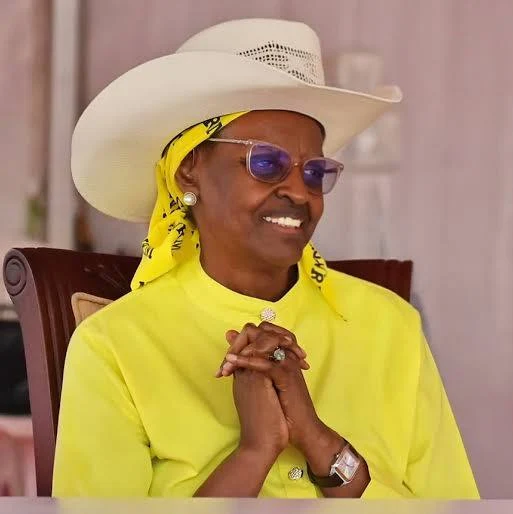
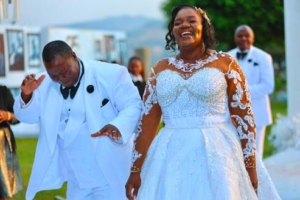
Uganda’s First Lady and Minister of Education and Sports Hon. Janet K. Museveni has told church leaders in the country that it is entirely possible for pastors to participate in governance without compromising their faith, pointing to Bishop Dr. Professor Daniel Muwanga and Dr. Victo Biwoye Muwanga as living proof that spiritual authority and public responsibility can co-exist.
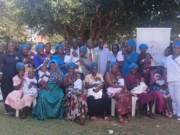
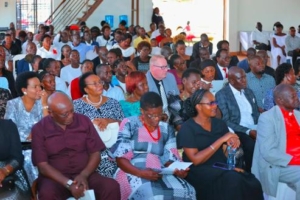
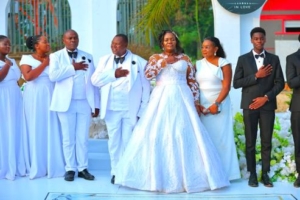
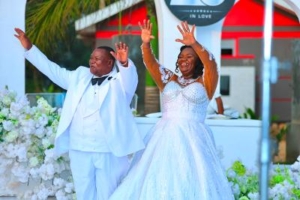
This was during the Silver Jubilee celebration, which marked 25 years of marriage and ministry for the couple held on Tuesday 21st July 2026 at Faith Fellowship Ministries International in Kimaka, Southern Division in Jinja City.
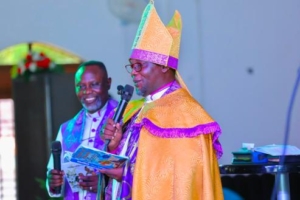
The ceremony was led by Archbishop-Elect Prof. Mugume Bagambaki Richard, widely recognized as the most translated Ugandan author whose works have been published in more than 160 languages across the world.
Ms. Irene Kawuma, Senior Personal Secretary to the Minister of Education and Sports and also a senior pastor, represented the First Lady as a matter of protocol and handed over Shs 5 million on her behalf, while Mr. Baker Waiswa, Executive Assistant to the First Lady, read the official message before giving his own remarks.
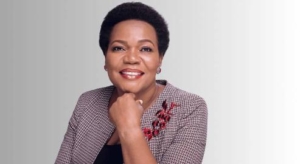
In her message, Hon. Janet Museveni, fondly referred to as Mama Janet congratulated the Muwangas for their sustained contribution to the body of Christ and to the nation, noting that in an era of shifting morals their consistency in faith and values has been remarkable.
“As Government, we appreciate your leadership, and acknowledge that in a world of shifting morals, you have stood firm and true to your faith and values. You are indeed proof that a Pastor can lead from the spiritual front and still engage in issues of political governance, without losing your soul!” the message read.
She commended the couple for building a ministry that has deliberately focused on marriage, the training of leaders, and the provision of wise counsel to the many lives they have touched both locally and internationally, and she rooted their work in Scripture by quoting Matthew 18:18-20 to emphasize Christ’s mandate to disciple nations.
“By enabling us to witness a life that is truly salt and light to the world, you have demonstrated the literal meaning of Christ’s call to the Church,” she stated, before also congratulating them on attaining Masters’ degrees and PhDs and praying that the Lord would renew their strength like the eagle’s so that they may continue to run and not grow weary.
Biblical and Theological Context: Can Clergy Engage in Governance Without Compromise?
The First Lady’s assertion speaks directly to a debate that has persisted in Uganda for years, where many people often say that politics is dirty and where the record of men and women of God who entered politics but were later conformed to the world remains troubling, with cases of vote buying, theft, bribery and corruption, and with a number of supposedly very devout believers ending up in jail after abandoning their Christian calling.
Scripture, however, presents governance not as something inherently corrupt but as a God-ordained sphere of stewardship, as seen in Romans 13:1-4 where authorities are described as God’s servants for the good of the people, and in Proverbs 29:2 which declares that “when the righteous are in authority, the people rejoice.”
The Bible gives multiple examples of men who held both spiritual influence and public office without losing their calling, including Joseph who administered Egypt with wisdom, Daniel who served with integrity in Babylon’s government, and Nehemiah who combined governance with a priestly burden for his people, all of which demonstrates that public service can be an extension of ministry when it is anchored in conviction.
At the same time, Romans 12:2 warns believers “not to be conformed to this world, but to be transformed by the renewal of your mind,” a text that speaks directly to the danger Ugandan clergy face when they enter political spaces driven by patronage and compromise, and which calls for the kind of integrity described in Micah 6:8 and James 1:27, to act justly, love mercy, walk humbly with God, and keep oneself unpolluted by the world.
In Matthew 5:13-16, Jesus did not call His disciples to withdraw from society but to be salt that preserves and light that exposes, which theologically means that clergy and believers in governance are meant to be a restraining and reforming presence, modeling accountability, justice and servant leadership rather than mimicking corrupt systems.

Baker Waiswa: Academic Excellence in Ministry is Key to Resisting False Doctrine.
Speaking in a personal capacity after reading the First Lady’s message, Mr. Baker Waiswa argued that the Muwangas’ academic credentials have helped to dismantle an old misconception in Pentecostal circles that highly educated people cannot serve effectively as ministers of the Gospel.
“Gone are the days when most or all Pentecostal churches leadership mistakenly thought highly educated people could not serve as ministers in God’s kingdom. The wedding and ministry thanksgiving by Archbishop Dr Professor Daniel Muwanga and his wife Dr. Victo who is a PhD candidate has demystified that mistaken belief,” he said.
He noted that in Busoga alone, the majority of serving ministers now hold at least a Master’s degree with many aspiring to become PhD holders and professors, a development he said enables them to administer with knowledge and to counter useless ideologies and false doctrine, before handing over Shs 400,000 as a contribution from his family.
Note on First Lady’s Team.
Ms. Irene Kawuma, who represented the First Lady and delivered the Shs 5 million contribution, is herself a senior pastor, and she is part of a wider team around the First Lady that is largely described as born again and prayerful, with several members serving in pastoral roles, including one of the First Lady’s daughters, Patience, who is set to be consecrated and installed as bishop.
Context: Church and State Through History.
The question of whether pastors can engage in governance without losing their soul is not new, and Christian thought over the centuries has consistently wrestled with how spiritual authority relates to political authority.
From Augustine’s City of God to Luther’s doctrine of the “Two Kingdoms,” theologians have argued that while the Church and the State have distinct mandates, both derive their legitimacy from God and are therefore accountable to Him.
St Augustine warned that the “City of Man” is often driven by the love of power, while the “City of God” is driven by the love of God, and the role of believers is to live in both without confusing their ultimate allegiance.
The Bible itself presents governance as part of God’s ordained order rather than as something inherently corrupt. In Romans 13:1-4, Paul describes governing authorities as “God’s servants” for the good of the people, and in Proverbs 29:2 Scripture declares that “when the righteous are in authority, the people rejoice.”
The Old Testament provides models of men like Joseph in Egypt, Daniel in Babylon, and Nehemiah in Jerusalem who held significant public office while maintaining spiritual conviction, suggesting that public service can be an extension of ministry when it is anchored in integrity.
At the same time, Scripture is clear about the danger of conformity. Romans 12:2 commands believers “not to be conformed to this world, but to be transformed by the renewal of your mind,” a warning that speaks directly to the Ugandan context where politics is often described as dirty and where several men and women of God who entered public life have later been implicated in vote buying, bribery, theft, and corruption.
The prophetic tradition in the Bible, from Nathan confronting David to John the Baptist confronting Herod, shows that the Church’s role is not to run the government but to speak truth to it, to uphold justice, and to remind leaders that they too are under God’s judgment.
In Matthew 5:13-16, Jesus did not call His followers to withdraw from society but to be “salt and light” — salt that preserves what is good and light that exposes what is wrong.
Applied to governance, this means that clergy and believers in public office are meant to be a restraining and reforming presence, modeling accountability, servant leadership, and moral courage rather than mimicking the very systems they were called to transform.
It is in this light that the First Lady’s commendation of the Muwangas reflects a broader theological conviction: that faith and governance can co-exist, but only when those in leadership refuse to trade conviction for convenience.
The Common Rebuke: “Stay in the Pulpit”
A frequent rebuke, often voiced by politicians and members of the public, is that men and women of God should avoid politics altogether and confine themselves to spiritual matters within the four walls of the church.
The argument is that once clergy enter governance or comment on public affairs, they risk being “soiled” by the same corruption, compromise, and patronage that have tainted many political actors, and that the pulpit loses its moral authority when it becomes partisan.
There is some historical basis for this caution because Uganda has seen cases where pastors, bishops, and other believers who entered politics were later accused of vote buying, bribery, theft, and abandoning their Christian calling, with some even ending up in jail.
These examples have reinforced the perception that politics is a dirty game and that the Church should keep its distance if it wants to remain credible as a moral voice in society.
However, Scripture and church history present a more nuanced picture. Jesus Himself said in Matthew 22:21 to “render to Caesar what is Caesar’s, and to God what is God’s,” which affirms that both spheres exist but neither operates outside God’s lordship.
The prophets in the Old Testament did not limit themselves to temple rituals; they confronted kings on justice, idolatry, and oppression. Likewise, figures like Joseph, Daniel, and Nehemiah served in government while maintaining their faith, demonstrating that presence in public office does not automatically equal compromise.
The concern, then, is not whether believers should be in governance, but how they engage. Romans 12:2 warns against being “conformed to this world,” and James 1:27 calls for religion that is “unpolluted” by the values around it. When pastors and Christians in politics function as “salt and light,” as Jesus described in Matthew 5:13-16, their role is to preserve what is good, expose what is wrong, and model servant leadership rather than imitate corrupt systems.

In that sense, the rebuke to “stay in the pulpit” misunderstands the calling of the Church. The pulpit forms conscience, but that conscience must then be lived out in the market, in schools, in hospitals, and in parliament. Silence in the face of injustice is not neutrality; it is abdication. The challenge for Uganda is therefore not to keep men of God out of politics, but to raise men and women of God who can enter politics without losing their soul.
Background. Bishop Dr. Prof. Daniel Muwanga and Dr. Victo have led Faith Fellowship Ministries International for more than two decades with a focus on marriage, discipleship and leadership formation, and their Silver Jubilee drew Ministers, Members of Parliament, religious leaders and district officials to Kimaka, signaling the growing intersection between faith institutions and national development priorities.
Profile: Archbishop Prof. Mugume Bagambaki Richard, Who Led the Service.
The service was led by Archbishop Professor Mugume Bagambaki Richard, who in 2023 was appointed Pro-Chancellor III of African Union University – AUU International, and who is considered the most widely translated Ugandan author, with his works published in more than 160 languages across the world.
Archbishop Bagambaki, who was consecrated Bishop by Ixthus Church Council London England on 17 September 2010 and ordained Pastor by Universal Life Church USA on 10 February 2004, has written more than 100,000 pages on a wide variety of spiritual and practical topics, guided and inspired by the Holy Spirit, and his central emphasis in all his writings is to exalt Christ Jesus and to point believers to the Scriptures as the basis of faith.
In the area of education, he was elevated to Full Professor in 2019 and holds a PhD in Theology and Bibliology from Ghana Pentecostal University, a PhD in Metaphysics and Divinity from San Diego State University, a Master’s Degree in WICCA from Atlanta Georgia, a Bachelor’s Degree in Applied Religious Education and Divinity from San Diego State University, a Bachelor’s Degree in School of Ministries from the United Kingdom, a Diploma in School of Ministries from the United Kingdom, a Diploma in Practical English from the United Kingdom, London, and a Certificate in Leadership of Training Trainers from Leadership Training International USA, among many other certificates across different fields.
He is the founding Director and President of Upper City Covenant Churches Uganda, Africa and the global movement, and also the founder of Upper City Covenant Seminary and Theological Bible College – UCCSAT University, which operates vocational and technical institutes and trains church leaders from certificate level up to doctorate degrees across 42 faculties in both secular and religious disciplines.
Through UCCSAT, he ordains and consecrates ministers, issues international ministerial licenses, and trains Sunday School teachers and trainers of trainees.
Beyond academia, his ministry extends to Christian entrepreneurship through micro-finance schemes, savings and credit cooperative societies, farming and animal rearing, as well as programs for orphans, widows and the elderly at risk, work which has transformed communities at both national and international levels.
Archbishop Bagambaki who will be consecrated and installed as Archbishop on 14 December,2026 is married to one wife and currently serves as the President and Chancellor of UCCSAT University, Senator President of Upper City Covenant Churches, and Presiding Bishop in the House of Bishops Council at Upper City Covenant Churches.