















A group of Busoga University stakeholders has petitioned the 12th Parliament led by Speaker Rt Hon Jacob Marksons Oboth Oboth, demanding urgent action to operationalize Busoga University as a public institution and to investigate alleged financial irregularities by the transition Taskforce.
The petition was received in the Parliamentary Records Management System (PRMS) on 16 July 2026. It names the Acting Minister of Education and Sports, Dr. John Chrysostom Muyingo, and the Permanent Secretary Ministry of Education and Sports as the key duty bearers.
The petition is signed by Baisi Godfrey Ndaada, Bamuhamye Edward, Waiswa Samuel Richard, Isanga John Walter, Kapambe Stephen, Mwegombi Job, Bogere Christopher, Balaba David, Lugaira Nathan, Prof David Lameck Kibikyo, Mutesi Sarah, Mande Aron Dickson, Sarah Naluwairo and Nakaaima Ruth.
Background: The Rise and Troubles of Busoga University.
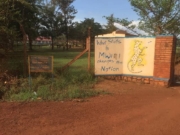
Busoga University was established in 1999 by the Church of Uganda as a private, faith-based institution to serve the Busoga sub-region and beyond. It grew to become one of the leading private universities in Eastern Uganda, with its main campus at the CMS in Iganga Municipality along the Trans-Africa Highway linking Uganda to Kenya and South Sudan.
In 2016, the National Council for Higher Education published a notice of intention to revoke the university’s operational license over governance and academic concerns.
Busoga University sued the Attorney General and NCHE in Constitutional Petition No. 7 of 2016. On 31st January 2017, Justice Solomy Balungi Bossa issued an interim order restraining NCHE from revoking the license, allowing the university to continue operating and recruiting students.
To resolve the impasse, Government signed a Memorandum of Agreement (MoA) on 2nd February 2022 between three parties: the Government of Uganda represented by the Ministry of Education and Sports, the Registered Trustees of the Church of Uganda, and Busoga University Limited.
The MoA was signed by Ms. Ketty Lamaro, then Permanent Secretary Ministry of Education and Sports, and witnessed by Prof Mary Jolly Nakanda Okwakol in her capacity as Executive Director of NCHE.
For Busoga University Limited, key directors who appended their signatures included the then Speaker of Parliament Rt Hon Rebecca Alitwala Kadaga, Canon(lay) Edward Gaamuwa, Mr. Joshua Kitakule and Prof. David Lameck Kibikyo.
Other signatories included the Most Rev Dr Stephen Samuel Kaziimba, Archbishop Church of Uganda, Rt Rev Nathan Ahimbisibwe, Rt Rev Paul Samson Moses Naimanhye, and Rt Rev Patrick Wakula. The parties also agreed to withdraw the constitutional petition.
Under the MoA, Government agreed to take over the assets and the ascertained and agreed liabilities of former Busoga University. Among the assets verified and agreed upon for takeover is the name or brand “Busoga University.” Item 3.1 of the MoA makes clear that the name is part of the assets to be assumed by Government, subject to verification and confirmation by the Auditor General.
In August 2024, Archbishop Kaziimba wrote to the Minister of Education and Sports confirming that land and properties had been transferred to the Government of Uganda in the names of Uganda Land Commission with the Ministry of Education and Sports as user department. Lectures continued until the CMS campus was handed over to the UPDF Engineering Brigade for rehabilitation works.
What the Petitioners Want.
The stakeholders are asking Parliament to direct Dr. Muyingo to maintain the name “Busoga University.” They also want the Minister to prepare and submit the Statutory Instrument establishing Busoga University as a public university for Parliamentary approval.
The petition noted a target of before the end of July 2026, a deadline that has now passed without action.
The third prayer is for the Permanent Secretary to immediately pay all pending sundry creditors that were audited and verified by the Auditor General, noting that government released the money in the last financial year.
The petitioners note that a similar petition was submitted to the former Speaker of the 11th Parliament, Rt Hon Annet Anita Among, which they allege was pushed to the drawer. They claim this happened at the peak of her political influence when she appeared to have outclassed her perceived political nemesis, Rt Hon Rebecca Alitwala Kadaga, who is one of the brains behind Busoga University.
Citing former British Conservative Enoch Powell’s observation that all political careers end in failure, the petitioners say Anita Among is “politically bedridden having fallen from grace to grass.” They argue this reflects a tragic view of human nature where the same grit that drives politicians to the top prevents them from leaving power except by compulsion, often in humiliating circumstances.
What is a Task Force and what is its Mandate?
A Task Force is a temporary, ad hoc committee appointed by government to handle a specific assignment within a defined period. It is not a permanent structure. In the public sector, task forces coordinate transitions, verify assets, oversee handovers, or prepare groundwork before a substantive legal entity is established.
The Busoga University Task Force is led by Prof. John Tabuti and was constituted to oversee the transition process following the 2022 MoA. Its mandate is to liaise with the Ministry, Church of Uganda, Auditor General, Uganda Land Commission and other stakeholders to ensure a smooth transfer of assets and liabilities, and to prepare recommendations for the establishment of the university as a public institution.
Under normal public service practice, task force members do not receive salaries. They are entitled to allowances and per diem to cover sitting, transport, and out-of-pocket expenses.
Salaries imply a permanent employment relationship, with statutory deductions such as PAYE and NSSF, pension obligations, and benefits. That is reserved for established public offices like Vice Chancellor, Deputy Vice Chancellors, University Secretary, and Bursar, which only exist after a Statutory Instrument has created the institution.
The implications of paying salaries to task force members are significant. First, it creates a parallel administrative structure without legal basis. Second, it exposes public funds to irregular expenditure and audit queries. Third, it blurs accountability, because task force members may begin to act as if they are already substantive office holders.
The petitioners allege this is exactly what is happening at Busoga University. They claim the Task Force is behaving as if the university is already fully operational, contributing to confusion and overreach.
Why a Statutory Instrument is Critical
A Statutory Instrument is a law made by a Minister under Section 25 of the Universities and Other Tertiary Institutions Act, 2001 as amended. With Cabinet approval, the Minister drafts the SI, signs it, publishes it in the Uganda Gazette, and lays it before Parliament.
Without the SI, Busoga University has no legal identity as a public university. The SI would establish the University Council, unlock direct budgetary allocation, and enable payment of verified creditors. It would also protect students, because degrees issued by a university established by SI are recognized under the Universities Act.
This was to address concerns raised by the Guild Council that NCHE had threatened to invalidate degrees of over 2,000 students.
The Guild Council, in a past letter to Prof Okwakol signed by Lubale Gershom, Kaligida Emmanuel and Kigenyi Samuel, dismissed the threat as “a waste of time,” insisting the university is operational. This contradicts statements attributed to Prof Okwakol in the Daily Monitor newpaper where she was quoted as saying the university was operating illegally.
The students further accused Prof. Okwakol of failing to provide proper technical guidance during her tenure as a founder and council member, and alleged she is being influenced by forces seeking to frustrate the President’s objectives for Busoga.
New allegations: Name-Change plot and Mafubira land issue.
The stakeholders allege that Prof. Mary Jossy Nakanda Okwakol is using the Taskforce to push for a change of the university’s name in order to evade audit queries related to funds sent from the centre whose accountability remains obscure.
They further allege that money meant to pay sundry creditors audited and verified by the Auditor General was diverted by members of the Taskforce for the illegal acquisition of 7 acres of land at Mafubira in Jinja City. They claim the land was not audited or verified by the Auditor General and was acquired outside the mandate of the Taskforce.
Of the 7 acres, only 3 acres were allegedly registered in the names of Busoga University. The remaining 4 acres, they claim, were shared among people and some unnamed officers.
The group also alleges that members of the Taskforce were erroneously issued appointment letters with monthly salaries attached, instead of allowances and per diem. They argue this bypass standard practice and creates avoidable tax liabilities.
Current Status.
With the 2022 MoA, the parties agreed to withdraw the constitutional case. However, the letter of 9th August 2024 to Hon. Janet K. Museveni had not appeared on the Order Paper of the 11th Parliament, even though copies were made to President Yoweri Museveni and Speaker Rt Hon Anette Anita Among.
The archbishop also expressed frustration, saying some people with ulterior motives are deliberately failing Busoga University despite the agreement.
Parliament is yet to schedule debate on the petition. Stakeholders say until the Statutory Instrument is in place and the alleged diversion of funds and land is investigated, issues of governance, funding, accountability and student certification will remain unresolved.
The Exposure Uganda Editorial.
Why Busoga University Must Not Be Killed by Bureaucratic Sabotage: The Multiplier Effect of Mega Developments on Communities Like CMS, Iganga.
Universities are not just buildings with lecture rooms. They are economic engines, talent factories, and community transformers.
When a mega development like Busoga University sits at CMS in Iganga Municipality, along the Trans-Africa Highway that links Uganda to Kenya and stretches to South Sudan, its impact ripples far beyond the campus fence. Landlords build hostels.
Boda-boda riders get daily fares. Food vendors, photocopy shops, internet cafes, and transport operators thrive. Local government collects more revenue. Bright children from Busoga see a university in their backyard and dare to dream.
That is the multiplier effect. One institution creates thousands of direct and indirect jobs, raises property values, improves skills, and positions a region to compete in a knowledge economy. It attracts government infrastructure. It makes Iganga a destination, not just a transit town.
Yet this is exactly what some entrusted with public trust appear determined to frustrate.
When experts appointed to serve the public interest instead use their offices and privileges to delay, confuse, and derail, they are not serving the people. They are serving themselves.
A name change plot to evade audit. Diversion of money meant for creditors to acquire land outside mandate. Issuing salaries where only allowances should apply. Acting as if a university is operational while blocking the very Statutory Instrument that would make it legal. These are not administrative errors. They are choices.
Such tricks betray a profoundly cynical view of leadership. They assume that public office exists to extract, not to deliver. They assume that communities like Busoga must wait indefinitely while a few individuals negotiate their personal gain.
This must stop.
President Yoweri Museveni recently commissioned his Cabinet and charged them to “get out of your air-conditioned offices and go to the wanainchi who are thirsty and hungry for improved service delivery under the Kisanja No Sleep slogan.”
That directive was clear: leadership is not about sitting behind big desks waiting for sweet-coated reports with big English. It is about feeling the pulse on the ground.
Some ministers have taken that charge seriously. Hon. Balaam Barugahara is on the ground mobilizing. Hon. Justine Namere, State Minister of Local Government, is side by side with her senior colleague, working directly with communities. Dr. Chris Baryomunsi of Health is out full blast addressing service delivery gaps.
Dr. John Chrysostom Muyingo, the Acting Minister of Education and Sports, should follow suit. Busoga University cannot be operationalized from a desk in Kampala.
The realities at CMS Iganga are urgent: students need certainty, creditors need payment, and the community needs that multiplier effect now. Waiting to read polished briefs while the ground is disappointing is the very bureaucracy that kills public projects.
Government made a commitment in 2022 through the Memorandum of Agreement signed by three parties including BUL directors Rt Hon Kadaga, Canon Gaamuwa, Mr. Kitakule and Prof. Kibikyo. The Church of Uganda fulfilled its part. The Auditor General verified assets. Money was released for creditors. The only missing piece is political will to lay the Statutory Instrument before Parliament.
Delaying Busoga University is not just delaying a school. It is delaying jobs for Iganga youth. It is delaying research that could solve local problems. It is delaying the transformation of the entire Busoga sub-region along a strategic trade corridor.
The 12th Parliament under Rt Hon Jacob Marksons Oboth Oboth now has a duty. Approve the SI. Pay the verified creditors. And send a clear message: public offices are for public good, not private capture.
Busoga has waited long enough. Let the university rise.
We Expose, You Decide.