









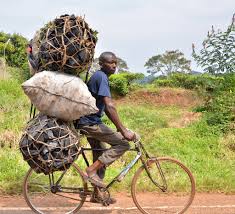
The transition of Ugandan households and institutions from firewood and charcoal to clean cooking technologies is progressing slowly and unevenly, with the country at high risk of missing its national targets, according to the Report of the Auditor General for Financial Year 2025.
The findings are contained in the Value for Money Audit on Implementation of Interventions to Transition Households and Institutions from Biomass Use to Clean Cooking Technology.
The audit covered the period 2022/23 to 2024/25 and assessed interventions coordinated by the Ministry of Energy and Mineral Development through its Clean Cooking Unit and partner projects.
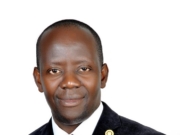
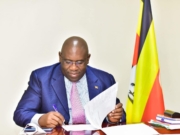
The Exposure Uganda (TEU) has seen a copy of the report signed by Auditor General Edward Akol.
NDP III Target Missed.
According to the report, Uganda committed under the National Development Plan III and Agenda 2030 to increase the share of the population using clean energy for cooking to 40 percent by 2023/24.
The Auditor General found that the share of households primarily using clean cooking energy rose by only 3.9 percent from 16.8 percent in 2019/20 to 20.7 percent in 2023/24, still far below the 40 percent target. Progress was concentrated in Central, Eastern and Western regions while parts of the Northern region including Acholi and West Nile recorded declines.
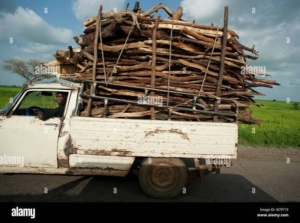
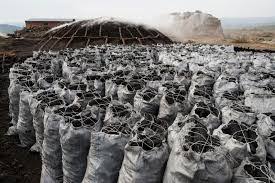
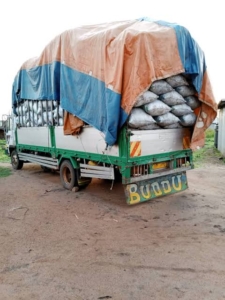
The report states that approximately 75 percent of households and nearly 95 percent of institutions including schools, hospitals and prisons continue to rely on traditional biomass such as firewood, charcoal and crop residues using inefficient three-stone fires and traditional stoves.
WHAT THE AUDIT FOUND
The Auditor General observed that awareness and sensitization campaigns were limited in scope, frequency and geographic coverage and focused on a few technologies. This affected efforts to demystify public misconceptions about modern clean cooking solutions.
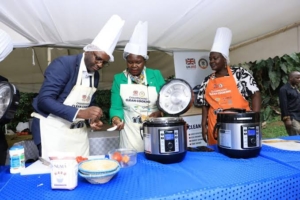
The selection of beneficiaries and installation of technologies was not informed by thorough needs assessments. According to the report, this resulted in mismatches between provided technologies and actual beneficiary needs, contributing to high abandonment rates and underutilization.
The audit also found absence of robust beneficiary verification and data management systems which led to duplication of beneficiaries across different projects, incomplete records and ineffective targeting.
On affordability, the report notes that high upfront costs of up to two million shillings for some technologies even where subsidies are available and absence of flexible payment options such as pay-as-you-go have deterred low-income households.
The electricity cooking tariff aimed at promoting cooking with electricity where households consuming 81 to 150 units incur lower cost is not meeting its intended objective as almost 75 percent of intended beneficiaries are not connected to the grid and even those connected rarely consume 80 units.
The report further cites inadequate refilling infrastructure for LPG cylinders and ethanol outside urban centres. In rural areas refill points are far from beneficiaries and suffer frequent stockouts, making continued use costly and inconvenient and forcing beneficiaries to revert to traditional fuels or use both systems.
The Auditor General also found no systematic follow up on beneficiaries after distribution and absence of comprehensive data collection and monitoring reports, which has compromised the Ministry’s ability to learn from past challenges and make evidence-based decisions.
On financing, Government has not developed effective financing mechanisms to mobilize adequate resources. The report states that while the Energy Transition Plan provides investment estimates it lacks a clear financing strategy and the MEMD Strategic Plan was not updated to align with it. While MEMD projected to mobilize 338.03 billion shillings for promoting clean cooking technologies translating to approximately 110 to 113 billion shillings per year for the three years under review, only 26.085 billion shillings was allocated for clean cooking interventions.
RECOMMENDATIONS
The Auditor General recommended that the Accounting Officer of MEMD should develop and implement a National Clean Cooking Sensitization Strategy, fast track development of an automated beneficiary management system, explore financing mechanisms such as effective subsidies and instalment payment schemes and review the electricity cooking tariff.
He also recommended establishing a clear strategy to expand and regulate clean cooking fuel supply chains in underserved areas, institutionalizing regular beneficiary follow up and monitoring and evaluation, and developing a comprehensive national clean cooking financing strategy that maps barriers and mobilizes resources from public, private and climate finance sources.
The overall conclusion is that interventions including the LPG project, Electricity Access Scale Up Project and Clean Energy Access Project have not achieved intended outputs at scale and are constrained by inadequate sensitization, weak targeting, affordability and accessibility barriers.
UGANDA IN GLOBAL CONTEXT
The report comes at a time when international agencies have also flagged Uganda as one of the countries with the lowest access rates.
According to the 2023 Uganda Energy Transition Plan developed by Government with the International Energy Agency, only about 15 percent of Ugandans had access to clean cooking technologies at the time. The International Energy Agency notes that nearly one billion people in sub-Saharan Africa still lack access to clean cooking with almost half living in five countries including Nigeria, Ethiopia, Democratic Republic of Congo, Tanzania and Uganda.
The 2024 National Population and Housing Census by the Uganda Bureau of Statistics indicated that only 3.8 percent of households used clean fuel and technology for cooking, with 6.5 percent in urban areas and 1.9 percent in rural areas. Uganda Bureau of Statistics data shows more than 94 percent of households still use biomass for cooking.
At a continental level, the International Energy Agency reported that while nearly 1.5 billion people in Asia and Latin America gained access to modern cooking between 2010 and 2022, the number without access in sub-Saharan Africa continued to grow. A Summit on Clean Cooking in Africa held in Paris in May 2024 mobilized 2.2 billion dollars in commitments.
HEALTH AND ENVIRONMENT IMPLICATIONS
The continued reliance on biomass carries severe implications for public health and the environment.
On health, the World Health Organization links household air pollution from inefficient biomass stoves to respiratory infections, low birth weight, stillbirth and cardiovascular conditions. Women and children who spend long hours cooking in poorly ventilated kitchens are most affected. International estimates cited in energy reports indicate that household air pollution is responsible for an estimated 700,000 premature deaths annually in Africa with tens of thousands linked to Uganda.
On environment, overwhelming dependence on firewood and charcoal is identified as a major driver of deforestation. Official records show Uganda’s forest cover declined from 20.4 percent in 1990 to about 9 percent in 2015, accelerating ecosystem degradation, soil erosion, loss of biodiversity and increased carbon emissions. This undermines Uganda’s commitments under Vision 2040, NDP III and the Paris Agreement.
MANDATE OF THE AUDITOR GENERAL
The Office of the Auditor General is established under Article 163 of the Constitution of the Republic of Uganda 1995 as amended and operationalized by the National Audit Act 2008.
Under the Constitution, the Auditor General is mandated to audit and report on the public accounts of Uganda and of all public offices including courts, central and local government administrations, universities, public institutions and any public corporation or other bodies established by an Act of Parliament.
The law empowers the Auditor General to conduct financial audits, value for money audits and other specialized audits.
In line with Article 163 (4) of the Constitution and Section 19 of the National Audit Act, the Auditor General submits his annual audit reports to Parliament through the Speaker of Parliament. Parliament then refers the reports to relevant accountability committees including the Public Accounts Committee and the Committee on Commissions, Statutory Authorities and State Enterprises for scrutiny.
The FY 2025 report was signed by Edward Akol, Auditor General of the Republic of Uganda.
EDITOR’S NOTE: This article is based on the Report of the Auditor General for Financial Year 2025, Value for Money Audit on Clean Cooking Transition. Detailed findings are in Chapter Four of the full report. Global context figures are attributed to the International Energy Agency, Uganda Bureau of Statistics Census 2024 and World Health Organization reports.