





























By Isaac Christopher Lubogo | Exclusive Legal Analysis for TEU.
Fort Portal is in mourning. The official proclamation has been made (Omukama Atulize, Enkuba Etutire), which in Rutooro means The King has rested, The Cloud has fallen. His Majesty Rukirabasaija Oyo Nyimba Kabamba Iguru Rukidi IV — Rukirabasaija being the sacred title of the King of Tooro and Bunyoro meaning The Greatest of Men, not a praise name but a constitutional title of the Babiito Dynasty — died on 27 August, 2026 from the US where he was taken for advanced medical management.
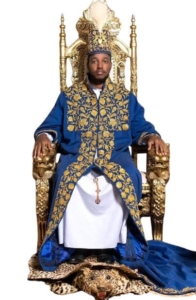
As the Kingdom prepares to unveil a Prince who is still a minor as heir, Tooro is facing exactly the same question it faced in August 1995.
Who determines the content of Tooro customary law when the community itself is divided? And how can a constitutional state recognize a traditional institution as culturally legitimate without allowing that institution to become a source of governmental power independent of the Constitution?
The answer lies in a High Court case many have dismissed as a family quarrel: Rukiidi and 2 Others v Katuramu and 3 Others H.C.C.S. No. 598 of 1996, UGHC 48 of 13th July 1999.
In that case, Omukama Patrick David Matthew Kaboyo Olimi had died in August 1995, leaving his son Oyo only three years old and living outside Uganda in the United Kingdom.
The Orukurato — which is the supreme cultural council of Tooro Kingdom, composed of clan heads, royals and elders, and which acts as Tooro’s own cultural constitutional court for matters of succession, regency and what is abomination — met during the nine-day mourning period to arrange burial and succession and appointed three regents, known in custom as Abatongole b’Omukama, meaning Those Who Hold the Throne for the King.
The plaintiffs challenged that process, arguing that custom had been violated and that no institutional activity could happen during the mourning period. The real question before court was whether the Orukurato had customary authority to do what it did and what Tooro custom actually requires during mourning.
The judgment was delivered by Hon. Lady Justice Solomy Balungi Bossa. It is important to clarify her identity because many Ugandans confuse two great female justices. Lady Justice Solomy Balungi Bossa was a Judge of the High Court in 1999 when she decided Rukiidi. She was later elevated to the Court of Appeal, then to the Supreme Court of Uganda, and is currently serving as a Judge of the International Criminal Court in The Hague. She is distinct from her colleague, Lady Justice Stella Arach-Amoko, who was also a High Court Judge at the same time and later Supreme Court Judge, who passed away on 17th June 2023 at Nakasero Hospital.
Justice Bossa’s method is what Prof. Lubogo says makes the case a classic today.
The case was a contest between two conceptions of custom. One side argued custom as restraint — that the mourning period suspended ordinary institutional activity, including political meetings and other social observances.
The other side argued custom as functional adaptation — that the necessary acts for burial and succession could continue despite mourning. The Court accepted the functional adaptation view. It treated custom as a contemporary legal question, not as a static historical artefact.
The legal relevance of this approach is reinforced by the Judicature Act, which speaks of established and current custom or usage, and by the Evidence Act, which permits proof of custom by transactions, instances, and opinion evidence from persons likely to know the custom.
In Ugandan law, custom is therefore not assumed; it is established through proof. Justice Bossa expressly approached the matter as one of proof of custom, not as an intuitive appeal to tradition.
She examined historical practice, testimony from persons with specialised knowledge of Tooro institutions, prior regencies, documentary material, the Tooro constitutional arrangements of 1962, and the actual institutional conduct surrounding the 1995 succession. That is the proper way to treat customary law in a common-law system.
The Judicature Act confirms that point. It instructs the High Court, subject to written law, to act in conformity with customary law that is both established and current, and it retains the classical limit that custom must not be repugnant to natural justice, equity and good conscience or incompatible with written law. In that framework, the Court’s willingness to receive evidence from knowledgeable insiders was not exceptional; it was doctrinally expected.
For non-legal readers, The Judicature Act, Cap 13 is the law that tells courts in Uganda which law to apply. In summary, it says this:
Hierarchy of laws that courts must apply the Constitution, then written law (Acts of Parliament) then common law and doctrines of equity and then customary law.
It also touches on the Customary Law Clause Section 15 which is the heart for Tooro and states that the High Court must observe and enforce established and current customary law but with two conditions, namely that it must not be repugnant to natural justice, equity and good conscience meaning it must not be grossly unfair or uncivilized in modern eyes.
It says it must not be incompatible with any written law, meaning it must not contradict the Constitution, an Act of Parliament or any other law. If a custom fails any of those two tests, the court must reject it, even if it is truly a Tooro custom.
Readers should note that repugnancy is now read as Constitutional Compatibility. Before 1995, judges would ask “is this custom barbaric?”
Today, after the Constitution, the test is “Is this custom compatible with human rights, dignity and the constitution?”. That is what we call constitutionalized customary law.
Justice Bossa’s strongest finding was that regency did not begin in 1995. The evidence supported the conclusion that Tooro had a prior tradition of regency and that the regents had been appointed when an Omukama was unavailable, incapacitated, or otherwise unable to exercise authority. That allowed the Court to treat the 1995 appointments as an application of existing custom rather than a judicial invention.
The judgment is also important because it distinguished between custom existing as a social practice and custom later recognized or formalized by constitutional arrangements. The evidence suggested that Tooro’s 1962 arrangements reflected, rather than created from nothing, the institution of regency. That distinction is essential: codification does not necessarily create the custom; it may simply record and formalize it.
The judgment is most often remembered for Justice Bossa’s famous remark that times have changed and culture is not static. That sentence captures the most important jurisprudential move in the case. The Court was rejecting the idea that custom is frozen in time and incapable of adaptation.
Instead, it treated custom as a living normative order, shaped by social change and institutional continuity. That approach fits perfectly within the 1995 Constitution. The Constitution protects the right to practice culture under Article 37 and directs the State to encourage cultural values under National Objective XXIV, but only insofar as they remain consistent with fundamental rights, human dignity, democracy and the Constitution itself.
A more difficult issue, which Prof. Lubogo highlights, is the role of the Orukurato. Justice Bossa appears to have regarded it as the culturally appropriate forum for dealing with questions of customary legitimacy and cultural abomination.
That position has force, but it must be read carefully. A cultural organ may be institutionally competent to interpret cultural norms without being sovereign to govern.
The Constitution makes that distinction explicit. Article 246 allows the institution of traditional or cultural leaders to exist, but only subject to the Constitution, and clearly states that such a leader shall not exercise administrative, legislative or executive powers of Government or local government. Article 246 also provides that unresolved questions about a traditional or cultural leader are to be resolved by the community concerned using a method prescribed by Parliament.
The later statutory framework reinforces the same position. Section 11 of the Institution of Traditional or Cultural Leaders Act 2011 provides that a traditional or cultural leader shall not have or exercise administrative, legislative or executive powers of Government or local government, and Section 13 prohibits any custom, culture, usage or tradition that detracts from constitutional rights or contravenes the Constitution or other law. The legal position is therefore clear: cultural authority exists, but it is not governmental sovereignty.
The old formula of repugnancy — the old colonial test that custom must not be repugnant to natural justice, equity and good conscience — remains relevant, though it must now be read through the Constitution. Section 15 of the Judicature Act retains that requirement and adds that custom must not be incompatible with written law.
But after 1995, that language cannot be applied as though the Constitution were absent. It must be read together with constitutional supremacy, cultural rights, and fundamental rights.
That is why Prof. Lubogo proposes the better modern formulation is constitutionalized customary law — meaning custom is recognised only if it is proved by evidence and it passes the constitutional test of rights and dignity — and constitutional compatibility rather than bare repugnancy.
The later Supreme Court decision in Mifumi (U) Ltd & Anor v Attorney General gives the strongest support to this reading. In Mifumi, the Court accepted that bride price as a cultural practice could survive, but held that demanding a refund upon dissolution of marriage was unconstitutional.
The lesson for Tooro: Even a genuine Tooro custom can be struck down if it violates fundamental rights. Cultural legitimacy does not itself establish constitutional validity.
Mifumi therefore does not undermine Rukiidi; rather, it completes it by showing how constitutional review disciplines customary law without abolishing it.
The evidence about the nine-day mourning period is best understood as contextual, not dispositive. The Court recorded practices relating to abstention, ritual, and animal breeding as part of the evidence of mourning custom, but the decree did not turn on any general rule about sexual conduct or livestock.
The legal issue remained the validity of the Orukurato’s appointment of regents. Still, the evidence is jurisprudentially valuable because it shows the breadth of customary norms. Customary law can regulate ritual, family life, authority, succession, and symbolic conduct. The modern court must therefore distinguish between cultural observance, customary normativity, and legally enforceable custom.
The best reading of Rukiidi is that it is a constitutional pluralist decision. It recognises that customary law is a living source of normativity, but it does not elevate that normativity above the Constitution. The Court treated Tooro custom as evidence-based law, not folklore, and it accepted the Orukurato’s competence as a cultural body while preserving the constitutional hierarchy.
That is why the case matters now. As Tooro buries a King and prepares to enthrone a minor, the method from 1995 will decide 2026.
The jurisprudence supports a clear analytical model that Tooro must now apply. First, does the custom exist, which is tested under the Evidence Act and Rukiidi itself. Second, is it established and current under the Judicature Act. Third, is it merely cultural practice, social expectation or enforceable customary law. Fourth, can the State recognize or enforce it under the Constitution and the Institution Act as interpreted in Mifumi.
The jurisprudence also supports a three-level distinction that every Mutooro must understand. Culture is broad social practices, values and meanings that define a community’s identity. Custom is specific norms and practices that are established, current and socially recognized.
Customary Law is customs that have been proved as legally normative, are compatible with the Constitution and written law, and are enforceable by courts. Not every cultural practice is necessarily a custom, and not every custom is necessarily customary law.
As Tooro Kingdom Prime Minister Calvin Armstrong Rwomiire Akiiki has assured the nation that the continuity of the Crown is assured and that His Majesty leaves behind a Prince as his heir, Rukiidi tells us Tooro survived 1995 by adaptation, by treating custom as living law, proved through evidence and bounded by constitutional supremacy.
Rukiidi v Katuramu should not be reduced to a story about mourning. Its real significance lies in its method. It shows how a court can recognize customary authority without surrendering constitutional control.
This is the jurisprudence that will guide Tooro through the coming transition.
We Expose, You Decide.
The writer, Isaac Christopher Lubogo, is a Ugandan legal scholar. The full footnoted academic version with bibliography and appendices is available on request via exposureuganda000@gmail.com
© The Exposure Uganda 2026