

























Reflective Philosophical Reading.
There is a type of spouse everyone knows, and every family has suffered from him. At home he never says thank you for food that has been cooked for ten or more years, he never compliments his wife, he never washes his own plate, and his own bedroom is dirty and disorganized, yet outside he is the most romantic man, for he praises the neighbor’s wife for being well-dressed, he praises the neighbor’s children for being disciplined, and he tells everyone that the neighbor’s family is better organized than his own. He admires every other home while despising the one that feeds him.
That unfaithful spouse is us as Ugandans. We have become that complaining, non-appreciative partner who sees no good in his own house. We say Kenya is better than us, Rwanda is cleaner than us, Tanzania is more disciplined, Ghana and Ethiopia are more patriotic, while we urinate on our own walls, throw rubbish out of our own cars not only at night but in broad daylight, refuse to flush our own public toilets, and hide indoors during general cleaning.
We are the spouse who flirts with the neighbors while our own compound is full of weeds because we refused to pick a hoe. Until we stop admiring the neighbor’s marriage and start working on our own, we will remain a quarreling family and a complaining nation.
We have become experts at diagnosing everyone else’s sickness and amateurs at diagnosing our own, for we can see corruption in government from miles away but we cannot see the corruption in our own bedroom, in our office drawer, or in our church pew, and while we complain that the nation is dirty, we throw rubbish out of our own car window at night without shame.
We say the country has lost morals while we fail to say thank you to our own wives and husbands who serve us daily, and this is the great contradiction of our time, that we have turned pointing fingers into a profession and forgotten how to point at ourselves, so that until we have the courage to ask who am I when no one is watching, we will remain a quarreling family and a complaining nation that admires every neighbor’s garden but refuses to weed its own.
The Three Physicians Of The Hidden Self.
To understand this disease, allow me to introduce you to three great physicians of the human soul who tried to diagnose why man pretends to be good in public and practices evil in private.
The first was Sigmund Freud, the Austrian neurologist born in 1856 and died in 1939, who is called the father of psychoanalysis, and before Freud people thought man was a rational and decent creature who occasionally made mistakes, but Freud tore that mask off by arguing that man is driven by a deep hidden basement of desires, fears, childhood wounds and selfish instincts that he does not even admit to himself, which he called the unconscious.
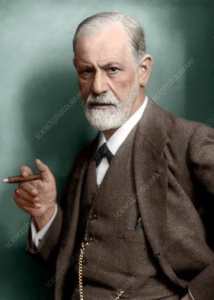
He divided the human psyche into three warring parts: the id which says I want now, the superego which says you must be holy, and the ego which tries to negotiate between the two and often fails, so his painful lesson was simple, that you are not as good as you think you are because a large part of you lives in darkness without your permission.
His own student rebelled and went deeper, and that was Carl Gustav Jung, the Swiss psychiatrist from 1875 to 1961 and founder of analytical psychology, who agreed that we have a hidden life but argued that Freud did not go far enough, for according to Jung every one of us wears a social mask to be praised in public which he called the Persona, and it is the suit, the title, the forced smile at office, and the loud hallelujah we shout on Sunday.
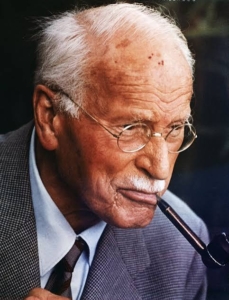
Behind the Persona we hide a dark, messy and selfish side that we refuse to admit even to ourselves, which he called the Shadow, and the tragedy of life is that we spend all our energy polishing the Persona and starving the Shadow, and because we refuse to face our Shadow we throw it onto others, which Jung called projection, so that we accuse others of the very dirt we hide, which is why Jung warned that everything that irritates us about others can lead us to an understanding of ourselves, and what you hate most loudly in others is often what you have refused to confront in yourself.
But long before Freud and Jung there was a barefooted old man who walked the marketplaces of Athens asking unsettling questions, and his name was Socrates, the classical Greek philosopher born around 469 BC and executed in 399 BC, who is the father of moral philosophy, and unlike philosophers before him who studied stars and rivers, Socrates turned philosophy to the human being himself.
He never wrote a single book and his classroom was the street, while his method was to ask a proud general, politician or priest simple questions until the man realized he did not know himself, and this method is called the Socratic Method or Elenchus, so his doctrine was devastating in that evil does not come from lack of information but from lack of self-knowledge, hence his two eternal maxims: Know Thyself and The Unexamined Life Is Not Worth Living.
Why Socrates Had To Die And Why He Points Upward.
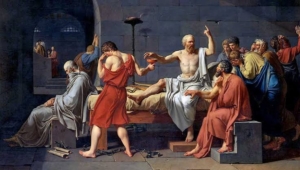
And what did Athens, the most democratic city in the world at that time, do to Socrates, for they put him on trial with official charges of corrupting the youth and disrespecting the gods of the city, yet the real crime was that he exposed their hypocrisy by showing that politicians pretended to be wise but were ignorant and priests pretended to be holy but were corrupt, and a society that loves its mask will always kill the man who removes it, so the court sentenced him to death by hemlock.
What is hemlock, for hemlock, Conium maculatum, is a highly poisonous plant common around the Mediterranean and now growing wild in many parts of the world including along roadsides and wastelands, and it looks innocent because its stem is green with purple spots, its leaves look like parsley or carrot leaves, and its flowers are small and white like an umbrella, but inside it is death since its poison, coniine, attacks the nervous system slowly while the victim remains fully conscious as his legs become heavy and fail, then his hands, then his chest, until breathing stops.
It was considered a more humane execution for philosophers than the sword, and Socrates could have escaped because his disciples had bribed the guards and arranged a boat, yet he refused since he believed a philosopher must obey the law even when the law is unjust lest he destroys the very idea of law, so in prison surrounded by his weeping disciples he drank the cup calmly and died for telling the truth.
Many have asked why Socrates is often painted dying while pointing up to heaven, yet medically this did not happen because hemlock paralyses the body from the legs upwards so a dying man cannot lift his finger, and what people remember is the famous painting by Jacques-Louis David in 1787, The Death of Socrates, which has shaped the world’s imagination, for in that painting David made Socrates point upwards deliberately, and it is not medical history but philosophical preaching.
First, he was pointing to a higher truth, for Socrates believed truth did not live in the shouting of the Athenian court that condemned him but in the higher world of eternal Ideas that his student Plato called the World of Forms, and second, he was pointing to the immortality of the soul, as Plato records in his dialogue Phaedo where Socrates taught in his final hours that the soul does not die with the body but goes upward to freedom, so the body can be poisoned but the soul cannot, and third, for us as believers, he was pointing to God, saying as Saint Paul would later write, set your mind on things above, not on earthly things.
In other words, the truth-teller dies looking up, not down at his killers, for the finger points up while the poison is below, and it is the same spirit we see when Stephen in Acts chapter seven looks up to heaven and sees Jesus while stones are falling on him.
And when Jesus on the cross says Father, forgive them while nails are going through His hands, so the mob points weapons at the truth-teller but the truth-teller points up to the Truth that cannot be killed, and hemlock itself is no longer used as a legal execution anywhere in the world today, but the plant still grows and still kills by accident when people mistake it for edible herbs, while more dangerous still is the human hemlock we give each other daily when we poison a truth-teller’s name with gossip and slander.
Why Societies Kill Truth-Tellers.
Because this pattern has never stopped, for societies kill truth-tellers, and the Bible is full of it, since Prophet Jeremiah was thrown into a muddy pit for telling the king that Jerusalem would fall because of corruption, Prophet Amos was chased away from Bethel for telling the truth about fake worship, John the Baptist was beheaded because he told Herod you cannot take your brother’s wife as it is adultery, and Jesus Christ Himself was crucified because He looked at the super-holy Pharisees and said you are whitewashed tombs who appear clean outside but inside you are full of dead bones and rotting things.
In modern literature, William Golding captured it brilliantly in his novel Lord of the Flies, published in 1954, where a group of British schoolboys stranded on an island without adults at first try to keep order but slowly descend into savagery by painting their faces, hunting and chanting, and only two boys keep reason and conscience, namely Piggy, the fat bespectacled boy who keeps saying let us make fire, let us build shelters, let us keep the map, who represents reason and science.
The other was Simon, the quiet boy who goes to the forest to pray alone, who represents spiritual truth, yet what does the group do but kill both by rolling a huge boulder that crushes Piggy and stabbing Simon to death in a frenzied dance thinking he is the beast, because they kill truth-tellers since truth is disturbing and they would rather live in comfortable darkness than be exposed by light.
And the same happens today in our offices, families, politics and churches, where the person who says friends, this corruption is wrong, this gossip is wrong, let us clean our compound and let us account for money, is isolated, hated, transferred to a hard station, or even physically harmed.
The Modern Hemlock: Cyber Threats And Bought Justice.
In our modern time today, this ancient pattern has taken a new form, for critical writers are no longer given hemlock in a cup but are intimidated, shunned, blackmailed and threatened online, so that truth-tellers are no longer killed only with stones and boulders but are killed with cyber threats, with character assassination, and with a corrupt system that refuses to protect them.
This writer has experienced it firsthand, for simply exposing wrongdoing in a primary school he has been subjected to sustained cyber threats against his life by someone whose display picture bears a military-like uniform, a clear attempt to create fear and to impersonate security forces, and upon verification the threatening number 0773XXXX80 is registered in the name of Immaculate Akullo.
The matter was formally reported to Jinja Central Police Station as a case of Offensive Communication and Cyber Harassment under SD Reference 59/24/07/2026, yet what is more painful than the threat itself is what happened at the police station.
At CPS Jinja,a senior female detective overseeing the matter has demanded money to handle the file stating that without money nothing can be done, and it is now more than a month since the complaint was lodged while each time the Investigating Officer is contacted he says he is busy or not at the station, and this is how the modern hemlock is served, when the protector demands a bribe to protect you, when justice is sold to the highest bidder, and when a journalist must pay to be kept alive, so if we cannot protect a whistleblower from a single threatening phone number, how shall we protect the nation from grand corruption?
The Complaining Nation And The Romans Seven War Inside Us.
Now let us ask the most painful questions about ourselves as a family and as a nation, for why are we a quarreling and grumbling family, why is every family meeting a court case and every clan meeting a battlefield, why are we a complaining country that never appreciates anything good in the government even when it is clearly good, why is everyone else bad except us, why do we say Kenya is better than us, Rwanda is better than us, Tanzania is better organized, and Ghana and Ethiopia are more patriotic, and why is the garden next to ours always greener, because we have turned complaining into a culture and grumbling into a national anthem.
Psychology has a painful answer, for when we feel small inside and when we have failed to build our own garden, it is easier to praise the neighbor’s garden than to pick a hoe and work, so Jung would call it inferiority complex and projection while Freud would call it displacement.
This is because we insult our own country to hide our own laziness and we say Uganda is useless because we do not want to admit we have not cleaned our own trench, we have not paid our own taxes, we have not raised our own children well, and we have not even swept our own bedroom.
Someone who has failed to manage his own small family will loudly say government has failed to cover his own failure, for it is easier to complain about State House, City Councils, Ministries than to sweep your own compound, and the man who beats his wife at night will be the loudest on radio calling the President a dictator to feel powerful.
But the deepest answer comes from Saint Paul, and many scholars and theologians have done deep research on this chapter, for in Romans chapter seven verses fifteen to twenty-five Paul battles with this exact human contradiction and cries out like a man in chains when he writes, “I do not understand what I do, for what I want to do I do not do, but what I hate I do, for I have the desire to do what is good but I cannot carry it out, for I do not do the good I want to do, but the evil I do not want to do, this I keep on doing, so what a wretched man I am, who will rescue me from this body of death?”
Theologians call this the Pauline Dilemma or the Romans Seven Conflict, and great scholars have wrestled with it for two thousand years, for Saint Augustine saw in it the battle between flesh and spirit, Martin Luther saw in it the proof that man is justified by grace alone because even the saved man remains a sinner, and John Wesley saw the struggle of a man under conviction before entire sanctification, while modern exegetes like James Dunn and N.T. Wright have debated whether Paul is speaking autobiographically as a Pharisee under the Law or as a Christian under grace, but the pastoral point for all of them is clear and it is our point, that there is a civil war inside every human being between the good we preach and the evil we practice, so we are all Romans Seven people.
We preach cleanliness but we litter at night, we preach anti-corruption but we bribe to get jobs, to get contracts, or to remain in juicy duty stations, and we preach patriotism but we say Rwanda is better while we mess our own toilets and throw rubbish out of car windows, and this is why we grumble, for grumbling is the sound of Romans Seven when it refuses to be honest, and in the Book of Exodus Israel had just been delivered from four hundred years of slavery in Egypt through mighty miracles where the Red Sea had parted and manna was falling from heaven, yet they grumbled every day against Moses and Aaron, so grumbling is not analysis and complaining is not accountability, because accountability builds while grumbling destroys.
A complaining country is often a country that has refused to have a self-reflection, for why is everyone else bad except us, because if we admit we are also bad we must repent and repentance is painful, so it is easier to say all politicians are thieves and liars than to admit we also steal office pens, papers and cash, we steal toothpicks from restaurants, we jump queues in offices and health facilities, we dodge office time to do private business, and we misuse office water hoping no one will catch us.
It is easier to say Kenyans are better organized than to wake up for the last Saturday cleaning, and it is sweeter to abuse leaders on social media or to drop used mineral water bottles anyhow or to urinate by the roadside and say this cannot be tolerated in Rwanda yet we are busy messing our own country every day, because the neighbor’s garden looks greener since you never have to weed it.
Check Inwards: Toilets, Water, Cars and The Cleaning Day.
Let us be honest and check inwards in other ways too, because character is revealed in small things, and how do we use a public toilet or a hotel toilet, for at home our toilet shines because we scrub it and buy disinfectant since visitors may see it, but in a public toilet, at school, at the taxi park or at a conference, we refuse to flush, we mess the seat, we throw tissue on the floor and walk away because no one will trace it to us, so if you only flush where your name is known, your cleanliness is fake and it is Persona, not character.
How do we use public water, for at home where we pay the water bill we use one jerrycan sparingly and we tell children to close the tap, but at office, at church, at a workshop or at a hotel we open the tap full blast and leave it running while we chat on phone or scroll through social media because someone else will pay, and same with electricity, for at home we shout switch off because electricity is expensive, but in office or in hotel rooms we leave lights, air conditioning and fans on all day even when we have gone out for lunch, so if you are only faithful when the bill is yours, your faithfulness is fake.
Look at government vehicles versus our personal vehicles, for our personal car even if it is an old small car we service on time, we drive slowly over humps, we park carefully, and we wash it every weekend and polish the tyres, but a government vehicle, a company vehicle, an NGO vehicle or a church vehicle where fuel is paid by office, we drive it recklessly over potholes at high speed, we use it to carry charcoal, goats and building materials, we send it to the village for private errands.
We are comfortable to drive it at night for entertainment, and we never check oil or water because it is not ours, then we gather at tea and complain that government has no money and that cars are always broken, yet who breaks them but we ourselves in secret when no one is watching.
Look at how we drive and park generally, for on the highway where traffic police is watching we keep lane, we put on seatbelt and we become very obedient citizens, but inside estates, inside trading centres and at night we drive on pavements, we drive one way, and we park in the middle of the road to chat with a friend and block everyone because we think we are more important than others.
Its not strange sometimes to see a well-dressed banker, politician, civil servant or celebrity in a suit stopping his shiny car and urinate on a wall by the roadside in broad daylight, something he would never do in his own compound, while at night we ask our maids or children to throw polythene bags, bottles and rubbish over the fence, yet in the morning we say Kampala is dirty, Jinja is dirty, Mbarara, Lira, Gulu and Arua are dirty, and leaders are useless, yet who makes them dirty but we ourselves when no one is watching.
And have we bothered to ask ourselves why even very good government initiatives are failing, like the recently introduced General Cleaning Exercise that takes place on the last Saturday of every month, with our Seventh Day Adventist brothers and sisters doing it on the last Sunday of every month out of respect for their Sabbath, for it is a noble idea to make Uganda clean, to unblock drainage and to prevent cholera.

Shockingly, it is facing challenges because of our character, since quite a number of people choose to remain indoors up to ten in the morning sleeping, watching television and hiding behind curtains, and then they walk out at ten deceiving unsuspecting colleagues how they cleaned in their area yet their compound is still filthy and their trench is still blocked, while another group opposes and rejects it outrightly not because cleaning is bad but simply because to them it will make the government popular.
To such a group, if they had power they would order lightning to strike dead the architects and participants of the cleaning, so how can we progress when we politicize even cleanliness, for this is Shadow politics and unexamined malice where we hate the good thing because of who said it, not because of what it is, and our true character is revealed when we would rather live in garbage than support a good idea from someone we dislike, so we disparage good things not because they are bad but because we did not initiate them.
A perfect example happened just over the weekend, for the Prime Minister Rt. Hon. Robinah Nabbanja, in a positive and practical gesture, donated some tuku-tuku to a ward in Kira Municipality, which is not even her constituency, in order to help with garbage collection, and this was a practical intervention to solve a real problem on the ground.
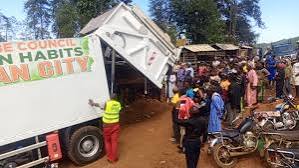
But as usual, the ever-complaining and non-appreciative Ugandans, including the former area Member of Parliament Hon. Ibrahim Ssemujju Nganda, who fled the country, reduced this gesture to social media fodder, mocking the Prime Minister and saying she would have donated a garbage truck instead, yet the same critic was area Member of Parliament for fifteen years and never donated even a mere wheelbarrow, which costs less than three hundred thousand shillings, to help the same people he now claims to defend.
This is the ungrateful spouse syndrome, where we despise the small food our own home has provided while demanding a feast from others, and we mock those who are doing something while we who did nothing for fifteen years clap for the mockery.
Guards, Homes And The Church: Where Character Is Tested.
Look at how we treat security guards, from soldiers to police to private guards deployed to keep us and our premises safe, for the government gave them guns to protect life and property but we have reduced them to housemaids, so we make them carry our shopping bags from the supermarket, wash our personal cars, mop our floors, cook, look after children, buy food on a bodaboda motorcycle, and run our private errands, and because we think they are helpless and useless, otherwise they would also be the ones being guarded.
We abuse them, we shout at them, we delay their allowances, and we even eat and drink in hotels and bars while they are yawning with their guns at the gate or standing in the rain without a shelter, so if you need a gun to respect a man your character is already broken, because your true character is how you treat the man who cannot retaliate, and that guard will open the gate for you even when you insult him not because he is weak but because he is disciplined, and God is watching how you treat him.
Our double life is most painful at home, for in a restaurant we are very polite when we choose to pretend, and at a slight mistake or delay of service we shout at the poor waiters, while sometimes we are nice saying thank you madam you are smart keep the change and we smile to impress people at the table, or when our true colors escape we shout and remind them how they did not go to school and demand to see the manager so that these poor workers are chased and lose their jobs, but at home we have never said thank you to our wife who has cooked for ten or more years nor to our husband who pays rent and school fees without complaining.
Also, at weddings and parties we dance so well displaying best strokes, we sing sweet melodies, we even pick friends of the opposite sex for dancing competitions and everyone claps for us, yet we have never danced for our own spouse in our bedroom, never sung a love song to our own partner, never said you look beautiful, so we give our best to strangers and leftovers to our own family, and that is Persona on the street and Shadow at home.
And there is a wound many of us carry that breeds more quarrels, for the brothers and sisters, cousins, nephews and nieces we helped bring up, whose school fees we paid, whom we sheltered when they had nothing and whom we fed when their parents had died, or the spouse we got when he or she had nothing and we built them, sacrificed, took them to school and connected them.
Today when they have grown a little and have got some money or a small office, they have the guts to undermine you, to abuse you, to insult you in family meetings and to say you are now useless, and the same with friends, for you helped a friend get a job, a contract or a political connection using your goodwill and your name, and today he uses that same platform to stab you in the back and to badmouth you to your boss so that he takes your position.
This is betrayal like Judas did to Jesus, so Jung would say two things are revealed here, that their ingratitude reveals their Shadow, but our bitter reaction, our desire to control those we helped and our endless mentioning of after all I did for you also reveals our own Shadow, so we must learn to help without seeking to own, because your goodness remains goodness even if it is not returned and God saw it when no one was watching.
How about in the Church, for in church we bow to bishops, archdeacons and priests, we kneel and we say yes, my Lord Bishop thank you, we are very holy in front of the pulpit and we shout Amen the loudest, but behind their backs we gossip, we abuse them, we refuse to pay our tithes and pledges, we use church water and electricity carelessly, we litter the church compound after cleaning, and we turn the vestry into a gossip centre.
Nowadays we even hire shameless social media people to abuse and disparage our own church and its leadership on radio stations and social media platforms, while in functions like funerals we direct priests to shorten the prayers because important guests or mourners from the city want to go back, so we want a heavenly church with earthly character, and if we cannot be faithful with church property how can God trust us with bigger things, for what we do in the church when no bishop is watching is who we really are.
Conclusion: Sweep Before Your Own Door.
My final appeal to my family and to all Ugandans reading this is that before you point an accusing finger, check inwards, for Socrates would ask you to examine yourself, Freud would ask you to face your unconscious, Jung would ask you to integrate your shadow, Saint Paul in Romans Seven would tell you to admit the war inside you and cry for grace, and Jesus Christ would ask you to first remove the plank from your own eye before you remove the speck from your brother’s.
Remember Socrates drank hemlock for telling the truth, Piggy and Simon were killed in Lord of the Flies for telling the truth, Stephen was stoned for telling the truth, and Jesus was crucified for telling the truth.
So do not join the mob that kills truth-tellers and do not be a quarreling family and a complaining country that sees green only in Kenya, Rwanda, Tanzania, Ghana or Ethiopia while your own garden is full of weeds because you refused to dig.
Before you say this country is spoiled, ask how you use a public toilet, a government car, office water, office electricity, the monthly cleaning exercise, and how you treat the guard at your gate, and before you say government has failed, ask whether you cleaned your own trench last Saturday or you were hiding indoors up to ten and then lying that you cleaned, because your true character is not what you do when the Bishop, the boss, the traffic officer or the camera is watching, but what you do when no one is watching except God.
The Bible says in Luke chapter twelve verse two that there is nothing hidden that will not be revealed and nothing secret that will not be known, for the camera of heaven is always on, so if we all sweep before our own doors the whole village will be clean, if we all flush public toilets as we flush our own Uganda will be clean, if we all drive government cars as we drive our own government will save money, and if we all respect guards as human beings God will respect us.
Let us come out on cleaning day even if we hate government, because garbage has no party and cholera has no opposition, let us thank our spouses before we thank waitresses, let us help without enslaving, and let us stop abusing leaders on social media and start building where we are, because the change we want to see in Uganda will not come from State House first but will come from your toilet, your tap, your parking, your gate, your bedroom, and your church pew, so know thyself, examine thy life, fix thy shadow, and then point a finger if you must, for only when we have faced the enemy within can we defeat the enemy without, and only when we have cleaned our own compound can we have the moral authority to ask government to clean the nation.
The Exposure Uganda – We Expose, You Decide
exposureuganda000@gmail.com | Please share your thoughts if you have been convicted.