















Preamble To The Exposure Uganda (TEU)
TEU In-Flight Briefing No. TEU-20260902.
Welcome aboard TEU Supersonic. We are flying at the cruising altitude of constitutional reason, where every citizen can read the compass and see the runway ahead.
Uganda is entering that delicate phase that every long-governed state must one day confront, which is how to transfer power from one generation to the next without injuring the Republic itself.
The current debate was triggered by a claim that after four decades, President Yoweri Museveni intends to give way to his son, Gen. Muhoozi Kainerugaba. It is also public record that supporters of Gen. Muhoozi, widely referred to as MK, have declared that he will be on the ballot in 2031, and he has neither rebuked nor dismissed those declarations. That leaves his ambition firmly in the public domain.
Two legitimate constitutional narratives have emerged, and both deserve a fair hearing.
The first narrative emphasizes rights and continuity. It argues that MK, like any other citizen under Articles 1 and 59 of the Constitution, enjoys the full right to stand, to be voted for, to support any person of his choice, and to aspire for the highest office. Supporters see in him continuity, institutional memory, generational renewal and the legitimate claim of a citizen who has served in uniform. To them, aspiration itself cannot be criminalized.
The second narrative emphasizes process and impartiality. It argues that the question is not whether MK may stand, for he clearly may, but how a serving Commander of Defense Forces (CDF) exercises that right while still holding command of the national army. This school cites Article 208 which requires the UPDF to be national, non-partisan, professional and subordinate to civilian authority, and the Political Parties and Organizations Act which restricts partisan political activity by serving officers. To them, the concern is whether the political field will remain open and equal for all other aspirants.
TEU does not carry a brief for or against any person, family, party or faction. Our fidelity is to a stable and flourishing Uganda where power passes only through the Constitution.
This is where classical statecraft helps us think more clearly.
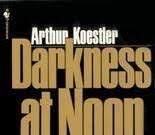
Sun Tzu in The Art of War offers two relevant maxims. In Chapter One he teaches that “All warfare is based on deception,” meaning the battle is often won when the outcome is made to appear inevitable before it is fought.
In Chapter Three he adds that “The supreme art of war is to subdue the enemy without fighting.” Applied to democratic succession, the lesson is cautionary for all sides. No outcome should be made to feel inevitable before citizens have voted, and no political actor should win by shaping the environment rather than by persuading the electorate.
Niccolò Machiavelli helps us from a different angle. The Florentine scholar did not teach immorality but realism about power. In The Prince, Chapter 19, he warns that a Prince must above all avoid being despised and hated, for stability depends on legitimacy. In Chapter 25, he reminds us that fortune controls half our actions but free will must control the other half.
And in his Discourses On The First Ten Books of Titus Livy (Nicolo’s other major political book), he argues that no state endures unless it establishes laws and institutions for succession that outlive the founder. In other words, the greatest service a long-serving leader can render is not to choose a successor, but to build institutions strong enough to produce a successor constitutionally.
Read together, Sun Tzu warns against predetermination, while Machiavelli warns against institutional vacuum. Both point Uganda to the same place: an open, lawful, competitive process.
That process must guarantee that every qualified Ugandan enjoys the freedom to organize, to assemble, to campaign and to be judged by the people, that security institutions remain within their constitutional mandate, that the Electoral Commission applies the rules equally to all, and that the Judiciary remains the impartial compass when constitutional questions arise.
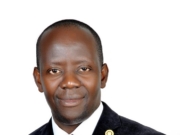
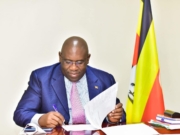
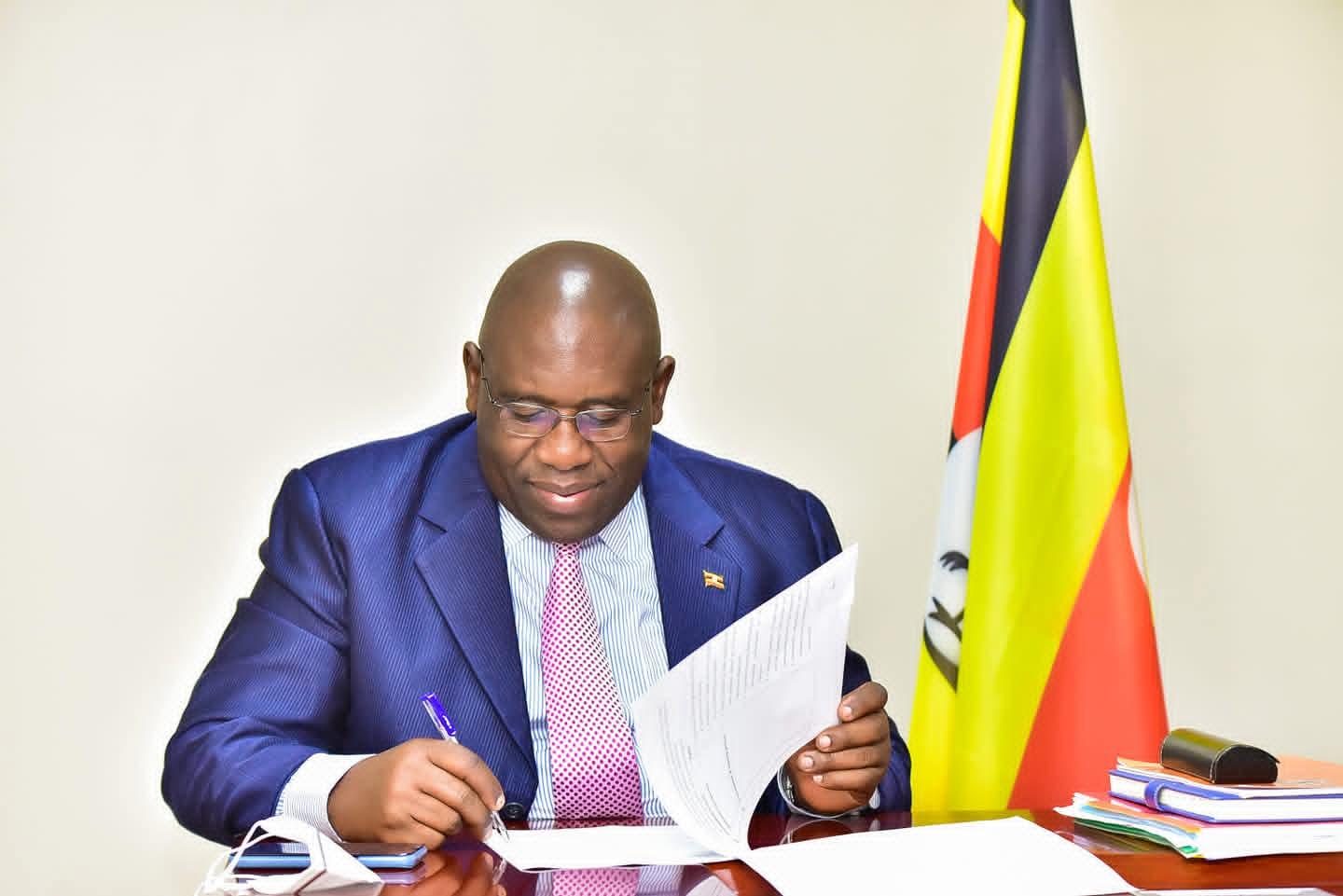
It is in that spirit that we have invited Hon. Asuman Kiyingi, Senior Advocate and former Minister who has served both in Cabinet and at the Bar, and political arena as Bugabula North MP in Kamuli to offer his constitutional reflection.
We present his piece verbatim, without addition or subtraction, so you may interrogate it, agree with it, disagree with it, and reach your own reasoned conclusion.
Because as our motto says, We Expose, You Decide.
Read Hon. Asuman Kiyingi Verbatim:
Four Decades of Museveni: When Succession Becomes A Constitutional Crisis. Uganda must ensure that power passes through the Constitution, not around it.
By Asuman Kiyingi
Uganda has suddenly been confronted with a remarkable claim: that after four decades in power, President Yoweri Museveni is preparing to “give up power” and that Gen Muhoozi Kainerugaba will take over.
The assertion, attributed to PLU Member of Parliament Hon David Kabanda (Kasambya County), would be extraordinary enough even if it concerned an ordinary political transition.
It becomes considerably more consequential because Muhoozi is the serving Commander of the Defense Forces and has himself publicly confirmed his intention to contest for the presidency in 2031.
Whether the President intends to leave office in favor of his son, whether Kabanda was announcing an agreed political plan, or whether the statement represents political messaging or speculation, is a question President Museveni can easily settle.
He should.
Because if Uganda’s next President is already being identified before the people have had an opportunity to choose—and before other aspirants have even had an opportunity to compete—the country is confronted with something much more serious than ordinary succession politics.
It is confronted with a constitutional question. Who chooses Uganda’s next President?
President Museveni may decide when to leave office. He may express a preference about who should succeed him. Gen Muhoozi may aspire to become President. Other NRM or PLU members may aspire to the same office. Opposition politicians may do likewise.
But none of them can constitutionally appoint Uganda’s next President.
Article 1 of the Constitution provides that all power belongs to the people, who exercise their sovereignty either directly or through their democratically elected representatives.
That principle is not decorative.
It means that the presidency is not the personal property of its incumbent. Neither is it the property of a political party, a family, a military institution or a political faction.
The next President must derive authority from the constitutional electoral process.
This is why the reported claim that the President will “give up power” in favour of Muhoozi deserves serious interrogation. Whatever the political meaning of “giving up power”, the constitutional transfer of presidential authority cannot simply be accomplished by personal designation. The Constitution establishes procedures governing presidential tenure, resignation, vacancy, elections and succession.
Political preference cannot substitute for constitutional process.
What about the other NRM and PLU aspirants?
There is a question that President Museveni should answer directly:
What happens to the other members of the NRM and PLU who aspire to become President of Uganda?
Why should one aspirant appear to enjoy an early endorsement while others have not even been given the opportunity to present themselves?
If Gen Muhoozi wishes to become the NRM flag bearer, why not allow him to compete openly against every other NRM presidential aspirant?
Let those who wish to contest declare their ambitions. Let them articulate their programmes. Let them debate one another.
Let the party’s members determine its flag bearer through transparent, credible and competitive internal processes.
If Muhoozi enjoys the overwhelming support that his supporters claim, there should be no reason to fear such a contest.
Indeed, an open contest would strengthen his claim to leadership.
If President Museveni genuinely believes that Muhoozi is the best person to lead Uganda, why should he fear allowing him to compete for the NRM flag against other aspirants? And if Muhoozi truly commands the overwhelming support claimed for him, why should that support not be demonstrated through an open and credible contest?
The same principle should apply to PLU or any other political formation.
After forty years, the ruling political movement has an opportunity to demonstrate that it is an institution capable of producing leadership through competition rather than succession by designation.
Allowing anyone who wishes to lead the NRM to compete for its presidential flag, subject to the law and the party’s rules, would strengthen rather than diminish the President’s historical legacy.
But can everyone actually compete?
This is where the question of succession becomes inseparable from the condition of Uganda’s civic and political space.
It is not enough to tell Ugandans that they will eventually be allowed to choose their President if the political environment in which that choice is supposed to occur has already been severely constrained.
A genuinely competitive election requires more than ballot papers, polling stations and competing names.
It requires the freedom to organize, assemble, campaign, speak, criticize government, mobilize supporters and participate in political life without intimidation or arbitrary interference.
Uganda’s experience in recent years raises serious questions on this score.
Reports of abductions and prolonged detention of political opponents, the continued prosecution and incarceration of opposition figures, and the displacement of political actors into exile have contributed to a political environment in which opposition forces face serious constraints on their ability to organize and compete.
These developments cannot simply be dismissed as isolated law-and-order incidents.
Their cumulative effect on the electoral environment matters.
The constitutional promise of popular sovereignty becomes hollow if citizens are presented with a choice only after some potential choices have been systematically weakened or eliminated.
This is the danger Uganda must confront before 2031.
For if the political field is sufficiently narrowed, an election can retain all the outward characteristics of constitutional legitimacy while failing the more fundamental test of whether voters were genuinely offered a free and meaningful choice.
The question therefore cannot simply be whether Muhoozi can win an election.
The prior question is whether everyone who wishes to challenge him will be allowed to compete on reasonably equal terms.
That responsibility rests principally with the State.
The Government must protect, rather than constrict, the civic space in which political competition takes place. Security agencies must operate within the law. Opposition politicians must be free to organize and campaign.
The Electoral Commission must be capable of enforcing electoral rules impartially. The courts must remain independent. Political parties must be allowed to compete without intimidation or administrative manipulation.
Otherwise, Uganda risks creating the appearance of constitutional succession while reproducing the substance of predetermined succession.
But what if the contest itself has lost meaning? Let me put the question personally, but hypothetically.
Suppose I wished to contest for the presidency in 2031. What exactly would I be contesting?
Would I be entering a genuinely open constitutional contest in which the law, the institutions and the political environment give every candidate a reasonable opportunity to persuade the electorate?
Or would I be participating in an electoral process whose fundamental conditions had already been compromised by restrictions on civic space, unequal access to political organization, detention of political opponents, the use of State institutions in partisan politics and the unresolved involvement of the military in political mobilization?
If the latter is the reality, then a more fundamental question arises:
What is the constitutional value of merely participating in an election whose essential conditions of democratic competition have already been compromised?
This is not an argument against elections.
It is an argument for elections that deserve to be called elections in the constitutional sense.
A ballot paper alone does not make an election free and fair. The constitutional right to choose necessarily includes the conditions that make meaningful choice possible.
If political competitors cannot organize freely, assemble freely, speak freely, campaign freely or remain free to participate in political life, then the existence of competing names on a ballot cannot, by itself, cure the underlying democratic deficit.
And if the eventual winner enjoys advantages unavailable to other contestants because of incumbency, State resources, security structures or political mobilization by serving public officials, the question cannot simply be whether votes were counted.
The deeper question is whether the people were genuinely free to choose.
The civil-military contradiction. This is also why the involvement of the military in the succession question is so consequential.
Article 208 of the Constitution establishes the UPDF as a national, non-partisan, patriotic, professional and disciplined force subordinate to civilian authority.
Parliament has reinforced this constitutional principle through the Political Parties and Organizations Act, which places significant restrictions on members of the UPDF and other specified public officers participating in partisan political activity.
These provisions exist for a reason.
The military possesses instruments of coercive power that ordinary political actors do not possess. Its political neutrality is therefore not simply a matter of institutional etiquette. It is a constitutional safeguard for political equality.
A presidential aspirant who simultaneously commands the national armed forces occupies a fundamentally different position from an ordinary presidential aspirant.
This does not mean that every political statement by a serving military officer automatically establishes a constitutional violation. Uganda’s constitutional jurisprudence itself reflects complexities concerning the relationship between military service and political office.
But the combination of active presidential ambition, partisan political mobilization and command of the national armed forces presents a constitutional contradiction of exceptional seriousness.
It requires authoritative determination rather than political rationalization.
The question is therefore not whether Muhoozi has a right to aspire to the presidency.
He does, subject to the Constitution and the law.
The question is whether he can simultaneously exercise the constitutional responsibilities of a serving CDF and participate in partisan political activity in a manner consistent with those same constitutional and statutory requirements.
That is a question for the institutions of the Republic—not for political convenience.
From formal election to genuine popular choice
There is a profound distinction between being elected and being freely chosen.
An election can be procedurally conducted while the political environment preceding it is profoundly unequal.
A country can have polling stations, ballot papers, counting centers and declared results and yet fail to provide citizens with the meaningful political choice contemplated by the Constitution.
That is why the integrity of the 2031 election cannot be left until 2031.
The conditions must be established well before polling day.
The Electoral Commission should clarify the legal status and activities of political formations involved in political mobilization and ensure that electoral rules apply equally to all.
Parliament should interrogate the intersection between military service, partisan politics and presidential succession.
The Government should guarantee civic and political freedoms rather than merely proclaim them.
Security agencies should remain within their constitutional mandate.
Political parties should open their internal processes to genuine competition.
And citizens, civil society and political actors should not wait until an election has been conducted to ask whether the conditions for a free election existed.
What must be done now.
President Museveni can remove much of the uncertainty surrounding succession.
He can publicly clarify whether the extraordinary claim that he intends to “give up power” in favour of Gen Muhoozi has any basis.
He can affirm that no successor has been predetermined.
He can insist that every NRM presidential aspirant enjoys an equal opportunity to compete for the party’s flag.
The NRM itself can demonstrate its democratic maturity by establishing transparent rules through which competing presidential aspirants can present themselves and seek the mandate of the party.
The Electoral Commission can clarify the legal status and activities of political formations involved in presidential mobilization, particularly where serving public officers are involved.
Government can restore the civic conditions necessary for genuine electoral competition—including freedom from arbitrary detention, abduction, intimidation and unjustified restrictions on lawful political organization.
And the constitutional questions surrounding military command and partisan political activity can be subjected to authoritative institutional determination rather than political convenience.
These measures would not weaken President Museveni.
They would strengthen his legacy.
After forty years, his greatest contribution to Uganda’s constitutional development may not be choosing who comes after him.
It may be demonstrating that he does not have the constitutional power to choose.
The Judiciary must be the constitutional compass
Ultimately, however, Uganda cannot depend upon individual goodwill.
Constitutions exist precisely because political power cannot safely be left to the goodwill of those who exercise it.
The Judiciary therefore has a particularly important role.
Article 137 provides the constitutional jurisdiction for determining questions concerning the interpretation of the Constitution, including challenges alleging that an Act of Parliament or an act or omission by a person or authority is inconsistent with the Constitution.
Where the relationship between military command, partisan political activity, presidential succession, civic freedoms and electoral competition raises genuine constitutional questions, the courts should be prepared to pronounce upon them.
They should not wait until a succession arrangement has become politically entrenched or until another disputed electoral process has already produced a constitutional crisis.
But judicial independence is indispensable.
The courts must neither become instruments for legitimizing political arrangements simply because those arrangements are powerful nor instruments for frustrating legitimate political aspirations.
Their responsibility is more demanding:
to apply the Constitution impartially to everyone.
That requires courage.
It requires institutional independence.
And above all, it requires fidelity to the Constitution.
The real test of four decades
The ultimate issue is not whether Muhoozi should or should not become President.
If Muhoozi wins a genuinely free, fair and competitive election, Uganda must accept that result—even those who oppose him.
If another NRM candidate defeats him in a genuinely competitive party contest, that result should be respected.
If an opposition candidate wins a genuinely free national election, that result must equally be respected.
The constitutional issue is not who wins.
It is whether the people are genuinely free to decide who wins.
That is why the reported succession claims, the condition of civic space, the treatment of political opponents, the role of the military and the independence of the Judiciary cannot be examined separately.
Together they determine whether Uganda’s next presidential transition will be a constitutional succession—or merely an electoral ritual conferring legitimacy on a political outcome shaped by an unequal political environment.
After four decades, Uganda’s historical test is no longer simply whether an incumbent can remain in power.
It is whether Uganda can demonstrate that political power is bigger than any individual who exercises it.
An incumbent may choose retirement or express a political preference.
Muhoozi may aspire to the presidency.
Other NRM and PLU members may aspire to it.
Opposition politicians may aspire to it.
Indeed, every Ugandan who satisfies the constitutional qualifications should be entitled to aspire to the presidency.
But no individual can choose Uganda’s next President.
Only the people can do that through the Constitution.
And if the meaning or limits of that Constitution are contested, the courts must be there to say what the Constitution permits and what it forbids.
They must do so without fear.
Without favour.
And with absolute fidelity to the Constitution.
President Museveni owes Uganda an answer—not because he is constitutionally required to nominate a successor, but precisely because he is not.
Uganda must now confront a deceptively simple question:
When power eventually passes, will it pass through the Constitution—or around it?
The writer is a senior advocate and former Minister.