













It is almost a miracle today to see family members truly sitting together, discussing or sharing. In many homes across Lango, bodies are together but souls are scattered. The television is on, smartphones are on, the internet is on, but conversation is off.
Young children are locked onto computer games or cartoons, older boys and girls are lost in endless scrolling on TikTok and YouTube, and the very parents who should chair the family by example are themselves occupied — laughing loudly at TikTok clips or consumed by quarrels and gossip in workplace WhatsApp groups.
The sitting room is full. The family is empty. The smartphone has entered and quietly killed the fireplace. It is against this silent collapse of family dialogue and moral anchorage that the Paramount Chief of Lango has reached for an old cure.
The Palace Fights Back With Song.
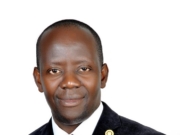
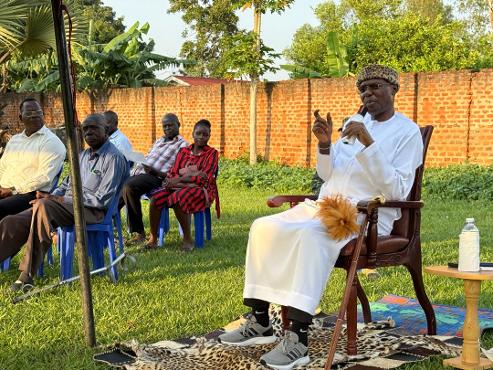
The Won Nyaci, HRH Eng. Dr. Michael Moses Odongo Okune, has unveiled a new cultural program that seeks to educate his subjects through traditionally composed songs and drama.
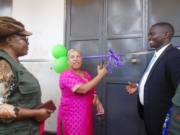
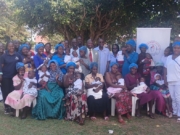
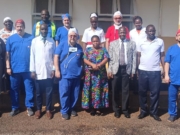
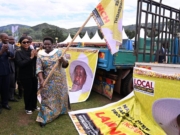
Dubbed “Galo Wang Won Nyaci” — Entertaining the Paramount Chief — the program will bring cultural troupes from across the eight districts of Lango to perform before the Won Nyaci and clan leaders on designated days at his Private Palace in Senior Quarters Cell, Lira City.
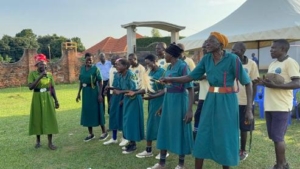
Its mission is to use the drum and the song to say what the family no longer says around the fire. The initiative was launched on Friday 4th September,2026 by Yab Yoo Company Limited, a troupe from Abia Sub- County in Alebtong District. Their skits confronted domestic violence, the dangers of widow and widower inheritance, personal greed, alcoholism, and the neglect of children’s education.
This call comes at a time of dangerous legal confusion among the youth. Many young people in Lango, Acholi and other regions where adultery is now being flaunted as fashion believe the courts have made it legal and therefore free. They are quoting a real ruling, but misunderstanding it completely.
In 2007 the Constitutional Court in the case of Law and Advocacy for Women in Uganda versus the Attorney General struck down the adultery law under Section 154 of the Penal Code Act.
The court found the law discriminatory because it punished a married woman for any affair while a married man was only guilty if he slept with another man’s wife, and it gave an aggrieved wife no compensation at all. The justices declared it unconstitutional and voided it. Since then, police no longer arrest for adultery.
That is where the truth ends and the mischief begins. The court never said adultery is moral. It said it is not a criminal offence. Adultery remains a grave civil wrong under the Divorce Act and is still the leading ground for divorce in Uganda.
Courts in Mukono and elsewhere continue to demand strict proof of adultery before dissolving marriages, and in August last year the Constitutional Court in a new petition on divorce was forced to revisit how fault-based divorce itself was harming families and violating dignity and privacy.
On the ground the meaning is simple, where a man may not be taken to any police station for sleeping with his neighbour’s wife, but his marriage can be dissolved, he can lose custody of his children, his clan can fine him heavily, and under Lango customary law he can be barred from inheriting. The law removed the handcuff but left the consequences.
It is this half-truth that youth have turned into a license. Taking advantage of the ruling that adultery is no longer criminal, some young men and women now engage in reckless sexual escapades, moving from home to home, trading marriages for moments.
The result is what every elder sees — rising HIV infections, children born without stable homes, and homes that are full of phones but empty of fidelity.
That is why the Palace is worried, and why Won Nyaci wants the drum to sing what the Penal Code no longer says. Just because the state will not jail you does not mean your family, your clan and your culture will spare you.
Also performing was Bony Ayo, the renowned adungu player who began singing in Primary Two at Lira Central Nursery and Primary School. He sang of roads and stadiums — praising the 20,000-seater Akii-Bua Memorial Stadium — while reminding leaders, in song, about the pending Anai International Airport. In Lango tradition, praise and correction can live in the same melody.
Awitong Richard Ogwal, Minister for Music, Dance and Drama in the Lango Cultural Institution, said the program is deliberate: to restore the historical method of educating the young without shaming them.
Gender Minister Joe Otim challenged media houses to give airtime to such local compositions, arguing they carry more moral weight than imported vulgarity.
When Words Had Power: The Philosophy From the Throne.
The Won Nyaci’s address was not a speech. It was a cultural diagnosis.”Sing about adultery because it is breaking marriages, sing about HIV/AIDS prevention, corruption, and defilement, which is tainting the image of Lango,” he said.
He reminded the gathering that in Lango, words themselves once had spiritual power to calm nature.
During hailstorms, elders, especially women would plead(lemo) with the storm while standing at the door saying, Pit kic kede mon too, cwe mot, akemo pe maki ikomwa ba — you are the feeder of orphans and widows, fall calmly, don’t be angry with us — while throwing an axe, bottles and calabashes into the storm as a sign of surrender and request for mercy. And the storm, elders say, would listen.
“Today we insult where our ancestors pleaded. We abuse where they prayed. A proverb corrects without wounding. A song warns without shaming. That is Lango justice,” Won Nyaci said.
He also tasked musicians to compose songs to educate newly elected local council leaders on good governance and the curse of facilitating illegal sale of customary land.
The University That Was a Fireplace.
What the Palace is reviving is Wii Otem — the fireplace. In Lango, every homestead had an evening university. After supper, children gathered around the fireplace where elders recited stories, parables and fables laced with wisdom to caution against greed, adultery, theft and laziness.
This is not nostalgia. It is pedagogy backed by research.
A study published in the journal Innovations on the Educational Value of African Folktales found that African people are storytelling people and that these stories are employed in daily conversations to mirror ideas of life, conduct and morals.
The study discovered that apart from farming and hunting, Africans got much more instruction through tales, which for centuries before Western education served as an integrated classroom, and it recommended employing indigenous folktales in schools at primary and secondary levels.
A separate study in Enugu, Nigeria on folklore as a tool for moral instruction found that students perceived folklore as effective in promoting honesty, respect, diligence and improved language competence, concluding that folklore remains a relevant pedagogical tool reinforcing both moral values and communicative skills.
In northern Uganda specifically, this system was more than teaching — it was justice. Research on traditional justice mechanisms in Uganda reveals that these mechanisms are still relevant and address cases of violence against women and girls and other community disputes.
The findings note that traditional justice is recognized as suitable for handling non-capital offenses such as land disputes, adultery, incest, widow and property inheritance, and physical assault, while capital offenses are handled by Police and courts.
The study further documents that community members themselves recommended strengthening the fireplace gathering where elders sit to transmit cultural values of truth and mutual respect as essential for protecting vulnerable groups and handling everyday conflicts.
Another study on traditional communication in Uganda emphasizes why proverbs were central: of all forms of verbal art, proverbs are the most valued by Africans themselves, seen as distilled wisdom of the ancestors. Proverbs had a deterrent effect on wrongdoing — if a man is tempted and remembers a proverb, he would desist immediately — and in traditional courts, proverbs are cited much like Western lawyers cite statutes and precedents, where misquoting a proverb could tarnish the whole case.
It further notes that proverbs and folktales inculcate customs and ethical standards in the young and transmit and validate social institutions. Wii Otem was therefore law, school and counselling at once.
The Bottle That Breaks Homes.
Among the vices Won Nyaci wants sung about, one towers above many: drunkenness and substance abuse.
Across Lango, local brew, known with many names or brands arege(waragi,derived from the Colonial-era war gin),dete,mogoamoga or Liralira and cheap small bottles have left many young men unsettled — unable to stay in marriage, unable to stay at work, and quick to violence.
The bottle begins as leisure and ends as homelessness. A student drinks his school fees, a father drinks school fees for children or drinks his bride price, drinks his garden, and then beats his wife for asking for salt.
Uganda-based research confirms this pattern is national and is rooted in Lango itself.
A study conducted in Acana-Taa Village, Aloi Sub- County, Alebtong District — right in the heart of Lango — found that Uganda is ranked as a leading consumer of alcohol, and that alcoholism among youth and displaced populations is a major problem causing domestic violence, accidents and death in homes.
The study identified availability of alcohol, local breweries, persuasive advertisements, peer pressure, unemployment and boredom as key drivers.
A study in Mukono District found that alcohol consumption is significantly linked to risky sexual behaviors like unprotected sex and multiple partners, and to vulnerability to sexual exploitation.
Critically, the same research found that 52.5% of youth strongly agreed that alcohol increases aggression, while large majorities linked it directly to domestic violence, fights and verbal abuse.
Research among adolescents in urban slums of Kampala found that illicit drug and high-risk alcohol use was associated with being married young, lacking formal parental control, and experiencing Intimate Partner Violence, with youth reporting that they resort to drugs and alcohol to forget problems caused by adolescent marriage and violence and to feel good. The study also found that marijuana and khat were the most used drugs because they are readily available locally and inexpensive.
This is exactly the cycle now seen in Lira, Alebtong and Kwania: early marriage, unemployment, drinking, beating, separation. The boy who should be in a garden is in a bar and many are now happy with Uganda’s CDF Gen Muhoozi Kainerugaba who recently overturned a directive by Hon Balaam who had said bars should open by 3pm.
The girl who should be in school is married at 16, beaten at 17, and back home at 18 with a child and no land.
When Radio Becomes a Football Pitch and a Family Court.
The second collapse, elders say, is the misuse of the airwaves. Radio stations in Lango were once extensions of the fireplace — places for caution, advice and reconciliation.
Today, some have become commentary boxes for football and courts for personal revenge. Instead of mediating conflict through clan structures, individuals now rush to radio to settle family disputes, insult co-wives, or shame clan leaders on air.
Listeners know the script: Maino… Koobe with the ball… or Bukayo Saka fouled in the box… Casemiro has also fouled back and a fight is about to erupt!
That dramatic football commentary style, once reserved for sport, is now how some presenters handle family affairs — blowing a whistle, escalating tension, creating a spectacle where reconciliation should be.
This is a dangerous shift away from strongly knit cultural conflict resolution mechanisms. Studies on Acholi in Gulu, northern Uganda — Lango’s close Luo cousins — show that before colonial administration, chiefs and elders were vested with power to control social institutions and settle disputes involving more than one lineage, pointing to the critical role language has traditionally played in dispute settlement.
When radio replaces the elder under the tree, justice is lost. A land dispute was once taken to elders for mediation, not to a microphone for public humiliation. A marriage dispute was taken to a clan gathering, not to a call-in show where anonymous callers add petrol.
The Uganda Communications Commission (UCC) has already raised concern over this decay, flagging content on radio, TV and online channels as offensive, obscene and indecent. The Commission flagged performers engaging in sexually suggestive dances and songs that promote inappropriate messages as violating Minimum Broadcasting Standards.
The New Obscenity: When Insult Becomes Content.
The third vice is the one that has shocked even elders: obscenity as content.
Some young Lango content creators have turned YouTube and TikTok into rivers of venomous obscenities — graphic sexual insults never heard in Lango oral tradition. Some messages expose theft or bad leadership, but they do so crudely that children now believe insult is courage.
Ugandan authorities have noticed. The Minister of Local Government, Balaam Barugahara Ateenyi, who previously served as Minister of State for Youth and Children Affairs before being appointed to the Local Government docket on 26 May 2026 replacing Raphael Magyezi, had warned that TikTok hosts explicit and inappropriate material that is corrupting young minds, fueling moral decay and exposing minors to cyberbullying and pornography, stating that the app is contributing to the erosion of values.
He also condemned the growing trend of young people capturing and sharing obscene content, describing it as a disgrace.
The government has since launched a National Ethical Values Policy under the Office of Ethics and Integrity, warning that spread of obscene content on social media is contributing to indiscipline in schools, teenage pregnancies and erosion of respect.
Research on youth language in the digital sphere confirms the cultural cost. A peer-reviewed study on profanity use among youth found that profanity was often used as humour but that this behaviour reveals immature conformity where it replaces genuine individuality, with many hiding behind online anonymity using humour as a mask to justify profanity.
The study found that this misuse of language reflects not freedom of expression but a lack of discipline and self-respect, revealing a concerning weakening of values within academic environments meant to nurture intellect.
The same study observed that communication was once shaped by respect and restraint rather than by the aggressive influence of technology and social media, and what was once guided by modesty has now shifted toward impulsive, attention-seeking language that reflects declining cultural and moral discipline among today’s youths.
If not checked, Lango will raise a generation that cannot sit before any decent table in Uganda or beyond for civil discourse.
How Strong Cultures Survive.
Strong cultures do not survive by banning the phone, the bottle, or the radio. They survive by making them carry old wisdom.
Buganda kept relevance by turning its traditional parliament into a development forum. Acholi is healing from two-decades war by returning to its fireplace justice system.
Lango now seeks healing through Galo Wang Won Nyaci — making the airwaves sing what the fireplace once taught.
In a time when homes are full but families are empty, when youth think a bottle is a solution and an insult is a career, the Palace in Lira is betting that the most powerful technology to bring Lango together is still a drum, a song, and a fire that forces us to look at each other and speak with restraint.
Because if Lango loses its decent language, it will lose more than culture. It will lose its children.