







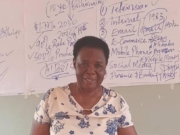
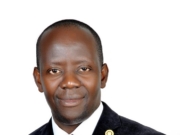

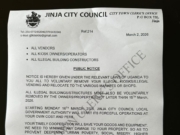





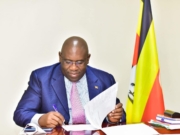


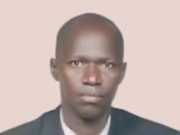

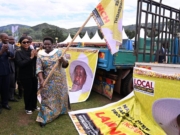


Jinja District Council descended into chaos on Friday 11 September 2026 after Speaker Simon Kibombo blocked the approval of Monica Namukose Kamagu as member of the District Service Commission, triggering a scuffle in which Vice Chairperson Joseph Ikoona seized the mace and fled the chambers.
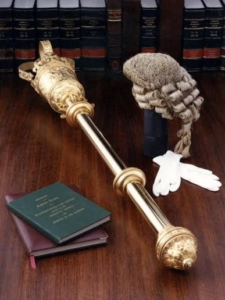
What is a Mace? It is not just a stick as some people think the symbol of authority of Council or Parliament. When the mace is lying on the table in front of the speaker, it means Council is legally sitting and has power to make decisions.
In practical terms, the mace is a decorated metal rod usually with the Uganda coat of arms and the district logo. It is carried into the chamber by the Sergeant-at-Arms before Council starts and placed on the table. It is carried out when council ends.
Police at Central Police Station (CPS) Jinja have since preferred a theft charge against Ikoona under reference SD 47/14/09/2026. Speaker Kibombo confirmed he lodged a formal complaint after Ikoona, who returned the mace hours later following intervention by elders, disrupted a lawful Council sitting.
Ikoona is expected to be summoned to record a statement before the file is forwarded for sanctioning and possible arraignment.
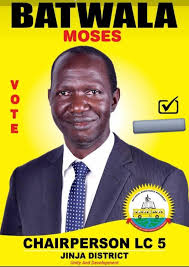
The Friday incident marks the second time Namukose’s nomination by LC5 Chairman Moses Batwala has collapsed over questions of legality.
Addressing allegations that he is sabotaging Batwala’s administration, Kibombo in an exclusive interview with The Exposure Uganda (TEU) said his office is bound by statute and not by personal allegiance.
He cited Section 11 of the Local Government Act Cap 138 which vests the Speaker with powers to preside, preserve order and enforce Rules of Procedure and ensure compliance with the law, alongside Section 64 which guarantees the independence of the District Service Commission.
He described the sabotage claims as cheap political popularity which has over the years been Batwala’s trademark and advised the executive to present another candidate who meets the legal threshold.
Why Council Rejected Namukose Again.
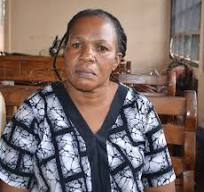
Council had on 28 April 2026 approved Namukose alongside Jackson Musarwa to the DSC under Min/DC/10/2026 and Ronald Nanga to the District Public Accounts Committee under Min/DC/11/2026.
At the time Namukose was still the serving Speaker of Council with her term due to expire on 12 May 2026. Nanga was serving as Secretary for Social Services and district councilor.
The then Chief Administrative Officer (CAO) Ms. Lillian Nakamate advised Council that both nominees needed to first resign as councillors before nomination.
Batwala, who publicly refers to himself as a bulldozer, overruled the advice and forced a vote through. The bulldozer metaphor is central to understanding Batwala’s method.
In construction a bulldozer is a tracked machine with a front blade designed not to negotiate obstacles but to push, level and clear everything in its path. In politics Batwala has adopted the same approach, pushing agendas through Council even when advised that they offend the law.

On 11 May 2026 CAO Nakamate wrote to Batwala declining to implement the two resolutions on grounds of illegality. She was later ejected from Jinja by Local Government Minister Balaam Barugahare in an unrelated administrative reshuffle.
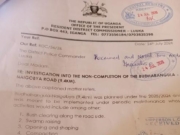
A whistleblower petition by NRM activist Paul Rwechungura to the Inspectorate of Government triggered investigations. In its report dated 16 June 2026 signed by Nabatanzi Olivia Sempa for the IGG, the Inspectorate confirmed that the CAO had rightly declined to implement the irregular nominations when both nominees were still serving as district councilors and closed the file.
That finding rests on clear provisions of the law. Section 61(2) of the Local Government Act provides that a member of Parliament, a local government council or an executive body of a political party or political organization or a public officer shall not be appointed a member of the District Service Commission. Section 88 of the Act which was previously numbered as Section 92 contains an identical bar for membership to the District Public Accounts Committee. The intention is to enforce separation of powers and prevent conflict of interest.
The Legal Limbo Surrounding Namukose.
When Batwala re-tabled Namukose before the new Council that assumed office after 12 May 2026, the debate shifted from her status as a councillor to her status as a public officer and party official.
At the centre of the new dispute is whether Namukose ever formally left teaching service. Council demanded evidence of resignation. She told the House she had written to the CAO.
The CAO in turn advised her to write to the Public Service Commission through the Education Service Commission. Council established that she has not written to PSC and has not tabled any acceptance letter.
The distinction matters because in Uganda’s public service resignation is not complete upon writing a letter or stopping to earn salary. Under the Public Service Standing Orders and the Education Service Act, the appointing authority must formally accept the resignation. For a government teacher that authority is the Education Service Commission acting for the Public Service Commission.
The CAO has no power to accept. He only forwards with a recommendation. Until that acceptance is issued the post is not legally vacant, the payroll is not formally closed, pension is not processed and the officer remains on the establishment.
Absence without formal release is treated as absence without permission which under Standing Orders can amount to abscondment leading to dismissal rather than honorable retirement. That would then offend Section 61(1)(a) which requires a DSC member to be of high moral character and proven integrity. For that reason, Council concluded that Namukose, though off payroll, remains on file and is therefore still a public officer barred by Section 61(2).
Beyond the public officer question, Council interrogated her political party status. Namukose sits on the NRM executive committee of Kageire Ward in Buwenge Town Council. The same Section 61(2) that bars public officers also bars members of executive bodies of political parties from appointment to the DSC.
Councilors argued this offends the independence requirement under Section 64 which demands that the DSC be insulated from political pressure and conform to standards set by the Public Service Commission.
Running through both legal objections is a deeper concern about independence. Namukose is widely perceived as a strategic ally of Batwala who led her campaign in the 2026 elections when she stood as an independent against Peace Tibyaze who is now Jinja District Woman MP and NRM flagbearer.
Councilors argued that appointing her would compromise the perception of fairness in a body that under Section 55 of the Act is responsible for recruitment, confirmation, promotion and discipline of district staff.
How An Executive Member Is Expected To Conduct Himself.
A member of the Executive, whether it is the Vice Chairperson and Secretaries at district level or Ministers at national level, is not an ordinary councilor or MP once he steps inside the Council or Parliament chamber. Even without opening the Rules of Procedure, his conduct is governed by established conventions of cabinet responsibility.
He is part of government, not just a member of the House. An ordinary councillor can shout, oppose, walk out to protest because he represents his electorate alone. A member of the Executive represents the Executive. When he stands in Council, he is defending a collective decision that was taken in the Executive Committee. He cannot disown it on the floor or turn against the Chair when it is rejected. That is the principle of collective responsibility. That is why Ikoona grabbing the mace is particularly shocking because as Vice Chairperson he is the deputy premier of the district and second highest in the Executive after Batwala. When the Executive brings a name to Council and Council rejects it, his role is to take notes, return to the Executive and advise the Chairman to bring another name, not to fight the Speaker physically.
He must also show restraint because he enjoys privileged access to information. A Secretary has access to CAO reports, IGG reports and legal opinions long before ordinary councillors see them. Because he knows more, he is expected to be more sober. He cannot feign ignorance that Namukose is still a public officer when the CAO has already advised so in writing. He cannot act surprised when Council raises the same issues that the IGG had already flagged. In Parliament a Minister does not heckle the Speaker. He bows to the Chair even when the ruling goes against him, because the Chair is the referee and he is a player who is also part of management.
He must further separate his two caps. Every Executive member wears two caps. He is a councilor for his area and a minister for the district. While in Council, when an executive matter is on the floor, he must wear the minister cap. That means he does not debate like an opposition activist. He presents, justifies and answers queries calmly and with facts. He does not turn Council into a rally with sloganeering or threatening that they are bulldozers. He accepts defeat gracefully because if Council says no, the Executive has lost and must reorganize.
What is making the situation worse in Jinja and across Busoga is the new culture of performing for the gallery. Because of the hunger to generate Facebook reels, YouTube clips and TikTok videos, some politicians now act in deliberately weird and provocative ways whenever they sense cameras or journalists are around.
Council has ceased to be a chamber for serious deliberation and has gradually become a stage for content creation. A member does not rise to make a point of law but to make a clip. He shouts, bangs tables, grabs the mace, not because it will change the outcome of a vote, but because it will trend online that evening and portray him as a strong man to his supporters.
Unfortunately, journalists have not helped to arrest the situation. Many no longer challenge drama or interrogate whether an action is legal or just theatrical. They take cover under the easy and convenient excuse that my duty is to report what happened. So they record the shouting, upload the mace grab, add a sensational caption, and leave the public with no context or explanation.
In the end members of the public do not get a clear picture of what transpired. What they get instead is lopsided and distorted information that glorifies impunity. They see the fight but they do not understand why the fight happened. They see the rejection of a name but they do not understand Section 61(2) of the Local Government Act or what it means to be a public officer by operation of law.
They see a speaker being accused of sabotage but they do not hear that the IGG had already declared the earlier nomination irregular.
This gallery politics is dangerous because it rewards impunity and penalizes procedure. When a Vice Chairperson knows that grabbing the mace will earn him thousands of views and praise from his camp, the law becomes secondary. The incentive shifts from behaving correctly to behaving dramatically. Yet Council and Parliament are not entertainment studios.
They are institutions of accountability. If politicians continue to act for reels and journalists continue to report reels without context, the ordinary citizen who depends on these institutions for teachers, health workers and roads will be left with entertainment instead of service delivery.
The Missing Pre-Council Engagement.
What remains baffling to many observers is what is so difficult for the LC5 Chairman, the Speaker and the CAO to have pre-Council engagements and harmonize issues before going to a full Council that ends up in tatters.
This is standard practice in functional local governments or even in parliament. Before Council sits, the Executive, the Speaker and the technical wing led by the CAO hold a pre-Council consultative meeting where contentious files are reviewed.
It’s also during such closed engagements that legal opinions are sought. Names proposed for statutory bodies like the District Service Commission and District Public Accounts Committee are vetted against Section 61(2) and Section 88 of the Local Government Act.
Where a nominee is encumbered, the Executive is advised quietly to replace that name. By the time Council convenes, only clean files reach the floor.
In Jinja this simple mechanism has collapsed. Instead of consultation, each arm wants to ambush the other in the full glare of Council and cameras.
The Executive tables names it knows are legally risky. The Speaker waits to strike them down in public. The CAO writes legal advice after Council has already approved. Everyone wants to be seen as powerful and the Council Hall becomes a theatre of embarrassment. Then all parties begin making reckless and misleading comments to the usually forest of broadcasters and journalists who will also pick particular angles that suit their editorial house styles.
Yet politics, just like life, is about give and take. You cannot have your way in everything and every day. That is the essence of leadership. A bulldozer may have its way in a swamp, but even a bulldozer must stop for a bridge.
Speaker Simon Kibombo and LC5 Chairman Moses Batwala must sit down. Not for the sake of their egos or their camps, but for the district they both claim to love. They must agree that no file with legal questions goes to Council before harmonization.
They must agree that the CAO’s office will be given time to verify resignation letters from the Public Service Commission and party executive status before nominations are tabled. They must agree that Council will not be used as a battleground for 2026 campaign revenge.
Without that give and take, Council will continue to end in tatters, maces will continue to be grabbed, mineral water bottles will fly at each other for TikTok reels, and the people of Jinja will continue to pay the price for leaders who refuse to talk to each other before they talk at each other.
Background: A Fraction of Decades Of Bickering.
While commentators say politics is itself a conflict matter, what unfolded on Friday is by no means isolated. It is only the latest episode in decades of political bickering that have defined Jinja District and Busoga sub-region as a whole.
Jinja is the political capital of Busoga which comprises eleven districts including Jinja, Iganga, Kamuli, Mayuge, Bugiri, Namayingo, Luuka, Buyende, Kaliro, Namutumba and Bugweri.
Control of Jinja has historically shaped the narrative of Busoga and Busoga remains one of the largest voting blocs in eastern Uganda. For that reason, every small battle in Jinja is magnified beyond its borders.
Every election cycle Jinja District Council has become a theatre of war. In 2021 councillors clashed over election of Speaker and allowances when Namukose herself was Speaker.
In 2023 the District Service Commission was dissolved over bribery allegations after whistleblowers claimed jobs were being sold. Recruitment of teachers and health workers was frozen for six months.
In 2024 recruitment of parish chiefs under the Parish Development Model was halted after accusations of political interference from both the LC5 office and the Woman MP office.
The current fight traces directly to the 2026 general elections. During that campaign Batwala openly de-campaigned Peace Tibyaze, the official NRM flagbearer for Jinja District Woman MP seat, and campaigned for Namukose who stood as independent.
Tibyaze won and now sits in the 12th Parliament. In NRM politics de-campaigning a flagbearer leaves a permanent scar. Tibyaze’s camp believes Batwala tried to end her political career while Batwala’s camp believes Tibyaze is now using her influence to cut his wings.
Analysts who spoke to this publication interpret the blocking of Namukose’s DSC appointment through that lens. Making Namukose a DSC member would keep her politically visible as a household name for giving jobs to sons and daughters of the soil and economically empower her through allowances and influence, preparing her for a future Woman MP bid which sources say is only on slight pause mode.
The Cost To The Ordinary Citizen.
In the final analysis it is ordinary citizens who suffer because when two elephants fight it is the grass that suffers.
Jinja has operated for several months without a fully constituted DSC because of the illegal April approval. The IGG closed the file but the vacancy remains. With the second attempt now collapsed the process must start afresh with identification, vetting and another Council sitting. That is another month or more lost.
Without a DSC Jinja cannot recruit teachers for primary schools in Buwenge and Butagaya, cannot recruit midwives for health centers in Budondo and Buyengo, cannot promote deserving staff and cannot discipline absentee staff. Schools remain understaffed and health centers remain understaffed at a time when demand for services is growing.
The District Public Accounts Committee which Nanga was nominated to is equally critical. Under Section 88 of the Act DPAC examines Auditor General and internal audit reports. Without it audit queries accumulate and accountability suffers.
While Council fights over Namukose, it is not debating the budget for roads, the collapsing classroom block at some primary schools, or impassable roads or Parish Development Model funds that have not reached beneficiaries.
The mother in Kagoma who cannot find a midwife at night, the pupil in Kamigo Buyengo who has sat without a science teacher for a term and the unemployed youth in Jinja town waiting for fair recruitment are the grass that suffers when elephants fight for Facebook reels.
Until Jinja leaders learn that power is not about pushing and flattening like a bulldozer but about building and accommodating like a bridge, and until journalists learn that their duty is not just to report drama but to explain the law behind it, the grass will continue to suffer.