











“The mind is not a vessel to be filled, but a fire to be kindled.”
That enduring principle was laid down nearly two thousand years ago by Plutarch (c. AD 46-119), the Greek biographer, essayist and moral philosopher, in his treatise On Listening to Lectures (De audiendo), part of his celebrated collection Moralia. For Plutarch, education was never about pouring facts into a passive learner; it was about igniting curiosity, character and conscience that would burn for a lifetime.
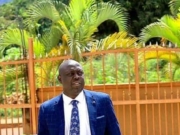
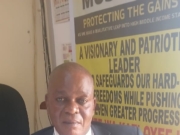
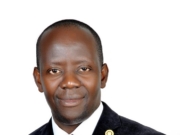
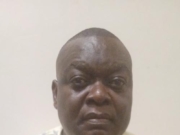
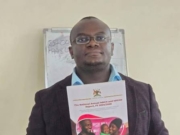
It is that ancient warning that Viva College School Principal Denis Alfred Anguyo is reviving in Jinja today, as Uganda confronts a painful paradox of brilliant academic papers collapsing under the weight of alcoholism, drunkenness, theft, bribery and indiscipline in the workplace.
Anguyo, an experienced teacher, manager and administrator who leads the school that lives by the motto Great Minds Shape the World, argues that Uganda has perfected the art of filling vessels with First Class degrees while failing to kindle the fire of character, and the result is graduates who shine brilliantly at interviews yet collapse on the job within months because employers are not hiring transcripts, they are hiring people who can be trusted with time, money, alcohol and power.
From Aristotle to King Jr.: The Classics Saw This Coming.
For Anguyo, this crisis is not new because it was foreseen by classical thinkers whose warnings have been validated across centuries and continents, and whose insights remain strikingly relevant to the moral challenges facing Ugandan families and schools today.
Recalling his education philosophy lectures, Anguyo invokes Aristotle (384-322 BC), the Greek philosopher and founder of virtue ethics, to whom the line Educating the mind without educating the heart is no education at all is attributed.
While the phrasing is a modern paraphrase widely used in educational literature, scholars trace its spirit directly to his Nicomachean Ethics and Politics, where he argued that intellectual virtue without moral virtue becomes a tool for harm and that habits formed in youth through repetition shape character for life.
He turns to Mohandas Karamchand Gandhi (1869-1948), the Indian anti-colonial leader and moral philosopher. On 22nd October 1925, in his weekly newspaper Young India, Gandhi published the Seven Social Sins, a list given to him by his friend Frederick Lewis Donaldson from a sermon at Westminster Abbey in London.
The list read: Wealth without work, Pleasure without conscience, Knowledge without character, Commerce without morality, Science without humanity, Religion without sacrifice, Politics without principle.
After publishing it, Gandhi wrote that readers should know these sins not merely through the intellect but through the heart. Today, Knowledge without character is the sin Anguyo says is most visible in Ugandan offices.
He quotes John Dewey (1859-1952), the American philosopher, psychologist and father of progressive education. In his seminal 1897 essay My Pedagogic Creed, published in The School Journal, Volume LIV Number 3, Dewey wrote: Education is a social process. Education is growth. Education is, not a preparation for life; education is life itself.
In the same creed he added, Education, therefore, is a process of living and not a preparation for future living. For Dewey, what children do at home and school today is precisely how they will live in marriage and employment tomorrow.
And then, Anguyo the press-shy man summons Dr. Martin Luther King Jr. (1929-1968), the American Baptist minister, civil rights leader and Nobel Peace Prize laureate.
At just 18, while at Morehouse College, King wrote in February 1947 in the Maroon Tiger student newspaper in an essay titled The Purpose of Education: We must remember that intelligence is not enough.
Intelligence plus character—that is the goal of true education. The complete education gives one not only power of concentration, but worthy objectives upon which to concentrate. In the same essay he warned, the most dangerous criminal may be the man gifted with reason, but with no morals.
Four voices, spanning Ancient Greece to twentieth century America and India, converge on one verdict that Plutarch first ignited: brilliance without character is dangerous and unsustainable, and a society that celebrates grades without grounding them in values will eventually collapse under its own cleverness and corruption.
Home Is the First Classroom.
If the classics diagnosed the disease, Anguyo says parents are the first cure, because children learn more from what adults live than from what adults’ lecture, and the home remains the most powerful classroom for character formation.
The home, he argues, must become the first laboratory where integrity tells the truth even when uncomfortable, where respect treats house workers and managers with equal dignity regardless of tribe or status, where responsibility accepts consequences without blame shifting, where discipline does what is right even when no one is watching, where compassion cares for neighbors, and where excellence strives to do one’s best even in small chores and daily duties.
In this partnership, schools must not be undermined, he adds that when a learner violates a rule, the revolutionary response is not to attack the teacher but to make the child reflect on what happened, who was affected and what will be done differently.
Disagreements between home and school, he insists, must be handled privately, respectfully and constructively, away from the child, to preserve the unity of the two most important worlds in a child’s life and learning journey.
He also warns against the rescue culture that has crippled resilience and created entitlement. Forgetting an assignment, misplacing a textbook, breaking a school rule or failing to prepare for a paper should become a lesson in ownership rather than an emergency for parents to fix with phone calls and excuses.
Anguyo says the question must shift from what has the school done to my child to what can my child learn from this experience and how will he or she take responsibility going forward with courage and humility and discipline.
Why First-Class Degrees Are Collapsing on The Job.
This failure to build resilience and character, Anguyo contends, explains the painful paradox now discussed everywhere from boardrooms to pulpits and now dominating national conversation about the future of work and national integrity.
No wonder quite a number of chaps considered very intelligent and bright who graduate with flying colors scoring first class degrees cannot sustain their jobs and their glittering academic papers due to alcoholism, drunkenness, theft, bribery and corruption.
They shine brilliantly at the interview, but they collapse miserably on the job within a few months, destroying trust, teams and institutions that depend on reliability and integrity.
These vices, he notes, have become topics of discussion everywhere — dominating seminars and workshops and conference halls, to sermons in places of worship, to debates on media and comedy platforms, to discussions in Parliament and village meetings.
“When our pulpits, boardrooms, media houses and comedy stages are all talking about the same moral collapse, it is clear the problem is deeper than technical skills. Uganda does not lack knowledge; it lacks knowledge governed by character, self-control and respect for others and for public resources”, he observes.
A First-Class degree may open a door, but it cannot keep a person in the room if they cannot be trusted with time, alcohol, money and power. He explains that an employer today is not hiring a transcript; an employer is hiring a person who is reliable, honest, sober, respectful, disciplined, teachable and able to work with others under pressure.
“Without those qualities, brilliance becomes a liability rather than an asset, and the nation loses both talent and trust and progress”, he elaborates.
That is why the partnership between home and school must move beyond fees and grades to formation of the whole person who will shape families, workplaces and the nation with both competence and conscience and courage.
Inside Viva College: How We Live Great Minds Shape the World.
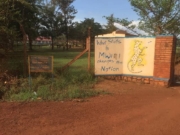
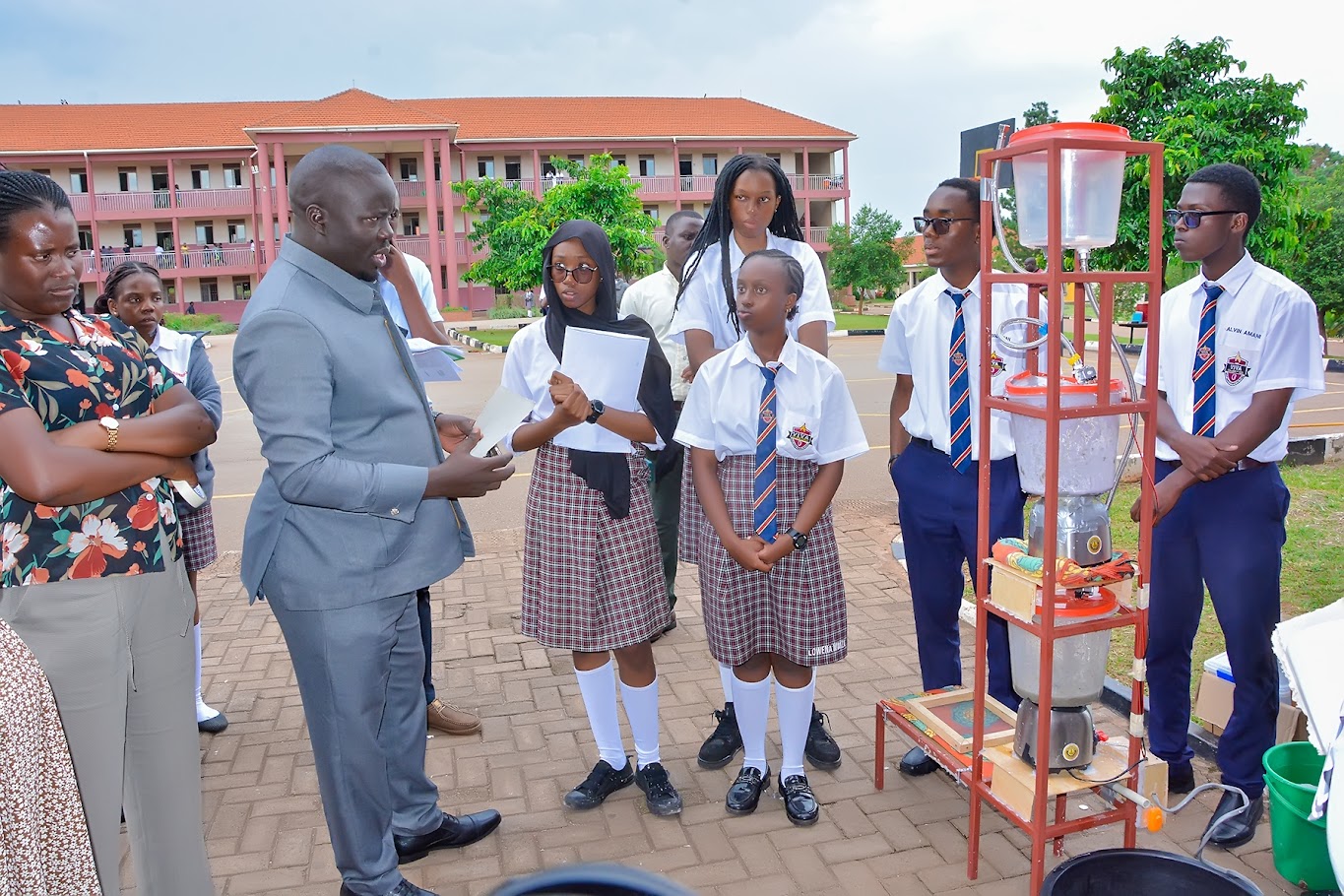
So how does a school turn a motto from a wall decoration into a way of life? At Viva College, Anguyo says, Great Minds Shape the World is not a slogan but a daily system that kindles Plutarch’s fire and turns it into practical habits that learners carry for life and leadership.
It starts each morning, where assembly is structured not as a parade of announcements but as a twenty-minute character clinic where a Value of the Week — such as integrity, discipline, time management, respect, honesty, cleanliness, stewardship — is declared, explained with real Ugandan stories and global examples, and practiced by both staff and learners throughout the week in classrooms, dormitories and playgrounds with accountability.
That value is then locked into a Code of Honor co-signed by learner, parent and teacher at admission, spelling out expectations on honesty in examinations, respect for property, decent language, decent dress, punctuality, and care for others.
Consequences are deliberately restorative rather than revengeful; a learner who litters leads a cleanliness campaign, while one who is persistently late is entrusted with timekeeping duties to learn accountability and service and leadership.
From rules, the school moves to relationships through structured mentorship. Every learner belongs to a small mentorship family of not more than fifteen learners headed by a teacher-mentor who meets them weekly not just about grades but about peer pressure, emotional intelligence, anger management, relationships, career guidance and life skills.
That mentorship is linked directly to parents through the home-school diary, phone calls, messages and parent meetings, ensuring that what is taught at school is reinforced at home consistently and lovingly.
Leadership is also treated as practice rather than theory. Through prefect ship, class responsibilities, clubs, societies, sports captaincy and dormitory leadership, learners handle real budgets, resolve real conflicts among peers, organize events and serve younger learners.
This is where humility, integrity and dependability are tested under pressure and where great minds learn to shape their small worlds first before they are entrusted with larger ones in society.
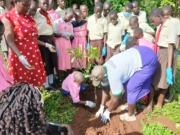
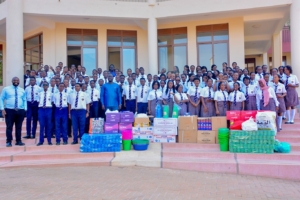
Service is the next pillar and it is compulsory and celebrated. Every learner at Viva College participates in community service — cleaning the community, visiting the sick in health centres, helping in places of worship, supporting the less privileged, and caring for the environment.
This discipline kills entitlement and teaches that education is not for self-elevation alone but for lifting others, which is the true meaning of shaping the world positively and sustainably for future generations.
Crucially, Anguyo says character is celebrated as loudly as academics and that at the end of term, Viva does not only award academic giants. It also awards the most honest learner, the most respectful, the most disciplined, the most helpful, the most improved in conduct, the most time-conscious and the best in teamwork.
Learners, he says quickly learn that what a school celebrates is what a school values, and what you celebrate you create in abundance across the entire school culture and community.
All this is held together by modelling, because teachers arrive early, dress decently, speak respectfully, keep their word and admit their mistakes openly. Learners become what they see daily, not what they are told occasionally in speeches and assemblies.
Knowledge gives our children the power to make a living. Character gives them the power to sustain that living with integrity. Service gives them the purpose for which to use both to shape the world with courage and compassion.
The Final Call: From Fee Payers to Co-Educators.
In his concluding appeal, Anguyo delivers a blunt challenge to every parent listening. Stop being spectators who appear only on visiting days and speech days. Become co-educators who kindle the fire that Plutarch described and keep it burning from childhood to adulthood with consistency.
A school can teach honesty, but the home must reinforce honesty when it is costly. A school can demand responsibility, but the home must give children chores, timekeeping duties, opportunities to handle small money, and chances to apologize and make amends when they have wronged others. A school can teach respect, but the home must model respect in how it treats neighbors, workers and strangers in daily life.
The ultimate measure of education is not only the certificate at the end of school. It is the kind of person that emerges from the entire educational journey — a young person who can stand with confidence and say: I know what is right. I understand why it is right.
I have the discipline to do what is right. I have the courage to stand for what is right even when it is unpopular. And I have the compassion to use my knowledge to make a positive difference for my family, community and country.
When home and school speak one common language of integrity, discipline, respect, care, responsibility and excellence, Anguyo concludes, education stops being about examination success and starts being about building character, shaping leaders and transforming society for the better.
“That is the revolution Viva College is inviting every parent to join today. That is what it means to live Great Minds Shape The World every day”, he says and concludes with a passionate calls to parents and all stakeholders to join hands along this direction for posterity.