









There is a night that is older than any nation on earth, yet it feels like last night in the hills of Mbarara, Kabale or Mbale City and the streets of Jinja City.
A man 84 years old, battle weary, childless, ten years after God promised him a great nation, stands outside his tent at Mamre in Hebron under a sky crowded with stars he cannot number.
A voice speaks from that sky and says, so shall thy seed be. In one line that would later echo through Romans, Galatians and James and shape the theology of the Reformation, Scripture records that he believed in the Lord and it was counted to him for righteousness.
4,000 years later humanity still lives in that night, still counting months and money and children not yet born and enemies feared to return, still looking for a shield when retaliation feels certain and a reward when refusing the wealth of Sodom has left hands empty.
That is why Genesis chapters 14 and 15 cannot be left in Genesis.
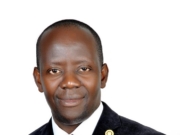
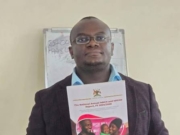
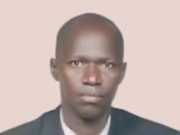
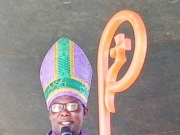
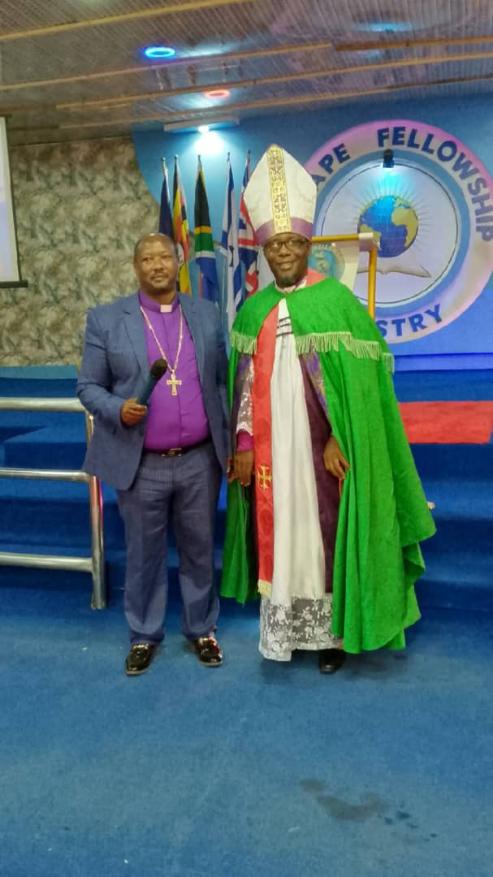
To unpack them for a generation that enjoys twenty-four seven access to information yet hungers for a word that does not expire, the Patriarchal Pulpit presented a preacher who is no stranger to the current socio economic and geopolitical terrain in Uganda, East Africa and the wider world is the Most Rev. Archbishop Elect Professor Mugume Bagambaki Richard.
He is also the Ecclesiastical Patriarch, Five-Fold Episcopal World Federation, Archbishop, Upper City Covenant Churches, President and Chancellor, UCCSAT University, Patriarchal.
What followed was not a lecture but an expedition, a careful walk-through ancient battlefields and ancient altars that ends in modern courtrooms, slums, maternity wards and places of exile, proving that the God of Abram remains the same yesterday, today and forever.
War Before Worship: Unpacking Genesis 14.
The archbishop intentionally refuses to begin in chapter fifteen and instead begins in chapter fourteen, on the conviction that covenant is born after war.
Genesis fourteen opens with a world order that feels painfully modern. Chedorlaomer king of Elam operates as the superpower of the age, exacting twelve years of tribute from the cities of the plain.
Together with Amraphel of Shinar which is Babylon, Arioch and Tidal, he forms an eastern coalition that enforces its will along the trade routes.
Five Canaanite kings, Bera of Sodom, Birsha of Gomorrah, Shinab of Admah, Shemeber of Zeboiim and the king of Bela which is Zoar, rebel in the thirteenth year. In the fourteenth year the coalition sweeps south along the Kings Highway, smiting Rephaims in Ashteroth Karnaim, Zuzims in Ham, Emims in Shaveh Kiriathaim, Horites in Mount Seir, before turning to smite Amalekites and Amorites in Hazezon Tamar.
The battle is finally joined in the vale of Siddim, a place described as full of slimepits, which would later become the Dead Sea. Sodom and Gomorrah flee, fall and lose all goods.
Lot, who had first pitched his tent toward Sodom and then taken residence inside Sodom, is taken captive with his family and possessions. Word reaches Abram the Hebrew, the man from beyond the river, dwelling among the oaks of Mamre the Amorite, brother of Eshcol and Aner.
What follows is the first holy war recorded in Scripture. Abram arms three hundred and eighteen trained men born in his own house and pursues by night as far as Dan, divides his force and smites the coalition unto Hobah which lies to the north of Damascus.
The archbishop lingers on that name, Damascus, because waiting at home in Abram’s own household is Eliezer of Damascus, the faithful steward, capable and qualified by every human standard to be heir according to custom if no son should come. He stands as the human backup plan that waits patiently while divine promise appears to delay, and God will soon declare that this man shall not be heir.
Abram recovers all, persons and goods and Lot his brother’s son, and on his return two kings meet him in the Kings Dale. Bera king of Sodom offers a deal that still tempts every generation, saying give me the persons and take the goods for yourself, the classic proposal to be enriched without accountability. From Salem, which is Jerusalem, comes a different king, Melchizedek, King of Righteousness, King of Peace, Priest of El Elyon, Possessor of heaven and earth. He brings forth bread and wine not as a host offering hospitality but as a priest offering blessing. He blesses Abram, saying blessed be Abram of El Elyon, and blesses El Elyon who delivered enemies into his hand. Abram responds by giving him tithes of all.
At this point the archbishop slows the narrative to reveal the mystery. Here is a priesthood without recorded father, without mother, without descent, without beginning of days or end of life in the text, made like unto the Son of God, whom Psalm one hundred and ten and Hebrews seven present as greater than Aaron and greater than Levi, for Levi still in the loins of his father Abraham paid tithes to him.
This is Christ in prefiguration, ministering to a weary warrior after battle what Sodom could never provide, bread and wine that anticipate body and blood, Calvary before Calvary. After every battle there remains a Salem. After refusing Sodom there remains bread and wine.
The Night of Covenant: Genesis 15.
After these things, after war, after worship, after tithes, after refusal, the Word of the Lord comes to Abram in a vision saying, fear not Abram, I am thy shield and thy exceeding great reward.
The archbishop unfolds the Hebrew with pastoral precision. Magen conveys a personal shield that covers a swordsman who fears counterattack after victory. Sekar Harbeh Meod conveys wages exceedingly abundant for a man who refused wages from Sodom.
God shapes His self-revelation to match Abram’s recent obedience, becoming protection for one who feared retaliation and portion for one who refused corruption.
Then comes honest prayer. Adonai Yahweh, Lord Master, what wilt thou give me seeing I go childless and the steward of my house is this Eliezer of Damascus. Behold to me thou hast given no seed. God answers not with rebuke but with space, bringing him outside and saying, look now toward heaven and tell the stars if thou be able to number them, so shall thy seed be.
The archbishop draws attention to the distinction between dust in Genesis thirteen sixteen which speaks of earthly seed, national Israel to be numbered, and stars in this chapter which speak of heavenly seed, Christ the singular Seed in Galatians three sixteen and the multitude in Him that is innumerable. Both dimensions are contained in one promise.
Then comes verse six, the hinge upon which the entire Bible turns. He believed in the Lord and he counted it to him for righteousness. Heemin means to lean with the whole weight, to stay, to confirm, to trust as a child leans on a father. Chashab is an accounting term, to impute, to reckon, to place to the credit of an account.
This occurs before circumcision fourteen years later in chapter seventeen and before Law four hundred and thirty years later according to Galatians three seventeen, establishing justification by faith alone. This is the text quoted in Romans four, Galatians three and James two.
When Abram asks, whereby shall I know that I shall inherit it, God initiates covenant ratification. He commands, take me a heifer of three years and a she goat of three years and a ram of three years and a turtledove and a young pigeon.
The archbishop notes maturity of three years speaks of completeness, heifer for sin, goat for sin, ram for consecration, turtledove and young pigeon the offering of the poor in Leviticus, pointing to Christ who became poor. Abram divides the animals and lays piece against piece, making a pathway of blood, but the birds he does not divide, for what is heavenly cannot be torn.
When the fowls come down upon the carcasses, Abram drives them away, guarding the sacrifice from morning until evening. Those birds represent unclean spirits and hostile powers, including Egypt that would later seek to devour Israel, and the act of guarding becomes a portrait of intercession that persists through the heat of the day.
At the going down of the sun a deep sleep, tardemah, the same deep sleep that fell upon Adam in Genesis 21 when Eve was taken from his side, falls upon Abram, and a horror of great darkness descends upon him.
In that darkness God reveals future history with prophetic exactness, declaring that his seed shall be a stranger in a land not theirs and shall serve and be afflicted four hundred years, that the nation whom they serve will be judged and that afterward they shall come out with great substance, a reference to the iron furnace of Egypt described in Deuteronomy four twenty.
Abram himself shall go to his fathers in peace and be buried in a good old age, living 91 more years to 175. In the fourth generation, Levi, Kohath, Amram, Moses, they shall return, for the iniquity of the Amorites is not yet full. God demonstrates patience that grants four centuries of grace to Canaan while remaining precise in His timetable.
Then comes the climax that makes this covenant the most important in Scripture. When the sun went down and it was dark, a smoking furnace and a burning lamp passed between those pieces.
In the ancient covenant ritual described in Jeremiah 34:18, both parties passed between the pieces invoking death upon themselves if they violated the covenant. Here Abram sleeps and does not pass.
God alone passes in symbols of judgment and presence. The covenant is therefore unconditional. If it fails, God must be torn. At Calvary God was torn, where furnace and lamp, judgment and light, met in one body.
In the same day the Lord made a covenant with Abram, saying unto thy seed have I given this land from the river of Egypt unto the great river Euphrates, naming ten nations, Kenites, Kenizzites, Kadmonites, Hittites, Perizzites, Rephaims, Amorites, Canaanites, Girgashites and Jebusites, a promise greater than Joshua’s conquest and awaiting the reign of the Seed.
Pillars That Hold The Covenant Together.
At the center of the message the archbishop distills five pillars for a reader saturated with information yet hungry for truth that endures.
The first pillar is that God Himself is the shield when retaliation feels real. After defeating four kings, Abram remained exposed. God does not provide a larger militia. He provides Himself.
The second pillar is that God Himself is the reward when corrupt reward is refused. Abram lifted his hand to El Elyon, Possessor of heaven and earth, and declined even a thread from Sodom. To a man who walked away from illicit enrichment, God declares that He is the exceeding great reward. Integrity is never loss when El Elyon is portion.
The third pillar is that righteousness is imputed by faith and not earned by performance. Faith precedes circumcision and precedes law, which removes both shame and striving. Humanity is made righteous not by what it does for God but by trusting what God has done and will do.
The fourth pillar is that God makes covenant while humanity sleeps. Abram does not walk the blood path. A smoking furnace and a burning lamp walk alone, revealing a covenant that is unconditional and therefore certain. The future rests not on human grip upon God but on God’s grip upon humanity.
The fifth pillar is that affliction possesses an expiry date and iniquity possesses a fullness. Four hundred years are decreed and then judgment upon the oppressor and exodus with great substance. God remains patient with Canaan for four centuries yet remains precise in judgment. No furnace lasts forever.
A Word For Those The World Forgets.
From those pillars the archbishop turns the pulpit into a pastoral hospital, speaking directly to groups he carries in his heart across Uganda and East Africa.
To widows and orphans who are suffering, the text in Genesis fourteen fifteen shows Abram pursuing at night to recover Lot, the vulnerable kinsman. El Elyon has not lost your file.
The smoking furnace declares that God has entered your furnace of lonely nights and school fees and contested land. The burning lamp declares that He will guide you out. A husband may have died and a father may have died, yet covenant has not died, because God passed alone.
To the destitute and homeless, Abram dwells in tents at Mamre yet is called heir of a territory stretching from the Nile to the Euphrates. God gives stars when there is no son and land when there is no acre. To those sleeping on verandas in Jinja, in church compounds in Mbarara, in iron sheet structures in Katanga, God says I am thy shield from rain and shame and I am thy dwelling.
The covenant was cut upon the ground between torn pieces for people who have no floor, and Salem continues to bring bread and wine to those without bread.
To the misunderstood and misjudged, Abram was dismissed as childless and therefore cursed, with only Eliezer to succeed him, yet God called him outside alone and showed him stars. Society counts by what is visible inside the tent while God counts by what is visible in heaven.
Righteousness is not explanation but imputation, and the call is to cease defending and begin believing. To the outcasts, whether economic, political or social, Abram appears as Ivri, the man from beyond, a migrant from Ur with Amorite allies rather than Canaanite credentials, an economic outcast refusing Sodom’s economy and a political outcast refusing its alliance. God grants him a promise larger than ten nations. To those cancelled because of tribe, party, poverty, accent, disability or history, God declares that inheritance is not from Bera of Sodom but from Melchizedek of Salem.
To the childless woman in a society where infertility remains a dangerous label, this text belongs most intimately. Sarai at 74 carries a label of barrenness in a culture where barrenness was treated as shame. God does not rebuke the question but shows stars and promises that seed shall come from his own body.
The horror of great darkness conveys that God feels the insult endured, while deep sleep conveys that God works while tears find rest. Worth was never located in the womb but in faith counted for righteousness.
In Uganda and Africa where a childless woman may be chased, judged or replaced, God declares that He is exceeding great reward before He becomes the giver of children.
To those wrongly convicted and jailed, Lot was taken captive wrongly by war rather than law. To those in Luzira, Kirinya or any cell for a case not committed, for a debt not owed, for politics not played, God says that nation whom they shall serve will I judge.
There is judgment for oppressors and record in heaven. The iron furnace possesses a door. The smoking furnace has entered the cell and the burning lamp will lead out. Even when a court declares guilt, heaven has counted righteous in Christ those who believe.
To the qualified but unemployed youth, the portrait is Eliezer of Damascus, trained, faithful, capable, born in the house, bearing certificates, diplomas, degrees and masters, yet hearing that this shall not be heir, not because qualification is absent but because inheritance in this kingdom rests on promise as well as preparation.
The season of guarding sacrifice and driving away fowls that seek to devour the carcass, birds of delay, rejection and nepotism, from morning until evening, is covenant guarding.
The counsel remains to keep driving them away. Stars are being counted. In the fourth generation they shall return, and that generation shall come out with great substance, not merely with employment but with testimony.
To all who wait, the final word left on the pulpit remains that God instructed Abram to divide the sacrifice but not the birds, indicating that some things in life are allowed to be torn so that God may create a passage through them while other things are preserved whole because what is heavenly cannot be divided.
He was told to wait from morning until sunset, revealing that some prayers offered in the morning receive answers at sunset. He was put to sleep because some covenants God establishes while humanity sleeps, lest human assistance spoil divine intention.
Therefore, the charge remains, fear not. Shield is not connection, tribe, party or bank. Shield is a Person. Reward is not tender, marriage, child, job or visa. Reward is a Person.
He believed and it was counted. While he slept, God walked. That is still how God saves today, yesterday, today and forever.