



















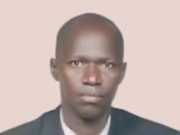
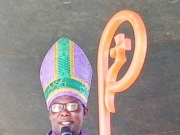

Patriarchal Pulpit Sermon No. 018 / Archbishop Elect Prof. Mugume Bagambaki Richard Delivers Powerful Exposition of Genesis 18
In what many bishops described as one of the most profound teachings of the year, The Most Rev. Archbishop-Elect Professor Dr Mugume Bagambaki Richard, Ecclesiastical Patriarch of the Five-Fold Episcopal World Federation and Archbishop of Upper City Covenant Churches, has delivered a rich and deeply philosophical exposition of Genesis 18, showing how an old story speaks to modern wounds.

The sermon, preached under the theme When God Comes For Lunch, focused on hospitality, laughter and intercession for Sodom. According to the Patriarch, Genesis 18 is the most intimate chapter in the entire book of Genesis because it is the chapter where God eats lunch with a man.
The Patriarch told the congregation that Genesis 18 is not just a story but the first full portrait of what it means to be called the friend of God, a title that would later be confirmed in 2 Chronicles 20:7, Isaiah 41:8 and James 2:23.
A Sore Patriarch in the Heat of the Day and the Woman at the Well at the Same Hour.
To understand Genesis 18, the archbishop first placed it in its historical time and medical condition, showing that biblical time often carries spiritual meaning.
He explained that Genesis 18 happened circa 1898 BC. Circa is a Latin word used by historians which means around or approximately, so circa 1898 BC means around 1898 years before Christ, which is about 3924 years from today.
It happened just days after Genesis 17. In Genesis 17, Abraham was circumcised at 99 years old while Ishmael his son was 13, and the Bible says they were circumcised on the selfsame day, which means Abraham was still nursing a fresh wound when Genesis 18 begins.
Genesis 18:1 says, And the Lord appeared unto him in the plains of Mamre and he sat in the tent door in the heat of the day, and the Patriarch noted that Abraham was sitting, not standing, because in Jewish understanding the 3rd day after circumcision is the most painful day as seen in Genesis 34:25, so Abraham was sitting in the tent door to catch a breeze while he was sore and in pain.
It was the heat of the day, which means it was noon, and at noon in the desert there is a hot wind called Chamsin when no one travels, yet God chose to travel at noon to visit a hurting friend, which the Patriarch called the philosophy of divine condescension where God does not wait until we are strong but visits us in our weakness.
The place was Mamre in Hebron, which means the place of oaks, a place of big trees giving shade where Abraham was living.
The time of the promise is also important because in Genesis 18:10 God says, I will certainly return unto thee according to the time of life and lo Sarah thy wife shall have a son, a promise that echoes Genesis 17:21 where God says at this set time in the next year, which means Genesis 18 happened about 9 to 12 months before Isaac was born, and at the same time it was the last afternoon of Sodom because the city was still standing but its judgment had already been decided in heaven and in a few hours it would be destroyed in Genesis 19.
Moses wrote this book for Israel around 1445 BC while they were in the wilderness, and the Patriarch explained that Moses wanted Israel to learn 3 things, first that God is a just judge who investigates before he judges when he says I will go down now and see, second that even doubting laughter can be turned into a miracle as Sarah laughed but still became a mother, and third that Abraham was more than a father of faith because he was a friend who intercedes for a wicked city.
The noon heat in Genesis 18 has a powerful equivalent in the New Testament in John 4, where a woman went to fetch water at noon and met Jesus who requested water from her, and the connection is deeply theological. In John 4:6, the Bible says Jesus being wearied with his journey sat thus on the well and it was about the 6th hour, which is Jewish time for noon, the same heat of the day when Abraham sat.
The woman of Samaria came at noon because she was avoiding people, she was sore in her soul from broken marriages and social rejection, just as Abraham was sore in his body from circumcision, and both of them met God at noon when no one else wanted to be outside. Abraham sat in the tent door in the heat, the woman walked to the well in the heat, and in both cases, God was waiting.
There is a beautiful reversal that the Patriarch highlighted. In Genesis 18, God comes hungry and Abraham gives him food and water to wash his feet, while in John 4, God comes thirsty and asks the woman, Give me to drink, and the woman who came to draw water ends up receiving living water. In Mamre, the Creator eats the calf of creation, while at Sychar, the Creator asks for a drink from his creation.
Both stories teach that noon is the hour of divine appointments for hurting people. At noon, when shame is hottest, when poverty is heaviest, when loneliness is deepest, God shows up. Abraham was sitting because he could not stand, the woman was walking alone because she could not belong, and Jesus meets both at the point of their soreness.
The God who traveled at noon to visit Abraham is the same God who traveled through Samaria at noon to visit a rejected woman, because God does not avoid the heat, he enters it.
For Ugandans who feel they are sitting in the heat of childlessness, unemployment, poverty or discrimination, the message is that the heat of the day is not a sign of abandonment but the exact time when God is most likely to appear if the tent door is open and if we are willing to go to the well.
Hospitality That Brings God to the Tent.
The first part of Genesis 18, verses 1 to 8, is about hospitality, which simply means love for strangers and generous welcome of visitors.
The Bible says 3 men stood by Abraham, and the Patriarch explained that 1 of them was Yahweh himself, not God the Spirit in his invisible form but God manifesting himself in a visible form that a man could see, which theology calls a theophany meaning God appearing, and more specifically it was a Christophany which means the appearance of Christ before he was born in Bethlehem, while the other 2 men were angels who would later go to Sodom.
Though Abraham was 99 and sore, the Bible says he ran to meet them and bowed himself to the ground, and the Hebrew word for bowed is shachah which means worship, and Abraham said, My Lord, if now I have found favor in thy sight, pass not away I pray thee from thy servant, because he recognized that this was a divine visitation.
He offered a little water to wash their feet because in those days people walked in dust and needed to wash feet, and he offered them to rest under the tree and promised a morsel of bread which means a small piece, but what he promised as small he gave as a feast.
He hastened into the tent to Sarah and told her to make ready quickly 3 measures of fine meal, which is called an ephah, a large measure of flour about 22 litres that was enough to feed many people, and Sarah was to knead it and make cakes upon the hearth which is the traditional oven or cooking stone.
Then Abraham ran to the herd and fetched a calf tender and good, meaning he did not bring an old tough animal but brought the best tender and young animal, and he gave it to a young man meaning a servant and the servant hastened to dress it, which shows speed and honor.
Then he took butter and milk and the calf and set it before them, where butter here means curds or yogurt, and it was a full menu of bread, meat, yogurt and milk, and he stood by them under the tree while they ate, standing like a servant while God ate like a guest.
For spiritual leaders, the Patriarch drew a lesson from 1 Timothy 3:2 which says a bishop must be given to hospitality, and Abraham at 99, sore and old, still qualifies, which raises the question whether today’s leaders run to meet visitors even when they are tired.
Does God Eating Contradict That God is Spirit.
Here the Patriarch answered a critical question that confuses many readers because the Bible says in John 4:24 that God is a Spirit and they that worship him must worship him in spirit and in truth, and Luke 24:39 also says a spirit hath not flesh and bones, so people ask how God can eat meat and bread under a tree and whether the Bible contradicts itself.
The Patriarch said there is no contradiction at all but there is progressive revelation, which means God reveals himself little by little more clearly over time.
God in his essence is Spirit, which means he is invisible, eternal, omnipresent and has no need for food because he does not hunger and does not need a body to survive.
But because God is also love and wants fellowship, he sometimes clothes himself in a visible form that human eyes can see, which theologians call accommodation meaning the infinite God accommodating himself to the finite man so that man can relate with him.
What Abraham saw was not God needing food to live but God choosing to eat as a sign of friendship and covenant acceptance, because in the ancient world to eat together meant to be in fellowship and peace.
The same God who ate under an oak in Mamre would later become truly flesh in John 1:14 where it says And the Word was made flesh and dwelt among us, and that Word is Jesus Christ who after his resurrection ate broiled fish with his disciples in Luke 24:42 to prove he was not a ghost, not because he was hungry as God but to prove the reality of fellowship.
So, Genesis 18 does not teach that God as Spirit needs food, but teaches that the invisible God is free to appear in a visible form and even eat, not out of necessity but out of love, to show that he is a God who visits and fellowships and enters into human hospitality, and the eating proves that the visit was real and relational and personal.
Hebrews 13:2 was born from this chapter where it says Be not forgetful to entertain strangers for thereby some have entertained angels unawares.
When Sarah Laughed Within Herself.
The second part, verses 9 to 15, moves from the field to the tent and focuses on the promise.
The visitors asked, where is Sarah thy wife, and they knew her name supernaturally, and Abraham said behold in the tent because it was custom for women to be in the inner tent.
Then came the promise that I will certainly return unto thee according to the time of life and lo Sarah thy wife shall have a son, and Sarah was listening at the tent door which was behind him while she was eavesdropping.
The Bible adds a note that Abraham and Sarah were old and well stricken in age and it ceased to be with Sarah after the manner of women, which means Sarah had reached menopause and was 89 years old and could no longer have children by natural means.
Therefore, Sarah laughed within herself, not loudly but inside her heart, and said, After I am waxed old shall I have pleasure, my lord being old also, where the word pleasure here in Hebrew can mean the joy of marital life including the pleasure of having a child, which was biological realism asking how an old womb and an old husband could produce a child.
The Patriarch noted that both Abraham and Sarah laughed, because Abraham laughed in Genesis 17:17, and God was not offended by honest laughter but in fact immortalized the laughter by naming the promised child Isaac, which in Hebrew is Yitzchak meaning laughter, so the child became a permanent testimony that God turns laughter into nations.
Then the Lord said to Abraham, wherefore did Sarah laugh saying shall I of a surety bear a child which am old, and added Is anything too hard for the Lord.
This question is the central axiom of the Bible, and the Hebrew phrase is HaYipaleh MeYHWH Davar which means is there anything too wonderful, too extraordinary, too hard for Yahweh, and the answer is nothing.
This same question is repeated in Jeremiah 32:27 and answered in Luke 1:37 by the angel Gabriel to Mary where it says For with God nothing shall be impossible.
God said at the time appointed I will return unto thee and Sarah shall have a son, where the phrase time appointed is moed in Hebrew meaning a fixed season on God’s calendar, showing that God works on schedule and is never early and never late.
Sarah was afraid and denied, saying I laughed not, because fear made her lie like Peter would later deny Jesus, but God gently corrected her saying Nay but thou didst laugh, and he did not destroy her for lying but corrected her in love and still fulfilled the promise.
For women today, the Patriarch said Sarah is a model who laughed within, feared and denied, yet became mother of nations, showing that God uses imperfect people and is not offended by honest doubt but transforms doubt into testimony.
Shall I Hide from Abraham and the Intercession for the City.
Verses 16 to 21 show the doctrine of friendship where after lunch the men rose up and looked toward Sodom and from Hebron you can see down into the Jordan valley where Sodom was, and Abraham went with them to bring them on the way which was the custom of escorting honored guests.
Then the Lord said to himself, Shall I hide from Abraham that thing which I do, which is a divine soliloquy showing that God does not hide his plans from friends, as Amos 3:7 says Surely the Lord God will do nothing but he revealeth his secret unto his servants the prophets.
Why would God not hide, and the text gives 2 reasons, first because of covenant destiny where Abraham shall surely become a great and mighty nation and all nations of the earth shall be blessed in him, and second because of ethical fatherhood where the Bible says For I know him that he will command his children and his household after him and they shall keep the way of the Lord to do justice and judgment, where the word know here is yada meaning intimate knowledge.
God knew Abraham was not a permissive father who lets children do whatever they want but was a patriarchal father who commands his household to walk in righteousness, and the purpose of being blessed is not just to be blessed but to do justice and judgment.
Then God reveals the problem saying Because the cry of Sodom and Gomorrah is great and because their sin is very grievous I will go down now and see whether they have done altogether according to the cry, where the cry means an outcry of victims like the blood of Abel that cried from the ground, and Sodom’s sin was grievous meaning heavy and serious as defined in Ezekiel 16:49 to 50 as pride, fullness of bread, abundance of idleness, not strengthening the poor and needy, haughtiness and abomination, with Jude 1:7 adding sexual immorality.
Philosophically this shows a just God who does not judge by hearsay but like in Genesis 11:5 where the Lord came down to see the tower of Babel, he comes down to verify, which is judicial fairness, and Abraham’s hospitality and Sodom’s hostility are opposites because Abraham feeds strangers under a tree while Sodom abuses strangers at its gate.
The last part, verses 22 to 33, is the first long intercession in the Bible where intercession means standing in the gap to plead for others, and the Bible says the men turned their faces from thence and went toward Sodom but Abraham stood yet before the Lord while the 2 angels went to Sodom arriving in the evening of Genesis 19:1 but Abraham stayed.
In the Patriarch’s words, when everyone is going to Sodom the intercessor stays before the Lord for Sodom, which is the work of a spiritual leader.
Abraham drew near, where the Hebrew word is nagash which is a priestly word meaning to approach God closely, and said, Wilt thou also destroy the righteous with the wicked.
He began to negotiate saying Peradventure there be 50 righteous within the city wilt thou also destroy and not spare the place for the 50 righteous that are therein, where peradventure means perhaps or what if.
He argued That be far from thee to do after this manner to slay the righteous with the wicked and that the righteous should be as the wicked that be far from thee Shall not the Judge of all the earth do right.
This is the first time God is called the Judge of all the earth, and Abraham appeals to God’s own character because if God is just he must distinguish between righteous and wicked.
God answered If I find in Sodom 50 righteous within the city then I will spare all the place for their sakes, and then Abraham with humility said Behold now I have taken upon me to speak unto the Lord which am but dust and ashes which means complete unworthiness yet he spoke boldly.
Then the number descended from 45 to 40 to 30 to 20 to 10, and each time Abraham said Oh let not the Lord be angry and I will speak showing reverent boldness where he feared but still spoke, and he stopped at 10 where the Lord said I will not destroy it for 10’s sake.
Why did Abraham stop at 10, and the Patriarch gave several views, perhaps he thought Lot’s family was about 10 including Lot his wife 2 daughters and sons in law, perhaps 10 was considered the minimum quorum called minyan in Jewish tradition to form a community, and some rabbis say if Abraham had gone down to 1 God would have spared for 1 righteous but he stopped too early, so the lesson is not to stop interceding too early because there is 1 righteous man Christ for whose sake God spares all who believe.
In the end Sodom did not have even 10 righteous so it was destroyed but Lot was rescued because the friend of God stood in the gap, and the Bible ends the chapter quietly saying And the Lord went his way as soon as he had left communing with Abraham and Abraham returned unto his place.
How Genesis 18 Speaks to a Hurting Uganda and a Bleeding World.
This is not just history from circa 1898 BC but present truth for Uganda and the world in 2026 where the world today is hurting and the news is full of wars, displacement, economic pressure and social tension.
Poverty is crushing families in villages and in urban centers, many communities experience segregation and discrimination where people are judged by background or economic status, many women weep for childlessness like Sarah going from hospital to hospital, young graduates walk the streets of towns and cities with degrees but no jobs, there is an increase in murder cases in homes and communities, there is robbery that leaves families traumatized, and there is rebellion in the hearts of young people who feel abandoned by society.
Genesis 18 has 4 answers that speak directly to these wounds and the Patriarch expanded them with pastoral depth.
First, God visits the sore in the heat, because Abraham sat in the tent door in the heat of the day sore from circumcision and God did not wait until he was healed and strong but came at noon the hottest hour when no one travels.
Poverty is a sore that makes people feel exposed, war is a heat that makes life unbearable, discrimination is a heat that makes a person feel rejected, and to be a child with disability hidden in a hut, to be a widow facing eviction from family land, to be a graduate with a first-class degree but no job for 3 years, is to sit in the heat of the day.
Philosophy sometimes presents God as distant, but Genesis 18 says God travels at noon and leaves the comfort of heaven to sit with the sore, which means God has not abandoned communities facing hunger or economic hardship but comes to the tent not only to the palace but to the ordinary tent door.
Like Abraham who was 99 and considered too old by today’s standards, God still uses those the world considers finished, which speaks to unemployment and age discrimination because the 60-year-old farmer and the 65-year-old retired teacher is not finished and God can still give a promise that will birth something new.
He came with 2 angels and does not come alone but comes as a community, and for a divided world this is a message of unity in diversity where we are meant to live as one household.
Second, hospitality versus hostility is the answer to murder, robbery and rebellion, because in Genesis 18 Abraham gives hospitality while in Genesis 19 Sodom gives hostility, and this contrast is the root of much social breakdown.
When hospitality dies hostility grows, when people have food but refuse to share it and have abundance but use it for selfish pleasure, society begins to experience insecurity, and when a family loses hospitality it gains conflict, while Abraham stood under the tree while God ate and served, but the people of Sodom wanted to make others serve their desires, which is the difference between Mamre and Sodom.
For Uganda today, the solution to insecurity is not only law enforcement because operations by security agencies are necessary, but the deeper cure is a return to the culture of the oaks of Mamre where every institution takes responsibility for its premises and every person learns to wash the feet of strangers again.
Third, is anything too hard for the Lord is the answer to childlessness, poverty and joblessness, because Sarah was 89 and had ceased to have the manner of women meaning she was in menopause for many years, and many women face the pain of childlessness and are mocked in families and communities.
God’s question still echoes today, and this question is not only about the womb but about every closed door in Uganda, because a closed womb is like a closed job market where a graduate sends 200 applications and hears nothing, a closed womb is like a closed business where a mother works in the market and makes no profit, and a closed womb is like a war that never ends.
But Genesis 18:14 is the divine reversal where it says at the time appointed, I will return, and the word appointed is moed meaning fixed season, showing that God works with appointed times and is never late, and Sarah conceived because God returned at the appointed time.
For couples facing childlessness, do not deny your honest emotions, because Sarah laughed and then out of fear denied that she laughed, and many women pretend they are fine when they are bleeding inside, but God allows honest questions and does not cancel the miracle because you doubted, and he names the miracle after your laughter because Isaac means laughter.
For the unemployed, your Isaac can be a job or a business that will feed others, because the 3 measures of flour that Sarah baked became a feast for God, and your small skill of baking or farming can become a feast if you offer it in hospitality.
Finally, shall not the Judge of all the earth do right is the answer to war, murder and the call to intercede for cities, because Abraham stood yet before the Lord while the angels went toward Sodom, and the Lord said shall I hide from Abraham that thing which I do because the cry of Sodom and Gomorrah is great.
Sodom represents any community where injustice, murder, robbery and oppression cry to heaven, and today cities and villages cry from victims of corruption, land conflicts, domestic violence and theft, and that cry has come before God.
God says I will go down now and see, which means God is not a distant figure who can be bribed but is the Judge of all the earth who investigates and verifies, which is a model of judicial fairness that every justice system must learn.
Abraham drew near and said wilt thou also destroy the righteous with the wicked shall not the Judge of all the earth do right, which is the greatest question for war torn and injustice affected communities, and God’s answer is that he distinguishes because he said if I find 50 righteous I will spare all the place for their sakes, then 45, then 40, then 30, then 20, then 10.
This means a city is spared for the sake of the righteous, because in philosophical terms the righteous are the salt and preservative of a nation as described in Matthew 5:13, and for Uganda this means the future of towns and cities does not depend only on political power but on whether God can find righteous people in the city who stand in the gap.
Intercession is the duty of the church and of all people of good will, because the angels are already going to Sodom to investigate and their work is assessment, but Abraham’s work is mercy because he stands yet before the Lord and pleads, and today faith communities must not only preach but intercede.
When crime increases, we should not only celebrate arrests but intercede for thousands of youths who have no jobs and are vulnerable to being recruited, and when murder happens in a home we must intercede for families where justice and judgment are no longer taught, because Genesis 18:19 says God trusted Abraham because he will command his children and his household after him to keep the way of the Lord.
So, the application is clear and urgent for every Ugandan, because if you are hurting from poverty God will visit you in the heat if you open your tent door, if you are hurting from childlessness remember that nothing is too hard for the Lord, if you are troubled by robbery and murder return to hospitality and serve others instead of exploiting them, and if you are a leader in any sphere stand yet before the Lord for your community until God finds righteous people who can preserve it.
Without hospitality there is no appearance, without faith there is no Isaac, without friendship there is no secret, and without intercession there is no Lot saved, no city spared, no nation healed, which is how Genesis 18 makes sense to a hurting Uganda and a bleeding world, because the God who came for lunch in Mamre still comes for lunch today.
Next in the Patriarchal Pulpit Series is Sermon No. 019, Genesis 19, Destruction Of Sodom, Lot’s Escape, And The Origin Of Moab And Ammon.
Preacher: The Most Rev. Archbishop Elect Professor Mugume Bagambaki Richard, Ecclesiastical Patriarch, Five-Fold Episcopal World Federation, Archbishop Upper City Covenant Churches, President and Chancellor UCCSAT University, Patriarchal See Mbarara Uganda, WhatsApp +256775050183