





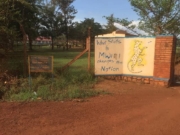









The much-awaited Kagoma Sugar Factory Ltd, the project expected to transform Buyengo Sub-County and finally put Jinja District on Uganda’s industrial map, now hangs precariously in balance.
Located in Nakitoloko village, Kagoma was meant to be the district’s first factory and its first serious investment, in a district long described as a revenue desert.
Jinja District has no meaningful revenue source, no industrial anchor and no factory to call its own, while neighbouring Jinja City boasts more than 100 investors. That breakthrough has now been frozen by a single ministerial letter.
That letter has sent shockwaves through Buyengo. It has rattled farmers who were preparing for an economic facelift, unsettled youth who had begun to dream of jobs at home, and cast a shadow over the district’s first real chance to escape economic obscurity.
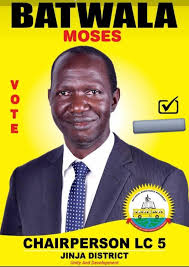
Jinja District, headed by two-term chairman Moses Batwala Mbago, has watched for decades as Jinja City attracted industry, revenue, banks, hotels and jobs. The district remained a supplier of labour and raw cane, exporting its youth to the city and its cane to other districts, and receiving in return little more than promises. Kagoma was supposed to change that equation.
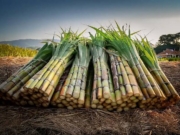
For Busoga, the stakes are even higher. Busoga is Uganda’s leading cane-growing region and feeds the nation’s sugar industry with sweat and soil, yet remains one of the poorest regions in the country. That paradox has haunted policymakers for generations. Kagoma was presented as a direct answer to it: a factory owned by a son of the soil, located in the heart of the cane belt, designed to keep value in Busoga.
For Uganda, the dispute has become a national test. It tests whether an investor who follows the law, secures a Uganda Investment Authority licence, wins community consent and carries a referral from State House can still be stopped by a ministerial letter that cites no study, attaches no figures and offers no hearing.
The Latest Letter: Tanna Orders A Halt.
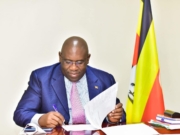
The letter from the Minister of Trade, Industry and Cooperatives, Hon. Sanjay Tanna, dated 3 November 2026, is addressed to the Chairman, Uganda Sugar Industry Stakeholders Council. Its reference is ADM.090/429/01. Its title is Concern Regarding Setting Up Unauthorized Sugar Manufacturing by Kagoma Sugar Factory in Busoga Region.
Tanna wrote:
“The Ministry has continued to receive reports about insufficient cane supply to satisfy the current capacities of mills operating in Busoga region. Therefore, no new applications should be processed. The purpose of this letter is to direct the Council to halt processing of the recently received applications, including Kagoma Sugar Factory project in Jinja, Busoga region, until the registration of sugarcane farms owned by millers and out-growers is completed and new industry locations are cited by the Council.”
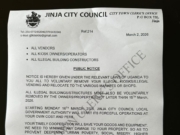
Kagoma Sugar Factory Ltd CEO Mugawe Fredrick Samuel says he was never served with the letter. If that is confirmed, the company learned of a decision affecting USD 80 million not through formal service, but through rumour and a telephone call.
The company further alleges that Jinja Resident District Commissioner Ahmed Kateregga Musaazi later telephoned its chairman and told him not to proceed.
The halt is, in practical terms, open-ended. It can last long enough to kill the investment without ever formally refusing it. That is administrative death by delay. Investors fear it more than an outright refusal, because a refusal can be challenged in court within 30 days, while a delay can drag on until the financier walks away.
Before That Letter: Kagoma Had Already Appealed To Museveni.
Before Tanna’s letter, Kagoma had already appealed to President Yoweri Kaguta Museveni over delays and financial obstacles surrounding its sugar manufacturing licence, and sought a waiver of pre-licensing fees.
In a letter dated 30 October 2026, addressed to the President at State House, Entebbe, Ref: KSF/LOANS/001, the company asked for help to secure the licence and exemption from the fees.
The appeal was made on behalf of the board, management and local stakeholders. It invoked an earlier presidential directive in a letter dated 8 July 2021, addressed to the Minister of State for Investment, and cited engagements with the President at Kololo Grounds on 29 November 2023.
At the centre of the appeal is Kagoma’s claim that President Museveni had previously directed government authorities to ensure the company received full support to establish a modern sugar plant in Buyengo. The latest letter therefore seeks to revive that earlier intervention and asks the Head of State to help remove outstanding administrative and financial barriers.
Authored by Mugawe Fredrick Samuel, Chairman and CEO, the letter reads in part:
“The company is ready to start the development of the project but is facing two critical hurdles in obtaining the necessary approvals, including delays in licensing approval and pre-licensing payment demand of 0.5% on total project valuation, USD 400,000.”
That complaint raises a question for Parliament and the Ministry of Finance. A local investor is being told to pay USD 400,000 before pouring a foundation, before crushing a tonne and before earning a shilling. He says he got his UIA licence in four days and paid nothing.
He is now being asked to fund the regulator before the regulator has decided whether he is fit to operate. The legal basis for that fee should be published for all investors to see.
The Finance Ministry’s involvement matters because the request includes a financial concession. The Trade Ministry’s involvement matters because it oversees sugar policy and regulation. Both must now decide whether expediting an application is lawful, and whether exempting an investor from statutory fees is lawful.
What The Hurdles Actually Are.
Kagoma is not struggling against vague obstacles but against specific, documented hurdles, and each one has to be named because together they explain why a UGX 330 billion investment has been frozen before a single foundation is laid.
The first wall is time itself, with Kagoma having applied on 11 October 2026 and watched its application get stamped received by the Ministry of Trade on 19 October 2026, only for the file to stall thereafter without any Council assessment ever being served on the company.
Layered on top of that delay is money demanded upfront, because the company has been asked to pay USD 400,000 in pre-licensing fees, calculated as 0.5 percent of total project valuation, and that demand arrived before production, before revenue and before any licensing decision was made.
What makes the halt even harder to defend is the absence of proof behind it, since the Minister’s letter cites reports of insufficient cane supply yet attaches no study, no figures and no assessment of whether existing mills can actually mill all the cane produced in the area.
Then there is the way the decision travelled, with Kagoma insisting it was never served with the halt letter and instead learning of its fate by telephone from the RDC, a method that leaves no paper trail and no formal right of reply.
Behind that decision sits a regulator whose own legitimacy is now in question, after published lists showed the Council’s miller seats going to representatives linked to large millers, while small and medium millers say their nominees were rejected and the Council has offered no published reasons for its choices.
Beyond the regulator lies a market that does not welcome newcomers, dominated as it is by established millers with deep pockets, deep networks and a proven willingness to use the courts to block new entrants, most recently in the January 2025 High Court case in which the Uganda Sugar Manufacturers Association challenged approvals for CN Sugar and Shakti Sugar.
And underneath all of it runs a contradiction at the heart of government, where one arm referred Kagoma for support while another arm froze it without even referencing that referral, leaving the investor caught between two different states speaking two different languages.
Together, those hurdles amount to a siege. Each one alone would test a weaker investor. Together, they explain why this dispute has become a national story. Every investor watching Kagoma is asking a simple question: if this can happen to a Ugandan with a licence, with land, with community support and with a State House referral, what can happen to me?
A Game-Changer For A Forgotten District.
Kagoma, chaired by Mugawe Fredrick Samuel, promised Buyengo an economic revolution. It proposed a modern integrated plant with an initial crushing capacity of 2,000 tonnes of cane per day, a 15-megawatt bagasse-based cogeneration plant and an ethanol distillery. The estimated investment is USD 80 million, about UGX 330 billion, a sum that dwarfs anything Jinja District has attracted in a single project.
The company says it holds Uganda Investment Authority Investment Licence No. 2022397137. It cites the International Finance Corporation as a prospective financier. That detail matters. IFC due diligence is rigorous and reputational. No serious investor invokes IFC lightly. No serious government treats an IFC-linked project lightly.
The company says the project would create more than 3,500 direct and indirect jobs for Busoga youth and women. It says it would give out-growers a reliable market, allowing farmers to negotiate, to choose and to survive, instead of begging a single mill to collect cane rotting in the field.
For Jinja District, the stakes could not be higher. Jinja City thrives on industry. Jinja District has remained a barren revenue desert, starved of factories, starved of local revenue and starved of the dignity that comes with industrialization. Kagoma was seen as the first seed that would break that barrenness. It would generate local service tax, trading licences, employment, housing demand and transport business. It would give banks, schools and health facilities a reason to grow in Buyengo.
Local leaders describe Buyengo as a place that has waited too long. Youth leave at dawn for casual labour in Jinja City and return at dusk with little to show. Mothers watch cane trucks pass through their villages to mills in other districts. The question is asked again and again: why must our cane build other districts while our own district remains empty?
Sugar manufacturing creates a market for agricultural produce and supports industrial processing, transportation, packaging, distribution and related activities. For Busoga, a modern factory could provide a more structured market for locally grown cane, especially for smallholder farmers who depend on established millers. It could stimulate production, encourage farmers to expand cultivation, improve practices and enter formal supply arrangements, and create direct jobs in operations, engineering, administration, quality control and logistics, plus indirect jobs in transport and agricultural inputs.
In its licence application, Kagoma stated:
“Kagoma Sugar Factory Ltd is a Ugandan company that intends to set up a modern sugar manufacturing plant with an initial crushing capacity of 2,000 tonnes of cane per day, 15 MW bagasse-based cogeneration plant, and ethanol distillery with an estimated total investment of USD 80,000,000, aimed at enhancing agro-industrialisation, import substitution, and local value addition in Uganda.”
The Founder Who Refuses To Yield.
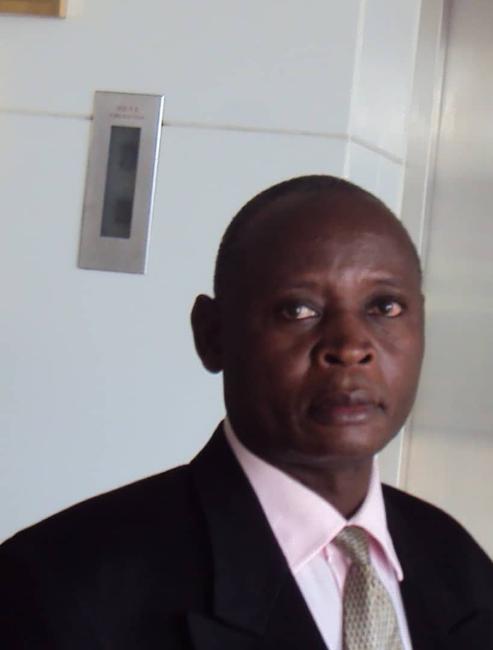
Mugawe Fredrick Samuel is no stranger to hardship or high-stakes enterprise. Any policymaker who dismisses Kagoma as speculative misunderstands the man behind it.
He built his name with the once powerful Gateway College Muguluka. Older residents of Jinja still associate that name with discipline, ambition and enterprise. The college educated hundreds of young people and became a symbol of what a determined local entrepreneur could achieve without waiting for government favour.
He then ran Grace Coaches on the grueling Kampala-Juba route. That route demanded resilience and capital, and an ability to operate across borders under conditions that broke weaker operators. Breakdowns, insecurity, border delays and currency shocks were daily realities. Only operators with discipline and courage survived.
After the pressures of that route, he moved his business operations to the Democratic Republic of Congo. Associates say he is revered there for his business acumen. He learned to operate in a complex and unforgiving environment and built a reputation for keeping his word and honoring contracts.
He knows procedure, he knows the law and he knows, painfully, the cost of red tape. That is why his approach to Kagoma has been to seek documents before favours. It is why he sought licenses before ground-breaking. It is why he sought the head of state, President Museveni, who is seen by investors as the chief investor mobiliser, rather than cutting corners or operating in shadows.
Surrender would mean abandoning Buyengo, abandoning farmers who planted in hope, abandoning youth who dreamed of jobs and abandoning a vision he has carried for years, from Jinja to Juba to Congo and back to Buyengo. Retreat is not in the vocabulary of a man who has survived routes, borders and bureaucracies that defeated others.
His associates describe him as battle-hardened. They do not mean it as rhetoric. They mean it as experience. He has seen businesses rise and fall, negotiated with officials, financiers and communities across three countries, and understands that the true test of an entrepreneur is not how he celebrates when doors open, but how he stands when doors are slammed shut.
A Presidential Referral Now In Question.
The dispute carries weight because the paper trail begins at State House. That trail is not rumour. It is record.
On 8 July 2021, Dr. Kenneth Omona, then Principal Private Secretary to the President, wrote to the Minister of State for Finance responsible for Privatisation and Investment, Hon. Evelyn Anite. He forwarded Kagoma’s expression of interest dated 7 June 2021.
Dr Omona wrote:
“I have been directed to forward to you a letter dated 7th June, 2021 from Kagoma Sugar Factory Ltd expressing interest to invest in sugar production in Uganda, for further management.”
That referral shows the highest office in the land acknowledged the investment and sent it to government for support. It raises a question: why does Tanna’s later letter, which froze the same investment, not list the President as copied? Why does it not refer to the earlier State House referral? It reads as if one hand of government did not know what the other had done.
Kagoma Sugar Factory Ltd chief says it met President Museveni again at Kololo on 29 November 2023. It later secured its UIA licence in four days without paying a shilling. That fact, it says, proves that when government wants to move, it can move swiftly, and when it wants to block, it can block indefinitely.
For four decades, President Museveni has built his economic message around one promise: to support local and foreign investors, to build factories, create jobs, add value to agriculture and stop exporting jobs. That message is the backbone of wealth creation, industrialization, import substitution and the Parish Development Model (PDM).
Kagoma’s appeal touches a central theme of that policy: the transformation of Uganda from an economy dependent on raw agricultural exports into one driven by manufacturing and value addition. Sugar manufacturing fits that agenda. It connects agriculture to industrial processing, and factories can use by-products such as molasses and bagasse to support ethanol production and energy generation.
The People Of Buyengo Had Already Spoken.
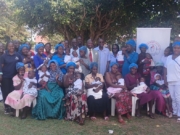
Before the Minister’s hammer fell, the people of Buyengo had already spoken. Their voice deserves attention, because it exposes the gap between Kampala boardrooms and Busoga fields.
On 29 September 2026, Watindi Butwahiyi, LC1 Chairperson of Budhobya Cell, Bulugo Ward, Buyengo Town Council, wrote through the LCII Chairman and the GISO. He supported the project.
He wrote:
“We the local community of Budhobya Cell, Bulugo Ward, Buyengo Town Council have approved the proposed establishment of Kagoma Sugar Factory and fully welcome and support the project in our area due to high demand and overwhelming support from sugarcane growers in the area and the entire Busoga region.”
That was not reluctant consent. It was a passionate embrace from a community desperate for a market, for jobs and for dignity. It was a community that says its cane rots while being told there is no market, and its youth leave for towns while being told there are no jobs.
The Madhvani Lesson.
In challenging the halt, Kagoma’s leadership reached for the most powerful history in Busoga: the story of Kakira itself.
The Kagoma CEO argued that the indigenous people of Busoga freely and happily gave their land to Muljibhai Madhvani, land that became the factory that has grown into the biggest in East Africa, a towering industrial empire that employs thousands and carries Busoga’s name across the region.
He argued that if residents had behaved as Tanna is now doing, with suspicion, obstruction and endless demands for registration before investment, there would be no Kakira and no Madhvani Group in Busoga.
He also said that Busoga opened its doors when Madhvani came with little more than a vision and a promise, and is now being told to close its doors when one of its own sons comes with a licence, with land, with community consent and with USD 80 million. He said the Minister should pick a leaf from that history before teaching Busoga to fear the very investment that once saved it.
Kakira Denies Any Involvement.
Kakira Sugar Ltd has now broken its silence. Its position is unequivocal and must be reported with the same prominence as the allegations against the Minister, because fairness demands that every side be heard.
The Company Secretary of Kakira Sugar Ltd, S.K. Iyengar, denies any involvement, directly or otherwise, in the matter. He says the Minister is doing his work independently and in accordance with the laws of the land.
Iyengar’s denial is central to the record. It separates Kakira, as a company, from the Minister’s decision and places full responsibility for the halt order on the Ministry, not on the miller. That distinction will matter to Parliament, to State House and to any court asked to review the halt.
This publication put Kagoma’s argument about Kakira’s proximity, capacity and market dominance to Kakira. Iyengar’s response was that Kakira had no hand, direct or indirect, in the Minister’s action.
The Licensing Question.
The appeal comes against a highly regulated sugar industry, where the establishment of new factories is governed by statutory licensing requirements that protect investors, farmers, existing millers and the long-term sustainability of the industry.
Uganda’s Sugar Act, 2020 provides the legal framework for the sugar industry. As amended by the Sugar Amendment Act, 2025, which Parliament passed on 15 April 2025 and Museveni signed on 30 May 2025, it replaced the never-operationalized Sugar Board with the Uganda Sugar Industry Stakeholders Council.
Under the Act, an investor must apply for a licence, provide prescribed particulars and pay the applicable fee. The licensing authority must consider suitability, experience and capacity. Where a licence is refused contrary to a recommendation to grant, reasons must be given. The aggrieved party may go to court within 30 days.
The Ministry of Trade publishes a checklist for investors. It requires a completed UIA application form, certificate of incorporation, memorandum and articles of association and a comprehensive business plan.
The business plan must address production capacity, sources of cane, land acreage, markets, capital investment, financing, electricity generation, use of molasses, implementation timetable, public health and environmental concerns. The Ministry also requires officials to inspect the proposed site and verify the information.
These requirements show that a licence is not merely an administrative document. It is a regulatory safeguard to ensure that a proposed factory is commercially viable, environmentally sustainable and supported by adequate raw materials.
Kagoma’s request therefore presents two distinct questions: can the licensing process be expedited in accordance with the law, and can the authorities lawfully consider relief from pre-licensing fees? A presidential directive may provide political impetus, but the ultimate licensing decision must still comply with legislation and regulatory procedures.
The Sugar Regulations, 2025, provide a key test. Before refusing a licence on grounds of inadequate cane supply in an area with an existing mill, the Minister must establish that the existing mill is operating efficiently, and that it has the capacity, or willingness, to mill all cane that can be produced in that area. Proximity alone is not, on the face of the Regulations, a veto. The existence of Kakira is not, on the face of the Regulations, a veto. The question remains whether Kakira can mill everything Buyengo can grow.
Kagoma says no such assessment has been served on it. It seeks confirmation of the exact distance from its site to Kakira under the 25-kilometre rule, whether it meets the 500-hectare, land-title and contract requirements, and whether Kakira’s capacity has been assessed against actual and projected cane production in the catchment. Those questions should already have been answered in writing.
A Sector Already Grappling With Disputes.
The significance of Kagoma’s appeal becomes clearer against recent developments in the sugar industry, especially in Busoga, where competition for cane, factory locations and regulatory approvals has become an increasingly important investment question.
In January 2025, the High Court ruled in a case brought by the Uganda Sugar Manufacturers Association Ltd against the Attorney General and the Ministry of Trade. The court held that the Ministry had acted unlawfully by issuing approvals for sugar mills without following the statutory licensing procedure, and questioned the use of certificates of no objection when the law required the statutory framework to be followed.
That ruling stressed that licensing decisions must be made by the legally authorised institution, not through administrative shortcuts, and exposed tensions between the desire to attract investors and the need to maintain an orderly, predictable and legally compliant industry.
The Sugar Regulations, 2025, later provided procedures for applications, assessment, inspection, recommendations, licensing and supervision. That regulatory environment is relevant to Kagoma because its investment is in Jinja District, within the wider Busoga sugar-producing region.
Other investments show why licensing cannot be treated as political endorsement. The proposed CN Sugar Factory in Namayingo District has faced prolonged licensing challenges, including disputes over cane availability, factory location and statutory requirements. In October 2026, reports indicated that the factory remained entangled in the dispute despite substantial investment.
For Kagoma, the challenge is not simply to secure goodwill. It must demonstrate that the factory satisfies legal, technical, environmental and commercial requirements, including sufficient cane, a suitable location, adequate land and water, and compliance with environmental and public health rules.
The Fee Question.
One of the most significant aspects of Kagoma’s appeal is its request for a waiver of pre-licensing fees, which raises a broader policy debate: how can government balance revenue generation through regulatory charges with its duty to encourage productive investment?
For an investor, pre-production costs can be substantial. They include land acquisition, feasibility studies, environmental assessments, engineering designs, equipment procurement, financing arrangements and regulatory approvals. An additional licensing charge can complicate planning, especially where a project has not started generating revenue.
He wonders why some foreign investors are given free land in addition to many years of tax relief and yet local investors who have gotten land out of community free will are instead given tough and rigid terms and conditions.
Kagoma therefore seeks consideration of whether pre-licensing charges can be waived. But a distinction must be drawn between expediting an application and exempting an investor from statutory fees.
The former concerns administrative efficiency. The latter requires a lawful basis for exemption. A presidential intervention cannot, by itself, dispense with statutory requirements or override the powers assigned to regulatory institutions. The authorities must establish the nature of the fees, the legal provisions under which they are imposed and whether the law permits a waiver.
That distinction will be critical. It will ensure that support for Kagoma does not undermine the regulatory framework for other investors, and that political access does not replace legal compliance.
The Economics: Who Benefits From Competition.
For policymakers, the dispute also turns on numbers. Numbers need honesty about their source. The figure of 16 factories does not come from an official gazette, a UIA register or a Ministry of Trade list. It comes from a business listing, a commercial directory that compiles publicly available business records, in this case compiled by PoiData and dated August 2025.
Business listings are useful for counting visible businesses. They are not a regulator. They can miss closed mills, double-count branches or include factories that are licensed but not yet crushing. The figure of 16 should be read as an indicator, not gospel. Earlier government licensing in 2011 had already been projected to bring the country to 15 licensed factories. Seven mills now operate in and around Busoga alone. The area planted with cane tripled between 2000 and 2024.
The authoritative count sits with the Council, UIA and the Ministry of Trade. They should publish it. What is not in dispute is the direction of travel. Bank of Uganda figures put production at more than 800,000 metric tonnes annually. Manufacturers told the Ministry of Finance in August 2026 that capacity had risen from about 400,000 metric tonnes to 800,000 metric tonnes. Sugar prices had fallen by nearly 30 percent largely because of that increase.
When factories increase and supply increases, consumer prices tend to fall. Farmer prices are decided not by Kampala statistics, but by whether a farmer in Buyengo has one buyer or three buyers at harvest time. That truth is understood by every cane farmer in Busoga.
James Kintu, a post-doctoral researcher at the University of Massachusetts Boston (UMass Boston) who spent more than 20 years in Uganda’s civil service, interviewed 27 officials, local leaders and farmer representatives in Jinja and Buyende. He found that hunger in Busoga was not caused by farmers not growing enough cane to sell. It was caused by a system in which mills sign contracts mainly with men, pay a lump sum to whoever signed, and leave households with up to 80 percent of farmland in cane and only about 20 percent for food crops.
Kintu’s finding matters for Kagoma. The problem in Busoga, on his analysis, is not too much cane. It is too little bargaining power, too little choice and too little competition at the farm gate. Adding a buyer in Buyengo would give farmers an alternative to a single dominant mill. Blocking that buyer would lock them into the same monopsony that has kept cane prices falling.
Farmers in Greater Kibaale have described a similar pattern. They depended almost entirely on Hoima Sugar and Kinyara Sugar. The two mills dominated the market and dictated prices that barely covered costs. Harvested cane was left to dry or burn when buyers failed to collect it. Farmers say that pattern repeats in Buyengo whenever one mill can decide whether cane is collected, when it is collected and at what price.
Government itself intervened when millers slashed cane prices to as low as Shs90,000 a tonne. At a high-level meeting chaired by then Minister Hon. Francis Mwebesa, it was agreed that factories should not pay farmers below Shs125,000 per tonne. That intervention suggests the crisis is not surplus cane. It is surplus power in the hands of a few mills that can cut prices at will when farmers have nowhere else to go.
Cane pricing is not a side issue for Parliament. Raw material typically represents 60 to 70 percent of total sugar production costs. When millers control that price, they control the farmer’s survival. That is why the Sugar Amendment Act, 2025, introduced a pricing formula, and why farmers say mills still impose a 5 percent trash deduction despite guidance scrapping it.
A Council Under Scrutiny.
The dispute is further complicated by who sits in judgment. The inaugural Council was inaugurated on 23 October 2025 after Cabinet approval on 6 October 2025. It was presented as self-regulation. Yet its miller seats, according to published lists, went to Mayur Muljibhai Madhvani, Milan Dobaria Vithalbhai and Ashish Monpara, with Rajbir Singh Rai as Chairperson.
Small and medium millers under the Millers Association of Sugarcane, namely GM Sugar, Kamuli Sugar, Mayuge Sugar and Victoria Sugar, protested. They said all their nominees were rejected in favour of those fronted by Kakira Sugar, SCOUL and Kinyara Sugar Ltd. That protest has not been answered with published reasons.
Critics argue that when the body that decides whether a new mill lives or dies includes the very big millers who would benefit if the new mill dies, the structure creates a perception of bias and an incentive to keep out competition. That is why transparency about recusals, declarations of interest and voting records matters, especially ahead of any engagement.
From Stop To Engage.
It is only after the appeal to President Museveni, after the letter, after the alleged phone call, after the panic in Buyengo, and after Kagoma challenged both the Minister and the RDC, that the RDC has spoken. His response marks the moment when a written STOP began to soften into a verbal ENGAGE.
The engagement talk came, Mugawe says, because Kagoma challenged both the RDC and the Minister. Its chairman refused to accept a halt order that contained no evidence, no figures and no hearing. That challenge forced government to retreat from a written STOP to a verbal ENGAGE, without yet withdrawing the letter that caused the panic.
When contacted through WhatsApp, RDC Ahmed Kateregga Musaazi did not deny involvement, knowledge of the Minister’s letter, or Kagoma’s complaint. He said engagement was coming, and that the pause had been agreed at a higher level.
He stated:
“I shall engage stakeholders mid this week, God willing. That was agreed between the minister, myself and the leading stakeholders.”
Kateregga did not, in that message, confirm or deny the alleged phone call to Kagoma’s chairman. His statement confirms that he is seized of the matter and acting in concert with the Minister. That makes his promised engagement the next verifiable step in a dispute that has now reached State House, the Ministry of Trade and the Council.
What Must Happen Next?
The immediate question is whether the President’s administration and the relevant ministries will refer Kagoma’s appeal to the competent authorities, and whether the Trade Ministry and Finance Ministry will determine, on record, whether the USD 400,000 pre-licensing demand has a lawful basis and whether it can be waived.
Other questions must also be answered: whether Kakira submitted a formal objection and what evidence it tabled, the exact distance from Kagoma’s site to Kakira under the 25-kilometre rule, whether Kagoma meets the 500-hectare, land-title and contract tests, whether Kakira’s capacity has been assessed against actual and projected cane production, why Kagoma says it was never served with the letter that froze its project, why Kagoma says it learned of its fate by phone from the RDC, the legal basis for the USD 400,000 demand, and what consideration was given to the IFC financing that Kagoma says now hangs in the balance.
Ultimately, Kagoma’s appeal raises a question about the relationship between presidential directives, administrative efficiency and statutory regulation. Uganda needs new investments that expand manufacturing, create employment and strengthen value chains. Attracting investors also requires a regulatory environment where approvals are granted transparently, according to law and without unnecessary delay.
The central test for government will be whether it can turn presidential investment commitments into tangible industrial development while ensuring that the law remains the ultimate guide to doing business. It must do so without making a Ugandan investor beg for what the law should already guarantee.
For Mugawe Fredrick Samuel, the battle-hardened founder who has survived the Kampala-Juba route, who has built businesses across borders and who has refused to yield in the face of obstacles on every side, the message is clear. He will not surrender. He will not retreat. He will keep demanding what he believes Buyengo deserves: a fair hearing, a lawful decision and a chance to build.
Right of reply: The Company Secretary of Kakira Sugar Ltd, S.K. Iyengar, denies any involvement, directly or otherwise, in the matter, saying the Minister is doing his work independently and in accordance with the laws of the land. RDC Ahmed Kateregga Musaazi responded via WhatsApp, stating: “I shall engage stakeholders mid this week, God willing. That was agreed between the minister, myself and the leading stakeholders.”