






By John Banalya
For many civil servants in Kampala, Nairobi, Dhaka and La Paz, a job at the United Nations has long been the pinnacle of a public service career. It promises diplomatic exposure, a passport to foreign capitals, and a salary that dwarfs what even the most senior government officials earn back home. In ministries across the developing world, a UN appointment letter is still treated like a golden ticket.
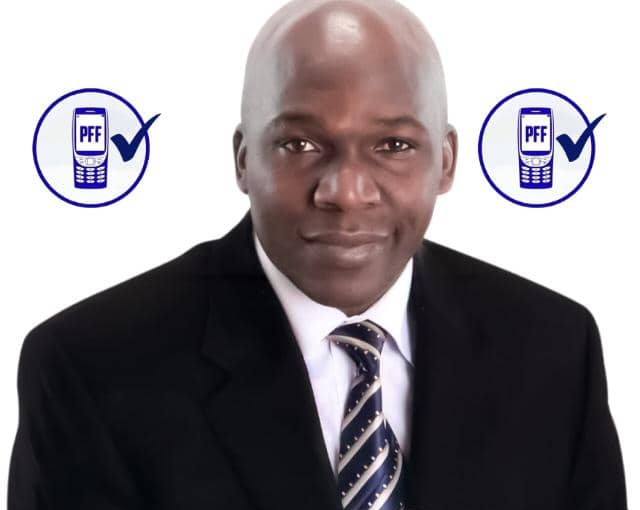
But John Banalya who stood the January 15 parliamentary polls under newly formed PFF but lost says “that aura is fading fast in the places that fund the organization”.
With the internet pulling back the curtain on global pay and influence, the United Nations is finding itself in an uncomfortable position. It is still revered in much of the Global South, but increasingly dismissed in Europe and North America as a bloated bureaucracy with an unclear mission and uncompetitive pay. To many young professionals in New York, London and Berlin, the UN is no longer a destination. It is a detour.
The money tells the story. The Secretary-General of the United Nations, the most visible diplomat on earth, earns less than 300,000 US dollars a year. In the same year, the chief executive of Walmart takes home about 29 million dollars. The president of Coca-Cola earns close to 28 million.
The head of FedEx earns 12.8 million. Even university presidents now out-earn the world’s top diplomat. Stanford’s Jonathan Levin earns around 1 million dollars annually, while the president of Southern New Hampshire University earns about 1.4 million. The World Bank President is paid 965,000 dollars, and the head of the IMF earns 623,000. A tenured professor at Harvard averages 293,619 dollars, roughly what a mid-career UN professional makes after years of service.
For a graduate from Oxford, Harvard or Sciences Po who can walk into McKinsey, Google or a major law firm and double that income in the first year, the UN simply cannot compete. Add to that a recruitment process that can take six to nine months, the politics of geographic quotas, and constant media scrutiny, and the calculation becomes easy. The best talent in the developed world is going elsewhere.
But not everyone is looking at the pay slip.
“But not everyone is in it for the money!!” says Hon. Victoria Ssekitoleko, Uganda’s former Minister of Agriculture (1986-1995) and a longtime voice on governance and development. “It could be for exposure… change of work environment… contribution to the world… retirement…”
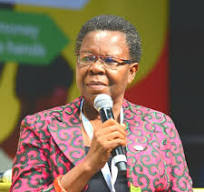
Her remarks capture a motivation that still drives thousands of applicants from across Africa, Asia and Latin America. For them, the UN is not just a salary. It is a classroom without walls, a chance to work in Geneva one year and in a refugee camp the next, to sit in rooms where global policy is drafted, and to retire with a pension and a story that spans continents. In countries where foreign service budgets are thin, the UN has long served as a school of diplomacy that no national government could afford to run.
Meanwhile the Deputy Head of Mission in Doha, Qatar Ambassador Hajji Mohammed Beswari Kezaala chips in saying some go into the UN juicy slot simply for what he calls self-actualization.
The result of this mismatch in motivation is a slow demographic shift inside the UN system. The applicant pool for junior and mid-level jobs is now dominated by candidates from the Global South.
For them, a UN salary remains transformative and the non-monetary benefits Hon Ssekitoleko describes remain powerful. For a European or American, it often represents a pay cut.
Over time this has created the perception of a two-track UN: funded and politically steered by Washington, Brussels and other Western capitals, but staffed in large numbers by professionals from the South who still see it as the only real path to global influence.
That tension is now playing out at the very top as the search for the next Secretary-General gathers pace. The United States, which contributes about 18 billion dollars of the UN system’s roughly 69-billion-dollar annual budget, is quietly signaling what it will and will not accept.
The regular UN budget itself is only about 3.5 billion dollars, a figure smaller than the 7.5-billion-dollar annual budget of Stanford University in California. Most US money is earmarked for specialized agencies like UNICEF, WHO and WFP, leaving the Secretariat with limited room to maneuver.
Against that backdrop, several high-profile candidates have struggled to gain traction. Former Senegalese President Mackey Sall has failed to secure endorsement from both Dakar and the African Union, weakening his case in New York. Michelle Bachelet of Chile, once seen as a strong contender for the role, has lost her own government’s backing and is widely viewed in Washington as too close to Beijing. María Fernanda Espinosa of Ecuador faces similar headwinds because of her past alignment with the government of Hugo Chávez and because her nomination came not from Quito but from pro-Cuban governments in the Caribbean.
Rafael Grossi of Argentina, who heads the International Atomic Energy Agency and has worked closely with the US on Iran nuclear inspections, carries credibility in Washington but remains a divisive figure in Latin American politics.
None of them, in the view of US and European lobbyists, clearly embodies the values and continuity that the major donors want to see.
It is in this gap that the name of Dr. Olara A. Otunnu has resurfaced. Dr. Otunnu, 75, is a Ugandan diplomat, academic and human rights advocate in Northern Uganda. His career arc reads like the textbook profile the UN has relied on for decades. After early education at Gulu High School and King’s College Budo, he studied at Makerere University before winning a Rhodes Scholarship to Oxford University, where he earned a Master’s and a D.Phil in International Relations. He later obtained a Master’s in Public Administration from Harvard’s Kennedy School.
His public service began at home. He lectured at Makerere and the University of Toronto, and served briefly as Uganda’s Minister of Foreign Affairs between 1985 and 1986 under the six-month military junta of Gen Tito Okello Lutwa. He was then appointed Uganda’s Permanent Representative to the United Nations in New York, a position he held from 1986 to 1997. During that time he chaired the UN Security Council and presided over it in 1994, giving him direct experience of the Council’s most sensitive negotiations.
It was his next UN appointment that made him globally known. From 1997 to 2005, Secretary-General Kofi Annan named him UN Under-Secretary-General and Special Representative for Children and Armed Conflict.
In that role Dr. Otunnu traveled to more than 50 war zones, from Sierra Leone and the Democratic Republic of Congo to Colombia and Afghanistan. He pioneered the UN’s practice of publicly listing parties that recruit child soldiers and pushed for the Optional Protocol to the Convention on the Rights of the Child. It was under his watch that “children and armed conflict” became a standing item on the Security Council agenda.
After leaving the UN, Dr. Otunnu returned to Uganda and entered partisan politics.
In 2010 he was elected President of the fractured Uganda People’s Congress (UPC) and stood as the party’s presidential candidate in 2011 against President Yoweri Museveni. He has since remained a commentator on governance, reconciliation and the post-conflict recovery of Northern Uganda.
For Washington and Brussels, Dr. Otunnu presents a familiar and therefore comfortable profile: African enough to satisfy demands for representation from the South, and Oxford- and Harvard-trained enough to reassure donors in the North.
Diplomatic sources say his name was added to the expanded list of aspirants after the General Assembly’s formal window had closed, following quiet consultations that almost certainly included Kampala.
Conclusion: What an Otunnu Ascendancy Would Mean for Uganda, East Africa and Africa
If Dr. Olara A. Otunnu were to ascend to the office of UN Secretary-General, the symbolism for Uganda and for the wider East African region would be immediate and profound.
For Uganda, it would be the first time an Acholi son of Acholi land sits at the very top of the global multilateral system. It would place a man born in northern region, — educated at Makerere, Oxford and Harvard — in the chair that sets the tone for how the world discusses war, peace, development and human rights.
Beyond prestige, it would give Kampala a direct line into the UN Secretariat at a time when Uganda is hosting one of the largest refugee populations on earth, is deeply involved in regional peacekeeping in South Sudan and Somalia, and is lobbying for more African voices in global finance and climate negotiations.
A Secretary-General from Northern Uganda would inevitably shine a spotlight on the Great Lakes and the Horn, forcing issues that are often treated as “regional” to be treated as “global.”
It would also carry heavy domestic political weight. For President Yoweri Museveni to endorse Dr. Otunnu would be to endorse a man who participated during the Nairobi peace talks which became known as Nairobi peace jokes between the Lutwa government and Museveni’s NRA rebel outfit, then later became one of his most prominent critics and even stood against him as UPC Presidential Candidate in 2011.
In the calculus of Pan-Africanism and legacy, that endorsement would be read as statesmanship over partisanship. It would be a political tick for Museveni — signaling that Uganda can rise above internal divisions to project a unifying African candidate onto the world stage.
For Acholi land, which bore the brunt of a 20-year war, it would be a moment of national healing and recognition: that a son of the region could lead not just Uganda, but the world.
For East Africa, Otunnu’s rise would come at a moment when leaders including President Museveni have been pushing hardest for regional integration, the East African Community common market, and a more unified African position in the world.
Having an East African at the helm of the UN would strengthen that push. It would give the EAC and IGAD a natural ally inside the UN system when arguing for African solutions to African problems — from the conflict in eastern DRC to drought, trade and cross-border infrastructure.
It would also reinforce the Pan-African argument that Africa is no longer content to be spoken for. It wants to speak, and to chair the meeting.
For Africa as a whole, an Otunnu Secretary-General would be read as a validation of the continent’s long campaign for equitable representation. The last African to hold the post was Kofi Annan of Ghana, and since then the feeling in Addis Ababa and across AU capitals has been that Africa contributes the most peacekeepers and faces the most crises, yet has the least say in how the UN is run.
An African Secretary-General in 2026 would reset that conversation. It would signal that the UN still sees value in a leader who understands both the wang oo(evening fireplace) in an open compound under the moonlight in Acholiland and the Security Council chamber in New York.
Of course, symbolism is not policy. Dr. Otunnu would inherit an organization that is underfunded, geopolitically divided, and struggling to prove its relevance to a generation that measures impact in different ways. He would have to balance the expectations of Washington and Brussels, who pay the bills, with the expectations of Africa and the Global South, who provide much of the personnel and host most of the UN’s field operations.
But even with those constraints, his ascendancy would matter. It would tell a young Acholi in Gulu, a Kenyan in Nairobi, and a Rwandan in Kigali that the highest office in global diplomacy is not closed to them. It would tell the world that Pan-Africanism is not just a slogan recited at AU summits. It can also sit at the head of the table in New York.
In that sense, the debate over the next Secretary-General is not just about who replaces the current one. It is about what kind of United Nations we want in the next decade. One that continues to drift between North and South. Or one that, for the first time in a generation, is led by a voice from the continent that has the most at stake in whether multilateralism survives.
For Uganda, for East Africa, and for Africa, that choice could not be more timely.
John Banalya
Journalist | Director, UDECU Consultancy, Research & Publishing Ltd, Jinja, Uganda.