
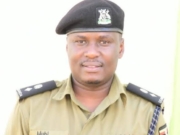
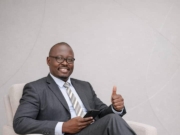
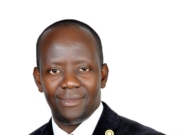

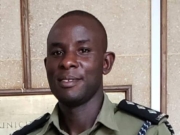
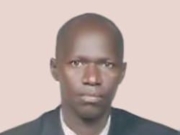
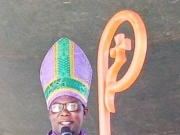
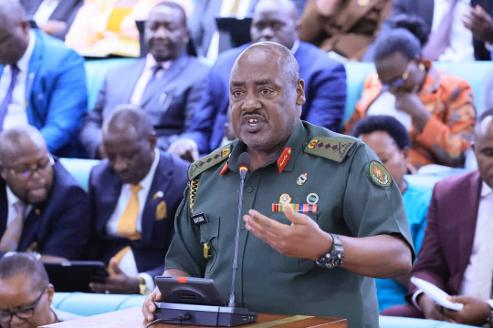
Lt Gen Sam Kavuma, the Force Commander of the African Union Support and Stabilization Mission in Somalia (AUSSOM), has urged the 12th Parliament to emulate President Yoweri Museveni’s pragmatic leadership and implement the policies laid out in the State of the Nation Address at constituency level.
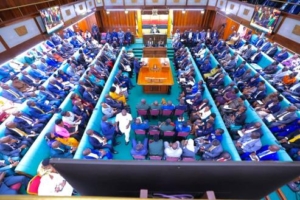
This was during a debate on a motion for a resolution of Parliament to express gratitude to President Museveni for his clear exposition of government policy in the State of the Nation Address delivered on 4th June 2026. The debate is scheduled to run for four weeks in the House.
“Leadership Is Not About Having A Lot Of Resources”
Reflecting on the President’s resourcefulness as a young man in 1968, Lt Gen Kavuma noted that even with limited means, Gen Museveni used pragmatic leadership skills to support the communities from which he came.
Quoting the President, Kavuma said:
“Our people were cattle keepers but they did not have skills to tame nature to benefit them. Instead, they followed nature. It rains here they settle, water their cows. When it dried, they didn’t know that you can tap this water and harvest it. Instead, they followed to where it rained.”
Lt Gen Kavuma recalled how he and his family were direct beneficiaries of that visionary leadership.
“My parents moved from Kazo now to Buwekula in Mubende to Bulemeezi in Ngoma. That’s where I was born 64 years ago. The family again moved to Gomba, Ssembabule back to Ankore. That’s where he met them (parents) in 1968,” Lt Gen Kavuma recounted.
He further stated that Gen Museveni demonstrated visionary skills by rejuvenating Uganda’s economy, which had stagnated until he took power in 1986.
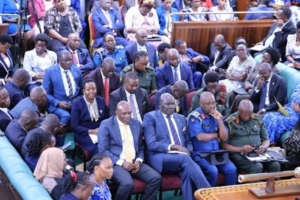
“Out of the Sh84 trillion you did pass in this house, the economy of Uganda funded about a half of it, may be Sh44 trillion. But in 1986, the whole country was collecting only Sh5 billion. That is the country that the President took over where all essential commodities were being gotten outside. No roads, no infrastructure,” Kavuma reminded the House.
He then challenged legislators:
“What do we learn from this State of the Nation Address? Is it enough for us to stand here and appreciate him? I think we need to learn something from him that leadership is not about positions, Generals, Honorable members, Ministers. Leadership is not about even having a lot of resources, leadership is about commitment, being pragmatic so that you use whatever you have to move your people from one stage to another.”
Call For Regular Medical Check-Ups Amid Malaria Surge.
During the 10th sitting of Parliament, while responding to a presentation by the Minister of Health, Dr Chris Baryomunsi, on the outbreak of a new killer malaria affecting young children, Lt Gen Kavuma raised concern over health-seeking behavior.
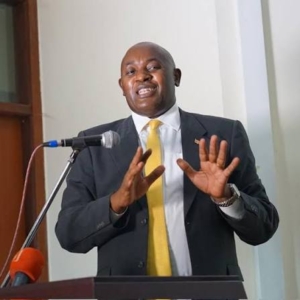
“98 percent Ugandans do not go for periodic and regular medical checkup, we live on self-medication, most of us have mini pharmacies in our bedrooms and houses,” Lt Gen Kavuma submitted.
He also expressed concern over what he termed a lack of proper diagnosis in some medical laboratories and hospitals.
“Even the 2 percent that try to check regularly do not get the right diagnosis. Where is the problem?” He asked.
Lt Gen Kavuma urged legislators to go back to their constituencies and sensitize the public to always seek medical check-ups before taking medication to ensure correct diagnosis. He further called on the Ministry of Education to work with the Ministry of Health to establish the cause of the malaria scourge in schools, which he said would help in providing an appropriate solution.
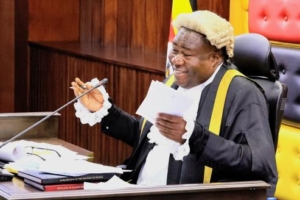
The House was chaired by the Rt Hon Speaker of the Parliament of Uganda, Jacob Marksons Oboth.
Malaria Surge: Current Situation:
Uganda continues to grapple with a high malaria burden despite years of interventions. According to the Ministry of Health, malaria remains the leading cause of illness in the country, accounting for 32.1 percent of 44.5 million outpatient attendances and 26.2 percent of 3.1 million hospital admissions recorded last year.
The latest Malaria Indicator Survey shows that malaria prevalence in children has risen to 12.5 percent, up from 9 percent in 2018. Uganda also ranks as the third highest contributor to malaria cases globally and 10th for malaria deaths, with the disease costing an estimated USD 577 million annually.
On Schools and Children:
Lawmakers in Parliament have raised particular concern over the impact on school-going children. The Kigulu South MP Andrew Kaluya told the House that the disease is causing growing concern among parents because it is increasingly affecting children under 15.
Research presented during the debate indicates that school children play a major role in transmission, carrying asymptomatic infections that contribute to nearly 50 percent of community cases. Health workers at Mulago National Referral Hospital have also reported a shift, with older children now presenting with severe forms of malaria, a pattern not common in previous years.
Causes of the Surge:
The Minister of Health Dr Chris Baryomunsi told Parliament that while Uganda has made progress, with parasite rates falling from 43 percent in 2009 to 13 percent today, seasonal spikes continue between May and July and again from September to November.
The Ministry attributes the current surge to poor adherence to prevention measures, climate variability, and increasing resistance of both malaria vectors to insecticides and malaria parasites to antimalarial drugs. Officials have also flagged a high rate of re-treatment, with patients returning for care much sooner than the expected two months.
Government Response:
To contain the outbreak, the Ministry of Health has intensified school-based malaria case management and is rolling out 25.8 million mosquito nets across 130 districts.
A mass campaign in January 2026 distributed 3.4 million nets. The malaria vaccine is also being deployed in 105 high-risk districts, including Jinja, Iganga, Luuka and Mayuge in Busoga. In April 2026, government launched the Uganda Malaria Elimination Strategic Plan 2026–2030, which targets zero malaria deaths and a 75 percent reduction in cases by 2030.
What Experts Say:
Health officials and legislators have called for a shift in community behavior. The emphasis is on testing before treatment to avoid self-medication, ensuring schools have equipped sick bays and qualified nurses, and consistent use of mosquito nets.
The Ministry has said a detailed report on ongoing measures will be presented to Parliament as surveillance continues in high-burden districts.
Why The State of The Nation Address Matters?
The State of the Nation Address is delivered annually by the President under Article 101(1) of the Constitution of Uganda. It is the country’s official report card and policy compass. It sets the national direction by outlining government priorities for the year on the economy, security, health, education and infrastructure.
It also enforces accountability because the President reports to Parliament and the people on what was promised versus what was delivered. The Shs 84 trillion budget passed by Parliament is anchored on SONA commitments. Beyond that, SONA guides planning and budgeting and connects national policy to the grassroots, because it only becomes real when MPs take it to constituencies.
SONA In Other Countries.
Almost all presidential and parliamentary democracies have an equivalent.
In the United States it is called the State of the Union Address delivered by the President to a joint sitting of Congress every January.
In Kenya, Tanzania, Ghana, Nigeria and South Africa it is also called the State of the Nation Address.
In the United Kingdom the closest equivalent is the King’s Speech at the State Opening of Parliament, which lays out government legislation for the year.
In France it is the President’s address to Parliament, and in India it is the President’s Address to both Houses of Parliament at the start of the budget session.
The purpose is the same everywhere: to set agenda, account to the people, and guide legislation and budgets.
What about motions to thank the President?
The practice of moving a motion to thank the President for the SONA is also common in many Commonwealth and African parliaments.
In Kenya, Tanzania, Uganda, Ghana and Zambia, after the President delivers SONA, Parliament debates it and then passes a resolution to thank the President. The debate gives MPs a chance to scrutinize, support, or challenge the policy direction.
In the UK, after the King’s Speech, both Houses hold a “Humble Address” debate and vote an Address in reply to the Monarch.
In the US, there is no formal vote to “thank” the President after State of the Union, but Congress responds through debates, rebuttals, and later legislation.
So, the motion to thank is essentially Parliament’s formal way of acknowledging the President’s policy statement, while opening space for accountability.