

“A woman is the full circle. Within her is the power to create, nurture and transform.” — Diane Mariechild, American author, poet and feminist writer known for her work on women’s spirituality and empowerment.
It is that very power Uganda is now presenting to the world.
At a moment when national conversation has fixated on former Under-Secretary Ambassador Dr Olara Otunnu’s bid for UN Secretary-General, Uganda has quietly placed forward another candidate whose record speaks with equal weight on the global stage.
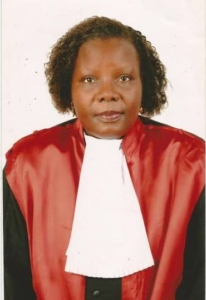
From the villages of Nabirumba in Kamuli District, Busoga, to the courtrooms of The Hague, Lady Justice Rosette Muzigo-Morrison is presenting herself for election as a Judge of the International Criminal Court in December 2026.
Uganda formally presented the veteran international criminal law expert to the African Union Ministerial Committee this week, seeking continental endorsement ahead of the 25th session of the ICC Assembly of States Parties at the United Nations headquarters in New York from 7 to 17 December 2026. Six judges will be elected to the Court’s 18-member bench.
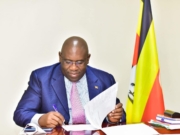
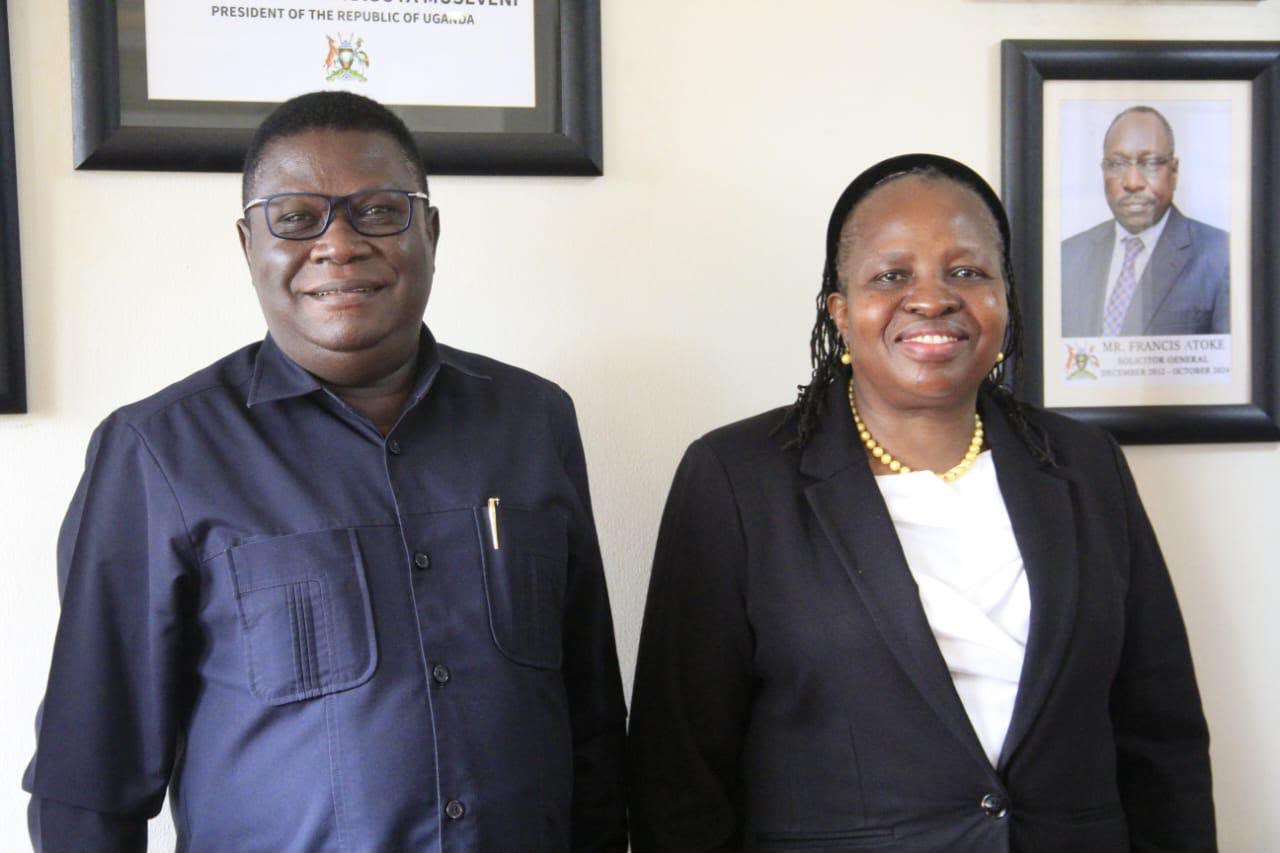
Leading the Ugandan delegation was the Minister of Justice and Constitutional Affairs and MP for Laroo-Pece Division, Hon. Norbert Mao, who described Muzigo-Morrison as the embodiment of competence, integrity and lived experience.
Her dossier runs to more than 30 years of service at the intersection of law, justice and humanity.
A CV Forged in the World’s Hardest Places.
Lady Justice Muzigo-Morrison has worked inside the institutions that define modern international justice. Her career includes service at the International Criminal Tribunal for Rwanda, the Special Court for Sierra Leone, and the Office of the Prosecutor at the ICC in The Hague, where she has been based for the last three decades.
Nominated under List B: International Law Expertise.
The ICC elects its 18 judges from two categories set out in the Rome Statute: List A and List B.
List A is for candidates with established competence in criminal law and procedure, and experience as a judge, prosecutor, or advocate in criminal proceedings.
List B is for candidates with recognized competence in relevant areas of international law, such as international humanitarian law and international human rights law, and with extensive professional legal experience relevant to the judicial work of the Court.
Lady Justice Rosette Muzigo-Morrison has been nominated under List B.This reflects the specific expertise Uganda is offering the Court: three decades of work in international tribunals, treaty interpretation, state cooperation, and the protection of victims in armed conflict.
It positions her among the jurists expected to shape how the Rome Statute interacts with broader international law, particularly on issues of gender-based crimes, witness protection, and accountability in complex conflicts.
Her expertise spans ICC procedures, state cooperation, investigations arising from armed conflict, and the protection of victims and witnesses, with particular attention to sexual and gender-based crimes. She has drafted policy, constituted judicial panels, and managed complex evidence in conflict and post-conflict settings.
That foundation began at home. In 1996 she was appointed Judge of the High Court of Uganda. In 2002 she chaired the Commission of Inquiry into corruption in the Uganda Revenue Authority, a national assignment that brought her name to public attention.
In 2005, on secondment from the Government of Uganda, she joined the Special Court for Sierra Leone. In 2010 she received the Distinguished Alumni Award of the Kroc Institute at the University of Notre Dame, where she delivered the Distinguished Alumni Lecture in 2011.
Busoga to the World: “Motherhood” on the International Stage.
Lady Justice Muzigo-Morrison traces her formation to Namasagali College — initially called Kamuli College — during its heyday under the late Fr Damian Grimes. It is the same Busoga soil that shaped her sense of service, faith and community.
“When a woman stands, the nation stands taller,” goes an African proverb. Married to John from the Outer Hebrides, Scotland, and mother to two grown children, Muzigo-Morrison has lived in the Netherlands for 30 years, working as an international human rights lawyer while remaining active in church and community life.
She serves on the Chaplaincy Council, the Prayer Ministry, the Intercessors team, and the catering and hospitality ministry, and has contributed to drafting safeguarding policies for the Diocese in Europe.
The soft-spoken and polished jurist describes herself as “an avowed Anglican from the womb to the tomb,” and says she feels called to bring the voice of women, migrants and the wider Communion into rooms where decisions are made.
After two cycles on Diocesan Synod, she now hopes to carry that experience of “walking together in diversity” to larger tables of global governance.
What colleagues and friends are saying:
Beyond the official citations, the quiet conversations in legal circles and among those who know her tell a fuller story.
“She has a rare combination of courtroom steel and pastoral heart. In The Hague she was known for reading every footnote, but in Kampala she is remembered for listening to every victim”.– Senior ICC legal officer who worked with her
In that same spirit, those who have watched her career across Africa describe a different kind of authority.
“Rosette does not chase titles. Titles chase her. She is the kind of jurist who makes the law feel human again.”— Anonymous African legal scholar based in Arusha
Her roots remain central to how she is remembered at home.
“From Namasagali to The Hague, she continues to carry Busoga with her. Humble, sharp, and stubborn about justice. That is what the ICC needs right now.”
— Michael Kifubangabo, former classmate, teacher and senior broadcaster in Jinja but who hails from Bulopa in Kamuli.
Practitioners who have appeared before her and alongside her point to her grasp of both law and humanity.
“If you want someone who understands both the politics of the courtroom and the pain in the witness room, that is Rosette. She has done the hard cases and she has done them well.”— International criminal law practitioner
And for many in the diaspora, her story reframes leadership itself.
“She is proof that motherhood and global leadership are not contradictions. She mothered a family, mentored young lawyers, and still found time to mother institutions.”
— Close friend from the diaspora community in The Netherlands
Why Lady Rosette Muzigo’s Election Matters Now.
If elected for the 2027–2036 term, Lady Justice Muzigo-Morrison would ensure Uganda retains a seat on the ICC bench when Justice Solomy Balungi Bossa’s nine-year term ends on 10 March 2027.
Beyond continuity, it would affirm Uganda’s, East Africa’s, and Africa’s place in shaping how the Rome Statute is interpreted at a time when the Court is handling some of the world’s most politically sensitive cases on war crimes, crimes against humanity and genocide.
Rosette Muzigo-Morrison’s candidacy tests that truth. AU endorsement would strengthen Uganda’s campaign, but the final vote rests with the Assembly of States Parties, where candidates must secure a two-thirds majority and rank among the top six. The process also weighs geographical balance, gender balance, and representation of the world’s principal legal systems.
Africa’s relationship with the ICC has been complicated, with accusations of bias alongside deep African contributions to its jurisprudence. Placing another seasoned African jurist on the bench would reinforce the continent’s role not as a subject of international justice, but as an author of it.
Two Ugandan bids, One National Ambition.
While media space on TikTok, WhatsApp, Facebook and in mainstream outlets has largely gone to Dr Otunnu’s UN bid, Lady Justice Muzigo-Morrison’s campaign is a reminder that Uganda’s talent is running on parallel tracks. One eyes the political leadership of the United Nations. The other eyes the judicial heart of international law in The Hague.
Both would place Uganda at the center of 21st century multilateralism. But Muzigo-Morrison carries something distinct: the story of a girl from Nabirumba who walked through Namasagali’s gates and into the world’s most consequential courtrooms, and who now returns to represent a continent.
“The future belongs to those who believe in the beauty of their dreams,” said Eleanor Roosevelt, former First Lady of the United States and architect of the Universal Declaration of Human Rights.
Lady Rosette Muzigo-Morrison belongs to the Omwiise Bwiire clan, daughter to Yowabu Magada Kawaaluuko a primary school headteacher cum politician and Lucy(Ruth) Namukaya Tabingwa who died when Rosette was just 14 years old.
She attended Nabirumba Primary School for primary education, went to Wanyange Girls School for her O level and Namasagali College where she did her A level.
She went to Makerere University Law School thereafter joined the University of Notre Dame Indian USA for a Masters in Peace Studies, then a Masters in Human Rights and International Law.
She completed her PhD in International Law and Human Rights at the prestigious Cardiff University, Ireland, according to Uganda’s ambassador to Moscow, Russia HE Moses Kizige.
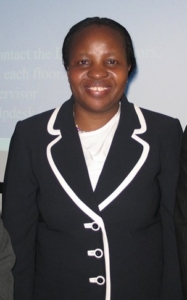
For Uganda, for Busoga, and for the many girls watching from Kamuli, that future may soon have a name, an accent, and a seat on the ICC bench.
We at The Exposure Uganda (TEU), a revolutionary digital news platform, commend and congratulate Lady Justice Rosette Muzigo-Morrison on her distinguished service and nomination. We wish her every success as she carries Uganda’s flag to The Hague, and trust that her wisdom, integrity, and lived experience will further strengthen justice, accountability, and Africa’s voice on the world stage.
We Expose, You Decide.