

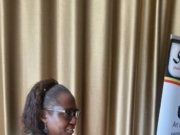



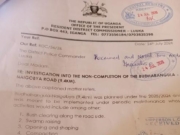

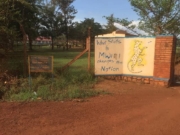

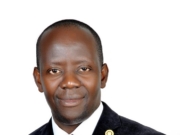

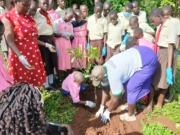

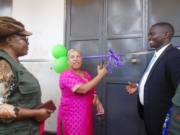

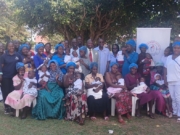
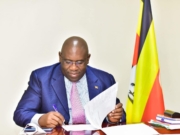



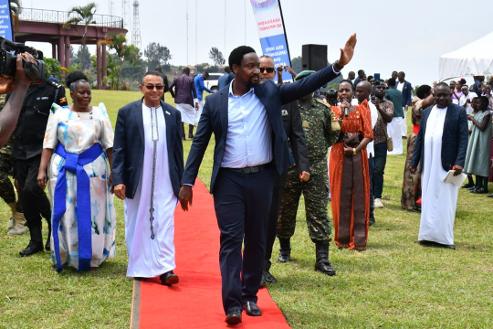
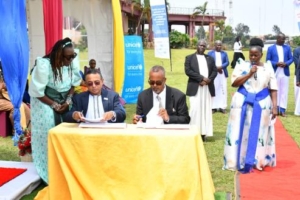
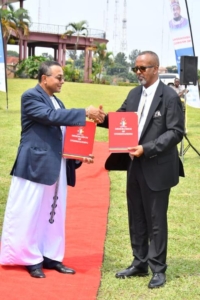
In a moment heavy with purpose and hope, the Kyabazinga of Busoga, His Royal Highness (HRH) William Wilberforce K. Nadiope Gabula IV, on Friday 7th August, 2026 hosted UNICEF Uganda Country Representative Dr. Robin Nandy and senior UN officials at the Royal Palace in Igenge Hill in Bugembe to sign a landmark Memorandum of Understanding (MoU) aimed at transforming the lives of Busoga’s 2.2 million children.
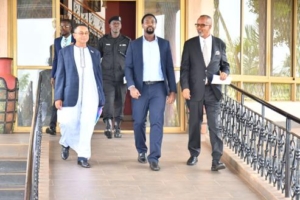
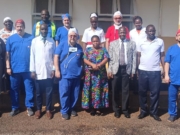
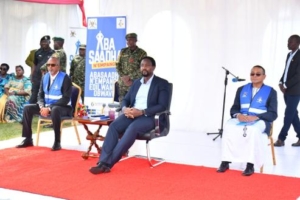
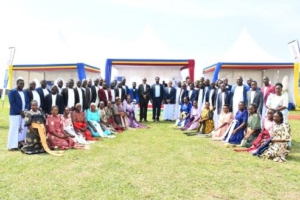
The ceremony drew together the Kingdom’s Second Deputy Prime Minister (Katukiro) Owek. Alhaji Ahmed Noor Osman, kingdom royals and cabinet, clan leaders and chiefs, development partners, school heads, learners, and more than 300 sub-county kingdom field officers and young people. Together, they witnessed what leaders called more than a signing, but a covenant.
A Covenant for the Child.
The MoU formalizes a strategic partnership between Busoga Kingdom, through Kyabazinga Initiatives (KI), and UNICEF. It establishes a collaborative framework to promote child health, education, protection and safeguarding, as well as overall well-being and development across the region.
At its core, the partnership seeks to strengthen systems and structures, and to mobilize resources that benefit children and families through culturally grounded, community-based, and sustainable approaches.
As the ancient African proverb reminds us: “A child who is not embraced by the village will burn it down to feel its warmth.” Busoga, it appears, has chosen instead to embrace.
Speaking at the event, the Kyabazinga said the gathering reaffirmed a shared commitment to nurturing children and transforming both Busoga and Uganda.
He traced the genesis of the MoU to two defining moments. First, his role as UN National Goodwill Ambassador and Male Engagement Champion in ending teenage pregnancy in Uganda.
Second, a heartfelt letter he wrote to the children of Busoga while at Yale University in 2025, urging them to enroll and stay in school until completion, and asking them to write back with the reasons behind high dropout rates and teenage pregnancy in Busoga and beyond.
In 2025, while at Yale University, the Kyabazinga penned a personal letter to the children of Busoga. It was not a speech. It was a father speaking to his children.
For context, the Kyabazinga in his 2025 letter urged them directly:
“Prioritize your education during your adolescent years, from age 9 to 19. Work hard. Respect your parents and teachers. And avoid negative peer pressure, early sexual relationships, and substance abuse.”
In a moving excerpt from the letter, the Kyabazinga wrote:
“Today, I write to you not just as your Kyabazinga, but as your loving father who sees in each of you a shining star — a dream, a future, a hope, and the strength of Busoga in every sacrifice.
However, I must speak to you and your peers from the depth of my heart about a great danger threatening your dreams, Busoga’s survival, and Uganda’s future:
Teenage pregnancy and early marriage must STOP. As your Kyabazinga of Busoga, I HAVE DECLARED IT.”
As National UNAIDS Goodwill Ambassador, the Kyabazinga has prioritized efforts to reduce school dropouts and combat child labor, challenges that fuel teenage pregnancies and continue to affect the future of young people in Busoga and across Uganda.
He also recalled a convening in May last year where he hosted over 2,000 headteachers and received feedback from more than 200,000 learners. That engagement shaped a strategy focused on keeping children in school until at least age 18.
“Among our key outputs was ensuring that children are in school at least up to the age of 18 years, so that they are mentored, responsible, and well-groomed into skilled, empowered, and thriving leaders of tomorrow,” the Monarch said.
Rooted in Data, Driven by Culture.
According to the King, the strategy and MoU are anchored in the voices of children themselves. Feedback from the 200,000 learners, together with a KI study of 2,000 key stakeholders in Busoga, now form the foundation of an evidence-based strategic plan.
The goal is clear: reduce early teenage pregnancies, child marriages, and school dropouts; improve maternal and child health; strengthen community-led household income initiatives; and foster community ownership of child protection. Central to this is behavior change, especially among men, alongside improved access to safe water, sanitation and hygiene. All of this is anchored in the Kyabazinga’s flagship KI: Abasaadha N’Empango -“Men Are Pillars” program.
Pledging the full weight of the institution, the Kyabazinga said the kingdom’s structures like the Chiefs Royal Council, Cabinet, clan leaders, and Kyabazinga Initiatives, among others would serve as neutral platforms for positive change.
“Education is not preparation for life; education is life itself,” he said, echoing philosopher John Dewey, as he called for learning to be continuous and protected.
“Every Child Deserves To Thrive”
The visibly joyous Dr. Robin Nandy described the MoU as a formal commitment to every child in Busoga.
“We are united by a simple but powerful truth: Every child deserves to survive, thrive and fulfil their potential. These are not privileges, but their rights,” he said.
The partnership rests on four interconnected commitments. First, safeguarding children’s health and nutrition through immunization and life-saving information shared via kingdom media. Second, securing quality education with special focus on girls and early childhood development.
Third, protecting children from violence, abuse and harmful practices including child marriage and teenage pregnancy.
And fourth, catalyzing a kingdom-wide movement that gives young people platforms to advocate for themselves.
Invoking a popular Lusoga saying, Dr Nandy added: “Omwana takuzibwa mulala” — “a child does not grow up in a house alone.”
“It takes a village to raise a child. We commit to being the village with you,” he declared.
For decades the business of raising a child requires a safe, supportive community through what was known as “community parenting”. Parents do not have to do the work alone; extended family, teachers, neighbors, and friends all help shape a child’s life and growth.
More Than Ink On Paper.
The Second Deputy Prime Minister Owek. Alhaji Ahmed Noor Osman, who also chairs the Board of Kyabazinga Initiatives, said the MoU was more than ink on paper. It is, he said, a promise that children’s voices will be heard, their dreams protected, and their future nurtured.
As Head of Partnerships in the Kingdom, Hajji Osman stressed that the partnership is built on shared values of education, family strengthening, and community participation — and on trust earned through transparency, accountability, and the professionalism of the kingdom through KI.
“We were not merely seeking financial support. We were seeking a strategic partner with technical expertise and shared values,” Owek. Osman said, assuring UNICEF of the kingdom’s open-book approach.
From Palaces to Villages: Structures Already Moving.
Owek. Yudaya Babirye Kigenyi, Executive Director of Kyabazinga Initiatives, outlined practical support already delivered with UNICEF, UNFPA, UNAIDS, WHO, UNESCO, and government agencies including NPA, UCC, UBOS, UAC, AIC, and the Ministries of Finance and Gender.
This support has operationalized and trained village, sub-county and chiefdom cultural structures. It has also equipped the kingdom cabinet, clan leaders, chiefs, KI technical staff, media, religious leaders, school heads, and 12 Busoga district local government technical teams.
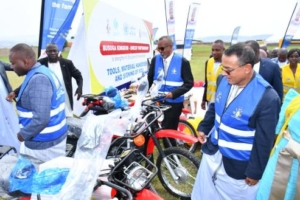
In-kind donations include a Land Cruiser for the KI Secretariat, motorcycles for chiefdom coordinators, office equipment, 2,000 reflector jackets, computers, community radios, IEC materials, and a Kingdom Situation Room for evidence generation and data monitoring funded by UNFPA.

She also highlighted Eisomero N’Empikyi – “School is the Winning Master Card”, a comprehensive Kingdom Education program where the Inhebantu serves as Patron to nurture culturally grounded youth and support government efforts to improve education outcomes.
At the heart of the rollout are 316 sub-county program officers — two from each of Busoga’s 158 sub-counties — many of them volunteers. Working with cultural and government structures, they prevent dropouts, protect children, and link health, food security, and household income to community action.
Babirye also recognized teen mothers being given a second chance through kingdom skilling programs, noting that many challenges stem from failed parenting and weak community support.
“The secret of change is to focus all of your energy not on fighting the old, but on building the new,” said Greek philosopher Socrates — a reminder that the kingdom’s work is not just about correcting what was broken, but about raising a new generation of Busoga.
Voices From the Ground.
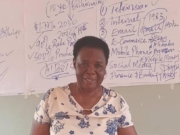
The event’s most moving moments came from the grassroots. Members of Kyabazinga Empango School Clubs and Kyabazinga Empango Dhe’Byaalo presented reports and testimonies. Village safeguarding committees — Sengas and “Mama w’Ekyaalo” from Butembe-Kakira and Luuka-Bulanga — shared how they are handling domestic and gender-based violence, recruiting teen mothers back to school, raising child protection awareness, and preventing child labor in sugarcane farms and abandonment.
Partners including NPA, MTN Uganda, UCC, UBOS, AIC, UAC, schools and religious institutions were acknowledged for their contributions to training, materials, and mobilization under the Men Are Pillars program.
A Wake-Up Call To Other Cultural Institutions.
Beyond Busoga, leaders said this gesture should serve as a wake-up call to other cultural bodies across the country. Too much energy, they observed, is being spent on power struggles instead of on the welfare of the future generation.
As the Lusoga proverb goes: “Emiti emito kye ekibira” — the young trees are the forest. If we neglect the children today, there will be no kingdom to lead tomorrow.
The Road Ahead.
Officials confirmed that joint coordination committees will be established to monitor progress, blending UNICEF’s technical expertise and global knowledge with the kingdom’s cultural authority and deep community reach.
The ultimate aim, all speakers agreed, is a Busoga where every child survives, thrives, and fulfils their potential.
As the signatures were affixed, the message was unmistakable: this is not charity. It is duty. It is culture. It is the future.