


















In the palm of every young person in Busoga today sits a device that is more powerful than a radio station, more powerful than a printing press, and more powerful than a pulpit, because with one tap it can either build a community, build wealth, or break a home.
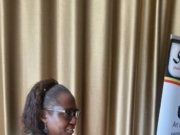
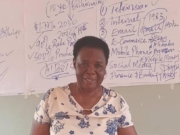
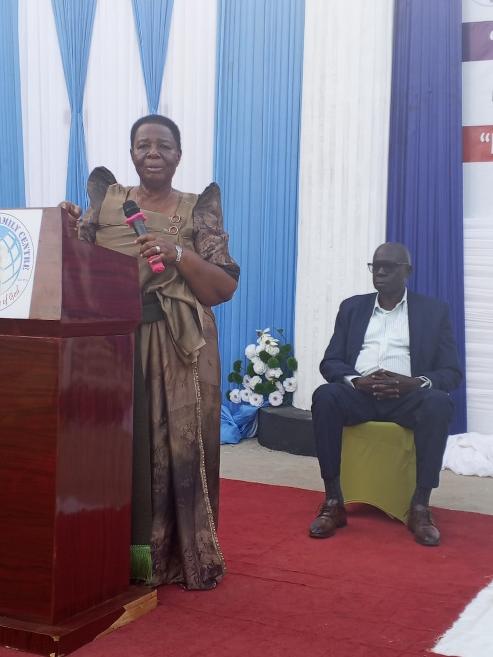
That was the warning and the hope delivered by Hon. Florence Mutyabule, Senior Presidential Advisor on Poverty Alleviation for Busoga, during a community engagement in her Namutumba district over the weekend, where she used two real-life stories to show how the same smartphone and the same internet can produce two completely different destinies.
Two Young Men, One Region, Two Paths.
“Let me tell you about two boys who grew up in the same Busoga. They have the same bundles and both own smartphones and TikTok accounts. But today, one is in America being trained, and the other is in Luzira facing charges,” Hon. Mutyabule began as she addressed residents who had gathered to listen to her message on media, morality and development.
She narrated the story of the first young man who decided that his Facebook and TikTok would not be for jokes and insults, but for service to his community. Week after week he posted simple, practical videos on hygiene, sanitation, environmental conservation and public health, showing people how to build a tippy tap, how to manage waste in their homes, how to plant trees, and why families must eat before taking medicine.
“Because his content was consistent, factual, and rooted in solving real problems that affect ordinary people, people began to watch and to share. A US-based charity organization saw him, came to verify his work on the ground, and today they are not only funding his program here in Busoga, but they have also taken him out of the country for benchmarking and capacity building. As I speak to you, that boy is in the United States learning skills he will bring back to lift his people and to create opportunities for others,” she said.
She then turned to the second story and the mood in the hall changed.
“This other young man also had a phone. He also had followers and data. But he chose a different path with the same device. He used his accounts to abuse leaders, to blackmail his peers, to spread alarmist information, and to play games with the dignity of others just to get views and to trend,” Hon. Mutyabule explained.
“For a short time, he was called famous online. But fame built on lies and insults does not last and it does not feed a family.
Today that young man is in Luzira Prison on cyber-related charges. His parents who once bragged about his followers are now selling land to pay lawyers. One phone. Two destinies. The difference was not technology. The difference was purpose and discipline,” she emphasized.
“Your Smartphone Can Be Your Shop, Your Farm, Your Factory”
Hon. Mutyabule said the first boy’s story proves that smartphones are no longer just for chatting and entertainment, because millions of people across the world are already using them to create wealth, create jobs and fight poverty from where they are.
“Your smartphone can be your shop; you can use WhatsApp to sell matooke from your garden in Kaliro and to receive payments on mobile money. You can use TikTok to teach tailoring, hairdressing, carpentry, or how to make briquettes from waste. You can use Facebook to market the crafts of our women in Kamuli, Iganga and Mayuge to buyers in Kampala and abroad,” she urged the gathering.
Hon Mutyabule added that people especially youth can use YouTube for free to learn a new skill, and then use that skill to earn and to support their family.
She says they can document the success stories of PDM beneficiaries and attract partners who want to invest in Busoga. That is how they can turn data bundles into dollars. That is how we turn scrolling into employment and into real development.
“Let media become one of the deliberate tools for wealth creation and poverty alleviation. Government is ready to work with any young person who is using their platform to show solutions instead of scandals, to show progress instead of propaganda,” Hon. Mutyabule stated.
“But The Same Phone Is Tearing Homes Apart”
Hon. Mutyabule then turned to what she called the painful truth that many families in Busoga are ignoring, noting that the region is recording rising cases of domestic violence that are directly linked to smartphone misuse and the secrets people hide in their devices.
“My people, we cannot talk about development and prosperity when our homes are bleeding and when there is no peace at the dinner table,” she said with concern. “And right now, smartphones are at the center of many of these problems that are breaking families apart.”
She painted a picture that drew nods and silence from the audience.
“In some homes today, a husband can forget his car keys. He can forget his ATM card. He can even forget his Bible or his pen when he is leaving for work. But he will never forget his smartphone. Why? Because that small device is carrying so many terrible secrets that he does not want anyone to see,” she said.
“Messages are coming in at midnight. A husband and wife are on the same bed, or sitting in the same sitting room, but they are not talking to each other. The wife is laughing loudly at TikTok videos. The husband is smiling at his phone. The children are watching and learning that this is how marriage looks like,” Hon. Mutyabule observed.
She continued, “Almost all phones of spouses today have secret codes that the other person does not know. And names are being saved as Panadol. Tomato, Mechanic. Electrician or Dentist. But we all know in Uganda what those words mean– side dishes/chicks. So instead of the phone connecting families, it is disconnecting them. Instead of building trust, it is building suspicion. And when suspicion grows, fights start. That is why we are seeing more domestic violence, more separation, and more broken homes in Busoga.”
“When The Law Catches Up, Don’t Blame Government”
Hon. Mutyabule also cautioned young people against abusing the peace and freedom that the government has provided, only to turn around and blame the same government when they face the consequences of their actions.
“Let me be very clear with you today. The government gave you peace. The government gave you a conducive environment to operate. The government gave you freedom to use your phone, to start a channel, to speak and to do business,” she said firmly.
She added that some people have used that same freedom to abuse others, to blackmail, and to spread lies. She warned that when law enforcers swing into action to restore order, then the same people begin crying that the government is bad and that they are being targeted.
“You cannot eat in the house and then bite the hand that feeds you. If you misuse freedom, the law must correct you. That is not oppression. That is order and that is how a country moves forward,” Hon. Mutyabule emphasized.
“Stop Trading Dignity For Likes”
Linking the issue back to public life, Hon. Mutyabule condemned the growing trend of fake news and blackmail online and how it is affecting leadership and service delivery in the region.
“Some of our people have turned social media into a market of falsehoods. They are looking for likes, for followers, for so-called content, but they are trading dignity for clicks and they are trading community peace for personal gain,” she said.
She cited a recent incident that angered many people. “Immediately after the elections, some people went on TikTok to allege that a prominent Woman MP-elect from one of our districts was caught with a Hajji in a guest house. There was nothing like that. Absolutely nothing happened. But the man behind it just wanted his channel to grow. He destroyed a woman’s name for views. That is not content creation. That is blackmail. That is sin and that is an attack on our mothers and daughters,” Hon. Mutyabule stated.
She went on to warn that the problem has grown worse, noting that some individuals have now graduated into digital mercenaries who are paid to abuse, to blackmail, and to intimidate others, selling their fingers and their voices to the highest bidder to destroy reputations for money. According to her, they don’t care about truth, they don’t care about Busoga, they only care about how much they will be paid to cause chaos and to divide our people.
It is because of this, Hon. Mutyabule said, that Busoga must return to the principle of Ubuntu. She explained that Ubuntu is an African philosophy that says I am because we are. It means your humanity is tied to my humanity. It means I cannot be happy when my neighbor is crying. It means I cannot build myself by destroying you. In Busoga we call it Obuntu bulamu, being a person of character, of respect, of community.
“But these digital mercenaries have forgotten Ubuntu,” she emphasized. “They have forgotten that the MP you are abusing is someone’s mother. The leader you are blackmailing is someone’s father. The Imam in the Mosque you are insulting leads prayers for your children. The Pastor in the Church you are ridiculing buried your grandmother. The member of another political party you are demonizing is from your clan. The person from another tribe you are attacking buys from you in the market and greets you in Lusoga.”
She continued, “We share schools, we share hospitals, we share taxis, we share burial grounds. So how can we destroy each other online and expect to develop together as one people? If we embraced Ubuntu in Busoga and in Uganda, in the Mosque and in the Church, across political parties and clans, among tribes and in families, we would use our phones to lift each other, not to bury each other. We would use media to protect dignity, not to sell it. Because a community that eats each other online will never build roads together, will never farm together, and will never prosper together.”
“That is why some of our leaders are now afraid to serve,” she warned, “because they know that once you stand up to work for the people, a group of paid abusers will come for you online to pull you down.”
“Let Us Choose Building Over Breaking”
Hon. Florence Mutyabule said Busoga has big potential in agriculture, tourism, and a young population, but that potential is being undermined by conflict both online and at home, and by a culture of tearing each other down instead of building each other up.
“The internet is not a pit latrine where you dump anything and walk away. It is a public square. What you post today will follow your child when they are looking for a job tomorrow. Teach our children digital discipline and teach them that their online behavior has real consequences,” she told parents, church leaders and cultural institutions.
She appealed to journalists, boda boda riders with smartphones, church media teams, and influencers to copy the example of the first boy.
“Use your Facebook to market our products. Use your TikTok to teach health and environment. Use your radio to talk about tree planting and sanitation. Let us use media to count what is working and to celebrate those who are doing good,” she urged.
“My appeal to you Basoga is simple. Will your phone take you to America like the first boy? Or will it take you to Luzira like the second boy? Will your phone build your marriage or break it? Will your phone create wealth for your family or create shame for your family?” Hon. Mutyabule asked.
“Let us decide today that we shall use media to create wealth, to create health, and to create peace. Because Busoga’s story must be written by Basoga, and it must be a story of progress and unity,” she concluded.
Community leaders present welcomed the message and pledged to start dialogues in churches, mosques and schools on responsible smartphone use, and to identify more youth who are using digital platforms to create jobs and solve community problems.
The Exposure Uganda (TEU)-We Expose, You Decide.