



























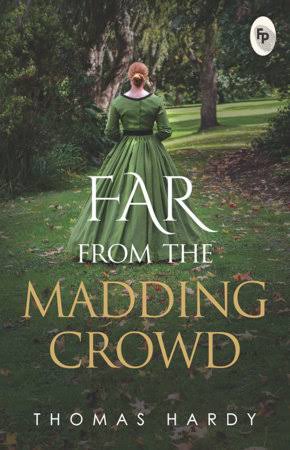
When English novelist Thomas Hardy published Far From The Madding Crowd in 1874, he was writing not merely about farmland and lost sheep in the fictional county of Wessex, but about a permanent and recurring pattern in human society that continues to repeat itself in parliaments, boardrooms, churches, and communities across Uganda and the world.

Hardy, who was born in 1840 in Dorset, England, and who trained first as an architect before devoting himself fully to literature, became one of the Victorian era’s most honest observers of ordinary people because he was not interested in painting heroes or villains in broad strokes, but in showing how men and women behave when prosperity arrives, when adversity strikes, and when public opinion shifts with the speed of weather.
In Far From The Madding Crowd, that observation is centered on Bathsheba Everdene, a young woman who inherits a farm and suddenly becomes the focal point of her community, not because people had taken time to know her heart, but because she controlled wages, contracts, land, and therefore access.
The crowd around Bathsheba was present and vocal when her barns were full, and it became distant and silent when misfortune came and her sheep died. Hardy’s conclusion was therefore not bitter, but truthful.
He was telling us that crowds gather where the grain is, that fame is borrowed light which can be switched off without notice, and that power is rented from systems that can reclaim it whenever they choose. What remains after the noise has moved on is character.
But Not Everyone Is Swayed By The Crowd.
It would be incomplete to end Hardy’s lesson without acknowledging that even in his novel, and even in our own time, there are always individuals who refuse to be carried by the current. These are the stable ones, the good students of life, who are not easily swayed by applause and are not quick to abandon people in silence.
They choose to identify with a person both in season and out of season, in the same way that couples, when they go down the aisle, make vows to stand together in plenty and in want, in health and in sickness, and in celebration and in mourning. Such people do not measure loyalty by what they can gain today, but by the covenant they made yesterday. In Parliament, in business, in church, and in families, these are the Gabriel Oaks of our time. They are quiet, consistent, and they remain when everyone else has found a new place to stand.
The Anita Among Parallel: From Bukedea To The Speaker’s Chair.

Uganda has watched a version of this story unfold in real time around Rt Hon Anettie Anita Among, the former Speaker of the 11th Parliament and the current Bukedea District Woman Member of Parliament.
Her journey began in opposition politics with FDC, then moved to the NRM, and within a remarkably short period she was appointed Deputy Speaker. Following the untimely death of Rt Hon Jacob Oulanyah, she was elevated to the Speakership in less than a year, and the country responded with the full volume of the madding crowd. Proximity to her became a form of currency, and to be seen waving to her, speaking to her, or being mentioned by her was treated as a mark of relevance and favor.
Across the country, groups convened press conferences and circulated videos confidently declaring that “Among would bounce back as Speaker of the 12th Parliament.”
In her own political projection, she had hoped to serve as Deputy for ten years and Speaker for ten years, in the manner of Rt Hon Rebecca Alitwala Kadaga.
The high point of that season came when she contested and won a seat on the NRM Central Executive Committee (CEC) by defeating Kadaga, and subsequently began to refer to herself as “Mama Busoga”, a title widely associated with Kadaga in the Busoga sub-region.
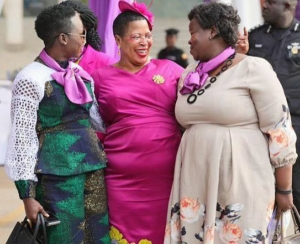
Then the season changed. Among did not return as Speaker, her name was absent from the lists of Ministers of State and Senior Presidential Advisors, and reports emerged of security operations at her private residences.
And just as Hardy predicted more than a century ago, the crowd that had been so loud went quiet. The same individuals who had been most visible in praise and projection have not made public statements of sympathy or support.
The Other Crowd In History: From Palm/Banana Leaves And Lessos.
History gives us another and even more sobering picture of a crowd, and it is one we must not ignore. On the day of Jesus’ Triumphant Entry into Jerusalem, the people welcomed Him with great joy and expectation. They spread their cloaks on the road and waved palm branches, shouting Hosanna and Hallelujah as He passed.
In our Ugandan context, we can easily imagine that same scene playing out with banabas leaves or lessos being waved in the air, because those are the fabrics and symbols we use to celebrate, to honor, and to show allegiance. The crowd in Jerusalem was sincere in that moment, or at least it believed itself to be sincere.
Yet only hours or days later, the very same crowd stood and voted in favor of releasing an aggravated armed robber called Barabbas, and in doing so made sure that the very Jesus they had honored with songs and palm branches would go to crucifixion.
Did they truly mean Hosanna when they shouted it? Or does that moment simply deepen our understanding of human beings who will stand on your side as long as the tap of money, power, and possibility is still flowing? The moment the Jerusalem crowd saw that Jesus was already a captive and a suspect, they concluded that they had no more business with Him.
That is the power of the madding crowd. It can make us mad. It can make us sing today and condemn tomorrow. It can make us wave lessos in celebration and then demand a different outcome when the wind changes.
A Scholarly Contrast: Hardy Versus Dickens.

To understand the full weight of Hardy’s warning, it is instructive to place Far From The Madding Crowd in dialogue with Charles Dickens’ A Tale of Two Cities, published a decade earlier in 1859.
While both novels are products of Victorian England and both are deeply concerned with social transformation, they offer fundamentally contrasting anthropologies.
Hardy presents a pastoral, almost deterministic world where human beings are largely reactive to circumstance, and where public sentiment is fickle because it is tethered to material benefit. His crowd is centrifugal, it disperses under pressure, and his central ethic is endurance and quiet fidelity as embodied in Gabriel Oak.
Dickens, by contrast, presents a revolutionary world of extremes where human beings are capable of moral transcendence even in the midst of chaos. His famous opening, “It was the best of times, it was the worst of times,” establishes a dialectic in which suffering does not necessarily produce abandonment, but can produce sacrifice.
The arc of Sydney Carton, who gives his life for another, stands in direct opposition to Hardy’s crowd. Where Hardy shows us the sociology of dispersal, Dickens shows us the theology of substitution.
In professional terms, Hardy gives us a diagnostic text for public life, while Dickens gives us a prescriptive one. Hardy asks us to see the crowd clearly. Dickens asks us to rise above it. Taken together, they form a complete moral curriculum for leadership and citizenship.
One of Uganda’s polished law dons and writers Prof Isaac Christopher Lubogo in a brief comment had this to say:
“Far From The Madding Crowd is not merely about a crowd. It is about the passions, judgments, loyalties and consequences that unfold within a community. That makes the analogy to the recent political experience particularly interesting.
Applause can indeed be deceptive. A crowd may applaud the office, the power, the moment, or simply the prevailing mood, without necessarily demonstrating enduring loyalty to the person being applauded. Equally, criticism from the crowd does not necessarily establish that the person being criticized is wrong.
Perhaps the deeper lesson is that leadership should ultimately be measured beyond the noise of the crowd, by substance, by institutions, by accountability, and by what remains when the applause has stopped.
In that sense, ‘applause is not loyalty’ is a powerful proposition. The madding crowd is always changing. Principle should not.”
An Invitation To Uganda’s Leadership.
It is for this reason that I extend a direct invitation to Uganda’s public and cultural leadership to find time to read Far From The Madding Crowd.
To Ministers, Members of Parliament, Permanent Secretaries, and Ambassadors, LC5 chairpersons, Mayors and others who hold office today and may not hold it tomorrow: read Hardy to understand that titles are tenures, and that the loyalty you are receiving now may be loyalty to the chair and not to the person.
To Celebrities, Tycoons, and Public Figures whose names trend weekly: read Hardy to remember that fame is borrowed light, and to build relationships that will survive the day the cameras move elsewhere.
To Young Leaders and Students who are entering public life: read Hardy early so that you learn that character is greater than clout, and that the Gabriel Oaks of this world are more valuable than a thousand admirers.
And to Citizens who participate in the crowd: read Hardy so that you can ask yourself honestly whether you are waving banana leaves, blowing vuvuzelas and kitenges also known as lessos for a person, or for a position.
Why Ugandans Must Read Thomas Hardy Today.
Ugandans must read Far From The Madding Crowd not because it is old English literature that belongs in school syllabi, but because it is a mirror that speaks directly to our current political, social, and even spiritual life.
We must read it because we live in a season where titles change quickly, where alliances shift overnight, and where social media can make someone a hero on Monday and a villain by Friday. We must read it because influence without integrity will not survive the first storm.
We must read it because we need to examine whether we are celebrating people or positions, and whether we are the kind of people who remain when the road gets difficult and the person is no longer in power.
Most importantly, we must read it because Hardy, like the scriptures, is calling us back to substance. He is asking each of us a question that cannot be avoided: when the applause stops, when the office is gone, when the grain is finished, who will you still be, and who will still be with you?
Conclusion.
From Bathsheba’s farm in Wessex to the corridors of Parliament in Kampala and to State House Nakasero or Entebbe, and from the streets of Jerusalem to the rallies in Bukedea, Jinja City, Mbarara, Lira or Gulu and Arua to Kaliro and oil-rich Hoima the story remains the same. The madding crowd will always gather where it sees advantage, and it will always move on when it sees none.
But there is another way. There is the way of the stable ones who keep covenant, of the Gabriel Oaks who remain faithful, and of the few who, like the best characters in Dickens, choose sacrifice over popularity.
Thomas Hardy did not write to make us bitter about people. He wrote to make us wise about life. And wisdom, in the current Uganda, is to build on character rather than on noise, on covenant rather than on convenience, and on truth rather than on temporary applause. Because one day, for all of us, the crowd will go home, and only what is real will remain.
The Exposure Uganda (TEU) Editorial Note.
On “The Madding Crowd”, Leadership, And “The Purpose Of Public Reflection”.
This article is not necessarily about Rt Hon Anita Among, or about any individual holding high office today.
We had no choice but to use her recent public experience as our entry point, not to target a person, but so that together, as a country, we can learn from the pattern that her story reveals and from what has happened to our politics, our institutions, and our national character.
Great writing has always done this. The purpose of public reflection is not to shame, but to teach. It is not to settle scores, but to preserve wisdom for posterity.
The Bible itself gives us the clearest example of this discipline. The writers of Scripture were not shy in naming the failures of very important spiritual and political leaders. They recorded the hesitation of Abraham, the impatience of Sarah, the pride of Naaman, the adultery and cover-up of King David, the early persecutions of Paul, and the drift and excess of Solomon in his later years.
They did not do this to disgrace them. They did it because they understood that nations and generations only grow when we are honest about both the heights and the falls of those who lead us. By telling the whole story, Scripture ensured that those who came after would not repeat the same mistakes.
That is exactly what we are doing here.
When we examine the idea of “the madding crowd,” when we place Thomas Hardy beside the events of our time, and when we ask hard questions about loyalty, power, and character, we are not pursuing an individual. We are pursuing truth that will outlive all of us.
Uganda needs leaders who will read, who will reflect, and who will build on substance rather than noise. We need citizens who will learn to distinguish between applause and covenant. And we need a public conversation that is brave enough to name patterns so that our children do not have to live through them again.
If any leader feels exposed by this article, let it be the same way David felt exposed by Nathan: not to be destroyed, but to be corrected, refined, and to leave a legacy that is greater than a title.
That is the spirit in which TEU publishes this piece. Not to tear down, but to build up. Not to embarrass, but to educate. Not for today’s headline, but for the Uganda we are handing to the next generation
We Expose, You Decide- We are The Exposure Uganda.