






















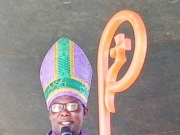


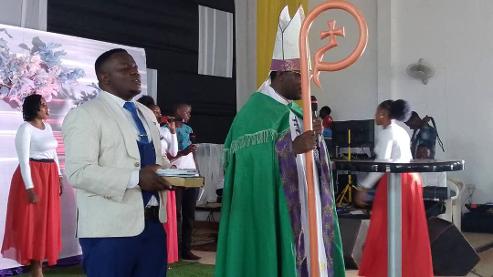
The Ecclesiastical Patriarch of the Five-Fold Episcopal World Federation (FFEWF) and Archbishop of Upper City Covenant Churches, The Most Rev. Archbishop Elect Prof. Mugume Bagambaki Richard, has issued a comprehensive defense of clerical vestments, dismissing claims that they are Western and foreign attires imposed on African churches.
Speaking ahead of the Federation’s historic Consecration, Ordination and Commissioning Service scheduled for 14th December 2026 at Jinja-Kimaka, Archbishop Bagambaki said it was hypocritical for Ugandan society to accept uniforms everywhere else while attacking the Church for maintaining order through vestments.
The archbishop, who also serves as President and Chancellor of UCCSAT University, said the debate had been hijacked by critics who will oppose anything, including why rain falls from above and not from the ground, and why when people jump, they come down instead of continuing upward.
“Everywhere we have accepted uniform except in the Church, and a lawyer wears a wig in the High Court, the Speaker wears a wig and gown in Parliament, the UPDF, Police, Prisons, doctors, private security guards, and even nursery school children from any part of the country and globally wear uniform for identity, equality and order, and even at royal weddings, cocktail parties and state functions we obey strict dress codes without complaint, but when a bishop wears a cassock for glory and for beauty, he is immediately called religious and colonial,” Archbishop Bagambaki said.
He said arguments that vestments are un-African collapse on simple logic, because the same critics who attack clerical attire continue to wear Western suits and ties to look smart.
“That tie critics wear to the office, is it African, and that suit we preach in under the intense Jinja sun, is it indigenous to Busoga, and that academic gown from Makerere University, was it made by our grandfathers, and if we must reject everything Western, then let us also reject microphones, projectors and English Bibles, because we have kept those things not because they are African but because they are useful, and vestments are useful for witness and respect,” he said.
According to the Archbishop, public respect for clergy is tied to visibility, because when people see a traffic officer in white uniform they stop even if they do not know his name, and when members of the public see a vested Bishop, they know a shepherd is on duty, which is important so that the community gives due respect to the office.
He said in combat even international law demands distinction, because a soldier must be known and a combatant who hides in civilian attire is accused of perfidy, which is why identity must be clear.
God Is the First Designer – Exodus 28:2.
Anchoring his argument in scripture, Archbishop Bagambaki said God is the first designer of clerical attire, and He did not leave Aaron to wear casual clothes to the altar.
“And thou shalt make holy garments for Aaron thy brother for glory and for beauty – Exodus 28:2 – and that verse destroys the idea that God looks only at the heart and does not care about outward order,” he said.
He gave three biblical reasons for vestments drawn from his teaching manual: for glory and beauty – Exodus 28:2 – to show the glory of the office and not the man, for distinction – Leviticus 10:10 – that ye may put difference between holy and unholy, and for covering and humility – Exodus 28:42-43 – to cover the flesh so that man is not seen but the office of Christ is seen.
“In Five-Fold Episcopal World Federation, when a Bishop vests, he says: It is no longer I, but Christ,” he noted.
Genesis To Revelation: What the Bible Says.
Tracing the theology from Genesis to Revelation, Archbishop Bagambaki said vestments begin in Eden, not in Rome.
“After the fall, Adam and Eve made aprons of fig leaves in Genesis 3:7, and that was man’s religion and self-made covering, but God rejected it and in Genesis 3:21 the Lord God made coats of skins and clothed them, which means the first vestment required blood and an animal had to die to cover nakedness, and the philosophy is that man cannot cover himself and covering must come from above,” he said.
In Exodus to Leviticus, God gave 43 verses describing Aaron’s garments, including the ephod with twelve stones bearing the twelve tribes over the heart in Exodus 28:29 to show the priest must carry the people, the bells and pomegranates on the hem in Exodus 28:33-35 to teach that ministry must have both sound and fruit, and the mitre inscribed with HOLINESS TO THE LORD in Exodus 28:36 to show the head must be branded with holiness.
He said transfer of authority was always vested, because Moses put some of his honour upon Joshua before all the congregation in Numbers 27:20, and Elijah’s mantle fell on Elisha in 2 Kings 2:13-14, which proves anointing is transferable but needs a physical point of contact.
“When Israel lost distinct priesthood in Judges 17:6, every man did that which was right in his own eyes, and when David restored order, he restored vestments and danced before the Lord girded with a linen ephod in 2 Samuel 6:14, because even a king must submit to priestly order in worship,” he said.
The prophets used garments as sermons, because Zechariah 3:3-5 shows Joshua the high priest clothed with filthy garments and then stripped and clothed with change of raiment, which is the theology of salvation as a change of vestments, while Isaiah, Jeremiah and Ezekiel used clothing as prophetic signs.
In the Gospels, Jesus honoured garments, because the woman with the issue of blood touched the hem of His garment and power left Him in Mark 5:27-30, His raiment became shining exceeding white as snow on the Mount of Transfiguration in Mark 9:3, and Roman soldiers gambled not for His body but for His seamless coat at the cross in John 19:23-24, fulfilling Psalm 22:18.
“The early Church continued the same pattern, because from Paul’s body were brought handkerchiefs and aprons to the sick and diseases departed in Acts 19:12, which destroys the argument that cloth is dead, because cloth that has touched an anointed office carries virtue,” he said.
He said Paul spiritualized vestments when he commanded believers to put on the Lord Jesus Christ in Romans 13:14, to put on the whole armor of God in Ephesians 6:11, to put on the new man in Ephesians 4:24, and to put on charity in Colossians 3:14, with the Greek word enduo meaning to sink into a garment.
Heaven itself is vested, because John saw Jesus clothed with a garment down to the foot and girt about the paps with a golden girdle in Revelation 1:13, the twenty-four elders representing the Church are clothed in white raiment with crowns of gold in Revelation 4:4, and the bride is arrayed in fine linen clean and white which is the righteousness of saints in Revelation 19:8.
“If we will be vested for eternity in heaven, why are we ashamed to be vested for seventy years on earth, and if our High Priest is still vested in glory, who told you vestments are demonic,” he asked.
Detailed Meaning, Color And Five-Fold Order.
In FFEWF, vestments are sermons in cloth, and the Archbishop detailed their meaning: the cassock or long robe is the righteousness of Christ in Revelation 19:8, with purple for bishops signifying royal priesthood in 1 Peter 2:9, the rochet or white Alb is purity and cleansing in Isaiah 1:18, the chimere or sleeveless gown is the mantle of teaching authority from 2 Kings 2:13, the stole or long scarf around the neck is the yoke of Christ in Matthew 11:29, worn over both shoulders for bishops to signify full burden and over one shoulder for pastors serving under bishops, with crosses signifying crucifixion with Christ.
The pectoral cross on the chest guards the heart and signifies confession that the Bishop is not ashamed of Jesus in Mark 8:38, bearing the Cross over the heart like Aaron’s breastplate in Exodus 28:29 and serving as protection in Psalm 35:2, the Bishop’s ring signifies covenant and marriage to the Church as in Jeremiah 22:24 and Luke 15:22 and authority to seal as in Esther 8:8, the mitre or two-pointed crown signifies tongues of fire in Acts 2:3 and the two Testaments and the helmet of salvation in Ephesians 6:17, the crozier or pastoral staff with a hook signifies shepherding and correction in Psalm 23:4, with the hook pulling back straying sheep in mercy and the pointed end driving away wolves in discipline, and the cope or pallium signifies covering and fatherhood as in Ruth 3:9 when Boaz spread his skirt and the anointing flowing from head to skirt in Psalm 133:2.
For Five-Fold ministers in Ephesians 4:11, the Federation teaches distinction: the Pastor wears white alb, stole and pectoral cross for purity and daily feeding, the Teacher wears cassock plus academic hood to show depth of study in 2 Timothy 2:15, the Evangelist wears simple tunic or clerical shirt with cross for mobility in Mark 16:15, the Prophet may wear plain white with ephod-like vest for cleanness to see as in 1 Samuel 9:9, and the Apostle or Archbishop wears full vestments plus pallium, mitre and ring as father of fathers carrying all five offices.
Color carries theology: white signifies purity, resurrection and victory used for ordination and dedication, red signifies blood of martyrs and fire of the Holy Ghost used for Pentecost, consecration and ordinations, purple or violet signifies royalty, penitence and Bishop’s office used for Advent and Lent, black signifies death to self, authority and humility used for chimere and academic settings, and gold signifies glory of God and Kingdom used for Archbishop and Patriarch on major feasts.
Should Pentecostals Wear Vestments?
Responding to some Pentecostals who say God looks at the heart, Archbishop Bagambaki said that is half-truth, because God looks at the heart but man looks at outward appearance in 1 Samuel 16:7, which is why God told Aaron to dress well so man would respect the office.
He said Pentecostals cannot be more spiritual than God who designed vestments in Exodus 28, and the New Testament pattern shows John saw Jesus still vested in glory in Revelation 1:13, and Pentecostal churches are suffering from lack of order described in Judges 17:6, and vestments bring order, respect and apostolic succession, and the difference from Catholicism is that FFEWF does not wear vestments to be mediators because Christ alone is Mediator in 1 Timothy 2:5, but as uniforms of function just like an army uniform.
“You are both Episcopal and Pentecostal in FFEWF, and your vestment must show power and order, which is fire inside and order outside, and let all things be done decently and in order in 1 Corinthians 14:40,” he said.
He warned that vestment without character is costume, and character without vestment is still power, but God wants both character and glory, and therefore bishops should not wear vestments if their life does not match it in Matthew 23:27, if they wear it for pride in 1 Peter 5:5, or if they have no character.
“On 14th December 2026 at Jinja Kimaka, when Archbishops and Bishops will vest, your cassock will say I am dead to self, your stole will say I carry the yoke of Christ, your cross will say I am not ashamed of Jesus, your ring will say I am married to this Federation, and your mitre will say I am on fire with the Holy Ghost, and this is not religion but Kingdom protocol,” he concluded.
Global Preparations Intensify.
The Central Organizing Committee comprising of senior church leaders from Pakistan, Zambia, Tanzania, Nigeria, South Africa, Namibia, Democratic Republic of Congo and the United States of America, under the chairmanship of Bishop Prof Dr Daniel Muwanga, is already engaging key stakeholders as part of the preparatory engagements for the important day.
According to the Secretariat, His Excellency President Yoweri Kaguta Museveni and First Lady Maama Janet Kataha Museveni from the Presidency are expected to grace the occasion as Guests of Honor, while the Minister for the Presidency, Hon Milly Babalanda who is also the Woman MP Buyende District, and dozens of other top politicians, government and public figures will also be part of the historic consecration.
Bishop Prof Dr Daniel Muwanga has already initiated weekly virtual preparatory meetings every Thursday from 9:00pm to 10:30pm, bringing together Bishops and Archbishops from across the global communion, and brilliant ideas are forthcoming as the Federation finalizes liturgy, protocol, vestments, security, and international delegation management for the December event.
According to Muwanga, the main consecrators are Archbishop Dr Thamsanqa Q William Mbakaza from Bloemfontein, Free State, South Africa to be assisted by Patriarch Prof Joh Seer from Thailand and his wife, Archbishop Prof Uju Wonders and is wife from Nigeria, Archbishop Prof Cosmos Zgambo and his wife from Zambia and Archbishop Prof Lawrence Luba and his wife from Cameroon, among others.
For more information contact the Office of the Archbishop Elect, Five-Fold Episcopal World Federation, Upper City Covenant Churches, Tel/WhatsApp +256775050183, Email: fivefoldepiscopalworldfederati@gmail.com