






The Greek philosopher Aristotle, who lived from 384 to 322 BC taught in his famous book the Nicomachean Ethics– a book named after his son and written over 2,300 years ago about how to live a good and happy life through good habits that health is the foundation upon which a good life is built has shaped Western thought and beyond.
Aristotle argued that the body must be kept in good condition for the mind and spirit to pursue virtue and happiness, and that without health, no other blessing can be fully enjoyed.
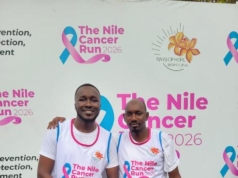
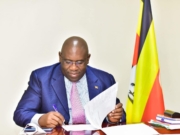
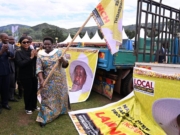
It is this single, centuries-old axiom that Owek. Al-Hajji Ahmed Noor Osman, the Second Deputy Prime Minister also the head of Partnerships, also known as Katukiro in Busoga Kingdom, borrowed to open his address as he launched this year’s Cancer Run, the 9th edition of the run which this time changes name to The Nile Cancer Run 2026, under the theme Cancer Prevention, Early Detection, Treatment.
Why The Nile Cancer Run.
Explaining why the run has been renamed and expanded, the Executive Director of Rays of Hope Hospice Jinja Ms. Sylvia Nakami said for the last 8 years the organization had largely focused on women’s cancers especially cervical and breast cancer because women were presenting in large numbers and dying silently.
However, Nakami explained that due to overwhelming demand and the cry from the community including men who kept asking why prostrate cancer was being left out and families affected by esophageal, liver and childhood cancers, the Hospice has expanded its wings because cancer knows no gender, no age and no tribe or religion.
According to Sylvia Nakami, renaming it The Nile Cancer Run 2026 is a deliberate shift to include all cancers affecting both women, men and children and to reflect its growth from a Jinja women’s run to a national run on the banks of the River Nile that welcomes everyone in the fight against cancer.
A Venue That Tells Its Own Story.

Like they always say, take the message to where the people are. And that is exactly what organizers did.
The launch was held at the mouth of Jinja Central Market, at the strategic junction that faces 3 connecting roads, a stone’s throw from NBS and Smart FM radio stations on Nizam Road and opening into Alidina Road on the other end, one of the busiest trading spots in Busoga.
It is a market that houses nearly everyone. It is a place where hundreds of young people sit from morning to evening at over 50 mobile money tables, while others are embedded in produce stores to weigh and load goods on and off trucks, where more than a dozen bodaboda motorists transport passengers and goods every minute, where at least 80 wholesalers offload heavy sacks of maize, rice, beans and sugar from trucks arriving from Mbale, Soroti, Lira, Nwoya and Arua, where more than 500 retailers arrange tomatoes, onions, cabbages, silver fish, matooke and fruits in neat heaps, and where more than 5,000 shoppers from all 11 districts of Busoga bargain daily.
For once, they all abandoned their stations to listen to messages from health experts and stakeholders, because health had come to the market.
Osman Delivers Kyabazinga Greetings and Sets The Tone.
On protocol and appreciation, Owek. Ahmed Osman who also heads partnerships at the Kingdom thanked Rays of Hope Hospice Jinja for organizing The Nile Cancer Run 2026 and for sustaining this run for 9 consecutive years without interruption.
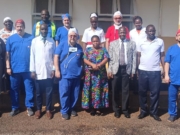
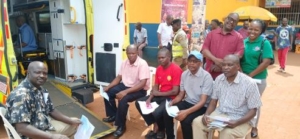
Among those present were health professionals who left their wards to come to a market, development partners who fund screening outreaches to islands on Lake Victoria and Lake Kyoga, government officials from Jinja City Council and Jinja City Health Office, media representatives who amplify health messages beyond Jinja, sponsors from corporate companies and small businesses, survivors who have turned pain into advocacy, and community leaders including chiefs, elders, women leaders and youth leaders.
According to the Deputy Katukiro, the presence of such a diverse gathering at a market proves that cancer is no longer a hidden disease discussed only in hospitals, but a community concern that must be addressed in markets, churches, mosques, schools and homes.
Conveying warm greetings from His Majesty the Kyabazinga William Wilberforce Nadiope Gabula IV, Owek. Osman reiterated that Busoga Kingdom places the health and well-being of its people at the center of its development agenda.
Reaffirming the Kingdom’s commitment, he said Busoga Kingdom will continue to support initiatives that improve health, save lives and strengthen communities, with special emphasis on preventive healthcare and healthy lifestyles.
He pledged continued collaboration with stakeholders working to improve public health and noted that the Kingdom will use its chiefdom structures from village level to the 11 chiefdoms to mobilize subjects for screening and to dismantle myths that cancer is witchcraft or a curse.
Cancer Is a Social and Economic Challenge, Not Just Medical.
Amplifying the health expert messages, Hajji Osman then addressed cancer as a growing public health challenge, noting that cancer continues to affect many families across Busoga and Uganda in a silent but devastating manner.
Beyond medicine, the Deputy Katukiro emphasized, cancer is a social and economic challenge affecting households and livelihoods, and not merely a disease of the body.
When a mother in Bugweri is diagnosed with cervical cancer, he explained, the entire household loses its caretaker and its food producer, and children drop out of school because money for school fees is diverted to transport to Uganda Cancer Institute at Mulago for chemotherapy.
When a father in Kamuli, Buyende or Luuka is diagnosed with prostate cancer, the family often sells land, sells sugarcane at throwaway prices, and sells goats, eventually sinking into poverty that takes more than 5 years to recover from.
In a region where more than 60 percent of families depend on subsistence farming and small trade, Hajji Osman warned, the cost of late treatment can push a household into extreme poverty within 12 months.
This, he said, is the real burden of cancer in Busoga, a burden that health institutions alone cannot carry without cultural and community support.
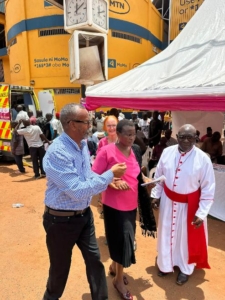
From that reality, he stressed that early detection is central to this year’s theme. Owek. Osman encouraged the public to prioritize regular medical check-ups and cancer screening as a normal part of life, not as an emergency response when pain becomes unbearable.
Like health workers always say, many cancers can be successfully managed when detected early, and early detection saves lives, saves money and saves families from catastrophic expenditure that often exceeds 10 million shillings per patient.
On personal responsibility, he said regular health checks must become a culture in Busoga. Just as we regularly service vehicles or equipment after every 1,000 kilometres and regularly check our mobile money balances every hour, we must regularly check our bodies at least once or twice a year.
Bishop Lubaale Says Body Is Temple and Screening Is an Act of Faith.
The launch was further enriched by the presence of the Bishop of Busoga Diocese, Rt Rev Prof Grace Lubaale, a former lecturer at Kyambogo University who combines theology and pastoral roles with academic depth.
He was flanked by Rev Canon James Kivunke who serves as Chairman Board of Rays of Hope Hospice Jinja.

Having watched more than 1,000 market traders abandon their stations to listen, Bishop Lubaale turned the health campaign into a pastoral sermon that the market will not forget in many months.
On regular health checks, the bishop stressed that many people in Busoga only go to hospital when disease has reached stage 3 or stage 4, when treatment is expensive, painful and less effective, yet scripture teaches us to be good stewards of our bodies.
Putting health messages contained in scripture into his own pastoral voice, Bishop Lubaale reminded the crowd of First Corinthians chapter 6 verses 19 to 20, which teaches that our bodies are temples of the Holy Spirit and that we should honor God with our bodies. If our bodies are temples, he reasoned, then taking them for check-ups is part of honoring God and part of worship.
Citing Third John chapter 1 verse 2, which prays that we may enjoy good health even as our souls prosper, and referencing the words of Jesus in Mark chapter 2 verse 17, that it is not the healthy who need a doctor but the sick, the bishop said medicine and faith work together and seeking screening is not a lack of faith but an expression of faith. He added that Luke the Evangelist was himself a physician, showing that God works through health workers.
To the many men listening, he counselled them to overcome fear and go for prostate cancer screening. To more than 600 mothers who had gathered near the produce section, he encouraged cervical and breast screening. To more than 200 young people at mobile money tables, he urged healthy lifestyles and avoidance of tobacco and excessive alcohol.
According to the Bishop, faith must be accompanied by responsible stewardship of the body, and early detection is stewardship. Affirming the message, Rev Canon Kivunke said Rays of Hope Hospice Jinja is founded on Christian compassion but serves all people regardless of religion, tribe or economic status, and has become one of the most trusted palliative care institutions in Eastern Uganda.
Why The Name Has Changed And What To Expect On 24 October.
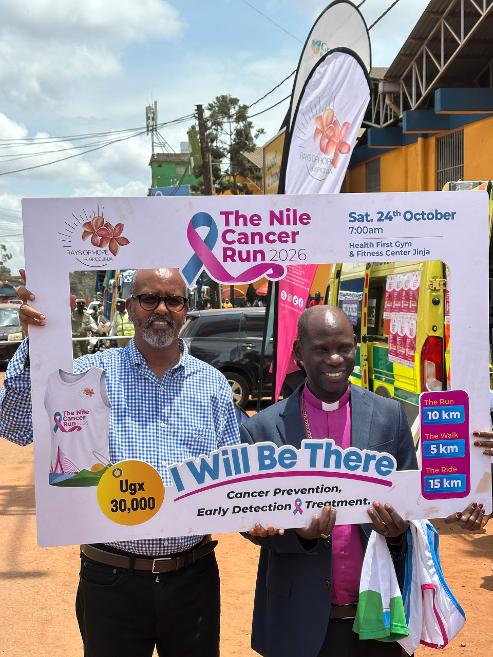
On the main run itself, Owek. Osman made a passionate call for participation in The Nile Cancer Run on 24 October 2026. This is the 9th edition which this time changes name from Jinja Cancer Run to The Nile Cancer Run 2026, to reflect its growth from a Jinja event to a national event held on the banks of the River Nile.
More than just a run, he explained, participation is about standing in solidarity with cancer patients and survivors, about saying to a patient undergoing chemotherapy that you are not alone, and about honoring the memory of more than 24,000 Ugandans who die annually while celebrating those who have survived.
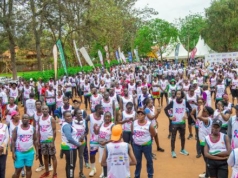
Inviting companies, institutions, schools, bodaboda associations, market vendors, women’s groups, youth groups and families to register, he said last year more than 8,000 people participated, and this year the target is more than 15,000 people running 5 kilometres, 10 kilometres and riding 15 kilometres along the Nile, wearing the colours of hope and carrying messages of early detection.
He also appealed for partnerships, calling upon the private sector, development partners and philanthropists to invest in screening equipment that can reach islands, in awareness campaigns in Lusoga and other local languages, and in patient support including transport, nutrition and pain relief for more than 1,500 patients currently under care.
Putting it in business terms traders understood, he said every 30,000 shillings spent on screening can save more than 5 million shillings that would be spent on late treatment, transport to Kampala and loss of productive time.
In his closing, Owek. Osman declared The Nile Cancer Run 2026 Campaign and Awareness Month launched, noting that a healthy nation is a prosperous nation and that together we can transform awareness into action and action into lives saved.
He said Busoga Kingdom will continue to walk with Rays of Hope Hospice Jinja and all partners until screening reaches every village.
Also in attendance were Jinja Regional Referral Hospital Deputy Senior Executive Consultant Dr Afiz Kibuuka who represented his senior colleague and boss Dr Alfred Yayi, Jinja City Health Officer Dr Frederick Isabirye and Dr Joseph Okello Damoi the Lead Surgeon at Kyabirwa Surgical Centre, among more than 100 other health workers and mobilizers.
With that, Owek. Osman’s message flowed and concluded, leaving the market with a clear call: get screened, get vaccinated, get involved, and come to the Nile on 24 October.
Understanding Cancer: What It Is and The Four Main Types In Uganda.
At this point, it is important to pause and define what cancer actually is, because many people in markets still associate it with witchcraft, yet science tells a different story.
According to the World Health Organization, Uganda Cancer Institute and Rays of Hope Hospice Jinja, cancer is a disease that occurs when abnormal cells in the body grow uncontrollably, divide without stopping, and spread to other parts of the body.
Normally, old cells die and new cells replace them in an orderly manner, but in cancer this orderly process breaks down. These abnormal cells can form growths called tumours.
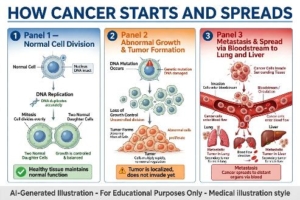
Readers take note the above is an AI-Generated Illustration for educational purposes only on how Cancer starts and spreads.
Malignant tumours can invade nearby tissues and travel through blood or lymph to distant organs, a process known as metastasis, which is responsible for more than 70 percent of cancer deaths.
There are more than 100 different types of cancer, but in Uganda, 4 main cancers dominate the burden and were repeatedly mentioned at the Jinja launch, and they deserve special attention.
First is cervical cancer, which affects the cervix in women and is caused by persistent infection with high-risk Human Papillomavirus, or HPV. It is the leading cancer among women in Uganda, killing more than 4,000 women annually, yet it is preventable through HPV vaccination for girls between 9 and 14 years and through regular screening for women between 25 and 49 years. Second is breast cancer, which affects breast tissue and is the second leading cancer among women in Uganda, though men can also be affected in about 1 percent of cases.
Early signs include lumps, changes in breast size, nipple retraction, and discharge. Early detection through self-examination monthly and clinical examination yearly saves lives in more than 80 percent of cases when caught early.
Third is prostate cancer, which affects the prostate gland in men, especially those above 40 years, and is now the leading cancer among men in Uganda. Many men fear screening due to cultural beliefs, yet a simple blood test called PSA and a physical examination can detect it early. Symptoms include difficulty in urination, frequent urination at night, and blood in urine.
Fourth is cancers of the digestive system, including esophageal, colorectal, liver and stomach cancers, alongside Kaposi sarcoma which is linked to HIV. Esophageal cancer is common in Eastern Uganda and presents with difficulty in swallowing, while colorectal cancer presents with changes in bowel habits and bleeding.
Experts at the launch explained that while some risk factors like age, family history and genetics cannot be changed, many can be prevented through HPV vaccination, avoiding tobacco which causes more than 15 types of cancer, avoiding excessive alcohol, maintaining healthy diets rich in fruits and vegetables, exercising at least 30 minutes daily, avoiding multiple sexual partners, and going for regular screening at least once or twice a year at facilities like Rays of Hope Hospice Jinja, Jinja Regional Referral Hospital and health centers.
They also explained that Rays of Hope Hospice Jinja, which began with palliative care as its maiden service now does not wait for patients to come to their facility or hospital in bad shape but goes to where patients are, with mobile vans reaching more than 10,000 women and men who cannot afford transport, screening thousands of women for cervical and breast cancer, supporting HPV vaccination for more than 15,000 girls in the last 3 years, and screening more than 2,000 men for prostate cancer in the last 12 months while caring for over 1,500 patients with cancer and other life-limiting illnesses across more than 100 villages.
Latest Report As Published In The New Vision Newspaper.
The background to the launch remains urgent, as confirmed by the latest national report that was widely discussed at the market.
As reported in the New Vision newspaper of Tuesday 15 September 2026 by health reporter Agnes Kyotalengerire, Uganda continues to face a heavy cancer burden that is growing every year.
The report, quoting the International Agency for Research on Cancer and the Global Cancer Observatory, indicated that Uganda recorded an estimated 35,968 new cancer cases and 24,629 cancer deaths in 2022, figures that translate to about 98 new cases every day and 67 deaths every day.
Current estimates, as captured in the same New Vision report, show between 34,000 and 36,000 new cases annually and over 22,000 deaths every year, meaning that every hour, at least 4 Ugandans are newly diagnosed and at least 2 die.
Women, the report noted, account for about 55 percent of diagnoses, with cervical cancer leading among women, followed by breast cancer, while prostate cancer leads among men, followed by Kaposi sarcoma, oesophageal and liver cancers.
The report also noted that 60 to 70 percent of patients present late when treatment is less effective, more painful and more expensive, and when chances of survival drop from over 80 percent to less than 20 percent.
The same coverage cited warnings from the World Cancer Congress held in Hong Kong that global cases will rise by 67 percent from 20.6 million in 2024 to over 34 million by 2050, with deaths rising by 79 percent from 9.2 million to 17.5 million annually, with the steepest increase in Africa where deaths are expected to double.
For Uganda with a population of about 51 million, this means the burden will grow unless prevention and early detection are prioritized now, and unless more than 10,000 health workers are trained and more than 100 screening centres are equipped.
This is why the venue at Jinja Central Market mattered. It brought the New Vision statistics from the pages of a newspaper to the place where more than 5,000 people trade daily, making cancer everyone’s business.
Prevention Is Better Than Cure: The Axiom We Learnt In Primary School.
On a final note, the launch closed with a timeless lesson we all learnt while still in primary school, written in chalk on a blackboard in Primary 3, and repeated by our teachers every health science lesson: prevention is better than cure.
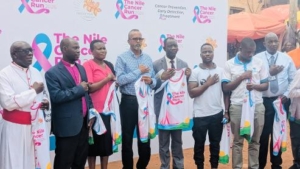
Like they always taught us, prevention is better than cure is not just a proverb to pass exams, it is a public health truth that saves money, saves families and saves nations.
When we vaccinate 1 girl between 9 and 14 years with HPV vaccine that are free in hospitals, we prevent a cervical cancer that would cost more than 10 million shillings to treat, would require more than 20 trips to Mulago, and would leave behind more than 3 children motherless.
When 1 man above 40 years goes for prostate screening that costs 30,000 shillings at Rays of Hope Hospice Jinja, we prevent a family from selling 2 acres of land, 5 goats and a motorbike to pay for late treatment that may still fail.
When 1 woman checks her breasts every month and goes for clinical examination once a year, we prevent a late diagnosis that would require mastectomy, 8 cycles of chemotherapy and 25 sessions of radiotherapy at Mulago, far from home and costing more than 15 million shillings.
Prevention also means healthy lifestyles. Avoiding tobacco prevents more than 15 types of cancer. Avoiding excessive alcohol prevents liver and esophageal cancers. Eating more than 5 servings of fruits and vegetables daily, exercising at least 150 minutes per week, and avoiding risky sexual behavior prevent infections that cause cancer.
As traders returned to their mobile money tables, boda-boda motorists to their stages, and wholesalers and retailers to their sacks and stalls at Jinja Central Market, they carried flyers for screening and registration forms for The Nile Cancer Run on 24 October 2026 with a renewed understanding that health checks are not a luxury but a responsibility, and that early detection is not fear but wisdom.
Indeed, a healthy Busoga is a healthy Kingdom, a healthy Uganda and a healthy world together, a truth first taught by Aristotle more than 2,000 years ago and now lived out on the banks of the Nile where more than 15,000 people are expected to run, walk and ride 5 kilometers, 10 kilometers and 15 kilometers for prevention, early detection and treatment.
Together, Busoga can transform awareness into action and action into lives saved, and ensure that no family faces cancer alone, because prevention, as we learnt in primary school, is truly better than cure.