

















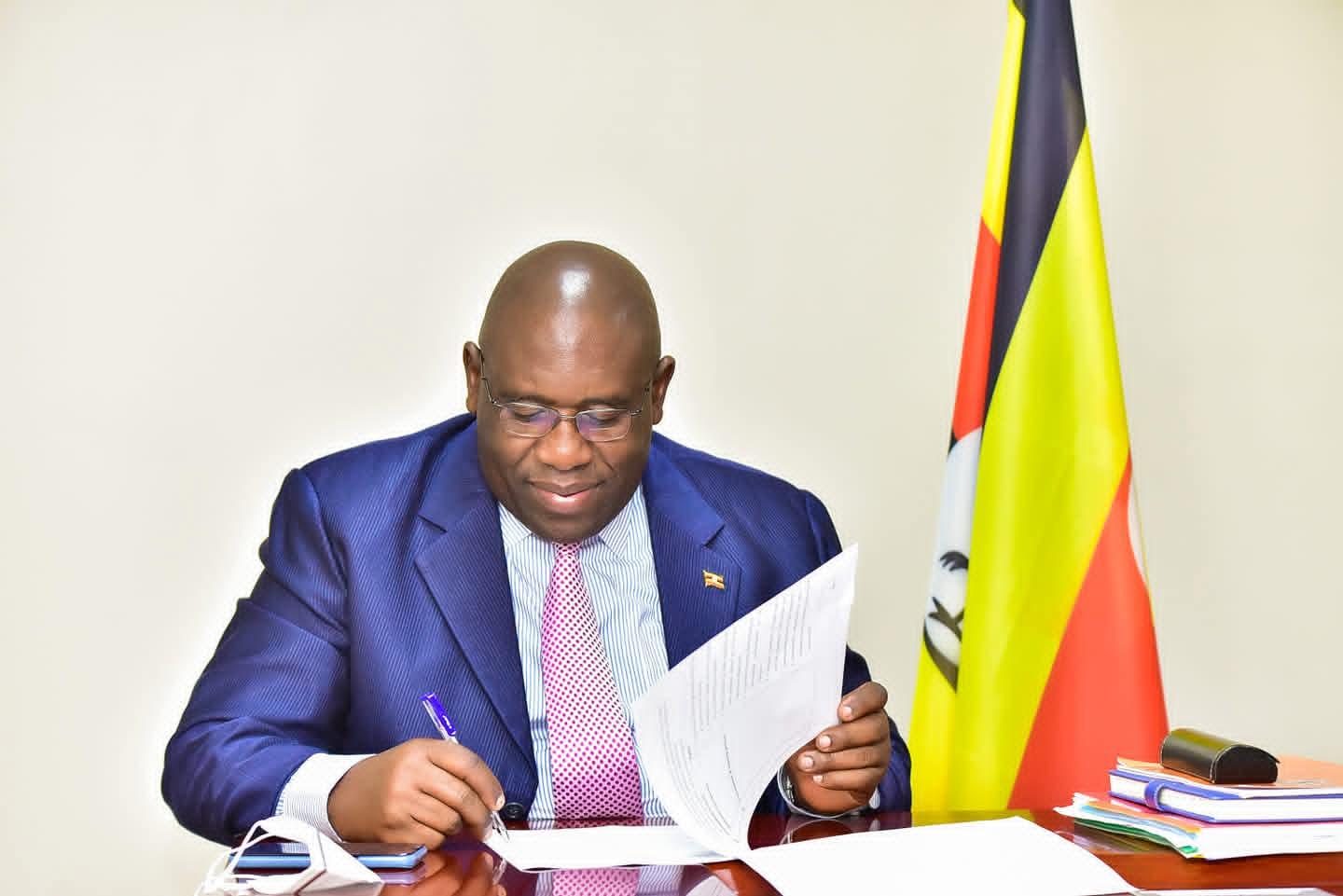
DISCLAIMER: The following is a guest opinion by Senior Advocate Asuman Kiyingi. It is reproduced verbatim in the public interest. Views expressed are solely those of the author and do not necessarily reflect the editorial position of The Exposure Uganda(TEU).
Editor’s Preamble: When Truth Is Called A Joke – The Danger Of Normalizing Impunity.

In Senior Two literature, we all read George Orwell’s Nineteen Eighty-Four.
We thought it was fiction about a distant country. Today it reads like a manual for how inconvenient truths are erased.
In Orwell’s novel, there is a Ministry of Truth whose job is not to tell the truth, but to make people doubt that truth ever existed. When torture happens, they say it did not happen. When a video shows abuse, they say the video is fake. When a citizen disappears, they say it is a rumor. The greatest trick in the book is to make the victim believe that his pain is a joke, and that the public should laugh it off.
Orwell called this doublethink. The ability to hold two contradictory beliefs at the same time. To say we uphold the Constitution while practicing its opposite.
Uganda’s 1995 Constitution was written after a long and painful history. Article One is clear. Sovereignty belongs to the people. Not to a pressure group, not to a faction, not to a single family. Article Twenty Nine guarantees every Ugandan freedom of speech and conscience. Article Two Hundred and Eight demands that the armed forces remain non-partisan and subordinate to civilian authority.
Those articles were not written to decorate a book. They were written to prevent a return to the very impunity we fought against.
It is against this constitutional background that we have received and decided to publish, verbatim, the intervention of Senior Advocate and former Minister Asuman Kiyingi, following a report by Mulengera News on 13th October 2026 concerning alleged plans to purge Maj Gen Rtd Kahinda Otafiire from Cabinet.
Kiyingi raises serious questions about the role of public commentators when faced with allegations of human rights abuse. Is it responsible journalism to dismiss documented cases of detention and torture as mere social media jokes or AI fabrications? Is it constitutional for political disagreements to be met with threats of total political annihilation?
We do not answer those questions. We invite a senior member of the bar to ask them.
We publish his piece below in full, unedited and verbatim, as a contribution to lawful, constitutional debate. We invite the public, the Uganda Human Rights Commission, and all concerned commentators including Mr Andrew Mwenda to respond through lawful and reasoned argument.
The floor is open.
—
OF MWENDA’S OPPORTUNISM, INTELLECTUAL BANDITRY, AND THE THREAT OF POLITICAL RETALIATION: LEAVE OTAFIIRE ALONE
By Asuman Kiyingi
The report published by Mulengera News on 13 October 2026 detailing a coordinated plot by the Patriotic League of Uganda to engineer the unconstitutional purge of Maj Gen Rtd Kahinda Otafiire from Cabinet and install Dr Elioda Tumwesigye in his stead unmasks a chilling reality: political disagreement in Uganda is no longer met with debate, but with threats of political execution.
Even more alarming are the inflammatory pronouncements attributed to journalist Andrew Mwenda, threatening total political annihilation for anyone daring to cross General Muhoozi Kainerugaba’s path.
Let us dispense with polite fictions. Political actors have every right to advocate for administrative changes. But when the language of policy debate mutates into the language of mafia-style retribution, we have crossed the Rubicon from political competition into pure intimidation.
The profound tragedy here is watching Mwenda, a man who built his entire public reputation on the altar of fighting arbitrary authority and defending free speech, transform into the chief apologist for martial overreach. The intellectual betrayal is absolute: a once-trenchant critic of state coercion now acts as the megaphone for a creeping military-backed succession project.
The Fallacy of Intellectual Banditry and Defensive Apologetics
Mwenda is entirely free to worship at the altar of Muhoozi’s political ambitions. He may champion generational shifts or critique Otafiire’s record until he is blue in the face. But proximity to a general’s epaulettes does not confer constitutional authority.
Where Mwenda’s intellectual dishonesty becomes truly grotesque is in his defensive apologetics for state violence. When confronted with the stark reality of gross human rights abuses and the illegal, military-backed persecution of citizens, Mwenda’s response is to patronizingly dismiss these atrocities. He flippantly brushes off military threats and coercive actions as social media jokes or unverified AI-generated fabrications, suggesting the public should not take them seriously.
This is defensive gaslighting of the highest order.
How can anyone dismiss as a joke the horrific, documented realities unfolding across the country.
We see the persistent, extra-judicial targeting and arrest of key opposition figures, such as Bobi Wine’s head of security, Eddie Mutwe. We witness the high-profile detention, humiliation and remanding of figures like Mathew Bagonza. We watch the harrowing video evidence of activists like Sam Mugumya, left visibly broken, limping, and barely able to function after years of grueling military captivity.
To look at broken human beings, shattered by military coercion and safe-house detentions, and wave it away as mere jokes or AI tricks is an insult to the victims and a betrayal of human dignity. If state actors have the capacity to shoot legs, torture citizens, and operate outside judicial bounds, brushing those actions off because the victims are still alive is not analysis, it is moral bankruptcy.
Association with military might does not grant anyone a license to police civilian thought, minimize human suffering, or dictate who sits in the executive. Mwenda’s historical defense of accountability rings hollow when weaponized to sanitize fear and silence dissent. If Otafiire is ineffective, produce the record. If he has erred, present the evidence. But do not dress up political thuggery and state impunity as reform. The credibility of public commentary is measured by consistency of principle, not transactional loyalty.
Otafiire, Sovereignty, and the Right to Dissent
Otafiire’s friction with the MK axis must be viewed through the unyielding lens of our constitutional order. Under Article One of the 1995 Constitution, sovereignty belongs exclusively to the people, not to a bloodline, a pressure group, or a military faction.
Otafiire owes no fealty to a succession matrix. His history in the protracted struggles that birthed this nation does not make him infallible, but it grants him the moral clarity to call out the dangerous conflation of military command with civilian governance. Under Article Two Hundred and Eight, the armed forces are legally mandated to remain non-partisan and subordinate to civilian authority. The proper retort to a historical leader pointing out these uncomfortable truths is reasoned argument, not a backroom conspiracy to strip him of his office.
The Wider Canvas of Impunity
Mwenda’s crusade against Otafiire cannot be viewed in isolation. It is part of a systemic erosion of liberties across Uganda. The pattern is too consistent to be accidental.
We are witnessing the ongoing legal battles surrounding Dr Kizza Besigye’s liberty and threats against his life. We have seen the high-handed detention of Kampala Lord Mayor Erias Lukwago for simply pursuing lawful remedies. There has been the attempt to silence veteran constitutionalists like Miria Matembe for daring to question military conduct. There is the relentless persecution of opposition voices like Muwanga Kivumbi. There was the brazen seizure of Charles Rwomushana live on air. And there is the chilling disappearance and detention of young activists like Aloikin Praise Opoloje.
These are not isolated anomalies, nor are they social media jokes. They are symptoms of a rotting political environment where critical thought is treated as treason and dissent is met with the boot of security forces. When influential commentators rush to sanitize this climate of fear, they become the primary architects of autocracy. They provide the intellectual cover under which impunity thrives.
Cabinet Is Not a Feudal Spoils System
The presidency holds the constitutional prerogative to appoint or dismiss ministers. No one disputes that. But a cabinet reshuffle driven by the coercive demands of an unconstitutional pressure group, operating under the unspoken threat that we have the guns, is a direct assault on institutional integrity.
The playbook being rolled out against Otafiire bears the ominous hallmarks of past political witch-hunts, deeply reminiscent of the tactics once deployed against former Prime Minister Amama Mbabazi. The script is familiar. First isolation, then demonization, then fabrication, then purge. Let us be clear: organizational discipline is one thing. Using the shadow of military coercion to purge independent thinkers is an internal coup against the Republic.
Otafiire may have his flaws. He is abrasive. He is outspoken. He is a historical who does not bow easily. But those are not constitutional grounds for purge. In a true democracy, abrasiveness is not a crime. It is a safeguard.
Conclusion: Leave Otafiire Alone
Uganda’s destiny will not be dictated by decrees of inevitable succession or the arrogant posturing of outlaws hiding behind military fatigues.
Leave Otafiire alone. Challenge his policies in the open market of ideas, contest his positions through lawful avenues, and test his record under the bright lights of public accountability. But abandon the delusion that proximity to guns equals a mandate to rule by fear or that state violence can be laughed off as a joke.
The Republic belongs to the citizens of Uganda, not to the loudest opportunist, or the most heavily guarded faction.
The writer is a senior advocate and former Minister.