
If theology is ‘Faith Seeking Understanding’, then philosophy is ‘the language’ in which it learns to think, because without philosophy, theology can only repeat what it has heard, whereas with philosophy it can ask why it is true, what it means, and whether it can hold together when it is placed under pressure.
It was on that mountain of reasoned faith that the Ecclesiastical Patriarch of the Five-Fold Episcopal World Federation (FFEWF) built his latest sermon, in which he argued that God does not test a man before blessing him but after blessing him, precisely to discover whether he loves the gift more than the Giver.
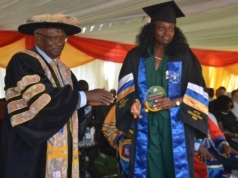
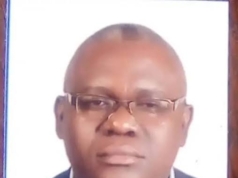
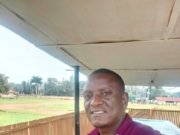
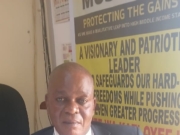
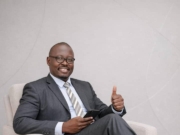
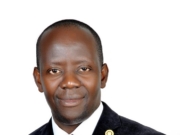
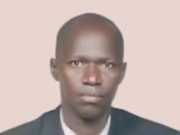
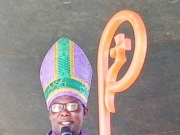
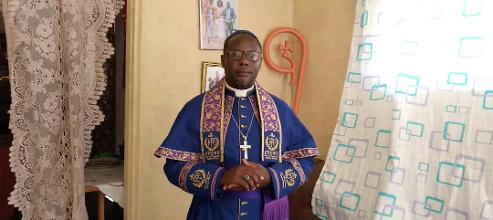
+The Most Rev. Archbishop Elect Professor Mugume Bagambaki Richard, who is also Archbishop of Upper City Covenant Churches (UCCC) and President and Chancellor of UCCSAT University, preached from Genesis 22:1-24 under the theme The Mountain Where God Will Provide — When the Promise Becomes the Sacrifice, a text he described as the hardest chapter in the Bible because it moves without warning from laughter to silence.
Genesis 21, he told the congregation, is laughter, for Isaac is born, the covenant at Beersheba is sealed and a tree is planted, while Genesis 22 is silence, for God says, kill the laughter. If Genesis 20 tested Abraham’s integrity and Genesis 21 tested his family, he said, Genesis 22 tests his faith itself, which is why in Hebrew tradition the chapter is called The Akedah — The Binding, the most sacred chapter for Jews and the most prophetic for Christians.
The Language Behind The Sermon.
Before he climbed Moriah with the congregation, Archbishop Mugume paused to lay the foundation on which the whole sermon would stand, because the story of Abraham cannot be understood by feeling alone. It needs a language that can carry it.
Theology, he explained, is the study of God as He has revealed Himself in Scripture, in creation, in history, and supremely in Jesus Christ. The word itself comes from theos, meaning God, and logos, meaning word, reason, or discourse, so theology is literally reasoned speech about God. It is faith seeking understanding, which means it takes what God has said and asks what it means, how it fits together, and how it should shape the way we live.
Philosophy, by contrast, is the love of wisdom, from philo, meaning love, and sophia, meaning wisdom. It is the disciplined art of asking the deepest questions clearly: What is true? What is real? What is good? What is logical?
Philosophy trains the mind to define terms before debating them, to distinguish ideas that look alike but are not the same, and to test whether a belief can survive its own contradictions. Where theology supplies the revelation, philosophy supplies the reasoning.
When we say, therefore, that philosophy is the language of theology, we mean that theology cannot speak clearly without it, because revelation always arrives in human words, and human words need definition, logic, and order if they are to carry divine truth without distortion.
Theology says God is love, and philosophy asks what love means, how it differs from sentiment, and how it can be both just and merciful at the same time. Theology says God tested Abraham, and philosophy separates a test from a temptation, showing that a temptation pulls a man down in order to destroy him while a test pulls the truth out of him in order to reveal him.
That distinction became the key to the whole sermon, for to confuse a test with a temptation is to misread Moriah entirely.
Where Is Moriah?
A central part of the sermon was historical geography, and Archbishop Mugume traced Abraham’s journey from Beersheba in southern Israel to Moriah, a distance of about 80 to 90 km to the north, which on foot, with a donkey, with wood and with a young man, amounts to exactly a three-day journey, matching Genesis 22:4, where Abraham lifted up his eyes on the third day and saw the place afar off.
He identified Moriah today as Temple Mount –Haram al-Sharif -in the Old City of Jerusalem, Israel, and he cited 2 Chronicles 3:1 as proof, where Solomon began to build the house of the LORD at Jerusalem in Mount Moriah, where the LORD had appeared unto David his father.
Today, he noted, that site holds the Dome of the Rock, which Jewish tradition holds to be the rock on which Abraham bound Isaac and which Muslim tradition holds to be the place from which Mohammed ascended, while the same Moriah range includes Calvary (Golgotha), where Jesus carried His cross.
“The mountain Isaac carried wood up is the same mountain Jesus carried His cross up,” the archbishop said, adding that some scholars believe Isaac was bound on the exact spot where Jesus would later be crucified. He explained the name Moriah as coming from Moreh (Teacher), Yah (Yahweh), Ra’ah (to see) and Yireh (to provide), a meaning confirmed in Genesis 22:14 as YHWH Yireh — The LORD Will Provide / Will Be Seen.
A Test After Blessing.
Theologically, the Archbishop argued that God does not test before blessing but after blessing, in order to see whether a person loves the gift more than the Giver, and he grounded that claim in the Hebrew word in verse 1 for “tempt,” which is nissah– to test as gold is tested in fire, rather than to lure to sin as in James 1:13. God, he said, was not seeking information He lacked but proving in history what faith looks like when it is fully formed.
It was here that he answered the question that hangs over the whole chapter: does faith seek God or does faith seek reason? Faith, he said, seeks God. Reason seeks to understand the God whom faith has already found.
That is the classical order behind Anselm’s definition of theology as fides quaerens intellectum , faith seeking understanding, and not understanding seeking faith.
Faith is first relational. It is trust, surrender, and encounter. Abraham did not climb Moriah because he had reasoned his way to God. He climbed because God had spoken, and he trusted the Speaker even when the command made no sense, which means faith moved before reason could explain it.
Reason comes second, but it is not second-rate, for once faith has found God, reason asks who this God is, whether He is coherent, whether He is good, and whether we can speak of Him without contradicting ourselves.
If faith seeks reason alone, it becomes philosophy without worship — clever, but cold. If faith seeks God without reason, it becomes feeling without foundation — warm, but easily misled. But when faith seeks God and reason seeks understanding, then Moriah makes sense, for Abraham believed God could raise Isaac from the dead (Hebrews 11:17-19) before resurrection had ever happened. Faith trusted. Reason followed. And the ram was revealed only after both had done their work.
He drew attention to Genesis 22:2, “Take now thy son, thine only son Isaac, whom thou lovest,” and asked why God calls Isaac the only son when Ishmael existed, answering that in covenant terms Ishmael had been sent away and God counts only the promise, not the flesh. “Whom thou lovest,” he added, is the first mention of ahav, love, in the entire Bible, and it is a father’s love for a son.
He described Abraham’s obedience in verses 3-6 as mature faith, noting that Abraham argued for Sodom in Genesis 18 and negotiated in Genesis 20 but does not argue here, because he has learned that obedience delayed is disobedience, which is why he rose up early in the morning.
Isaac, he noted, was no longer a baby but a young man in Jewish tradition, between 25 and 37, who carried the wood up Moriah just as Jesus would carry His cross up the same mountain in John 19:17.
Where Is the Lamb?
The heart of the sermon was the dialogue in verses 7-8, in which Isaac asks, “Where is the lamb?” and Abraham answers, “God will provide himself a lamb,” a sentence which in Hebrew, Elohim Yireh Lo HaSeh, can mean both that God will provide FOR Himself a lamb and that God will provide HIMSELF as the lamb, two meanings that are both true and are fulfilled in John 1:29, “Behold the Lamb of God!”
This is philosophy at work inside the story itself, for one sentence carries two meanings that do not cancel each other out, since God provides the sacrifice and God is the sacrifice, and the grammar itself holds the gospel. Without philosophy, we would flatten that mystery. With philosophy, we can hold it, explain it, and defend it.
He then walked the congregation through the binding in verses 9-10, the intervention in verses 11-12, the provision of the ram caught in a thicket in verses 13-14, and the covenant oath in verses 15-24, noting that the ram’s horns caught in the thicket prefigure the crown of thorns and that the ram was a substitute for Isaac just as Christ is substitute for humanity.
Quoting verse 12, “Thou hast not withheld,” he asked what the congregation was withholding from God, whether money, church or title, and insisted that God wants nothing withheld.
The archbishop closed with four applications for FFEWF, UCCC, UCCSAT University and the wider Body of Christ, and he did not present them as isolated points but as one journey up the same mountain, where each lesson prepares the heart for the next.
First, God tests after promise, not before, because after Isaac is born, after the church grows and after the title is given, God asks for it back, not because He is cruel but because He wants to know whether we love the gift more than the Giver. This is the foundation of the whole sermon, for until we understand that blessing invites testing, we will mistake every test for punishment and miss the purpose behind it.
From that testing, we move to the second lesson, which is obedience that rises early, because once God has spoken, Abraham does not consult Sarah or call a council meeting, since some obedience cannot be shared, and the two young men are left at the bottom of the mountain because Moriah is lonely and only father and son go up. The test reveals the heart, but obedience proves it, and true obedience does not wait for permission, applause, or consensus.
And when obedience has taken us up the mountain, we discover the third lesson, which is that Jehovah Jireh is not in Beersheba but in Moriah, because in Beersheba Abraham dug a well and planted a tree, which is provision by effort, while on Moriah God provides a ram, which is provision by sacrifice, and a man will not see the ram until the knife is raised, since provision comes at the point of total surrender.
In other words, Beersheba teaches us to work for provision, but Moriah teaches us to surrender for it, and the church that only knows Beersheba will always be tired, while the church that knows Moriah will always be supplied.
That surrender then leads us to the final lesson, which is that the Lamb question still echoes, because the world still asks where the lamb is to stop war in Gaza and to heal Uganda, and the answer is that God HAS provided Himself a Lamb, for Jesus died on Moriah, so no more Isaac is needed and no more child sacrifice is required. The journey that began with a test ends with a Lamb, and the God who asked for Isaac becomes the God who gives His own Son, so that what Abraham could not finish, God finished Himself.
Moriah In 2026: The Ancient Mountain In A Modern War.
Moriah has never stopped being Moriah. In 2026 it remains the most contested piece of land on earth, a 35-acre ridge in Jerusalem where Temple Mount, Al-Aqsa, the Dome of the Rock, Jewish longing for a Third Temple, Muslim guardianship, Christian pilgrimage, and international politics all collide on the same rock where Abraham once raised a knife.
It is a mountain that the world cannot divide, cannot ignore, and cannot fully possess, because every faith claims it, every army has fought over it, and every headline still returns to it, as if history itself is still circling the place where God said, “In the mount of the LORD it shall be seen.”
But Archbishop Mugume insisted that Moriah is not only a place on a map in Israel. It is also a place in every heart, for every believer has a personal Moriah where God asks for the Isaac that has become too precious. For him, he said, it was surrendering ambition to be recognized as Patriarch, while for a pastor in Luweero with a church of 10, it is offering that church back to God, and for a mother, a businessman, or a bishop, it is laying down whatever has quietly taken God’s place.
“We must build altar on Moriah — not in Gerar fear, not in Beersheba comfort, but in Jerusalem surrender,” he said.
Conclusion: The Altar That Still Speaks.
Genesis 22 does not end with a death. It ends with a resurrection. Isaac, who died three days in Abraham’s heart, walked back down the mountain alive. The ram died so that Isaac could live. Christ died so that we could live. And that is why Moriah still speaks.
It speaks to the man who has built his life around a gift and forgotten the Giver. It speaks to the church that has mistaken growth for God’s approval. It speaks to a generation that wants provision without surrender, blessing without binding, and a crown without a cross.
But Moriah will not be cheapened. It demands the knife before it reveals the ram. It demands the altar before it reveals the provision. It demands the laying down before it permits the lifting up.
So, the question that Isaac asked his father on the way up the mountain is still the question God is asking His church on the way up today: Where is the lamb? And the answer is still the same: God will provide Himself a Lamb, and He already has.
Lay Isaac down. Raise the knife. Do not withhold. For the God who asked Abraham for his only son did not withhold His own, and the mountain where Abraham wept is the mountain where the world was redeemed.
The service ended with the declaration: My Moriah Is My Altar Of No Withholding.
+The Most Rev. Archbishop Elect Professor Mugume Bagambaki Richard is Patriarch of FFEWF, Archbishop of Upper City Covenant Churches, and Chancellor of UCCSAT University. WhatsApp +256775050183.