












From The Exposure Uganda (TEU) Newsroom.
At The Exposure Uganda (TEU), we have been following with keen interest the issues surrounding the ongoing endorsements, the debate around the Patriotic League of Uganda (PLU), and the constitutional questions that continue to arise from them.
This is a debate that has not stayed in one place. It has moved from opinion pages to WhatsApp groups, to radio talk shows, to newsrooms, to Parliament corridors, to homes across the country. Some Ugandans discuss it openly. Others discuss it quietly. Others choose not to discuss it at all. That in itself tells us how sensitive, and how important, this conversation has become.
At the center of the latest round of this debate are two voices.
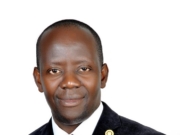
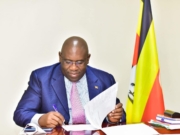
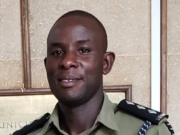
On one side is Morrison Rwakakamba, who wrote in The Independent on 3 November 2026 defending the UPDF Chief of Defense Forces (CDF) General Muhoozi Kainerugaba, fondly referred to as “Gen MK” and the Patriotic League of Uganda (PLU).
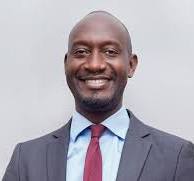
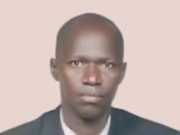
Rwakakamba who is the CEO of Prescot 15 Investment Advisory and immediate former chairman URA, argues that PLU is a lawful pressure group, that Gen Muhoozi enjoys constitutional freedoms of association and expression, and that the legal gaps in Uganda’s electoral and party laws require political dialogue rather than judicial intervention.
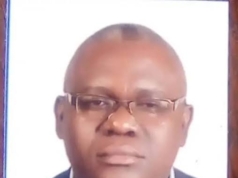
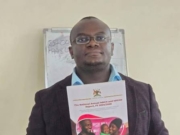
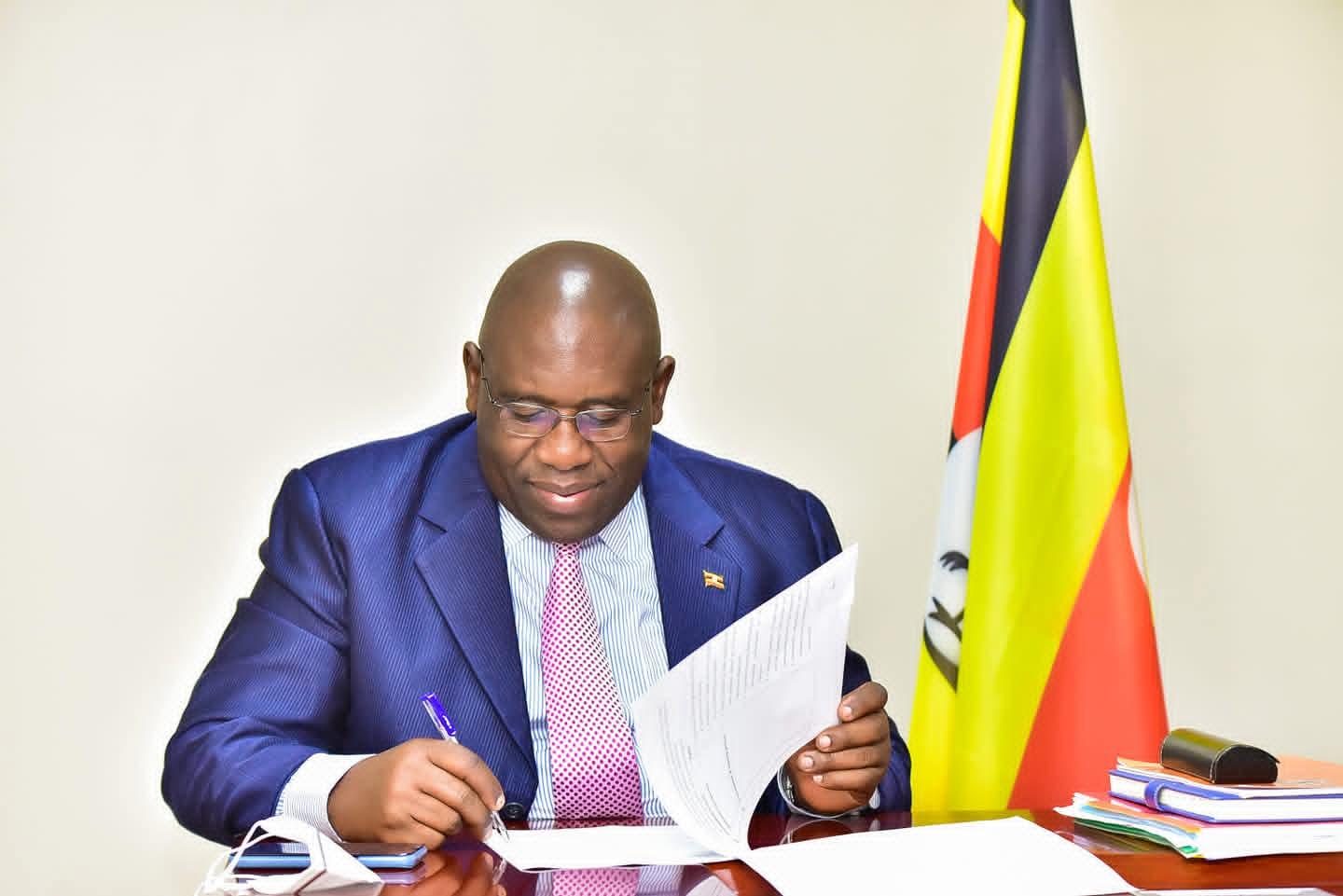
On the other side is Hon Asuman Kiyingi, senior advocate, former Member of Parliament (Bugabula South in Kamuli district), former Cabinet Minister and former Deputy Chairperson of the Leadership Code Tribunal.
His argument is that the classification of PLU as a pressure group does not answer the military question, that Article 208(2) requires the UPDF to remain non-partisan and subordinate to civilian authority, and that Uganda needs an authoritative judicial interpretation alongside genuine national dialogue.
TEU, a revolutionary digital news platform does not take a side in this exchange. Our role is to ensure that Ugandans have access to the full arguments, in full, so that each reader can judge for themselves.
What follows below is Hon Kiyingi’s rejoinder to Rwakakamba, reproduced verbatim, in his own words, without editing or summarizing.
We invite you to read it in full, and to follow this debate with us as it continues to unfold.
READ ON VERBATIM:
Rwakakamba’s Civilian-Clothes Constitution: Why Military Law Cannot Be Suspended For Muhoozi.
Constitutional freedoms do not exempt serving military commanders from non-partisanship. Morrison Rwakakamba’s defense of General Muhoozi Kainerugaba confuses civic association with military immunity, presidential awareness with constitutional compliance, and political dialogue with the enforcement of existing law.
By Asuman Kiyingi
Morrison Rwakakamba’s response to my article, published in The Independent on 3 November 2026 under the title “Kiyingi’s sweeping claim against Muhoozi seeks to mask gaps in the law and electoral institutions”, advances an extraordinary constitutional proposition: that Uganda’s serving Chief of Defense Forces (CDF) may direct nationwide presidential succession mobilization without violating military neutrality, provided the vehicle is described as a civic pressure group operating outside military establishments and command.
His defense rests on three propositions: that the Patriotic League of Uganda (PLU) enjoys statutory exemption as a pressure group; that General Muhoozi Kainerugaba exercises constitutional freedoms independently of his military command; and that supposed legal ambiguities require political dialogue rather than judicial intervention.
None answers two fundamental questions. Is General Muhoozi a serving member of the Uganda Peoples’ Defense Forces (UPDF)? If so, can he lawfully direct partisan presidential mobilization while remaining bound by Article 208(2) and military legislation?
Rwakakamba, who has publicly identified himself as a patriotic cadre, is entitled to defend PLU. But political affiliation cannot substitute for constitutional reasoning. His accusation that my arguments are sweeping is misplaced when his defense separates legal provisions that must be interpreted together.
The controversy is not whether soldiers possess constitutional rights or pressure groups may lawfully exist. It concerns whether those freedoms authorize conduct incompatible with military obligations.
A Pressure-Group Exemption Is Not Military Immunity.
Rwakakamba relies heavily on section 1(2) of the Political Parties and Organizations Act, Cap. 178, which excludes pressure groups and civic organizations from the statutory definition of political organizations.
Section 1(1) defines political organizations by their objectives, while section 1(3) recognizes pressure groups seeking to influence public opinion and government action.
Political advocacy alone therefore cannot disqualify PLU from being a pressure group. Its objectives, structures and activities require examination, particularly its mobilization for a named presidential successor.
But Rwakakamba overlooks a fundamental distinction.
Even assuming PLU is a lawful pressure group, its classification does not automatically authorize a serving military commander to direct its partisan activities.
Section 16 restricts participation by Defense Forces members in political parties and organizations. Its application to PLU raises questions concerning the organization’s legal character.
Independently, Article 208(2) requires the UPDF to remain non-partisan, national, patriotic, regular and professional, and subordinate to civilian authority.
That constitutional obligation cannot be displaced by an organizational exemption under ordinary legislation.
A familiar interpretive principle captures the danger: Quando Aliquid Prohibetur Ex Directo, Prohibetur Et Per Obliquum, a Latin for ‘what the law prohibits directly cannot be accomplished indirectly’.
(Editor’s Note: For example, if the law says you cannot enter a house through the front door, you cannot climb in through the window and say you did not use the front door. In a nutshell if the law says a serving General cannot run a presidential campaign, he cannot run it through a pressure group and say he did not run as a general).
Rwakakamba disagrees and says this maxim does not create a new prohibition. He says you cannot use a Latin saying to invent a crime where the statute does not forbid it.
Kiyingi replies in his rejoinder:
The maxim does not invent prohibitions. It prevents established restrictions from being defeated through artificial changes of form.
If particular partisan activities are prohibited to a serving commander, conducting them through a civic pressure group does not automatically make them lawful.
The law must examine substance, not merely labels. The maxim does not invent prohibitions. It prevents established restrictions from being defeated through artificial changes of form.
If particular partisan activities are prohibited to a serving commander, conducting them through a civic pressure group does not automatically make them lawful.
The law must examine substance, not merely labels.
Constitutional Rights & Military Obligations.
Rwakakamba invokes Articles 29 and 38, protecting expression, association and political participation.
These rights are fundamental but operate within the Constitution as a whole.
Article 43 permits lawful limitations justified by the rights of others and the public interest, provided they are acceptable and demonstrably justifiable in a free and democratic society.
Article 208(2) establishes military non-partisanship, while Article 210 authorizes Parliament to regulate military organization and discipline.
The objective is not to extinguish soldiers’ citizenship but to prevent the coercive institutions of the state from becoming instruments of partisan competition.
An ordinary soldier expressing a political opinion is not equivalent to the CDF directing a nationwide movement promoting his presidential succession.
Rwakakamba’s suggestion that Muhoozi acts exclusively in his private capacity whenever he wears civilian clothes is untenable.
Military obligations arise from continuing military status, not the uniform worn.
The UPDF Act, Cap. 330, provides the statutory framework for military service and discipline. Section 97 addresses relevant restrictions concerning political office and military service.
The distinction between formal presidential nomination and preceding political mobilization is important.
Rwakakamba argues that Muhoozi has not presented himself for nomination. But presidential campaigns do not begin when nomination papers reach the Electoral Commission.
Political structures, endorsement campaigns and mobilization networks are established much earlier.
If military neutrality became enforceable only upon formal nomination, a serving commander could organize an entire presidential campaign while retaining military command, retiring shortly before nomination.
That interpretation would severely weaken Article 208(2).
The question is whether Muhoozi’s present activities comply with military law, not whether he is already a nominated candidate.
What The Courts Actually Decided.
The Supreme Court’s decision in Attorney General v Major General David Tinyefuza, Constitutional Appeal No. 1 of 1997, is instructive.
The Court considered whether Tinyefuza had ceased being a soldier following his appointment as Presidential Adviser and attempted resignation.
It rejected the proposition that military status could terminate independently of applicable legal procedures.
Military membership and accompanying obligations are determined by law, not an officer’s preferred description of his position.
Although Tinyefuza did not determine whether a serving CDF could chair a presidential pressure group, it undermines the suggestion that military obligations disappear whenever an officer claims to act privately.
The Tumukunde litigation addressed military status, constitutional rights, parliamentary representation and military discipline.
More directly, in Kasozi and Others v Attorney General, the Constitutional Court rejected partisan political activity “within the army”.
Rwakakamba construes that formulation as though the prohibition ends at the barracks gate.
That is an artificial geographical interpretation of an institutional constitutional obligation.
Military non-partisanship concerns the character and conduct of the institution and its members, not merely where activities occur.
Neither Tumukunde nor Kasozi establishes unrestricted partisan freedoms for serving commanders outside military installations.
Nor does Article 78, providing for UPDF representation in Parliament, authorize serving officers to direct presidential succession campaigns.
Constitutionally authorized parliamentary representation cannot become unlimited partisan political liberty.
Museveni’s Letter: The Smoking Gun Rwakakamba Misreads.
(Editor’s Notes for context: Why Kiyingi Calls M7’s Letter A Smoking Gun.
Kiyingi is not saying Museveni confessed to a crime, rather he is saying Museveni’s letter of 11th October,2026 to the NRM CEC is the smoking gun because:
It acknowledges PLU is mobilizing for MK’s presidency in 2031, it invites the CEC to discuss MK’s suitability and it also proves that the organized succession mobilization around the serving CDF had reached the Commander-in -Chief himself.
In Kiyingi’s words: “It establishes presidential awareness and organized political direction not by itself, criminal liability”. So, the smoking gun is not proof of guilt, it is proof of awareness and organization.
Rwakakamba says Kiyingi misread the letter, Kiyingi says Rwakakamba misses the point-because the letter itself is the proof that this was not just supporters acting alone.)
Rwakakamba accuses me of mischaracterizing President Museveni’s letter of 11 October 2026 to the NRM Central Executive Committee.
Yet the letter acknowledges PLU’s mobilization for Muhoozi’s presidency in 2031–2036 and invites consideration of his suitability.
Its significance is not that the President confessed to a criminal offence.
It establishes that organized succession mobilization surrounding Uganda’s serving CDF had reached the Commander-in-Chief and become a matter for deliberation within the ruling party’s highest leadership.
Subsequent developments reinforce its importance.
On 29 October, Muhoozi directed PLU members to concentrate on presidential endorsements rather than discussing his father’s CEC paper. On 31 October, PLU Secretary General Twalla Fadil issued instructions attributed to Muhoozi concerning digital endorsements, regional and district structures and registration of political cadres.
These developments challenge Rwakakamba’s suggestion that PLU mobilization consists merely of unsolicited enthusiasm by independent supporters.
The smoking gun establishes presidential awareness and organized political direction—not, by itself, criminal liability.
Why has the Commander-in-Chief not confronted the implications for military neutrality?
Presidential awareness, political accommodation or institutional silence cannot confer legality upon unconstitutional conduct.
When Private Politics Intrudes Into Public Power.
Rwakakamba’s private-capacity defense becomes less convincing when tested against Muhoozi’s interventions in civilian governance.
Consider his public declaration that PLU would approve new Resident District Commissioners.
Article 203 vests RDC appointments in the President. A civic association may recommend candidates. But what constitutional authority permits PLU, under the serving CDF, to claim an approval role in presidential appointments?
Consider also the reported ultimatum to Hon Justine Nameere, State Minister for Local Government.
Following statements allegedly attributed to her and considered derogatory to the CDF, Muhoozi reportedly demanded an apology and threatened her with dismissal.
Article 113 establishes the framework for appointing ministers, while the Constitution regulates termination of ministerial appointments. The CDF possesses no independent constitutional authority to dismiss a minister.
These incidents cannot be explained away as private civic advocacy.
They raise serious questions about military influence over civilian executive authority.
A pressure group may lobby government. It cannot acquire constitutional powers over public appointments or ministerial tenure.
This is precisely why civilian supremacy matters.
The ULS, Constitutional Litigation & Foreign Examples.
Rwakakamba attacks the Uganda Law Society’s Executive Order RNB No. 13 of 2026, arguing that the Society has assumed prosecutorial powers.
Calling a legal opinion an Executive Order does not make it binding.
The ULS cannot prosecute by proclamation or exercise the Director of Public Prosecutions’ constitutional powers.
But its statutory mandate permits it to identify constitutional concerns, advise government and call upon competent authorities to act.
Recommending investigation or prosecution is not itself prosecution.
Article 137 separately provides for resolving questions requiring constitutional interpretation.
A properly constituted petition concerning Article 208(2) does not usurp the DPP’s powers.
Neither does the dismissal of Male Mabirizi’s private criminal complaint establish that Muhoozi’s PLU activities comply with the Constitution.
Criminal liability and constitutional compliance involve different legal questions.
Rwakakamba’s objection to judicial intervention mistakes constitutional adjudication for political persecution.
His comparative examples fare no better.
United States Department of Defense Directive 1344.10 distinguishes permissible personal political expression from restricted partisan campaign activity by serving military personnel.
Kenya’s Constitution, under Article 239(3), similarly restricts partisan conduct by national security organs and their members when exercising official functions.
These examples distinguish citizenship from partisan military involvement.
Egypt’s military-led development, which Rwakakamba praises, cannot determine Uganda’s constitutional obligations.
Economic performance does not override Article 208(2).
Welcome Dialogue, But Not Militarized Succession.
Rwakakamba invokes the Consociational Democracy Agreement (CDA) associated with General Salim Saleh and Professor Ogenga Otunnu as an alternative to constitutional litigation.
I welcome serious national reconciliation initiatives.
Having recently obtained a substantial document containing the CDA’s proposed dialogue framework, which I am yet to examine fully, I recognize that it deserves informed engagement.
However, important questions remain. How does the CDA relate to the National Consultative Forum and the Inter-Party Organization for Dialogue (IPOD)?
How will civil society, religious and cultural institutions, academia, professional associations, women, youth, organized labour, business and communities beyond established political elites participate?
Who will determine representation, control the agenda and guarantee independence?
The CDA should become part of transparent, inclusive national dialogue culminating in a genuinely representative National Conference.
Such a conference must confront constitutional reform, civilian supremacy, electoral credibility, judicial independence, accountability, federalism, decentralization and peaceful political transition.
Above all, dialogue must not become a political cover for legitimizing a predetermined militarized Muhoozi succession.
National reconciliation cannot be purchased by sacrificing constitutional principles.
Political negotiations and constitutional accountability are complementary, not competing obligations.
The Choice Between Military Command And Partisan Ambition.
The controversy is not hostility towards Muhoozi or opposition to his future presidential ambitions.
The Constitution does not disqualify a citizen merely because he is the President’s son or has served in the military.
But political ambition must operate within the law. Muhoozi cannot claim the advantages of military command while treating its constitutional obligations as optional during partisan mobilization.
Rwakakamba’s defense asks Ugandans to accept that a serving CDF may direct a presidential succession movement privately while its institutional implications remain legally irrelevant.
That proposition is constitutionally unsustainable.
PLU’s classification as a pressure group does not settle the military question. Presidential awareness does not confer constitutional immunity. Nor can dialogue substitute for judicial determination of existing legal obligations.
Uganda requires authoritative judicial resolution alongside genuine national dialogue capable of producing a broader political settlement.
Our constitutional history warns against confusing military authority with political entitlement.
Military law does not end at the barracks gate. The Constitution does not change when the Chief of Defense Forces changes his clothes. And what the law prohibits directly cannot be legitimized indirectly through a political pressure group.
The writer is a senior advocate, former Member of Parliament, former Cabinet Minister and former Deputy Chairperson of the Leadership Code Tribunal.