








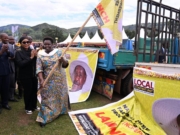

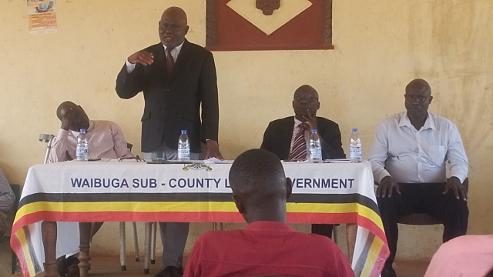
Luuka District leadership has commissioned and handed over several road projects totaling over 20 kilometers and worth Shs 304 million, as part of efforts to improve rural connectivity and ease movement of people and goods across the district.
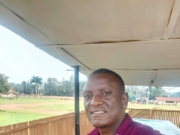
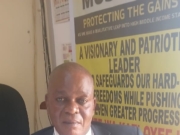
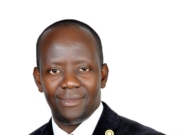
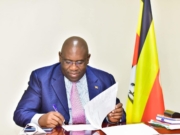
The Resident District Commissioner (RDC) Michael Kibwika led the commissioning exercise and said the roads were implemented under Force on Account through the district’s Works Department. He noted that government is determined to ensure taxpayers’ money delivers visible and durable results.
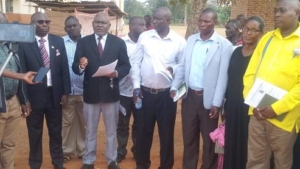
The Bulanga–Waibuga–Busiiro Road stretching 16 kilometers was done at a cost of Shs 240 million. Works included bush clearing, road alignment, shaping of the surface, graveling and culvert installation to improve drainage.
At Kigulamo Swamp, a one-kilometer stretch was worked on at Shs 19 million. The team carried out bush clearing, reaping, grading, compaction, watering, graveling, culvert installation and construction of offshoots to stabilize the swamp crossing.
The Bulanga–Kyankuzi Road covering 3.2 kilometers was also completed at Shs 45 million. Activities here included bush clearing, reaping, grading, compaction, head wall construction, graveling and culvert installation.
Kibwika said more roads are lined up for commissioning later this month as the district accelerates infrastructure development ahead of the rainy season.
However, the RDC declined to commission the Nanvunano–Ikoonia Road in Nawampiti Sub- County, which was implemented under routine maintenance through Force on Account at a cost of Shs 50 million. He said the Nanvunano swamp section has a lot of defects that must be addressed first.
“We shall not commission shoddy work,” Kibwika said. “Service delivery must be seen and felt. Contractors and sub-county teams must know that quality is non-negotiable because this is public money.”
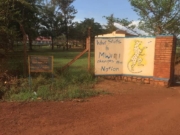
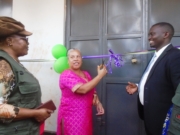
In the education sector, the district also witnessed the site handover and launch for construction of new facilities by development partner Stromme Foundation. The Deputy RDC Nkoko Rachel presided over the launch at Walibo and Namakale Primary Schools, where each school will get a three-classroom block and three five-stance pit latrines. The entire project is valued at Shs 175 million.
What is Force on Account?
Force on Account is a government procurement approach where a district or sub-county uses its own staff, equipment and materials to implement a project instead of hiring an outside contractor.
It is important because it is cost effective since it eliminates contractor profit margins, it allows projects to start faster without long bidding processes, and it builds the capacity of district technical teams. It also strengthens accountability because the district directly supervises the works and can ensure quality and proper use of funds. The method is widely used for road maintenance and small infrastructure under the Uganda Road Fund and district budgets.
Why Commissioning Matters.
According to RDC Kibwika, commissioning government projects is a key accountability tool.
“Commissioning tells the public this is what your taxes have done. It transfers responsibility to the community to protect the asset, and it forces us as leaders to inspect quality before we celebrate,” he said.
Commissioning also creates public awareness, deters corruption because leaders must account physically for the money spent, ensures defects are identified and fixed before handover, and promotes community ownership and maintenance of public assets.
“Under the ‘KISANZA NO SLEEP’ approach, we are in the field. If the work is good, we commission. If it is bad, we send it back,” Kibwika added.
District officials say the newly commissioned roads will greatly ease the movement of learners, patients and agricultural produce from Bulanga, Waibuga, Busiiro and Kyankuzi to Luuka Town Council and onward to Jinja City markets.