
















Preamble: The Weight of The Uniform In A Fractured World.
War and peace have always turned on one question: who do the guardians serve?
In 431 BC, an ancient Greek general and historian Thucydides (460 BC-400 BC) warned that in moments of great power struggle, “it was the strong who did what they could and the weak who suffered what they must.” Yet even the strong, he noted, lost when they lost the belief of those they claimed to protect. Credibility, not firepower, was the true currency of empire.
Napoleon Bonaparte (1769-1821), whom the world remembers for redrawing the map of Europe between 1799 and 1815, understood this better than most generals.
He rose from a young artillery officer to Emperor of France not just by winning battles, but by building institutions. Yet his most enduring lesson for soldiers came in one sentence: “The moral is to the physical as three is to one.”
In other words, morale, perception and legitimacy matter three times more than guns and numbers. Napoleon conquered half of Europe, but he lost it in Russia in 1812 because the people he marched into no longer believed his cause was theirs.
That is why modern peacekeeping rests on three pillars forged in blood: impartiality, consent, and minimum use of force. From United Nations Emergency Force (UNEF) in Sinai in 1956 to AMISOM in Mogadishu, the doctrine has been clear — a peacekeeper must be seen to have no flag but peace.
The moment a blue helmet is perceived as the armed wing of one side’s politics or theology, it ceases to keep peace and becomes a target.
History is littered with the cost of ignoring that. In Lebanon in 1983, a multinational force lost neutrality and lost 241 marines in a single day.
In Bosni and Herzegovina, UN “safe areas” collapsed not because troops lacked courage, but because the world doubted their mandate. And in Africa, Uganda itself knows this truth: the UPDF earned respect in Somalia not merely by fighting Al-Shabaab, but by staying, in the eyes of Somalis- as a buffer, not a belligerent.
Today, the Middle East presents the hardest test of all. Gaza is not a border dispute. It is a wound where law, religion, memory and power intersect. Any force sent there will walk into a story 75 years old, where every stone has a narrative and every uniform is read for its allegiance before its purpose.
It is in that context that reports of a proposed Ugandan deployment as part of an International Stabilization Force in Gaza must be weighed — not just militarily, but politically and morally. For Uganda, this is not about the capacity of its soldiers.
The UPDF has proven itself from Mogadishu to Bunia. The question is about Uganda’s soul as a diplomatic actor: Can a nation be both a committed friend and a credible referee?
These are the dilemmas that have occupied statesmen from South Africa’s Nelson Mandela to Texas’s Dwight D. Eisenhower. “You cannot shake hands with a clenched fist,” Mandela said.
And Eisenhower, the four-star-general-turned-president, cautioned: “In the councils of government, we must guard against the acquisition of unwarranted influence… by the military-industrial complex.” Missions abroad must serve national interest and national values, not just the logistics of deployment.
It is with that burden of history and philosophy in mind that we turn to the voice of experience.
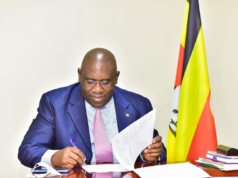
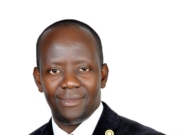
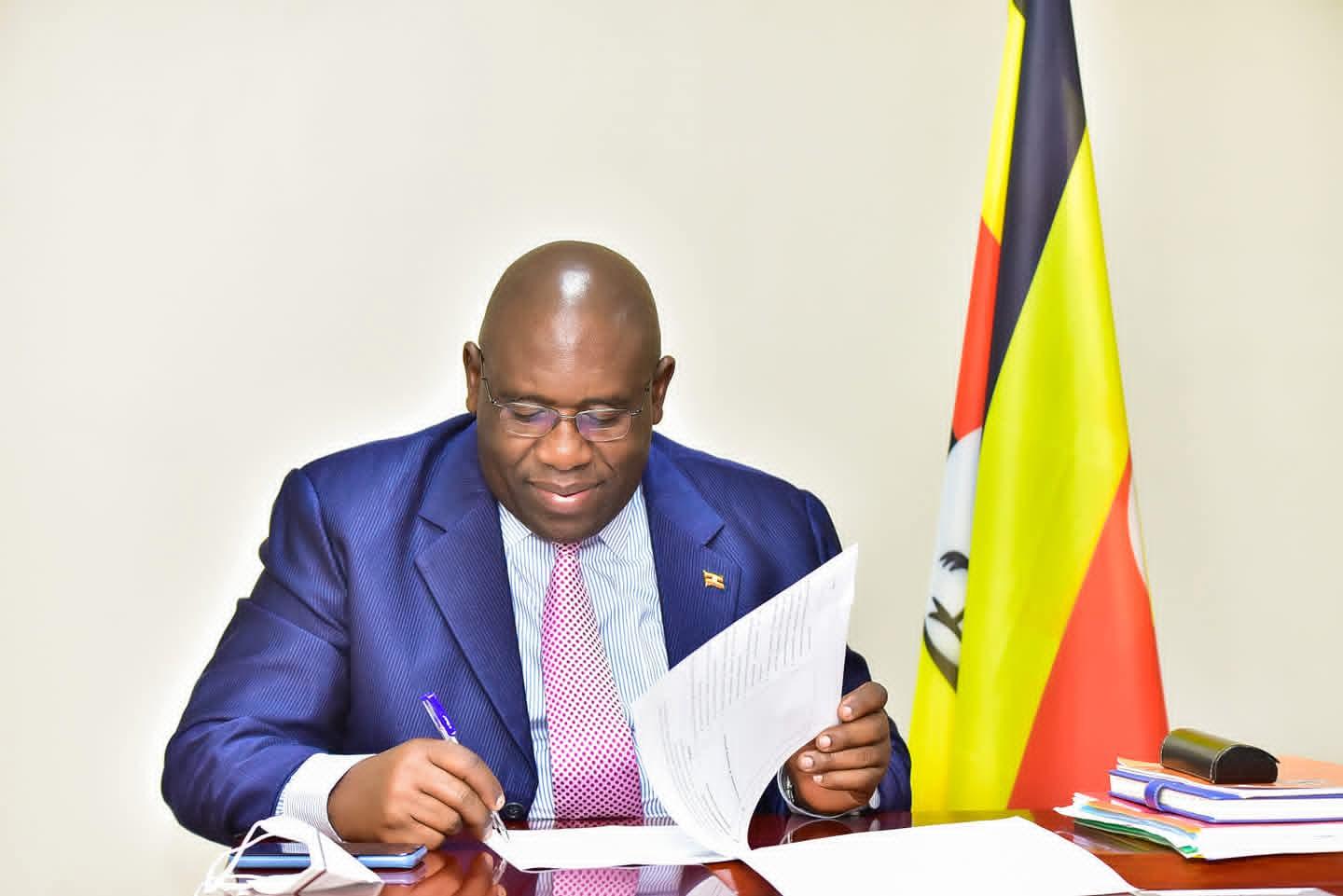
Read verbatim what former State Minister for Foreign Affairs, Member of Parliament and Senior Advocate, Hon. Asuman Kiyingi, is saying on Uganda’s proposed Gaza mandate:
Uganda’s Gaza Mandate: Why the Proposed Deployment Risks Uganda’s Credibility.
By Asuman Kiyingi
Reports that Uganda has agreed in principle to deploy the Uganda People’s Defense Forces (UPDF) as part of a proposed International Stabilization Force (ISF) in Gaza should concern every Ugandan who values the country’s diplomatic credibility. Ordinarily, such an invitation—reportedly following discussions initiated by the United States—would be presented as recognition of Uganda’s reputation as a dependable contributor to international peace support operations. For decades, the UPDF has distinguished itself through demanding stabilization missions in Somalia, South Sudan, the Central African Republic and the Democratic Republic of Congo.
Yet the proposed Middle Eastern deployment raises profound institutional and geopolitical questions that cannot be ignored. Can Uganda credibly present itself as a neutral peacekeeping actor when its own Chief of Defence Forces has repeatedly and publicly declared unwavering political, religious and military support for one side in the conflict? More fundamentally, does participation risk drawing Uganda into a political framework that many believe falls short of the requirements of international law and a just settlement of the Israeli-Palestinian conflict?
In peace support operations, perception matters almost as much as reality. A force entrusted with maintaining security during a political transition must command the confidence of all parties. It must not only be impartial but also be seen to be impartial.
Unfortunately, the public pronouncements of Uganda’s Chief of Defence Forces, General Muhoozi Kainerugaba, have seriously undermined that perception. During the escalation of tensions involving Israel and Iran earlier this year, General Muhoozi declared on X: “Uganda stands with Israel because we are Christians. Jesus Christ is our God.” In another post he described Israel as “the land of our Lord Jesus Christ” and quoted Deuteronomy 33:29: “Blessed are you, Israel! Who is like you, a people saved by the Lord?” He subsequently spoke of Uganda’s readiness to commit substantial numbers of troops to defend Israel if called upon.
Whether one agrees with these sentiments is beside the point. Military commanders occupy offices that transcend personal theological or political convictions. Their public statements carry the sovereign weight of the state. Once the head of a national army openly identifies with one belligerent in an ongoing conflict, the credibility of any future peacekeeping deployment into that theatre is inevitably called into question.
This perception has been reinforced by symbolism. Earlier this year, General Muhoozi announced plans to erect a monument at Entebbe International Airport in honour of Lieutenant Colonel Yonatan (“Yoni”) Netanyahu, the Israeli commander killed during the 1976 Entebbe raid. Whatever one’s view of that operation, it remains a deeply contested episode in Uganda’s history. Uganda’s sovereignty was violated, Ugandan soldiers lost their lives, and significant military assets were destroyed. For Uganda’s serving Chief of Defence Forces to commemorate the commander of the attacking force inevitably communicates a political message. To many Palestinians, Arab governments and members of the Organisation of Islamic Cooperation (OIC), it becomes considerably more difficult to regard Uganda as an impartial security guarantor.
Even if these statements had never been made, important questions would still remain about the political architecture of the proposed Gaza mission. While the United Nations Security Council has authorised an international security mechanism, debate continues over wider proposals for Gaza’s post-conflict governance. Several proposals supported by the United States envisage an internationally supervised transitional administration backed by a multinational stabilization force.
Many states, however, argue that security cannot be divorced from political justice. The Arab League and the OIC have consistently maintained that any international presence in Gaza must form part of an irreversible political process leading to an independent Palestinian state based on the 1967 borders. They oppose arrangements that separate Gaza from the West Bank, postpone Palestinian sovereignty indefinitely or convert temporary security measures into permanent political structures.
This concern is not confined to governments. Hazrat Mirza Masroor Ahmad, the worldwide Head of the Ahmadiyya Muslim Community, has consistently emphasized that lasting peace requires restraint by the major powers and an unwavering commitment to justice. In an official statement issued in response to the escalation of the Israeli-Palestinian conflict in October 2023, he urged:
“We urge the United States and other influential nations to abstain from any actions or statements that may further inflame the volatile situation. Instead, alongside the relevant international organizations, they should make every possible effort to urgently de-escalate the conflict and secure peace as soon as possible.
Justice and equity are of paramount importance in achieving lasting and sustainable peace. Thus, all the major powers must focus on establishing long-term and sustainable peace based upon the principles of fairness and true justice.”
His message reflects a broader principle of international law: durable peace rests not merely on security, but on justice accepted as legitimate by all parties.
Against that background, Uganda must ask whether participation in the proposed force would reinforce or undermine its own diplomatic standing. If a stabilization mission is widely perceived as implementing a political settlement lacking broad regional legitimacy, participating states inevitably become associated with that perception. Uganda therefore risks being viewed, not simply as a neutral peacekeeper, but as an enforcement partner in a controversial geopolitical project.
The proposed deployment also carries domestic implications. Uganda’s previous external military engagements largely enjoyed public legitimacy because they were presented as advancing regional security within Africa. Gaza is fundamentally different. Public debate following reports of the proposed deployment reveals growing skepticism.
Some commentators question whether Uganda’s expanding foreign military commitments are increasingly shaped by geopolitical patronage rather than clearly defined national interests. Others fear that Uganda’s armed forces are becoming an exportable security instrument for the strategic priorities of major powers. Whether justified or not, such perceptions deserve serious consideration.
Within sections of Uganda’s Muslim community, additional concerns have been expressed about what is perceived as a recurring pattern in which Uganda’s external military engagements—from Somalia to operations against the Allied Democratic Forces, and now potentially Gaza—align with broader Western security priorities in conflicts involving Muslim populations. Reports that the proposed deployment followed discussions with the United States are likely to reinforce that perception, irrespective of the government’s intentions.
Supporters of the mission note that Uganda would not be acting alone but alongside countries including Morocco, Albania, Kosovo and Kazakhstan. Yet this comparison also exposes Uganda’s unique challenge. There is no comparable public record of the serving defense chiefs of those countries making similarly explicit declarations of political and religious allegiance to one side in the conflict. Uganda therefore enters any prospective mission carrying an avoidable burden created not by the professionalism of its soldiers but by the public conduct of its military leadership.
Uganda has earned international respect through decades of sacrifice in regional peace operations. That reputation should not be placed at risk by entering one of the world’s most politically polarized conflicts under circumstances that compromise the appearance of neutrality. Peacekeeping succeeds only when those whom peacekeepers are sent to protect believe they are guardians of justice rather than instruments of one side’s political objectives.
The question before Uganda is therefore not whether the UPDF possesses the professionalism to undertake another demanding mission. It unquestionably does. The real question is whether the proposed deployment advances Uganda’s long-term diplomatic interests, preserves its reputation for impartiality, and contributes to a peace founded on justice, international law and the equal dignity of both peoples.
Until Uganda can demonstrate that its participation would be genuinely impartial and embedded within a credible political process leading to a just and lasting settlement—including the realization of Palestinian self-determination—it should respectfully decline participation in the proposed Gaza mission. Uganda’s greatest contribution to peace is not merely the deployment of troops. It is the preservation of the moral credibility that has long enabled it to contribute meaningfully to peace and stability on the African continent.
The writer is a senior advocate and former State Minister for Foreign Affairs (Regional Cooperation).