







It was 6:30pm on a Thursday along the Jinja-Kampala Highway, that busy corridor which stretches all the way to the Busia and Malaba border. The evening rains had just stopped, the tarmac was wet, and the road was full of people closing from work, vendors packing, and school children rushing home.
Driver Atanasio fondly referred to as Mzee Wakazi had been behind the wheel since 6am. He was tired, but as he approached Njeru Market, he eased off the accelerator, dipped his headlights, and gave way to boda-boda motorists, and pedestrians.
When a group of school children stepped onto the crossing, he stopped fully even though no traffic officer was there. Some passengers grumbled that he was wasting time, but he simply replied, “I am taking you home, not to the mortuary.” Thirty minutes later he parked safely, offloaded, and went home. No sirens. No headlines. Everyone he carried reached home alive.
Driver Lorenzo popularly known as Muziki Pilot had also been driving since morning, but his attitude was entirely different. Loud music was blasting from his speakers, the kind of music that had even the passengers singing along and clapping.
Between verses, Lorenzo was on his smartphone, scrolling, taking a selfie, replying, and sometimes holding it up to show the passengers a video while the taxi was still moving.
“I know this highway better than my wife,” he boasted as he overlapped on a solid line to beat traffic and hooted aggressively at boda-boda to get out of his way and hurling insults at them.
Near Lugazi town, with vendors along the shoulder and children crossing in groups, an elderly man in the front seat gently said, “Young man, please slow down, there are people here.” Lorenzo turned, laughed, and shut him down in front of everyone. “Go and counsel your bazukulu in the village, don’t come and lecture a dotcom driver like me:, he said.
Before the old man could answer, other passengers shouted him down too, telling him to “take away his dirty grey hair” and let the driver do his work.
Minutes later, on a bend with poor visibility, Lorenzo tried to overtake another vehicle while still watching his phone. He misjudged the distance. The impact was devastating.
In seconds we were in the nearby bush with injuries while the vehicle was upside down. There were about 10 or so women and children lying on the tarmac. The body 0f what seemed to be a boda-boda rider and his mangled bike was trapped in the wreckage. Some passengers survived, bleeding and screaming for help.
By the time first respondents got there, smartphone holders were busy taking videos for posting on social media while a few sympathetic people were trying to pull out survivors.
Thankfully, police arrived shortly and secured the scene, rushed the injured to the hospital and began documenting. And the incident was already hitting the airwaves as ‘breaking news’ with alarming headlines “DOZENS FEARED DEAD IN A GHASTLY ACCIDENT”.
Two drivers, same highway, same evening and same road. Two very different decisions, two very different outcomes. And this is not just a Jinja-Kampala story. We see it repeated daily on the Kampala-Gulu Highway, the Kampala-Masaka Road, the Kampala-Entebbe Expressway, and every other major corridor.
The Carnage Is Human, Not Just Mechanical.
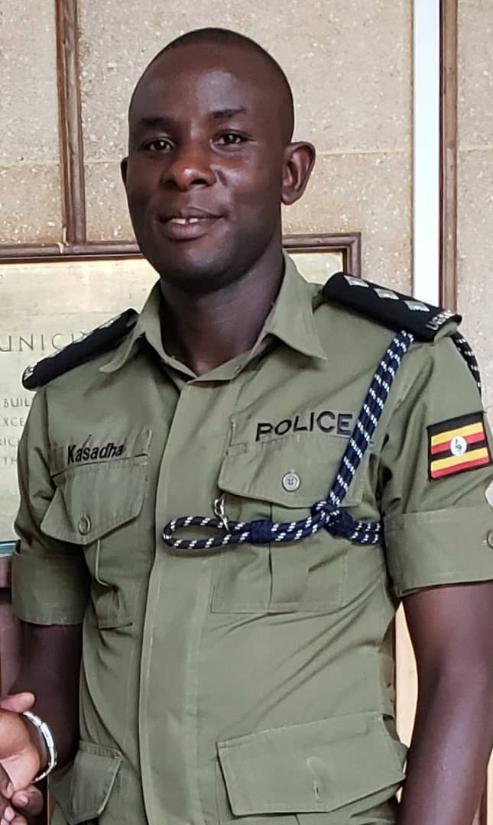
Writing in The Exposure Uganda (TEU), a revolutionary digital news platform, ASP Mike Kasadha argues that the public expectation that police and government alone should end the carnage is misplaced, because the deadliest factor on our roads is human behavior.
According to the Uganda Police Annual Crime Report 2025, road traffic deaths rose to 5,383 in 2025, averaging 15 fatalities per day. That means one person dies every 97 minutes on our roads.
The data tells a painful story. Motorcyclists and passengers recorded 2,525 deaths, the highest of any road user group. Pedestrians lost 1,776 lives, with 43 percent killed while crossing and 32 percent while walking along the road.
The most affected age group was 18 to 24 years, with fatalities rising by nearly 20 percent in just one year. These are the boda-boda motorists carrying passengers for a living and the students walking home from school.
ASP Kasadha admits that factors such as the state of the roads and the mechanical condition of vehicles matter a great deal, and government must continue to invest in safer infrastructure and enforce roadworthiness.
But he insists the human factor remains the main cause, because we have all seen brand new vehicles on well-paved roads like the Kampala-Entebbe Expressway being involved in horrific crashes. A smooth highway does not stop a driver from speeding. New tyres do not stop a driver from overtaking recklessly or from watching his phone.
Our own analysis shows that most fatal crashes are not happening because a pothole appeared out of nowhere. They are happening on straight, familiar stretches, whether it is Jinja-Kampala, Kampala-Gulu, Kampala-Masaka, or the northern corridor , where speeding and reckless overtaking feel normal.
In 2024, careless overtaking and speeding alone accounted for close to half of all crashes. Fatalities also peak between 6pm and 8pm, when fatigue, darkness, loud music, and distraction from phones come together.
You cannot fill a pothole in ten seconds, but you can lift your foot off the accelerator in one.
What Caution Actually Looks Like.
Caution is a decision made in the moment. It is reducing speed when it is raining on the highway to Busia or to Gulu. It is putting the phone down and focusing on the road instead of on music and videos.
It is clicking a seatbelt and asking passengers to do the same. It is a boda rider pausing at a junction on Masaka Road instead of weaving. It is refusing alcohol before driving on the Expressway to Entebbe. It is a tired driver parking for an hour of sleep instead of pushing through fatigue.
When we choose caution, hospitals get relief. Mulago and our regional referrals have ICU space for mothers with complications, not just for crash victims with head injuries. Traffic officers spend less time at crash scenes and more time on community policing. Families keep breadwinners. The economy keeps workers. One careful driver protects people he will never meet.
What The World Has Learned.
Other countries have shown us this is not hopeless.
In Helsinki, the capital and largest city in Finland, the city recorded an entire year with zero pedestrian and cyclist deaths. They achieved it by lowering speed limits in residential areas, redesigning intersections to protect people on foot, installing automated speed cameras, and investing in public transport so fewer people had to drive under pressure.
The World Health Organization (WHO) has been consistent: road crashes are not “accidents.” They are predictable and preventable. The WHO promotes a Safe System approach built on safer roads, safer vehicles, safer road users, and faster emergency response. The principle is simple. Humans will make mistakes, so the system must be designed to ensure those mistakes do not turn into deaths.
Africa carries nearly one-fifth of all global road deaths while owning only about three percent of the world’s vehicles. Uganda has one of the lowest vehicle ownership rates on the continent, yet records some of the highest death rates. That gap is not about the number of cars. It is about behavior, discipline, and enforcement.
Here in Uganda, Traffic Police are responding through the “Arrive Alive” campaign with roadside mechanical inspections, targeted patrols in crash hotspots on Jinja-Kampala, Kampala-Gulu, and Kampala-Masaka, and school outreach to teach children road safety early. We are also using data to know where and when to deploy. But no campaign will succeed if the person behind the wheel believes rules are for other people.
The Call We Must Answer.
So, what will it take for all of us to exercise caution?
It begins with personal responsibility. Drive as though your own children are in the back seat, because the child you spare belongs to someone.
It requires peer pressure. Passengers must refuse to ride with speeding drivers. Friends must take keys from a drunk colleague. We normalized wearing masks in 2020 to protect each other. We can normalize caution in 2026 for the same reason.
It demands professional example. As police, as UPDF, as traffic officers, we must model the behavior. A patrol vehicle with no seatbelts or broken lights destroys the message before we speak.
And it needs memory. Remember Lugogo Bypass. Remember Masaka Road. Remember Kiryandongo on Gulu Highway. Remember the Jinja-Kampala Highway and the vendors and children. Remember Atanasio who got everyone home, and Lorenzo who chose music, his phone, and arrogance instead.
The surge we are seeing is not fate. It is the result of thousands of small, careless decisions made every single day. If we replace each of those with a cautious one, the surge will reverse.
Roads do not kill people. People driving without caution on roads kill people.
What if we all exercised caution? Then the next headline would not be about another ten buried. It would be about the week Uganda went without a road fatality, and realized the power was with us all along.
Try it today. Change the story.
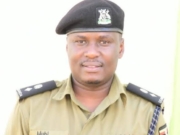
ASP Mike Kasadha
Police Spokesperson, Busoga East.