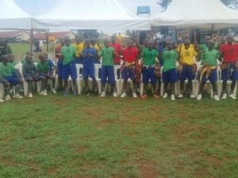



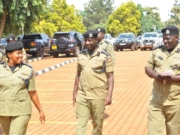








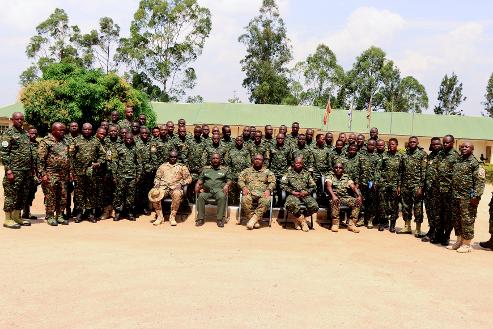
The Uganda Peoples’ Defense Forces (UPDF) has passed out Explosive Ordnance Disposal and Counter-Improvised Explosive Device technicians and combat engineers from Intake 4/2026 at the School of Combat Engineering, Kalama.
The ceremony reflects a growing focus within the UPDF on engineering capabilities, at a time when modern conflicts are increasingly defined by hidden explosives rather than open conventional battles.
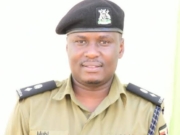
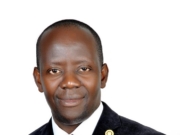
Presiding over the pass-out ceremony, the Commander of the 14 Combat Engineering Brigade, Brigadier General Richard Wakayinja, said the nature of modern warfare has shifted.
“The war theatre is now littered with IEDs. It is no longer conventional but asymmetrical,” Brig Gen Wakayinja said.
He commended the graduates for their resilience and commitment throughout the physically and mentally demanding training.
Brig Gen Wakayinja urged the graduates to uphold teamwork, leadership, patriotism and integrity, reminding them that their pass-out marked the beginning of a lifelong commitment to military service.
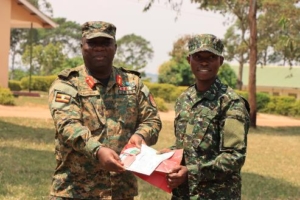
“To the trainees standing before us today, your journey does not end here. Let discipline guide your actions, and let your service to your country be reflected in your commitment and conduct,” he said.
The Commandant of the Mechanized Warfare College, Brig Gen Peter Candia, said combat engineers remain indispensable to military operations because of their role in opening routes, enhancing troop survivability and creating operational options for commanders.
“Like you have shown us and like I have just said, you will be the first in the battle to open the way and will be the last to leave, in addition to ensuring the survivability of the troops and the task forces,” Brig Gen Candia said.
He urged them to prioritize their safety and wellbeing, saying their survival is essential to their continued service to the country.
“The contemporary battlefield is mainly fought now by you. Through you, task forces will survive. Through you, task forces will delay, fix and destroy our enemies. You keep safe. UPDF and Uganda need your life,” he said.
The Acting Chief Instructor at the School of Combat Engineering, Lieutenant Colonel Jackson Akena, congratulated the graduates and reminded them that precision and safety are more important than speed in explosive ordnance disposal operations.
“I always tell you this; remember speed is not important, but accuracy and safety are,” Lt Col Akena said.
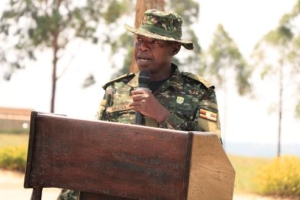
The graduates underwent training in explosive theory, demolitions, Counter-IED operations, tactical combat casualty care, military law, GPS navigation and practical field exercises, among other areas.
The pass-out ceremony was attended by senior and junior UPDF officers.
The Exposure Uganda (TEU) Explainer: Why Engineers Are Now at the Front of Modern Combat.
For many people, combat still means infantry with rifles, artillery, and air support. But military doctrine worldwide, and in the UPDF, has changed. Engineers are no longer just builders behind the lines. They are now frontline enablers of survival and movement.
An Improvised Explosive Device, or IED, is a bomb fabricated in an improvised manner, using non-military components.
According to the US Department of Defense Joint Publication on Countering IEDs, these devices can be triggered by a person stepping on them, by remote control, or by a timer.
Because they are cheap and can be hidden in almost anything, from a jerrycan by the roadside to a culvert or inside a building, armed groups in asymmetric conflicts use them to cause maximum damage with limited resources.
Research from the US Army’s Center for Army Lessons Learned shows that IEDs were responsible for the majority of coalition casualties in Iraq and Afghanistan between 2003 and 2011. That reality forced militaries across the world to create specialized units to deal with the threat.
There is a clear difference between EOD and Counter-IED roles. An EOD technician is trained to deal with all types of explosive ordnance. This includes unexploded artillery shells, grenades, and abandoned ammunition. Their work is to render the item safe, recover it, and dispose of it properly.
A Counter-IED technician focuses specifically on the IED problem. That means detecting devices along routes, using equipment to jam remote triggers, clearing paths for convoys, and conducting analysis after an explosion. NATO training standards stress that in this work procedure matters more than speed, because one mistake can be fatal. That is why the instruction given by Lt Col Akena to the Kalama graduates reflects global practice.
The phrase used by Brig Gen Candia, that engineers will be first in and last out, comes directly from military doctrine. According to the US Army Field Manual on Engineer Operations, engineers provide mobility, counter-mobility, and survivability.
Mobility means breaching obstacles and clearing routes so forces can advance. Counter-mobility means creating obstacles to slow the enemy. Survivability means building positions and protection that keep troops alive. In an IED environment, the mobility role expands to include route clearance.
Engineers move ahead of convoys with detectors and protected vehicles to ensure the road is safe. They are also last to leave because they recover equipment and destroy any abandoned munitions that could be used by the enemy.
The UPDF’s experience has reinforced this. In nearly two decades of operations in Somalia under AMISOM, ATMIS and now AUSSOM, IEDs have been a persistent threat.
Studies by the International Peacekeeping Institute show that a significant number of AU fatalities in Somalia have been linked to IEDs. Lessons from those deployments have shaped the curriculum at Kalama.
The training for Intake 4/2026 covered explosive theory to understand how devices function, demolitions for deliberate destruction, Counter-IED tactics, Tactical Combat Casualty Care so technicians can treat injuries under fire, military law for handling evidence and civilian interaction, and GPS navigation for operating in unfamiliar terrain.
As international support arrangements in Somalia evolve, African troop-contributing countries will need even more of this capability within their own forces. The graduates from Kalama are part of that preparation.
Modern war is no longer decided only by firepower. It is decided by who can move, who can survive, and who can control space. Engineers decide that. As Brig Gen Wakayinja noted, the battlefield is now littered with IEDs. That means every advance, every patrol, and every supply movement depends on technicians who can find and defeat a hidden bomb.
For the graduates, the message from their commanders was clear. The training ends today, but the responsibility begins now. Discipline, teamwork and accuracy will determine not only mission success, but whether they and their comrades come home.