

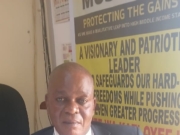


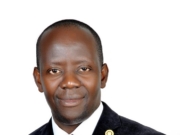



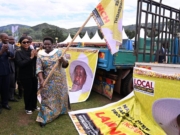

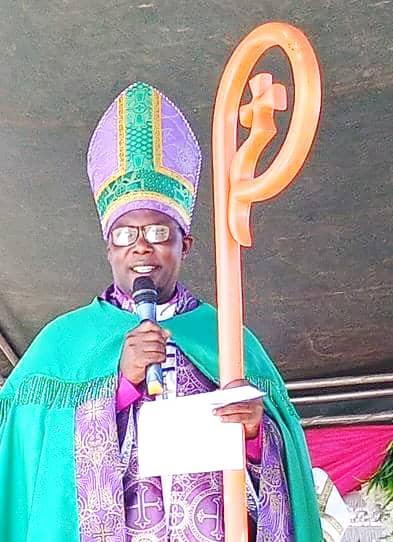
For the past months, His Grace +The Most Rev. Archbishop-Elect Professor Mugume Bagambaki Richard, Ecclesiastical Patriarch of the Five-Fold Episcopal World Federation and Archbishop of Upper City Covenant Churches, has been serializing a carefully selected series of texts for the formation of leaders in both Church and state.
Moving through books that confront pride, purify worship and restore governance, he has taken the Church and the nation through defining seasons of prophetic instruction, calling leaders in every sphere, whether political, academic, commercial or ecclesiastical, back to righteousness, mercy and the fear of God.
He now enters the Book of Daniel, a book of thrones and dreams, of furnaces and fields, of empires measured and humbled by heaven. In this latest installment, the archbishop draws from Daniel Chapter Four, the only chapter in Scripture written by a pagan king, to deliver a piercing word for Uganda in 2026, that the Most High still rules over the kingdoms of men.
Text: Daniel 4:1-37.
Preacher: +The Most Rev. Archbishop Elect Professor Mugume Bagambaki Richard
There is a chapter in the Bible that was not written by a prophet hiding in a wilderness cave, but by a president dictating from the roof of his own palace.
Nebuchadnezzar, the builder of Babylon, the man who believed his dominion would never be interrupted, finally picked up a pen and wrote his own confession to every nation under heaven.
He had commanded armies that erased kingdoms and built a city the world called a wonder, yet it took being driven into the open field to eat grass like an ox for him to understand what every leader must now understand without having to taste grass, that no throne is secure when heaven decides to humble it.
This is the core message the archbishop is lifting before the nation. The Most High rules over the kingdoms of men. Not strategists. Not money. Not crowds. Not titles. Not the volume of applause that surrounds a leader.
Key Verse: Daniel 4:17 “The Most High rules the kingdom of men and gives it to whom he will and sets over it the lowliest of men.”
Key Verse 2: Daniel 4:37 “Those who walk in pride he is able to humble.”
The Core Message: From the Furnace to The Field.
The archbishop anchors his message in a divine progression that every leader must discern. In Daniel 2, God reveals a mystery to a king. In Daniel 3, God delivers His faithful people through a furnace. In Daniel 4, God humbles the king himself in a field. God first speaks, then He shows His power to save, and finally He touches the pride that refuses to bow.
The burden of this message is not historical curiosity. It is a prophetic summons to all who hold influence, whether in politics, business, academia or the Church, that all can build Babylon and all must learn to lift their eyes to heaven before heaven forces them to.
Why What Happened Centuries Ago Is Still Happening Today.
Because God is omnipresent and omniscient, He is not limited by the calendar we live by or the map we draw. What He does in one generation, He watches over in every generation. Time does not weaken His Word. Geography does not dilute His authority. He is in Jinja, Lira, Mbarara, Kisoro or Arua and Masindi as fully as He was in Babylon. He sees the palace in 580 BC and the office in 2026 with the same eye.
And because, as Isaiah declares, His Word is like rain, “So shall my word be that goes out from my mouth; it shall not return to me empty, but it shall accomplish that which I purpose, and shall succeed in the thing for which I sent it“ – Isaiah 55:11.
The Word that fell on Babylon did not evaporate in Babylon. It is still falling. Like rain, it never returns without causing effect. It soaks the soil of every generation. It finds every seed of pride and either waters it into repentance or washes it away in judgment.
This means what happened to Nebuchadnezzar centuries ago is not merely history that is archived and forgotten. It is a living verdict that is not inhibited by time or geography. The God who judged pride on the roof of Babylon in 573 BC is the same God who watches pride on the rooftops of our cities today. The decree that drove a king into the field is not locked in the past. It travels like rain, it waters every season, it searches every heart that says “my power” and “my majesty.”
Daniel 4 therefore is not a story about a strange mental illness of an ancient king. It is a pattern, a spiritual law, a rain that has never stopped falling. Wherever pride raises a golden image, wherever power repurposes a furnace to punish the faithful, wherever a leader begins to believe that he built his own Babylon, that same Word returns to accomplish its purpose again. God does not need to write a new law for each proud generation. The old rain is still effective. Those who walk in pride He is still able to humble, whether in ancient Mesopotamia or in modern Uganda.
For The Reader Who Is Not Familiar With The Background
Who was Nebuchadnezzar and how did he become king? He was the son of Nabopolassar, a Chaldean general who ended the Assyrian Empire.
According to antiquity, ancient Assyria was the cruel superpower before Babylon, centered in what is today northern Iraq around Mosul and the Nineveh Plains, with extensions into southeastern Turkey, northeastern Syria and northwestern Iran. Its capitals were Ashur and Nineveh, cities built on terror and tribute. In 612 BC Nabopolassar, in alliance with the Medes, destroyed Nineveh and ended Assyrian dominance forever. It was one of the most decisive turnovers in world history.
His son Nebuchadnezzar secured that victory by crushing Egypt at the Battle of Carchemish in 605 BC, a battle that made Babylon the sole superpower of the known world. When his father died that same year, Nebuchadnezzar rushed across the desert and was crowned king. He reigned forty-three years until 562 BC, longer than most modern presidencies and far more powerful.
How does the world remember him? Secular history remembers him as the greatest builder king of antiquity, the man who built the Ishtar Gate with its deep blue glazed bricks and golden lions, the Processional Way, the great ziggurat Etemenanki, and the Hanging Gardens said to have been built for his homesick wife. Every brick in Babylon was stamped, “I am Nebuchadnezzar, King of Babylon.” Military history remembers him as the conqueror who destroyed Jerusalem and Solomon’s Temple in 586 BC and carried Judah into seventy years of exile. But Scripture remembers him for one sentence he finally learned after grass had been his food, that those who walk in pride, God is able to humble.
How did the furnace in Daniel 3 come about and what was it for? The furnace began as wounded pride from Daniel 2. Daniel had told Nebuchadnezzar that his kingdom was only the head of gold and that other kingdoms would arise after him, inferior to his, until God Himself would set up an everlasting Kingdom that would crush all kingdoms.
Offended by the thought that his empire would not last forever, Nebuchadnezzar built an image of gold ninety feet tall and nine feet wide, all gold from head to foot, as if to say my kingdom will be all gold forever, there will be no succession. He summoned all his leaders, satraps, prefects, governors, counselors, treasurers and magistrates to the plain of Dura, which was like a vast national stadium for public ceremonies, and commanded that at the sound of the horn, flute, zither, lyre and harp, all must fall down and worship the image or be thrown immediately into a burning fiery furnace.
That furnace was originally an industrial kiln for baking bricks for his endless construction projects. He repurposed an instrument of development into an instrument of destruction, which is always what happens when power becomes idolatrous. It was meant for enforced unity through fear, for testing true worship, and ultimately for revealing that there is a God who walks with His people in fire. The three young men who refused to bow came out without even the smell of smoke upon them, because the fire that was meant to destroy them only revealed the fourth man walking with them. The same king who heated that furnace seven times hotter for others would later be humbled in the field himself, because God would rather let a king eat grass than let him keep burning people to prove he is god.
The Warning Dream – God Always Speaks Before He Strikes
This is the heart of the Archbishop’s warning to all leaders. Nebuchadnezzar dreamed of a great tree, tall and strong, visible to the ends of the earth, giving shelter to beasts of the field and lodging to birds of the heavens, with abundant fruit for all. That tree was his empire, beautiful, dominant, providing shade for many nations.
Then a holy watcher, an angel commissioned from heaven, came down and issued a decree that is still preached today. Chop down the tree, strip its branches, scatter its fruit, but leave the stump bound with a band of iron and bronze in the tender grass of the field. Let his mind be changed from a man’s mind and let a beast’s mind be given to him for seven periods of time.
God is merciful because He sends interpretation before He sends judgment. He sent Daniel, and Daniel was appalled for a full hour and said, my lord, may the dream be for those who hate you. True prophets do not celebrate the downfall of leaders. They weep first before they warn, because they love the leader and they love the nation enough to tell the truth.
Every leader, every organization, every great ministry, every thriving business is that great tree for a season. God allows you to grow tall, to become visible, to provide shade and fruit for many. But the moment you convince yourself that the height came from your own roots and that the shade belongs to you and not to Him, the decree goes out from heaven to cut it down to size. The band of iron and bronze around the stump is mercy, it means God preserves the root for restoration, but He will cut down the pride that grew above it.
We do not suffer from a lack of strategy in our institutions. What we suffer from in every sector is a lack of weeping Daniels, leaders who have enough courage and enough love to look at power, whether political, corporate or ecclesiastical, and say it is you who must repent.
The Counsel Of Mercy – The Only Way To Lengthen A Reign
When Daniel finally spoke, he did not advise the king to build higher walls, to organize more rallies, to hire more advisors, or to tighten his intelligence network. He gave him the only counsel that can lengthen any reign in any nation or any church. He said, “Therefore, O king, let my counsel be acceptable to you: break off your sins by practicing righteousness, and your iniquities by showing mercy to the oppressed, that there may perhaps be a lengthening of your prosperity.” Daniel 4:27.
And then God, in staggering patience, gave him twelve months to repent. For twelve months heaven waited.
This counsel must reach every seat of power, because pride is universal and mercy is the only antidote that works everywhere.
Practicing righteousness means allowing justice to flow without interference, allowing institutions to be truly free, refusing to use instruments of state or instruments of the Church for personal revenge, and calling corruption what it truly is, which is sin against God and against the people. It means preparing to be a better tree, not spending all your energy cursing the present tree while secretly planning to do the same oppression once your time comes.
Showing mercy to the oppressed means remembering the unemployed youth who hustle in our towns, slums and trading centres, from Kisenyi and Katwe in Kampala to Mafubira and Namulesa or Bugembe in Jinja, from Gulu to Arua, the farmer in Teso, Lango and Acholi whose produce rots for lack of market and whose children drop out for lack of fees, the prisoner whose file has disappeared from the system and whose case has not been heard for years, and the young person who has become voiceless because no one will listen without payment.
For twelve months, Nebuchadnezzar saw nothing happen. Babylon still glittered. The economy still boomed. Building continued. Applause continued. Every leader today is living inside that dangerous twelve-month window where God’s silence must never be mistaken for God’s endorsement. Delay is not approval. Patience is not absence.
For Upper City Covenant Churches and for UCCSAT University, this is the central key the archbishop is emphasizing. Education without righteousness produces polished Nebuchadnezzars, men and women who can build impressive cities but cannot govern their own hearts. We must train leaders who practice righteousness and show mercy, not just leaders who can quote constitutions, canons, and policies.
The Judgment of Pride – When A King Eats Grass Like an Ox.
Twelve months later, Nebuchadnezzar was walking on the roof of his royal palace in Babylon and boasting, “Is not this great Babylon, which I have built by my mighty power as a royal residence and for the glory of my majesty?” Daniel 4:30. Notice the pronouns, my power, my majesty, my residence, I have built. This is plagiarism of glory, taking credit for what heaven merely allowed, stealing ink from God’s pen and writing our name on His work.
While the word was still in his mouth, while the sentence was not yet finished, judgment fell. The voice came from heaven. He was driven from among men and made to eat grass like an ox. His body was wet with the dew of heaven till his hair grew as long as eagles’ feathers and his nails were like birds’ claws. This is divine de-creation. In Genesis, man made in God’s image rules over beasts. In Daniel 4, the man who wanted to be God becomes like a beast.
This text must now reach every cathedral, every office, every boardroom, every cabinet room and every pulpit where leaders preside, because spiritual pride is more dangerous than political pride, for it uses God’s holy name to build its own Babylon. The leader who says my organization, my network, my ministry, my university, my anointing, is speaking Nebuchadnezzar’s language behind a different microphone.
God opposes the proud. Scripture says He resists them. He does not ignore them. He actively resists them. For the public leader, grass can look like public humiliation, electoral shock, health failure, or the sudden collapse of trust that no public relations can restore.
For the spiritual leader, grass can look like scandal that strips titles and reveals character, or like a ministry that still has crowds but has lost the presence of God. God would rather let us eat grass for a season than let us preach Christ while living for our own glory.
Was This Just A Mental Health Crisis?
One reading this story today might be tempted to rush into a quick clinical conclusion, that Nebuchadnezzar simply suffered a severe psychotic break and needed a quick ride to Butabika National Referral Mental Hospital, and that modern psychiatry would have handled him well with diagnosis, medication and therapy, or if it persisted, he would have been flown to the best global hospitals in India, Germany or the USA for advanced neuropsychiatric care.
Let it be clearly known that we thank God for science. Science has done a lot and continues to do more wonders. Doctors, psychiatrists, psychologists, nurses and researchers are gifts of God to preserve life and restore dignity.
The Church does not despise medicine. Luke was a physician. Butabika saves lives. Hospitals in India, Germany, the USA and here in Uganda save lives. We honor them.
Yet science belongs to God, and God is beyond science. What happened to Nebuchadnezzar was not merely a chemical imbalance in the brain. It was a divine verdict upon a moral imbalance in the heart. It was not just insanity. It was heaven’s discipline.
The best hospital in Babylon could not cure him because his sickness did not start in his mind. It started on the roof of his palace when he said, “my power, my majesty.” The problem was not in his neurons. It was in his pronouns.
Modern science can manage symptoms. Only God can judge pride. Science can tranquilize a man who thinks he is an animal, but only God can restore a man who thought he was God. That is why no physician was summoned in Daniel 4. No physician was relevant. The One who had issued the decree was the only One who could lift it.
This is why the text says his reason returned when he lifted his eyes to heaven, not when he lifted his hands to medicine. His cure did not come from a prescription from below. It came from worship directed above. Psychiatry could have sedated Nebuchadnezzar. Only repentance could restore Nebuchadnezzar.
So yes, take your medication if you need it. Go to Butabika if you must. Fly to India, Germany or the USA if you can. But do not miss the voice behind the condition. Some collapses are not merely medical, they are theological. Some breakdowns are actually heavens breaking in to break pride before pride breaks you completely.
God is not against science. Science is a servant in God’s house. But science cannot humble a proud king, and it cannot restore a humbled one. When God says “those who walk in pride He is able to humble,” He does not need a medical report to do it, and He does not need a medical report to reverse it.
The Restoration of Worship – Sanity Returns When Worship Returns.
The most hopeful verse in the entire chapter is this. “At the end of the days I, Nebuchadnezzar, lifted my eyes to heaven, and my reason returned to me, and I blessed the Most High and praised and honored him who lives forever.” Daniel 4:34.
Sanity did not return when he called a better cabinet meeting or a sharper strategy session. Sanity returned when worship returned. He lifted his eyes. Worship reordered vision. Worship restored reason.
He blessed the Most High, and his kingdom was restored to him with even greater glory than before, because God never restores you to the same level of pride. He restores you to a deeper humility and therefore to a greater capacity to steward influence.
This is the hope for all leaders today. The world cancels people in order to destroy them. God humbles people in order to restore them. The stump that was bound with iron and bronze was not uprooted. It was preserved for regrowth, but regrowth under a new acknowledgment that heaven rules.
Prophetic Keys for This Hour.
The Most High rules, not men. Elections, boards, synods, appointments, wealth and social media following do not ultimately determine the future. God does. Stop worshipping the instruments that make leaders and start worshipping the Lord who lifts leaders.
Pride is the root of every fall. By my mighty power I built is the seed of every downfall in leadership, in business, in academia and in ministry. Ministry success, university growth, corporate expansion and public influence can become our own golden image if we do not cut it down ourselves before God does.
God always gives warning before judgment. Daniel wept before he spoke. True fathers and true patriots warn because they love, not because they hate. That kind of weeping warning is true covering for a nation.
Mercy is the antidote to pride. Show mercy to the oppressed. Let every plan, every manifesto and every budget be audited not by how beautiful its promises sound, but by how deep its mercy reaches to widows, orphans, prisoners and the voiceless.
Restoration comes through lifted eyes. When institutions face shaking, the answer is not more Babylonian building. The answer is worship that lifts eyes from Babylon to heaven, because when eyes are lifted, reason returns.
Three Questions for Every Leader In Modern Time.
Who gets the credit for what we see? Is it I built this, or is it God established this? Does our speech betray plagiarism of glory?
Are we practicing righteousness and mercy, or are we merely building impressive programs, massive crowds, beautiful buildings and personal empires while the oppressed remain forgotten?
Where are our eyes fixed in this moment? Are they fixed on Babylon and all its glitter, its gold, its applause and its power, or are they fixed on the King of heaven whose dominion is everlasting and whose Kingdom has no end?
Nebuchadnezzar lost his mind in order to finally gain his soul. God would rather break our pride than lose our worship. He would rather let us eat grass for a season than let us burn others in a furnace forever.
Conclusion: You May Not eat Literal Grass, But the Warning is Loud and Clear.
The proud and arrogant in our generation may not go literally insane and eat grass like Nebuchadnezzar did. God does not always repeat the method, but He never abandons the principle.
You may not lose your mind, but you may lose your peace. You may not sleep in the field but you may watch everything you built grow hair like eagles’feathers,but you may grow a reputation that no longer reflects the anointing you once carried.
For some, grass looks like public humiliation that no advisor nor public relation officer can spin away. For others, grass is the silent erosion of trust where people still clap for you in public but no longer believe you in private.
For the leader in office, grass can be a health crisis that remind you that the body you neglected is not made of gold. For the leader in ministry, grass can be a stage that is still full but a prayer room that is empty, crowds that still gather but a presence that has already departed. For the leader in business and academia, grass can be expansion without satisfaction, degrees without wisdom, profit without purpose.
God does not need to drive you to the field to humble you because he can humble you right on the roof of your own Babylon while the words “my power, my majesty, my throne, my achievement and success story”, are still in your mouth.
That is why the warning is loud and clear and why the rain of Isaiah 55 is still falling. The same Word that said, “Those who walk in pride He is able to humble”, has not returned empty. It is still accomplishing its purpose in parliaments ts and pulpits, in boardrooms and chambers, lecture halls, in State Houses and Church houses and palaces.
The question is not whether God still humbles the proud because does anyway. The question is whether e will humble ourselves before He has to do it for us.
For Nebuchadnezzar, reason did not return until worship returned. He lifted his eyes to heaven and sanity came back. That remains the only way back for any leader today. Lift your eyes, give back the glory you plagiarized, break off your sins by practicing righteousness and show mercy to the oppressed.
Because the Most High still rules. His dominion is not contested in heaven, and it will not be contested forever on earth. The stump is preserved only for those who are willing to learn that heaven rules.
Humble yourself today. Before the grass becomes your diet, let worship become your reason.
Those who walk in pride he is able to humble. Humble yourself today, whatever office you hold, whatever title you carry, whatever influence you command. Lift your eyes to heaven now, before heaven forces you to look down to eat grass. The Most High still rules over the kingdoms of men. His Word, like rain, is still falling, and it will not return without accomplishing its purpose.
Benediction.
For his dominion is an everlasting dominion, and his kingdom endures from generation to generation. All the inhabitants of the earth are accounted as nothing, and he does according to his will among the host of heaven and among the inhabitants of the earth; and none can stay his hand or say to him, what have you done?
To the King of Heaven be all glory in Uganda and forever. Amen.
+The Most Rev. Archbishop Elect Professor Mugume Bagambaki Richard.