





























The Exposure Uganda Special Historical Review.
There are papers you read and you clap because they praise you. There are papers you read and you sleep because they bore you with jargon. Then there are papers you read and you feel you have been put in a taxi that deliberately takes you through Kaitabawala-Mbulamuti Road after heavy rain, not because the driver hates you, but because he loves you enough to show you the real road you have been pretending is tarmacked.
Prof. Isaac Christopher Lubogo’s seminar paper delivered on 8th September 2026 under the title Busoga: From Historical Foundations to Economic Renewal is that taxi. It is driven by a man who is not a historian in the traditional sense, but a lawyer, a philosopher and a teacher of law who has spent years in lecture rooms teaching young Ugandans how to argue from evidence rather than emotion, and how to separate what feels good from what is true.
That background matters because it explains how he dissects Busoga. He does it the way a surgeon respects a body he loves, not to mutilate it but to find where the bleeding is coming from. He does not come with only praises for the Kyabazinga or only condemnation for politicians. He comes with exhibits, with footnotes, with cross-examination, and with a quiet refusal to let nostalgia become evidence.
The abstract alone tells you he is not playing to the gallery. He says Busoga’s history should not be read as an uncomplicated golden age where everything was perfect, nor as permanent decline where nothing will ever work. He says it should be read as a recurring relationship between institutional continuity, productive investment, leadership legitimacy and economic resilience. That single sentence is his thesis, and the rest of his fifty pages is spent proving it with painful honesty.
The core issues he raises are not new to any Musoga who has sat in a trading centre in Bugiri, Kaliro, Luuka, Buyende or waited for a job in Jinja City. What is new is how he frames them. He starts with a question most cultural seminars avoid. What kind of society produces leaders who translate collective identity into durable public goods like schools, factories, cooperatives and archives, and what kind of society produces leaders who only produce slogans and laughter?
He answers with a balanced scorecard that many conference organizers will not like. He cites the Uganda Bureau of Statistics Uganda National Household Survey Report 2023/24, published in 2025, which puts income poverty in Busoga at 18.9 percent compared to 16.1 percent nationally.
He acknowledges the reduction compared to the COVID period, but he insists on intellectual honesty. Busoga has come a long way institutionally, educationally and commercially, but it has not yet converted its full historical economic potential into broad-based prosperity for the mother selling tomatoes in Bugembe or the graduate riding a boda boda in Iganga.
That paragraph is perhaps the most honest in the whole Busoga Development Agenda conversation. It refuses to let conferences become celebrations where people clap for PowerPoint pillars. It says plainly that we have built agendas and held workshops, but poverty is still higher here than the national average. Our children are still going to bed hungry in a region that once fed the factories of Uganda.
From that poverty data, he goes backwards to explain why. He traces Busoga’s economic history since independence not as a straight line of progress, but as a deeply human story of building, disruption and attempted renewal that every family feels in its own compound.
He reminds the audience that Busoga’s economic life did not begin with colonialism. Pre-colonial communities around Lake Victoria and the Nile were already in agriculture, fishing and local exchange. Colonial rule reorganized these activities rather than creating them from nothing. That matters because it restores dignity to grandparents who are often portrayed as idle before the white man came.
Then he zooms into cotton, and here he uses a deliberate academic vehicle that carries human weight. He cites Peter F.B. Nayenga’s study of commercial cotton growing in Busoga between 1905 and 1923 to prove that African cultivators themselves were important agents in adopting cotton. That destroys the passive victim narrative and shows that Basoga farmers responded to market incentives and made rational choices, not as forced labourers but as farmers.
Who is this Nayenga that Lubogo trusts to carry his argument? Peter F.B. Nayenga is not a passing commentator. He is one of Uganda’s most enduring historians, a Professor of History who chaired the History Department at St. Cloud State University in Minnesota from 1978 well beyond 2015. His work has focused on the political economy of colonial Uganda, on ethnicity and the state, and on how African societies negotiated colonial capitalism with agency.
His seminal piece, Commercial Cotton Growing in Busoga District, Uganda, 1905-1923, was published in 1981 in African Economic History, Volume 10, pages 175 to 195.
It is a peer-reviewed journal based in Boston that remains the gold standard for African agrarian history. In that paper, Nayenga used district annual reports, cotton market reports and oral evidence from elders to show that Basoga chiefs and farmers adopted cotton because it fit with food production and because they understood the market. Lubogo uses Nayenga because he gives archival credibility against both colonial apologetics and post-colonial romanticism.
Prof Lubogo then takes the reader to Jinja and explains why Jinja rose, in a way any old man who worked in the factories still remembers. It was geography, railway, lake transport, and later hydroelectric power at Owen Falls Dam that made Jinja Uganda’s industrial heartland. It was where energy met transport, and where a young man from Kamuli could find work without going to Kampala.
Then he explains why Jinja died, in a way any young woman walking past empty warehouses can feel. National economic reforms after 1986 brought macroeconomic recovery for the country, but Jinja itself did not return. Uganda’s economic geography shifted to Kampala and newer industrial corridors, while some of Jinja’s old sites became underused or abandoned. That leads him to a distinction that is crucial for a philosopher and painful for a resident. National growth is not the same as regional transformation. A country can record strong GDP while a historically important industrial region remains below its potential and watches its children leave.
The most painful part is his handling of sugar, which is not abstract in Busoga because it is the crop that pays school fees and also takes away food. He treats Kakira Sugar Limited, established in 1930, with respect, calling it a major sugar-industrial complex that illustrates the long-term relationship between plantation agriculture, processing and industrial capital.
But he then cites contemporary research on sugarcane out-grower schemes in Busoga that identifies land pressures and conversion from food to commercial cane. He cites national planning documents that recognize concentration of smallholder land in sugarcane can contribute to poverty risks for families who now have sugar in the shop but no millet in the granary.
His argument is not to reject sugarcane, which would be dishonest and ignore thousands of families who depend on it. His argument is to diversify the rural economy and increase value addition, to combine sugar with coffee, livestock, cassava, soya, horticulture, poultry, fisheries, tourism and services. The strategic objective should be resilience rather than dependence. It is a legal philosopher’s way of telling a mother in Luuka not to put all her land in one crop, because one crop will eventually eat her and her children. But economics alone does not explain why leaders who once built factories now build TikTok pages. For that, Lubogo turns to history and biography, where his literary vehicles become clear and where African philosophy carries weight that economics cannot.
In Luo, and among other African cultures, there is a saying, Mac Onywalo Buru. In Lusoga it is Enku dhizala Eivu. It literally means fire begets ash. It is a philosophy of generational contradiction that elders used to warn that a generation forged by hardship often raises a generation softened by comfort.
Lubogo’s use of the proverb does more than moralize about generational decline. It operates as a vernacular formulation of what in Hegelian dialectics is called negation of negation. In Hegel’s Science of Logic and later in the Phenomenology of Spirit, negation is not mere destruction.
The first negation, die erste Negation, is where a form of life negates itself because its own success produces the conditions of its opposite. Fire, through its own intensity, produces ash, which is both its product and its contradiction.
The second negation, die Negation der Negation, is not a return to the original fire, but a sublation, Aufhebung, where ash is itself negated, preserved and lifted to a higher level. Marx and Engels later materialized this as historical development through contradictions in productive life.
Lubogo applies this without the jargon. The fire generation of Wako, Nadiope, Muloki and Nabwiso built federations, infrastructure, agricultural systems and archives precisely because colonialism, abolition and scarcity forced institution-building.
That very success created a generation that inherited institutions without inheriting the discipline that built them, producing what the proverb calls ash, leaders who seek visibility over durability, slogans over data, and consumption over production.
The second negation that Lubogo’s ten-point compact demands is therefore not nostalgia for the first fire, but a disciplined re-burning of ash through education before status, integrity before influence, and data before slogans, so that what emerges is not the old fire, but a new, self-conscious fire that knows it was once ash.
He chooses four historical personalities not to praise them blindly, but to use them as four different transport vehicles for his message, to test whether fire has indeed given birth to ash and whether ash can remember it was once fire.
He starts with Ezekiel Tenywa Wako, the Zibondo of Bulamogi, elected president of the Busoga Lukiiko in 1919 and first Isebantu Kyabazinga in 1939. Lubogo treats him as an institutional vehicle. The Kyabazingaship, he argues, was an effort to create a common framework across proud and sometimes quarrelsome chiefdoms.
The lesson is not that Wako was powerful, but that he understood legitimacy. A federation survives when constituent units see the common institution as useful and not as a threat. The expansion of the Lukiiko beyond hereditary rulers was movement toward broader representation. Wako carries the idea of institution-building and represents fire, the generation that builds from nothing while suffering colonial suspicion but creates something that outlives it.
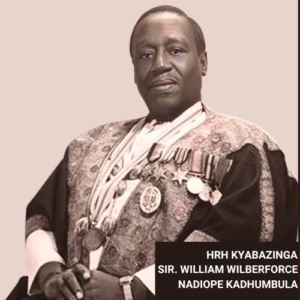
Then he brings in Sir William Wilberforce Kadhumbula Nadiope, Kyabazinga in 1949 and later first Vice-President of independent Uganda. Lubogo uses him as a mobilization vehicle, associating him with roads, schools, health facilities and productive agriculture.
He lingers on two stories modern politicians would avoid. The Emizindula campaign against theft and his resistance to dehumanizing aspects of colonial public-health enforcement. For Lubogo, Nadiope matters because he showed that legitimacy grows when people see leadership defending their dignity and material welfare, not just cutting ribbons.
His career also exposes a structural tension that remains relevant today, the coexistence of cultural authority, party politics and national executive power which requires clear institutional boundaries. Nadiope carries people-centred dignity, still fire, but fire learning to negotiate with the coming independence wind.
Then he brings in Henry Wako Muloki, perhaps his most personal vehicle because Muloki is the clearest example of education translating into public leadership. He attended King’s College Budo and Makerere, studied agriculture and served in agricultural administration before becoming Kyabazinga.
His political life was interrupted by abolition of traditional institutions in the 1960s and resumed after restoration. His later social programmes for youth, girls and disadvantaged people show how cultural institutions can contribute to social development without replacing constitutional government.
Lubogo contends that Muloki carries the idea that competence is the first infrastructure. You cannot lead what you do not understand. A title without knowledge is just noise. He is the bridge between fire and ash, the generation that survived abolition and rebuilt with humility.
Finally, he brings in the now deceased Dr Frank Wilberforce Nabwiso, the vehicle many audiences miss but which Lubogo as a philosopher values most. It speaks to quiet work that holds society together, namely scholarship as leadership.
Nabwiso combined teaching, development studies, political participation and historical writing, including his work on Busoga’s eleven hereditary chiefdoms and the Kyabazingaship from 1600 to 2016. For Lubogo, Nabwiso proves that a region’s future depends not only on politicians and entrepreneurs, but also on teachers, archivists, researchers and writers who preserve evidence and explain institutional choices.
Historical memory is itself a development resource. In a region where archives are rotting and young people think history started with TikTok or Youtube and WhatsApp or X formerly Twitter, this is a radical statement. We cannot build a future if we do not know where we came from.
If Wako, Nadiope, Muloki and Nabwiso are fire, then what we have now, Lubogo suggests with sadness any elder would recognize, risks being ash. The generation that built federations, roads and archives produced a generation that in many places produces jokes and slogans. That is Mac Onywalo Buru/Dnku dhizala eivu in its purest form, where fire gives birth to ash not because children are cursed, but because the fire stopped being tended.
These four vehicles transport his message, but the routes he chooses determine how passengers feel. He does not take the smooth highway of official history that goes from Kyabazinga to Kyabazinga praising each one for protocol. He takes the old, bumpy, murram roads that official history avoids for fear of offending the powerful.
Here Lubogo behaves like a good instructor of learner drivers. A good instructor does not teach on smooth empty tarmac. He deliberately makes learners pass through potholed roads, busy roads, narrow and dusty roads, roads with children crossing and boda bodas overlapping. Every parent understands why. If you only train on smooth roads, they will die on the first rainy day when potholes are filled with water. You train on bumpy roads so they learn control, patience and humility. Lubogo is that instructor who loves his students enough to make them uncomfortable.
He takes the road through 1966 and 1967, when the constitutional crisis abolished kingdoms. He calls it institutional rupture and economic dislocation, explaining that institutions carry memory, norms and networks across generations like a grandmother carries stories. When you abolish them, you do not just abolish a king, you abolish a hard drive that contained how people resolved disputes. It is a bumpy road because many Ugandans still debate whether abolition was liberation, but a learner must go through it to understand why Busoga’s car stalled.
Lubogo takes the even bumpier road through 1972, the expulsion of Asians, where he refuses easy narratives that make people clap. He does not romanticize Asian enterprise and does not portray Africanisation as inherently destructive. He says African farmers and workers were indispensable, colonial racial structures had created serious inequalities that needed correction, but productive systems also require continuity of skills, capital and institutions. When those systems were dismantled abruptly, Jinja paid a heavy price still visible in empty factory shells.
That road is bumpy because it requires holding two truths at once, that inequality was real and that abrupt dismantling was costly. A learner who cannot hold two truths cannot drive in Busoga’s traffic where two truths compete at every junction.
He takes the road through Ubuntu philosophy, beloved in cultural seminars and often used as decoration. He says Ubuntu provides useful vocabulary for people-centred leadership and stewardship, but warns it should not become a romantic device for declaring all pre-modern practices virtuous.
Historical communities also contained hierarchy, exclusion and inequality that hurt women and the poor. A contemporary Busoga ethic should combine cultural responsibility with constitutionalism, human rights, gender equality, professional competence, transparent finance and measurable outcomes. It is a bumpy road for audiences who want Ubuntu to mean we were perfect before whites came.
And he takes the bumpiest road of all, the road that leads directly to the current trading center and radio station where politics now lives. This is where his paper meets reality many in Busoga whisper but few academics dare to write. Quite a number of people now prefer those who appeal to emotions with repeated empty slogans and jokes in comedy skits where presenters dance bare chested and post on TikTok. Those are the leaders elected as councilors and Members of Parliament, after which voters say with a resigned smile, let him also go and eat.
Lubogo does not use those exact words because he is measured, but he says contemporary leaders operate in a fragmented environment of electoral competition, party politics, decentralization, mass media, social media and individualized incentives.
He says leadership behavior is shaped by institutional incentives. A leader who builds a school or cooperative may receive less immediate visibility than a leader who makes a highly visible announcement. That is why institutional design matters more than moral character alone.
Alongside visibility is a slang that has now entered our political vocabulary. People say so-and-so has vibe. What they mean is not that he has a plan for cassava value addition, or for youth skilling, or for keeping girls in school. They mean he can dance on stage bare-chested, shout the same empty slogan five times, turn a rally into a concert, and move the crowd to scream. That is vibe.
In that moment, the serious candidate with a socio-economic agenda, the one who comes with a ten-page plan on cooperatives, feeder roads, and cold storage for fish from Lake Victoria, who is too shy or too principled to follow bandwagon slogans, is defeated flatly. He is termed boring. He does not have vibe. He is called too serious, too English, too old school, not in touch with the ground.
Yet vibe does not audit books, vibe alone does not write a district development plan. Vibe does not negotiate with the Ministry of Finance. When the music stops and the stage is dismantled, the crowd remains with the same poverty data that Lubogo cited, 18.9 percent against 16.1 percent nationally, and with no factory, no archive, no cooperative to show for the noise.
Lubogo’s argument is that institutional design must be strong enough to reward the boring builder over the exciting dancer, because development has never been built by vibe alone.
What he is diagnosing is TikTok politics, the slow shift from institution-building to attention-building, from Wako and Nadiope and Muloki and Nabwiso who left roads, schools and books that children still use, to the comedy king who leaves only videos that disappear when bundles run out.

At this point, a clarification that Lubogo himself would insist on is needed, with a human face.
The Exposure Uganda(TEU) is not in the business of demeaning comedy or comedians, many of whom are hardworking young people surviving in an economy that gave them no jobs.
Comedy is a legitimate, difficult craft that requires timing, intelligence and courage. It is social commentary, therapy for a stressed population, and employment for creative youth. Lubogo, and this article, does not mean to demean comedy. The issue is tools and purpose, like different nuts and bolts in a mechanic’s toolbox. A spanner is not better than a screwdriver, but you cannot use a spanner to sew a button and you cannot use a needle to tighten a bolt. There are different leadership positions like Parliament which require unique qualities that comedy alone cannot provide.
Parliament is not a stage for jokes, it is a legislative factory that requires law-making, budgeting, oversight, representation and negotiation. It requires reading a 300-page budget framework paper, understanding public finance and constitutional law. It is not right that anyone goes there simply because they can fill a hall with laughter.
The Constitution spells out minimum qualifications like citizenship, age and academic papers, but the Constitution sets the floor and the people must set the ceiling if they want a region that works. Comedy belongs to the comedy industry, which should be respected, protected and paid properly. Leadership belongs to those with the craft of leadership, who have shown they can build, preserve and account. Mixing the two is like asking a good carpenter to perform surgery because he is good with his hands.
The let-him-also-eat philosophy is the final corruption of Ubuntu, where shared eating becomes justification for incompetence and where sympathy for a poor comedian replaces responsibility for a poor region. The voter knows the comedian has no other office to go to, no farm, no profession, no archive, so the sub-county budget becomes his salary for making them laugh for a season. It is welfare for entertainers disguised as democracy, and it is eating the very seed that Lubogo’s ten-point compact tries to save for planting.
Lubogo’s compact, which he offers at the end not as nice wishes but as a survival kit, is a direct antidote to TikTok politics. He proposes education before status, because competence is the first infrastructure. He proposes value addition before raw export, because processing more locally is harder than shouting slogans about government not helping us.He proposes diversification before dependence, because sugar should be one pillar, not the whole economy. He proposes industry before nostalgia, because rebuilding production ecosystems is harder than building monuments. He proposes integrity before influence, because public office must remain stewardship, not eating. He proposes data before slogans, because publishing regional indicators is the opposite of repeating empty slogans.
He proposes cooperation before fragmentation, because aligning Kingdom, local government, private sector, universities and civil society is the opposite of radio presenters insulting each other for likes. He proposes youth before succession, transferring skills and institutional knowledge instead of transferring microphones. He proposes culture plus innovation, preserving identity while embracing technology. He proposes legacy before tenure, judging leaders by what remains after they leave office, not by how many views they got while in office.
How do his passengers feel during this journey that is both academic and deeply human? They do not feel entertained. They feel interrogated, and that interrogation is necessary because it is done with love. That is what makes this paper different from political pamphlets that tell people what they want to hear.
A reader who came looking for a praise poem for Busoga will find himself being asked to defend his own vote and the future of his own children. A reader who came looking for a political attack on Museveni or on the Kyabazinga will find that Lubogo attacks neither, but instead attacks the laziness of all of us who allowed institutions to become stages and who clapped for dancers while factories rusted.
Lubogo does not let you leave the taxi at the stage you wanted, where you could alight and go home to laugh. He drops you at the place you need to be, at the gate of a school that needs teachers, at the gate of a factory that needs power, at the gate of an archive that needs preservation.
He says the most meaningful tribute to the great Basoga of the past is not admiration alone but continuation, building what they built, correcting what they could not correct, diversifying what became dependent, documenting what might otherwise be forgotten, and leaving institutions stronger than you found them.
That is a hard message in a time when many voters have decided that since the educated ate, let the uneducated also eat, because hunger makes people cynical.
But Lubogo’s paper says with firmness of a father and gentleness of a teacher, no one should eat what they did not build, and if you eat without building, you are eating the seed your children were supposed to plant.
For The Exposure Uganda (TEU), this paper is not just a seminar. It is evidence that Busoga’s crisis is not lack of history, but lack of institutional seriousness. It is Mac Onywalo Buru/Enku dhizala eivu happening before our eyes, fire giving birth to ash because the fire stopped being tended. It can only be reversed if ash remembers it was once fire, and decides, with the help of honest teachers like Lubogo who are willing to take us through the potholed roads, to become fire again for its children.