


Every political generation eventually confronts a defining question it can no longer postpone, a question that tests its maturity, its patriotism, and its understanding of history.
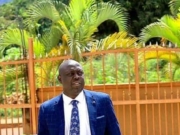
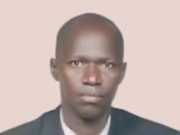
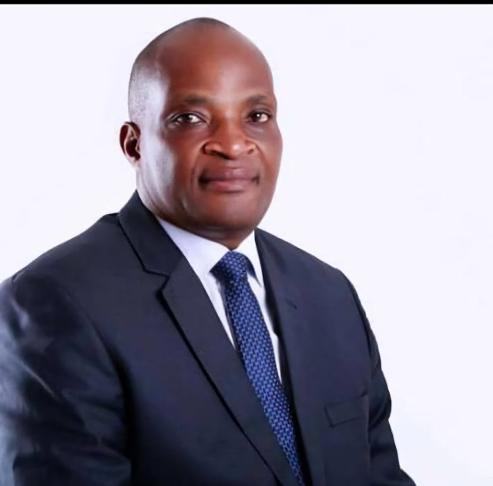
According to Hon. Frederick Nkayi, the veteran politician who served with distinction as Member of Parliament for the Greater Kagoma County from 2006 to 2016, that question is now squarely before Uganda with unavoidable clarity and moral urgency: How does a nation preserve what has been painstakingly built over four decades of sacrifice while simultaneously preparing itself for what must inevitably come next?
For Hon. Nkayi, this is not an abstract debate for television/radio talk-shows or comedy skits on social media platforms. He is a man who knows what political earthquakes look like, because he caused one of the most dramatic in Busoga’s modern history.
In 2006, when the opposition Forum for Democratic Change (FDC) was at its absolute political glory, feared and revered as an unstoppable wave, he shocked the entire country when he decisively defeated Dr. Frank Nabwiso, the one-time opposition strongman who was referred to across the region as the political mahogany because of his deep, immovable roots in FDC, his powerful oratory, and his entrenched grassroots networks.
While many thought the now deceased Dr Nabwiso was politically immortal, Nkayi proved that no political tree, however big, is too big to fall when the season changes and the people demand new representation.
What makes his perspective even more profound and worthy of listening to today is his spiritual grounding.
Hon. Nkayi is a committed born-again Christian attached to the Universal Apostles Fellowship Church of Righteousness (UAFCR) headed by Prophet David Isanga, popularly known as Prophet David or Nabbi David by his followers.
It is this faith, nurtured under the mentorship of Prophet David at UAFCR, that shapes his philosophy that leadership is not an accident of history or a product of mere ambition, but a divine succession plan ordained by God for the preservation of a people.
He argues, in his piece to TEU, that the recent endorsement of Gen. Muhoozi Kainerugaba, fondly referred to by followers as MK, for the 2031 presidency presents a rare historical opportunity for the country to evaluate, with sobriety, its psychological, institutional, spiritual, and generational readiness for a new phase of leadership.
“The statesman does not fear succession, he plans it with deliberate wisdom, because even God himself is a God of succession and continuity,” Nkayi writes.
Continuity and Renewal Are Twins, Not Rivals.
When Hon Mbagadhi Nkayi says Continuity and Renewal are twins, not rivals, he is speaking as a true Musoga who understands what twins mean.
In Busoga, when twins are born Waiswa and Tenywa for boys, Babirye and Nakato for girls, they are never seen as competitors. They come from the same womb at the same hour, from the same father and mother.
Even when Waiswa comes out first and Tenywa follows minutes later, we never say Waiswa is more important than Tenywa. We never say they should fight, and the truth is our tradition forbids it.
This is the heart of Nkayi’s message is Waiswa, PLU is Tenywa-one is older with historical legitimacy because he came first like Waiswa, the other is younger energetic born with modern touch like Tenywa. But they share the same blood, same womb of the liberation struggle so to make them fight is to curse the family.
Hon. Nkayi also insists that Uganda’s transition must be understood philosophically, biblically and institutionally, not emotionally.
To anchor this argument on solid intellectual ground, he turns to one of the greatest thinkers in human history, Aristotle (384–322 BC), the ancient Greek polymath who was a student of Plato at the Academy in Athens, later became the personal tutor to Alexander the Great, and who is universally recognized as the founding father of Political Science and formal logic for his timeless works Politics and Nicomachean Ethics.
In his seminal treatise on governance, Politics, Aristotle propounded the doctrine of teleology, the profound idea that nature acts with intentional purpose and wastes nothing. In Book I, Chapter 2, 1253a9 (c. 350 BCE) he wrote, “Nature makes nothing in vain.”
For Hon Nkayi, this ancient wisdom, which has guided empires and republics for over two thousand three hundred years, is alive today in Uganda’s political journey. It is this philosophical bridge that leads him directly to scripture, where the same principle of purposeful succession is demonstrated powerfully and without contradiction.
He cites Deuteronomy 34:9, a text often taught and preached at UAFCR during teachings on leadership and impartation, which says, “Now Joshua son of Nun was filled with the spirit of wisdom because Moses had laid his hands on him.”
The bridge is unmistakably clear: Moses was irreplaceable, yet even heaven understood that Israel needed a Joshua to cross the Jordan River into Canaan.
Moses was anointed to liberate the people from bondage, but Joshua was anointed to give them a settled country. One generation liberates, the next builds and settles.
This divine pattern repeats itself, and Hon Nkayi, drawing deeply from the teachings he receives at UAFCR, reminds the nation of 2 Kings 2:9, where Elisha asks Elijah for a double portion of his spirit.
In UAFCR, Prophet David teaches that Elisha was not competing with Elijah out of arrogance; he was humbly seeking capacity to complete what his master had started.
That, Hon Nkayi writes, is exactly what Gen. Muhoozi represents – not competition with his father, President Gen (Rtd) Yoweri Kaguta Museveni, but completion of a divine national mission.
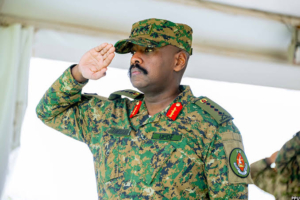
He seals this foundation with the Davidic transition. God told David, a man of war who secured Israel’s borders, “You shall not build my temple because your hands are stained with blood. Your son Solomon, raised in the palace and educated in statecraft, will be the builder.” Uganda, after decades of securing the state, does not need another bush-warrior to fight yesterday’s wars. It needs a builder who was raised in the palace of statecraft, exposed to global diplomacy and military command from childhood.
Beyond the Uniform: Judge a Tree by Its Fruits, Not by Propaganda.
This powerful historical and spiritual grounding naturally has led Hon Nkayi to confront the critics who reduce Gen. Muhoozi to a mere uniform.
As a born-again mature Christian who believes that God judges leaders by evidence, he answers them with the ultimate test given by Jesus Christ himself in Matthew 7:16, a cornerstone verse that has since found space in his heart: “By their fruits you shall know them.”
No amount of subjective judgment or elite prejudice can water down a track record that is visible and grounded in two decades of service. Do not tell us what you think about Gen Muhoozi, Hon Nkayi challenges in his submission, show us what he has built.
And the fruits, he says, are undeniable. As Commander of the Special Forces Command (SFC), he transformed what was once perceived as a presidential guard brigade (PGB) into a professional, continental-class elite force.
As Commander of Land Forces, he championed what Hon Nkayi calls “soldier-first leadership,” pushing for decent housing, improved medical care, and modernized training that restored dignity to the common soldier.
His operational footprint in Somalia under AMISOM and against the ADF in the jungles of Eastern DRC gave him what Nkayi terms “a strategic grasp of the Great Lakes security complex that no lecture theatre in Makerere can ever teach.” This is a man forged for twenty years in command where failure was not an option.
The NRM-PLU Pact: A Masterstroke of Complementarity and Apprenticeship.
For a man who felled a political mahogany, Nkayi recognizes political genius when he sees it. He describes the Memorandum of Understanding between the NRM and the Patriotic League of Uganda (PLU) as perhaps the most strategic masterstroke in recent history.
He anchors it not on abstract foreign theories, but on two familiar principles that every Ugandan understands. First, on Ubuntu, the African philosophy that teaches, “I am because we are,” that individual destiny is tied to collective destiny. Second, on the timeless wisdom of Plato in The Republic, who argued that a state endures when guardians who have the institutional memory are complemented by auxiliaries who bring new energy and zeal.
In this light, NRM is the institutional memory, the root system that has held the tree firm during the worst political storms. PLU is the new energy, the fresh shoot that proves the tree is still alive and growing. Together, they produce a stable synthesis that guarantees a transition without bloodshed.
As Psalm 1, says, “Blessed is the man… He shall be like a tree planted by the rivers of water, that brings forth its fruit in its season.” NRM is the deep root, PLU is the new fruit. You cannot have healthy fruit without a strong root.
The 2026 general elections served as a successful pilot that proved this theory works. While NRM provided the national structure, PLU mobilized millions of first-time voters within the broader effort, supporting President Museveni’s candidature with unprecedented energy and door-to-door organization. The results showed how younger Ugandans can participate within a disciplined structure while gaining invaluable statecraft experience.
“It was not competition, it was not rebellion, it was apprenticeship in statecraft, as Titus 2:6-7, instructs: ‘encourage the young men to be self-controlled. In everything set them an example by doing what is good”, he writes.
A Final Word to the Critics: Uganda Is Not a Monarchy, It Is a Constitutional Democracy.
And now, Hon. Nkayi speaks directly to the haters and critics who chant lazily that “it cannot be from Museveni to his son because Uganda is not a monarchy.”
This argument, he says, is intellectually dishonest and constitutionally illiterate. Uganda is not a monarchy precisely because our Constitution is crystal clear. Under Article 1, which states that all power belongs to the people, and Article 102, which lists the qualifications for President, every Ugandan citizen who is of sound mind, is 18 years and above, is a registered voter, and meets the educational qualifications, has a fundamental right to contest for the highest office.
The Constitution does not disqualify you for being a son of a farmer, a son of a pauper, son of a clergy, or indeed, a son of a President. To argue that being the son of President Museveni should be a roadblock is to punish a citizen for his birth, which is the very definition of discrimination that the Constitution forbids under Article 21.
Hon Nkayi says that being the son of the President cannot be an excuse to deny a qualified Ugandan his constitutional right. If anything, Nkayi argues with a powerful analogy that every ordinary Ugandan will understand, think of it like football, our national passion.
You cannot stop the son of the coach or the son of the captain from playing for the Uganda Cranes if he has the qualification, the fitness level, the discipline, and the talent to deliver goals. You do not bench a good striker because of his surname. You field your best talent and let the game be won fairly on the pitch.
Therefore, the challenge to the opposition is simple and democratic: if you believe Gen. Muhoozi is not fit, do not hide behind insults, tribal whispers, and inflammatory, divisive remarks that poison our nation. Instead, do what serious teams do – select your own talisman, your most qualified, fittest, and most disciplined player, and meet him on the ballot in 2031. Let the people of Uganda, the ultimate owners of Article 1 power, decide.
For that reason, Hon. Nkayi urges all Ugandans, whether in Katakwi or Kisoro, Lira, Amuru or Arua, whether boda-boda rider or professor, to refrain from divisive and inflammatory rhetoric.
The season of insults must end. What Uganda needs now is not hate speech, but hard work for growth and development.
In his conclusion, he writes: “Let us, as one people under God, choose construction over destruction, unity over division, and posterity over petty politics. As Ecclesiastes 3:1 declares, ‘To everything there is a season, and a time to every purpose under heaven.’ This is Uganda’s season to build, not to break.”
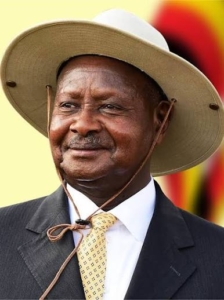
“Gen. Muhoozi is not the sunset of an era we must mourn; he is the dawn of a new era we must embrace. And a wise nation, as scriptures teach us, does not curse the dawn because it loved the night; it wakes up early, washes its face, and walks boldly into the light that God has provided for its children and its children’s children.”
About the author:
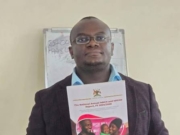
Hon Frederick Mbagadhi Nkayi is a former MP Kagoma County in Jinja District. He now serves as Commissioner RDC Secretariat, Office of the President, Kampala Metropolitan.