










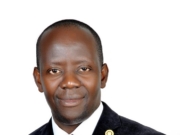









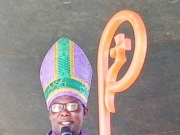


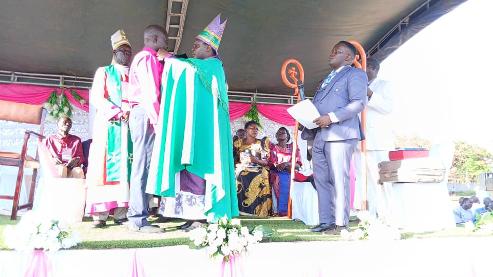
Archbishop Elect Prof. Mugume Bagambaki Richard has delivered his Second Patriarchal Pulpit Sermon under the Five-Fold Episcopal World Federation foundation series.
The Most Rev. Archbishop-Elect Professor Mugume Bagambaki Richard also serves as Ecclesiastical Patriarch -Elect of the Five-Fold Episcopal World Federation, Archbishop of Upper City Covenant Churches and President and Chancellor of UCCSAT University, the Upper City Covenant Seminary and Theological University.
He is known for his emphasis on formation before placement and on building covenant partnership among bishops across nations.
The sermon, titled From Creation to Covenant, was drawn from Genesis Chapter 2 and was preached this week as part of the build-up to the historic Patriarchal Consecration slated for 14th December 2026 at Kimaka Faith Ministry International Cathedral in Jinja City. Archbishop Mbakaza of South Africa will serve as Main Consecrator.
According to the Archbishop Elect, the central message is that God builds a man before He builds a ministry.
He opens with clarity on the biblical timeline, explaining that Genesis 1 and Genesis 2 are not two different creations but two perspectives of the same creation. Genesis 1 is the wide angle where God as Elohim creates heavens and earth for all nations.
Genesis 2 is the close up where God as Yahweh focuses on one man in one garden for covenant people.
He notes that understanding the style of writing in biblical times is key. Moses, writing around 1445 BC in Sinai, used literary forms that were understood in the Ancient Near East but were inspired by the Holy Spirit for covenant truth.
Genesis 1, he says, is written in elevated prose that is structured, ordered and rhythmic. It follows a clear framework of six days with repeated refrains that it was evening and morning and that God saw it was good.
It should be noted that in Hebrew scholarship this is linked to the priestly and liturgical genre that presents creation as God’s cosmic temple.
The days are arranged in panels where the first three form the realms of light, waters and land, and the next three fill those realms with lights, birds and fish, and animals and man. This shows Elohim as the orderly Creator who brings cosmos out of chaos, a direct response to the chaotic creation myths of Babylon and Egypt.
Genesis 2 shifts completely. It is written as historical narrative with close up covenant drama that is intimate and earthly. Here God is not just Elohim high above but Yahweh close by, with hands in the dust, forming, breathing, planting and building.
The genre explains origins of human institutions such as work, marriage and shame. It also uses Hebrew wordplays such as Adam from Adamah meaning ground, and Isha meaning woman from Ish meaning man.
He emphasizes that understanding genre prevents misinterpretation. Genesis is not a modern scientific manual and it is not myth. It is theological history, true history told in ancient literary forms. Genesis 1 answers who created and why, while Genesis 2 answers how God relates to the man He created by covenant.
Are Genesis Stories Myths?
In modern scholarship, some voices claim that Genesis chapters 1 and 2 are full of myths borrowed from Babylon and Egypt and do not represent accurate true history.
The Archbishop-Elect, a highly decorated theologian and scholar, addresses this concern directly from a scholastic standpoint.
He says we must define what myth means. In popular use, myth means a false story. In theological scholarship, myth means a story that explains origins using symbols.
The Genesis account is not myth in either sense. It is theological history. It tells true history in ancient literary forms.
It is true that there are similarities between Genesis and ancient accounts like the Enuma Elish of Babylon. Both talk about waters, darkness and creation. But the differences are greater than the similarities. In Babylonian myths, creation comes through violence where gods fight and kill each other and man is made from the blood of a murdered god to be a slave.
In Genesis, creation comes through the Word. God speaks and it is done. Man is not a slave of the gods but made in the image of God to reign. Moses used a style his audience understood but filled it with opposite theology. He was not copying myths. He was correcting them.
If Genesis were myth, it would contradict its own structure. Myths are timeless and placeless. Genesis is dated and placed. It gives toledot, meaning these are the generations, which was the family archive style of those days. It names rivers Pishon, Gihon, Hiddekel and Euphrates that were known geography. It gives lifespans, genealogies and locations. Myths do not do that.
Jesus Himself treated Genesis as true history. He quoted Genesis 1 and Genesis 2 as one authoritative account when teaching on marriage in Matthew 19, saying from the beginning He made them male and female. Paul treated Adam as a real historical man and Christ as the Last Adam in Romans 5 and 1 Corinthians Fifteen. If Adam were myth, the doctrine of redemption collapses.
The archbishop explains that the presence of poetic elements does not make it untrue. A wedding ceremony uses poetry but the marriage is still real. Genesis 1 uses elevated prose to show creation as God’s cosmic temple. Genesis 2 uses close up narrative to show covenant intimacy. Both are true, both happened.
The Law of Placement
With that foundation, Prof Bagambaki teaches on the law of placement. Scripture says the Lord God formed man of the dust of the ground and breathed into his nostrils the breath of life and man became a living soul, and the Lord God planted a garden eastward in Eden and there He put the man whom He had formed. Formation comes before placement.
He warns that many church leaders including some bishops today want placement, position and title before formation, yet God does the opposite. He says UCCSAT is the formation house of dust and breath before the consecration in Jinja.
He notes that placement is mentioned twice. First God put man in the garden by grace, and later He took man and put him there with responsibility. The first putting is gift, the second is assignment. To dress the garden means to work, serve and cultivate, which is pastoral work. To keep it means to guard and protect, which is apostolic work. A Five-Fold bishop must do both.
Liberty and Boundary.
Moving to the law of covenant, he addresses the balance of liberty and boundary. God said of every tree of the garden thou mayest freely eat, but of the tree of the knowledge of good and evil thou shalt not eat. Here the Archbishop corrected a widespread error.
Some have taught that the forbidden fruit was sexual intercourse between the serpent and Eve. He stresses this teaching, often called the serpent seed doctrine, is not found in the text and makes God contradict Himself.
He explains that sexual intimacy within covenant marriage was ordained by God before the fall. In Genesis 1, while everything was still very good, God blessed them and said be fruitful and multiply and replenish the earth. God cannot bless sex in Chapter 1 and punish it as sin in Chapter 2.
He further explains that the serpent is described as more subtle than any beast of the field which the Lord God had made. He is still a beast of the field, of a different kind from man-made in the image of God, and the law of kind after its kind forbids such union.
The judgment itself disproves the myth, because God judged them for eating. The language is consistently about consuming food.
He asks what then was the tree of the knowledge of good and evil and described it as a real tree that represented a spiritual reality, independence from God, the decision to define good and evil for yourself without God. The temptation was ye shall be as gods knowing good and evil. Satan was not offering sex, he was offering godhood and self-rule.
The Law of Partnership and Covering.
He then taught on the law of partnership. The Lord God said it is not good that the man should be alone. This is striking because at the end of Genesis 1 everything was very good, but now something is not good, man’s aloneness.
God could have made woman from dust as He did man, but He made her from man’s rib to show they are same substance. God caused a deep sleep to fall upon Adam.
He took a rib meaning side, not from the foot to be trampled, not from the head to rule, but from the side to walk together. Then God built the woman. She is not just formed, she is built, an architectural masterpiece.
This is the picture of FFEWF. Many archbishops are alone because they will not die to pride to allow God to build partnership. FFEWF is not a one man show. Archbishop Mbakaza as Main Consecrator is rib partnership. Uganda, Kenya, Nigeria,Thailand, Cameroon, South Africa,Pakistan and America must walk as one flesh federation.
Finally, he taught on the law of covering. They were both naked, the man and his wife, and were not ashamed. Why naked and not ashamed? Because glory was their covering. Before sin they were clothed in the light of God. After sin glory left, they saw nakedness and were ashamed.
There are two types of covering for bishops. Glory covering where before the fall there was no need for vestments because God’s presence covered, and garment covering where after the fall God made coats of skins, the first blood sacrifice to cover nakedness.
This is what Episcopal vestments signify, that we are covered by blood, not by our own righteousness. Naked and not ashamed means transparency and accountability.
In conclusion, the Archbishop Elect stated that if Genesis 1 is dominion, Genesis 2 is how to keep dominion. Be formed before you are placed, dress and keep your garden, respect boundary, do not be alone, and walk in glory covering.
He then gave an altar call, asking where each leader is today, whether still dust not yet formed, formed but not yet placed, in the garden but not dressing it, alone and needing help meet ministry, or naked and ashamed needing blood covering.
Prof Bagambaki now invites all to come to Jesus, the Last Adam, who slept the deep sleep of death on the cross so that the Church, His Eve, could be built from His side.
Prayer, ordination, FFEWF membership and UCCSAT registration remain open through the Global Communion Office in Kampala.
Contact is The Most Rev. Archbishop Elect Professor Mugume Bagambaki Richard, Ecclesiastical Patriarch of FFEWF and President of UCCSAT University, Kampala, Uganda. WhatsApp plus 256 775 050183 and email fivefoldepiscopalworldfederati at gmail dot com.