














Homiletic Political Satire/Creative Moral Essay.
Perhaps many or most people remember Albert Einstein, a German-born theoretical physicist considered the most famous scientist of the 20th century for other things.
They remember E equals mc squared scribbled on a blackboard. They remember relativity, the wild hair, the violin, the tongue stuck out in the famous photo. Yet that is not what Einstein wanted to be remembered for at the end.
What is E equals mc squared? E is energy, the power inside something. m is mass, how heavy it is. c is speed of light, about 300,000 kilometers per second. c squared is that speed multiplied by itself, a huge number. The formula says energy equals mass times that huge number.
So, a tiny amount of mass can become huge energy. That is why a small piece of uranium can power a city, or destroy it. Matter and energy are the same thing in different forms. As said after Hiroshima, Einstein knew this small formula had become too powerful for man without morals.
In the spring of 1954 in Princeton, as said in LIFE Magazine, journalist William Miller arrived to document the final chapter of a genius. Who was William Miller? He was a senior correspondent for LIFE, the most influential picture magazine in America. His job was history in real time.
His motivation was legacy. Einstein was 75, frail, dying slowly from an aortic aneurysm that would kill him in April 1955. The world had taken his science. Miller wanted his wisdom. He came with his teenage son Pat Miller, a boy burning with ambition to be successful, to be seen, to be famous.
The encounter that followed, as said in Miller’s essay Death of a Genius, carries a quiet Biblical echo. It mirrors Nicodemus in John chapter three. Nicodemus was a Pharisee, a ruler of the Jews, learned and respected. Yet he came to Jesus at night, in secret, because he sensed that the man had a truth that daylight politics could not give.
Miller was a journalistic Nicodemus. He came at dusk to a modest house on 112 Mercer Street, not for a press conference but for a pilgrimage. He brought his son like a young disciple hoping for a blessing. Like Nicodemus, he thought he was coming for a story. He found he was coming for a sermon.
He did not get the answer he expected. Pat Miller declared with youthful confidence that he wanted to be successful. He expected Einstein to pat his back. Einstein did not. He corrected him. As said in his final counsel that has outlived all his physics, try not to become a man of success, but rather try to become a man of value. As said in the old Latin emblem, one lives in one’s genius, other things shall pass away in death.
At first, they did not understand. Like Nicodemus who asked how can a man be born when he is old, Pat was puzzled. Success was concrete. Value was abstract. Understanding came later.
Nicodemus stepped out of the night after the crucifixion, as recorded in John 19:39, bringing myrrh and aloes to bury Jesus. The secret seeker became a public disciple. Pat Miller became a teacher and spent his life retelling that one sentence. He later said his father William Miller never recovered from that evening. He had gone to interview a scientist and met a prophet.
Would we understand Einstein if he landed at Entebbe tomorrow? If he held a press conference at State House, Serena, Hotel Africana, Munyonyo Resort, or the newly unveiled Marriott Hotel in Nsambya? If he went on NTV, NBS, BBS, Sanyuka?
We would miss him and how we would miss him shows exactly who we have become as a nation that confuses noise with knowledge.
Journalists from different channels would not ask about value. They would ask him to be a prophet for their politics. Who will win the US-Iran war? Who will win Russia-Ukraine? How to solve the Israeli settlement saga? Who will be the next Pope?
Scribes at the Daily Monitor newspaper would change their slogan Truth Every Day to something petty and tabloid. They would ask Einstein to tell them the truth whether he takes alcohol or goes to the night club. Is he a drinker? Does he dance? Does he have a girlfriend in Kololo? That would be their truth, not value.
Those from NTV would also twist their own slogan. Their slogan says Turning On Your World. They would ask Einstein to turn their world with the latest dance stroke. Can you do the new moves? Can you dance like Ruger, like the TikTok kids? Show us your world-turning dance. That would be their turning.
Even us at The Exposure Uganda, TEU, with our acclaimed slogan We Expose, You Decide, we would also miss the point completely. We would want to ask why he was not in a matching suit like our ministers. Why he can’t accompany Hon Balaam Barugahara and Hon Justine Nameere in their upcountry anti-corruption campaigns.
Our interest would be to make quick headlines like Einstein Condemns Corrupt Ugandans. Einstein Joins Balaam to Fight Graft. And definitely we would miss the value the man had come to preach, not with the Bible, but with his life. We would chase the headline and lose the homily. We would expose the coat and miss the soul inside it.
And then would come the celebrated and stubborn lawyers, the likes of Hon Asuman Kiyingi, Isaac Christopher Lubogo and others. They would not ask about value either.
They would ask very cheeky and stubborn legal questions. Counsel, can you explain your energy theory legally? Can E equals mc squared be cross-examined? Can you produce its title deed? Is mass guilty of becoming energy without consent? Who owns c, the speed of light, and under which jurisdiction? Can we sue light for trespass when it moves too fast?
Can we get an injunction restraining energy from becoming mass? They would turn relativity into a court drama, argue it for three hours, cite authorities from 1905, and still miss the simple warning that tiny mass can become huge destruction if character does not match knowledge.
Politicians would also hijack him. Who will be the next US president after Donald Trump? The opposition, especially NUP’s Hon Joel Ssenonyi and journalist-cum politician Hon Betty Nambooze, would ask him to help their principal Robert Ssentamu Kyagulanyi also known as Bobi Wine return home safely without being arrested. Others would ask him to prevail over President Museveni to free Col Dr Kizza Besigye and Erias Lukwago from detention.
PLU members like Hon David Kabanda and Balaam would rush forward with an endorsement book for MK 2031 and ask Einstein to sign it for General Muhoozi. Everyone would want Einstein to endorse their agenda. No one would want Einstein to question their values.
At Serena or Sheraton, we would admire his suit. At Munyonyo we would take selfies. At Marriott Nsambya we would ask for a group photo. Everyone wants a picture with power. No one wants a lesson from wisdom.
What would the former Mayor of Jinja, Hajji Mohammed Baswari Kezaala, now serving in diplomatic circles as Deputy Head of Mission in Doha, Qatar, say if he met this Einstein?
Born and bred here, Ambassador Kezaala knows Jinja, the former industrial capital built on the Nile. He knows Doha, the new capital of gas and diplomacy built on the desert.
He would not ask small questions. He would ask tough questions that bridge the two worlds.
He would ask, Professor, Jinja once powered Uganda with copper and textiles from mass, small mass that became big energy. Now Doha powers the world with gas, small mass that becomes big energy. In your formula E equals mc squared, where do you place the value of a city that lost its industrial soul? Is Jinja’s energy still there, or did we convert its value into scrap? Second, Professor, you said try to become a man of value. Thousands of young Ugandans leave Busoga every month to become security guards, drivers, and housemaids in Doha and Dubai. They send small mass, small remittances, that become huge energy for our economy. Are we exporting value or exporting desperation? Third, Professor, you fled Germany because power without morals turned science into a weapon. When a diplomat sees labourers sleeping ten in a room near the gas that lights Europe, is that not also power without morals? Is that not another Hiroshima of dignity? And finally, Professor, if you were Mayor of Jinja for just 5 years, or Ambassador in Doha, would you chase success measured in photos with presidents, or value measured in whether the poorest farmer from my Budondo can be heard without paying and without fear?
Those would be his questions, not about success, but about value.
That is why his counsel belongs to the angel-looking aides who hold the most delicate bridge in Uganda. Some are in suits with ties and cologne. Some are in uniform with a pistol and an AK-47. Both hold the same bridge.
You Are Not The Gate, You Are The Bridge.
No aide owns power. As said in his relativity, all power is relative. You borrow its shadow for a season. Ab African proverb says the fly on the ox must not think it is the ox. Proximity to power is not power itself. You began as a messenger. Do not become the message. Not everything that counts can be counted. Not everything that is counted, like photos behind the President, truly counts. Be a bridge that connects, not a tollgate that collects bribes and favours. A bridge is praised when people cross safely. A gate is hated when people are blocked.
Access Is Not A Favour, It Is A Sacred Trust.
The most dangerous corruption is not money. It is editing truth to make it sweet for the palace. As said in Proverbs 21:13, he that shutteth his ears to the cry of the poor shall cry himself and shall not be heard. Think of the farmer from Buyende or Mayuge kept six hours in the sun while a foreign visitor is ushered in in six minutes. That is betrayal of protocol. Corruptio optimi pessima, the corruption of the best is the worst. You can polish the chain so well that you forget you are still chaining the dog. True protocol bows to people, not only to power.
The Smallest Envelope Can Bury The Largest Legacy.
As said after Hiroshima, Einstein warned that power without character is ruin. Just as E equals mc squared showed that a tiny mass can become huge energy, a tiny envelope can become huge destruction.
Careers here do not collapse with a gunshot. They collapse with a brown envelope. A small appointment auctioned. A small favour sold. A small lie told to block someone. It takes twenty years to build a name. It takes five minutes to ruin it. If you cannot be trusted with small access, you cannot be trusted with big affairs. An aide who sells access is a merchant in the temple.
And Now, To The Man With The Gun, What Would Einstein Tell Him?
There is another aide. Not in a suit, but in uniform. Perhaps trained in the best military or police colleges in Uganda, in Kabalye, in Masindi, in Bihanga, in Kaweweta, or abroad in Sandhurst or Fort Leavenworth.
He is sharp, disciplined, respected. Armed with a very precise and lethal revolver pistol dangling on his waist, or the one wielding an AK-47 assault rifle that never leaves his shoulder. He shouts toka hapa, leave this place, and everyone runs.
A mere change of his facial expression causes jitters in the crowd. People fear him more than they respect him. They obey him because of the gun, not because of his character.
But what happens when power is carried on the waist and not in the heart? At the slightest provocation, at an insult in a bar, at a quarrel over money, at a political argument, he releases the trigger.
And that trigger leaves a colleague dead, a civilian dead, or even a spouse dead in a domestic quarrel at home. The headlines in Uganda are full of it every month. An officer shoots. A bodyguard shoots. A man trained to protect life takes life over a small argument. The gun that was supposed to guard the bridge becomes the terror on the bridge.
What would Einstein tell such chaps?
He would tell them what he told the generals after Hiroshima. As said in his letter to the 32nd US President Franklin Roosevelt, a new type of thinking is essential if mankind is to survive. Force does not equal authority. Fear does not equal respect.
He would say, your gun is not your voice. Your uniform is not your value. The revolver on your waist is precise, but your temper must be more precise. The AK-47 in your hands can fire 600 rounds per minute, but your wisdom must fire slower than your weapon. Your training in Kabalye taught you how to shoot. Life must teach you when not to shoot.
Einstein was a pacifist who loved his violin. When he was angry or stuck in an equation, he did not shout. He played Mozart. The violin was his restraint. What is your violin when anger comes? What do you play when provoked? If you have no violin, you will play the trigger, and the music will be mourning.
The Bible, as recorded in Matthew 26:52, is clear. All they that take the sword shall perish with the sword. The gun that makes everyone run today will make you run alone tomorrow when you misuse it. You will run from court, from the law, from your conscience.
You were trained in the best colleges to protect the bridge between power and people, not to be the terror on that bridge. When you shout toka hapa and a mother runs with her child, you have not shown strength. You have shown that you have forgotten why you were given the gun in the first place. The gun was given to protect the farmer from Bugiri, not to chase him away from the gate. The gun was given to guard the people, not to silence them.
The real security is not in the trigger. It is in the character that refuses to pull it when anger says pull it. Any coward can pull a trigger. It takes a man of value to walk away when provoked, to breathe, to play his violin.
History Remembers The Bridge, Not The Gatekeeper Posing On It.
Fame is vapour, value is root. You will not be remembered for standing angelic behind the President at Serena or Munyonyo or Marriott Nsambya with a pistol shining on your waist. You will be remembered for stepping aside and letting a weeping mother, an unpaid teacher, or a landless farmer be heard without paying a bribe and without fearing your gun.
As said in Revelation 14:13, blessed are the dead whose works follow them, not whose photographs follow them. The Ugandan proverb is blunt. The drum that beats only for the palace dancer and never for the farmer will soon be heard by no one. And the gun that scares only the farmer and never the thief will soon be turned against its owner.
From a quiet room in 1954 where a frail Einstein spoke to Pat Miller, the lesson returns to Uganda. From Entebbe to Nakasero, from Africana to Marriott, from Daily Monitor to NTV, NBS, BBS, Sanyuka, and even to us at TEU, from the aide in a suit with cologne to the aide in uniform with an AK-47, from the lawyer in chambers to the former mayor in Doha.
Your appointment is not an arrival, it is an assignment. You are not the fountain; you are the pipe. If the pipe drinks all the water itself, both the fountain and the village will condemn it. If the gun that guards the gate kills the people it was meant to guard, both heaven and earth will ask why.
Remember Einstein at his desk, frail, playing his violin to calm his mind before he destroyed an equation that could destroy the world. That is value. Not success. Not shouting toka hapa. Not a brown envelope. Not a selfie at Serena. Not a title deed for light. But restraint, humility, and choosing to be a bridge that lets others cross.
If Uganda could understand Einstein for one minute, it would understand this. Success will make you a celeb around power for a season. Value will make you an ancestor worth honoring when the photographs have faded and the guns have rusted.
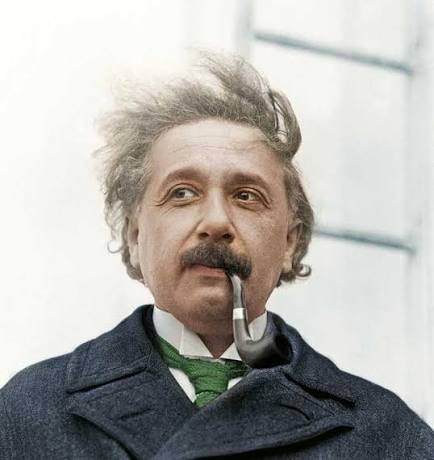
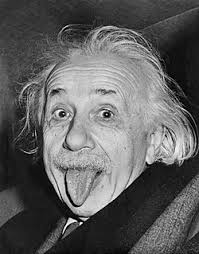
Then there is the picture that puzzles every child. Why is his tongue hanging out in one of the most famous photos in history, while in another he is calmly smoking a pipe?
The tongue picture was taken on 14th March 1951, on his 72nd birthday. After a long party at Princeton, photographer Arthur Sasse from UPI kept shouting, Professor, smile for the camera.
Einstein was exhausted from a lifetime of being asked to look like a genius. In a moment of mischief, he stuck out his tongue like a naughty schoolboy. Sasse clicked at that exact second. Einstein liked the rebellion so much that he ordered nine prints and sent the cropped face to his friends. That tongue was his protest. It said, do not worship my seriousness, remember my playfulness.
The pipe was the opposite. For almost fifty years, Einstein smoked a pipe and said it contributes to a somewhat calm and objective judgement in all human affairs. When relativity stuck him, when politics angered him, when journalists chased him, he did not shout.
He lit his pipe and thought slowly. The smoke made him look like a prophet to photographers. To him, it was his second violin, a tool to slow down time before making a decision. The two pictures are two sermons. The tongue says, I am tired of your fake respect. The pipe says, if you want value and not just success, learn to sit and think before you act.
Try not to become a man of success. Try to become a man of value. That was his final counsel to one boy in Princeton in 1954. It is his final counsel to a nation in Uganda in 2026.