


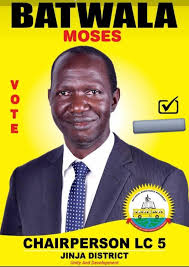





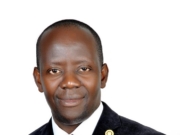



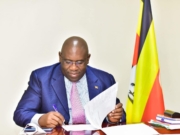





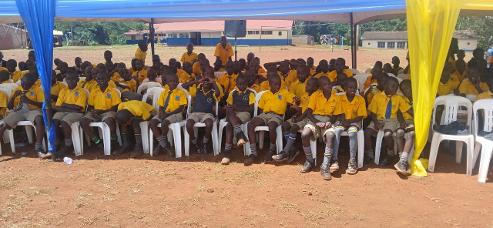
In a service that blended academic commissioning with deep sacramental meaning, the Member of Parliament for Butembe County in Jinja District, Hon. Grace Paddy Kirya Wanzala, challenged this year’s national examination candidates to refuse mediocrity and to keep aiming higher until their true dreams and goals are achieved, arguing that the modern world has very little space left for average effort.
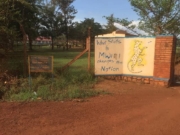
Hon Wanzala was speaking on Saturday 10th October,2026 during the dedication and thanksgiving service for 145 Primary Leaving Examination candidates at Mwiri Primary School, one of the historic Church of Uganda founded schools in Busoga that continues to carry a reputation for discipline, academic seriousness and spiritual formation.

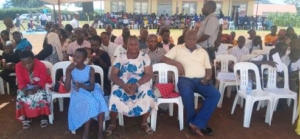
He graced the ceremony as one of the top invited guests alongside school management, parents, teachers, clergy and old boys and girls of the institution who returned to stand with the candidates.
The day carried double significance, as the same service witnessed the confirmation of 34 Anglican pupils by the Bishop of Busoga Diocese, the Rt. Rev. Prof. Dr. Grace Lubaale, who was assisted by a number of clergy from across the diocese. What began as an academic dedication therefore became a full pastoral moment, where prayer for examinations met prayer for lifelong discipleship.
The congregation gathered early under bright skies, with parents occupying the front benches, candidates dressed in crisp school uniforms seated in orderly rows, and teachers moving between them with the quiet pride of people who have done their part.
Songs of praise alternated with intercessory prayers for wisdom, steady hands, good health and courage before the national examination season that brings together Primary Leaving Examination, Uganda Certificate of Education and Uganda Advanced Certificate of Education candidates across Uganda.
A Call To Refuse Mediocrity.
Addressing the candidates, parents and teachers, Hon Wanzala said examinations are important milestones but should never be mistaken for final destinations. He urged learners to see PLE, UCE and UACE not as ceilings that limit them but as gates that open into larger rooms of purpose, innovation and service to family, county and nation.
“There is very little space for mediocre in today’s world. Aim higher until your true dreams and goals are achieved,” Hon Wanzala told the candidates, adding, “Do not compete to merely pass. Compete to become useful, to become excellent, to become socially efficient for your family, your county and your country.”
He said Uganda is at a stage where the job markets, the innovation economy and even the moral leadership of the nation demand more than minimum grades.
Employers are looking for thinkers, problem solvers and people of integrity while communities are looking for young people who can return with solutions rather than complaints.
For that reason, the FDC-sponsored MP told the candidates that the grades they will obtain in a few weeks must be accompanied by character, curiosity and commitment to continuous growth.

To strengthen his call for excellence beyond grades, the legislator invoked West Africa’s celebrated educationist, intellectual, missionary and early Pan-Africanist, James Emman Kwegyir Aggrey, 1875 to 1927, a Gold Coast scholar whose ideas shaped Achimota College in Ghana and whose influence reached classrooms across Africa and the United States.
Hon Wanzala quoted Aggrey’s enduring definition of education, saying, “By education, I do not mean simply learning. I mean the training in mind, in morals and in hand that helps to make one socially efficient. Not simply the 3Rs but the 3Hs, the head, the hand and the heart.”
Expounding on the quote, Wanzala explained that Aggrey’s 3Hs remain more relevant today than when they were first spoken a century ago. The head represents intellectual development, critical thinking, comprehension and academic mastery that candidates must pursue with discipline and focus. The hand represents practical skills, work, creativity and the ability to produce, build, repair, farm, innovate and add value rather than wait for white collar employment. The heart represents character, integrity, empathy, patriotism and service, without which knowledge becomes dangerous and skill becomes selfish.
“Aggrey taught us that if you educate only the head, you produce a clever individual, but if you educate the head, the hand and the heart, you produce a complete citizen,” Wanzala said.

“Mwiri Primary has given you the 3Rs of reading, writing and arithmetic. Now you must add the 3Hs. Uganda does not just need people who passed. Uganda needs people who can think, who can work and who can love their nation enough to serve it honestly.”
He reminded the gathering of Aggrey’s other famous images. The piano illustration, that if you play only the white keys you get sharps, if you play only the black keys you get flats, but if you play both together you get harmony and beautiful music, which Aggrey used to preach racial harmony and holistic learning.
And the eagle parable, where a farmer raises an eagle among chickens until it believes it is a chicken, until a naturalist takes it to a mountain at sunrise and says, “Eagle, thou art an eagle, thou dost not belong down here, thou dost belong to the sky, stretch forth thy wings and fly,” at which point the eagle finally flies and never returns.
“My people of Africa, we were created in the image of God, but men have made us think that we are chickens, and we still think we are, but we are eagles. Stretch forth your wings and fly. Don’t be content with the food of chickens,” Wanzala quoted, urging candidates not to be content with average results when the sky of excellence is open to them.
Attentive And Observant — The Un Interview Testimony.
Beyond philosophy, Wanzala gave the candidates a practical tool that will save them marks and save them in life. He asked the pupils to always be attentive and observant, not only during examinations but in life itself. He warned that many capable people fail not because they lack knowledge but because they lack patience to listen, to read and to understand instructions before acting.
To illustrate his point, he recounted a personal testimony from a high-stake interview he attended for a lucrative position with one of the United Nations agencies, where dozens of international candidates had gathered, all highly qualified, all confident, all eager to secure the job.
The instruction at the top of the paper was simple and bold, read all instructions and questions before you answer any question. Eager to impress, most candidates ignored it and went straight into answering. Page after page they wrote, calculating, explaining, sweating, determined to show brilliance and speed.
At the very bottom of the last page was the final instruction, typed in capital letters, DO NOT ANSWER ANY QUESTION AT ALL.
All others had already filled their answer sheets and were waiting with satisfaction. He alone had obeyed the first instruction to read everything before writing anything. He submitted a blank answer booklet with only his name and a note that he had followed instructions.
At the end, it was him who passed and got the job, because the examiners were not testing knowledge alone, they were testing obedience, comprehension, discipline and the ability to follow instructions under pressure.
The open space at Mwiri Primary erupted in laughter and then fell into thoughtful silence as Wanzala connected the story to examination strategy and to life wisdom.
“While my testimony’s immediate intention is to prepare you for your forthcoming examinations, the lesson goes beyond PLE,” Wanzala said. “Even in life, people must be careful. Do not simply hear of something and you jump into it. Many people lose jobs, lose marriages, lose opportunities, lose money, lose reputation because they did not pause to read the instructions of life. Attentiveness is a skill of successful people.”
He told the candidates that examiners reward attentiveness as much as knowledge. A misread question can cost marks that a child actually knew. A rushed interpretation can turn a correct answer into a wrong one. Calm reading, careful observation and obedient following of instructions are academic skills that become life skills.
In a light gesture that drew warm laughter from parents, teachers and the FDC legislator’s own entourage, Hon Wanzala added that the same principle guided him in marriage.
He said he first took time to study and to do some due diligence on his now beloved wife, Jenifer, after seeing her while he was working in Ethiopia. He did not rush. He observed, he inquired, he prayed, he understood the person behind the face, the values behind the beauty.
That careful attention, he said, has given him a marriage built on knowledge rather than impulse, just as a good examination should be answered after understanding rather than after panic.
Jenifer, who nowadays prefers to be addressed as Mrs. Hon Wanzala, was standing beside her husband, smartly dressed and radiating quiet pride as her husband narrated their story.
As the congregation laughed and applauded, she responded with an honorable smile, a smile that acknowledged both the public teasing and the private truth that attentiveness had indeed given them a home built on respect and faith.
Her presence beside the MP was not ceremonial, it was testimonial, that what he preaches about character and patience, he practices at home.
“Attentiveness gave me a job. Attentiveness gave me a good wife. Attentiveness will give you good grades and a good future,” he said to sustained applause.
Examiners Are More Interested In Methodology Than Rushing.
Hon Wanzala also told the candidates that examiners are more interested in the methodology used even when the answer is wrong than in rushing just to answer without critical thinking.
He cautioned the 145 PLE candidates that many pupils lose marks not because they do not know, but because they do not show how they arrived at what they know. In subjects like Mathematics and Science, he said, the examiner rewards the steps, the formula, the reasoning, the working, because methodology is proof that learning has taken place.
A wrong answer with correct methodology can still attract marks, but a correct answer without methodology or a rushed answer with no logic often attracts suspicion and loss.
“Do not rush to finish first. Finish well. Think critically. Show your working. Explain your reasoning,” Wanzala said. “Examiners are looking for thinkers, not gamblers. Anyone can gamble with an answer, but only a learner can demonstrate methodology.”
He linked this to life beyond the examination room, noting that in the world of work, especially in the UN system and other international agencies where he has served, supervisors are more interested in how you solved a problem than in whether you shouted the answer quickly. Critical thinking, he said, is what separates a competent professional from a mediocre performer.
Who Is A Mediocre?
Hon Wanzala then paused to define the word he had used at the start of his message when he said there is very little space for mediocres.
A mediocre, he said, is not a person who fails. Failure is part of learning. A mediocre is a person who settles. A mediocre is a person who does the bare minimum to get by, who is content with average, who avoids extra effort, who does not read instructions, who does not show methodology, who copies from others, who blames the teacher, the paper, the government, the system, but never examines his own preparation.
According to Hon Wanzala, a mediocre in class is the pupil who rushes to write without reading the question twice. A mediocre in life is the person who hears of a job, a marriage, a contract, a business opportunity and jumps into it without study, without due diligence, without counsel.
A mediocre wants the title without the toil, the certificate without the character, the position without the process.
“God did not create mediocres. Aggrey told us we are eagles, not chickens. A mediocre is a chicken mentality in an eagle body. He has wings but he prefers to scratch the ground for grains. He has capacity to fly but he is satisfied with noise in the compound,” Wanzala said.
As an old boy of the school in the 1970s,Hon Wanzala told the candidates that Mwiri Primary has not trained them to be mediocres. The school has trained them to be attentive, observant, methodical and faithful. That is why they were being dedicated both academically and spiritually, so that their methodology in the examination room would reflect a methodology of life, reading well, thinking well, writing well and living well.
Bishop Lubaale: Be Calm, Be Steadfast, Trust God Not Your Own Strength.
Taking the pulpit for dedication and confirmation, Bishop Lubaale, assisted by diocesan clergy, reinforced Hon Wanzala’s call for calm but rooted it firmly in faith. He encouraged the candidates to be calm and steadfast, trusting only in God and not in their own knowledge and strength.
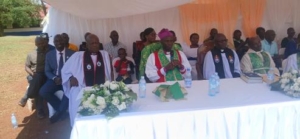
The bishop prayed for God’s power, wisdom and good health for the pupils before, during and after the examinations, asking that anxiety be replaced by peace, that memory be sharpened, that pens be steady and that parents and teachers be given grace to support the children without pressure that breaks them.
“The best revision is done with a calm spirit,” the bishop said. “Do your part faithfully, revise diligently, sleep well, eat well, and trust God to do what you cannot do. Knowledge can fail, strength can fail, memory can fail, but God does not fail those who call upon Him in truth. Do not panic. Do not fear. God is with you in that examination room.”
In a firm pastoral warning that drew quiet attention from the congregation, Bishop Lubaale cautioned against the growing misuse of the name of God, a practice he said has become common among some so-called men and women of God who misinterpret scripture while manipulating believers for their own selfish agenda. He said the pulpit must never be turned into a marketplace and the name of God must never be used as a tool for intimidation, extortion or self-promotion.
Addressing himself directly to the 34 confirmed pupils, the bishop further cautioned against those who are always saying “I swear upon the Living God” and then launch themselves into a litany of lies and falsehoods, noting that such conduct goes against the will and commandment of God and undermines both Christian witness and public trust.
“You cannot hold the Bible with one hand promising nothing else but the truth and with the other hand trade in lies,” Bishop Lubaale said in an implicit rebuke of dishonest witness in courts, in pulpits, in classrooms, in business and in homes. “God commands truthfulness. When you say you swear by the Living God, heaven is listening. Let your yes be yes and your no be no. The God who gives wisdom for examinations is the same God who watches over truthfulness.”
According to Anglican faith, while baptism marks entry into the body of Christ, confirmation is a sacred rite where a baptized person publicly affirms Christian faith, takes personal ownership of promises made on their behalf during infant baptism and receives strengthening of the Holy Spirit through prayer and laying on of hands by a bishop. Through the bishop’s prayer, the Church asks for the sevenfold gifts of the Spirit from Isaiah chapter 11, wisdom, understanding, counsel, strength, knowledge, godliness and holy fear.
The bishop linked those gifts directly to examination life. Wisdom to choose well among options, understanding to comprehend what is taught rather than merely memorize, counsel to listen to good advice and reject destructive peer pressure, strength to persevere when revision becomes tiring, knowledge to retain and apply learning, godliness to remain honest even when tempted to copy, and holy fear to remember that all of life is lived before God.
Headteacher Mwanga: Equipped With Academic Tools And Spiritual Armor.

The smartly dressed and joyous headteacher, Mr. Mwanga Ronald, was visibly moved and for a moment was lost for words as he rose to address the gathering.
After salutations and recognitions of everyone from the Mwiri Primary School fraternity, parents, teachers, clergy, the bishop, the Member of Parliament and invited guests, Mwanga, being a Church of Uganda sponsored and fronted headteacher in a Church founded school, wasted no time and dropped a word from the Bible as recorded in Philippians chapter 4 verse 13 to send the candidates into the examination hall knowing that they are not only blessed but anchored on God’s own power.
“I can do all things through Christ who strengthens me,” Mwanga quoted, his voice steady with conviction.
The text the headteacher chose is one of the most quoted yet most misunderstood verses in the Bible, and Mwanga was careful to return it to its true context. The Apostle Paul did not write it from a pulpit of triumph but from a prison cell in Rome around AD 62, chained to Roman guards, uncertain whether he would live or die.
He was writing to the Church at Philippi, a small but generous and faithful congregation in Macedonia that had supported him materially and spiritually, a church he loved deeply and called his partners in the gospel.
In Philippians chapter 4, Paul is not teaching about winning examinations or winning tenders or winning trophies in the modern motivational sense. He is teaching about contentment, endurance and Christ-sufficient strength. Just two verses before, in Philippians 4:11-12, he says, “I have learned to be content whatever the circumstances. I know what it is to be in need, and I know what it is to have plenty. I have learned the secret of being content in any and every situation, whether well fed or hungry, whether living in plenty or in want.”
The immediate context is therefore hardship, not ease, scarcity not abundance, pressure not comfort. The power of Philippians 4:13 is not that Christ will make you pass without revision, but that Christ will strengthen you to do what you ought to do even when you are afraid, even when the question looks difficult, even when you feel like giving up.
It is not a slogan for laziness but an anchor for diligence. It is not a promise that you will do anything you dream, but that you will have strength to do all things God has called you to do, through Christ who infuses inner power.
In that sense, Mwanga’s use was precise. He had just told the candidates, “We have equipped you with the academic tools.” He was not telling them to replace tools with prayers. He was telling them that after preparation, after revision, after discipline, there remains a gap that only divine strength can fill, the strength to stay calm, to remember, to stay honest, to not panic.
“Do not panic, do not fear. We have equipped you with the academic tools and today through the blessed hands of our bishop we are equipping you with spiritual armor. Go in the examination room with confidence and the assurance that God is with you. You carry the banner of Mwiri Primary School and we know you will fly high,” Mwanga said.
Mwanga said the school has done its part through the year, covering the syllabus, conducting assessments, holding remedial classes, guiding and counseling and instilling discipline. The remaining part, he said, belongs to God and to the candidates themselves to remain focused, to keep time, to read instructions and to write with clarity and honesty.
He thanked Bishop Lubaale for confirming the 34 pupils and for dedicating the 145 candidates, noting that Mwiri Primary remains proud of its Church foundation which insists that education must shape both competence and character.
Mwanga also thanked Hon. Wanzala for his presence, his testimony and his invocation of Aggrey, saying the MP’s message of refusing mediocrity and practicing attentiveness will remain with the pupils long after PLE. He thanked parents for entrusting their children to the school and teachers for their tireless labour that turns raw potential into refined readiness.
Conclusion: From Dedication To Distinction.
As the 145 PLE candidates stood for dedication prayer and the 34 newly confirmed knelt for episcopal blessing, with hands laid upon them and prayers spoken over them, the service delivered a single message in three voices that will echo beyond the examination season.
From the Member of Parliament, the message was refuse mediocrity and be attentive to instructions in examinations and in life, show methodology, think critically, do due diligence, and never settle for chicken feed when you were born to fly.
From the bishop, the message was be calm, be steadfast, trust God not your own strength, never misuse His holy name with lies, and remember that the same Spirit who gives wisdom for examinations also demands truthfulness in life.
From the headteacher, the message was you are academically equipped and spiritually armored, you can do all things through Christ who strengthens you, you carry the banner of Mwiri Primary School and you must fly high.
The congregation responded with a long-standing ovation, with hymns of commissioning and with ululations from mothers who could not hide their joy.
The candidates left the chapel with dedication cards, confirmation certificates, and a renewed sense of identity, as pupils of Mwiri Primary, as confirmed Christians of the Church of Uganda, as young Ugandans challenged by Aggrey’s vision of head, hand and heart, and as children of Busoga sent into examination rooms with the promise that God is with them.
They go not as mediocres gambling with answers, but as methodical thinkers who read all instructions. They go not as chickens scratching for grains, but as eagles stretched for flight. They go not with panic, but with power, with wisdom, with good health, with confidence, and with the assurance that the God who strengthened Paul in prison is the same God who will strengthen them in the examination hall and in the life that follows.
For Mwiri Primary School, the 145 are not just candidates, they are ambassadors. For Busoga Diocese, the 34 are not just confirmed, they are commissioned. For Butembe County, the message is clear, the future will not be built by mediocres, but by men and women who were taught early to read well, think well, live truthfully and trust God fully.
Go and write with confidence. But first read. Then write. And after you write, go and live with purpose, with truth, and with the strength of Christ.