



The camera was shaking as it followed a ministerial inspection through a crowded corridor of a regional referral hospital that has been surviving on 23 percent staffing for 2.5 million people.
Voices were loud and performative for the gallery that had gathered around. A senior dental surgeon who had been working under immense pressure was told to leave the ward and declared suspended on the spot because his hands were in his pockets while speaking to the visiting minister.
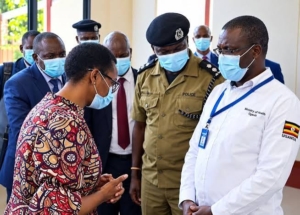
In a facility where patients walk for hours to be seen and where health workers routinely cover shifts meant for three people, that single image of hands in pockets travelled faster than any drug delivery truck.
It travelled not because Ugandans are fascinated by etiquette, but because they recognized a familiar national script. A powerful figure displays authority, a smaller figure is instructed to perform respect in a very visible way, and the far more urgent question of service delivery is left quietly standing in the corner without meaningful interrogation.
The Village Boys Who Stitched Socks in Otwal Trading Center.
Many Ugandans did not first encounter that script in a hospital or ministry office, but much earlier in life, in trading centers and villages where belonging had to be stitched together from whatever little was available.
During our teenage days, socks and shoes were for the selected few. Most families could not afford new clothes and depended on second-hand relief items legitimately distributed to needy families.
In our household, we received such sweaters through the relief distribution. We would then carefully cut a portion of the long sleeves from our own sweater and stitch it with whatever needle and thread we could find to make socks.
Everyone in Otwal Trading Centre, Otwal Sub- County, Oyam District, knew it was almost impossible for some of us to acquire genuine socks from shops. We therefore created drama by pretending an insect had stung us just above the ankle. We would pull our trousers up with exaggerated urgency and make a face that suggested pain. The watching fellow boys would not worry about the sting but would reluctantly congratulate us for being real boys who had joined the ranks of those with socks. They would also quickly add a playful disclaimer that we hope nobody has lost their socks in this trading centre.
That disclaimer was not about theft at all. It was a shared joke, because in Otwal everyone knew whose family had received relief sweaters and everyone could see whose sweater had now lost its sleeves after we tailored our own property.
Otwal is a place I grew in and should call home, where resources were scarce but honesty about whose item was whose was well known.
That memory has stayed with me because it explains what we continue to do as adults. As teenagers we performed a small drama to belong and avoid shame for poverty, using what we legitimately owned. As adults we perform bigger and more consequential dramas to belong and avoid exclusion from opportunities that should be available on merit.
The Roman Emperor’s Notebook.
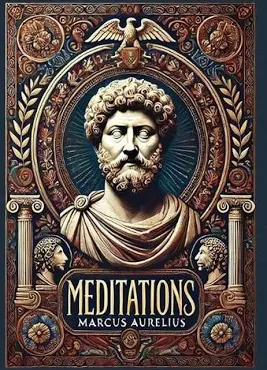
A diary written two thousand years ago in a cold and dangerous war tent helps make sense of this habit of performing belonging. Marcus Aurelius, Emperor of Rome from 161 to 180 AD, held more formal power than any Ugandan official today.
While plague spread in his camps and politicians maneuvered in Rome, he wrote notes to himself to stay steady. Those notes became Meditations. They contain what he called dogmata, or axioms, meaning simple, self-evident truths you live by rather than merely quote.
What Is an Axiom?
An axiom is like the statement that 1+1=2 or that gravity pulls downward. You do not debate it. You build your structure upon it. Uganda has lived for years with a very different unwritten axiom. You must belong to someone powerful to get something that should be a right. You must identify with a powerful religious group, political figure, cultural institution, or military network to get medicine, a job, a transfer, or a contract.
Uganda’s Unwritten Axiom:AAA, JPAM, KK & PLU.
This alternative axiom has become a national reflex. It has faces Ugandans recognize because they have seen them rise and shift over time. That is why the story of stitched socks from Otwal matters when we try to understand the present.
For a period from 2022 to early 2026, Rt Hon Anita Annette Among, as Speaker of Parliament, was widely seen as one of the most powerful figures after the President. Many people including MPs, contractors, religious leaders, and youth groups sought closeness to her office because it could open doors.
From mid-2024, after sanctions announced by the UK and US and related court processes, the political atmosphere shifted. Some people who had sought closeness kept their distance, not necessarily because of any legal determination of guilt or innocence which courts will handle, but because proximity itself had become politically risky.
The memory of Rt John Patrick Amama Mbabazi, universally known as JPAM, carries a similar lesson. From the late 1980s to 2014, as Minister for Defense, Minister for Security, Prime Minister and Secretary General of the National Resistance Movement, he was continuously at the center of public life.
To be known as close to JPAM and to have his phone number was considered a distinct advantage in public service and business. After 2014, when he left government and contested for President in 2016 under Go Forward, his political base changed considerably and he became quieter, respected as an elder statesman but no longer at the center of appointments.
Another figure many Ugandans remember vividly is Gen. Kale Kayihura, who served as Inspector General of Police from 2005 to 2018. For thirteen years, he was arguably the most visible and powerful security chief in the country.
To be seen as close to Gen. Kayihura was considered an advantage in policing, in business, in local politics, and in many district-level negotiations. Many officers, politicians, and youth groups sought photographs with him and attended functions where he was chief guest because his office was perceived as able to make things happen quickly.
After March 2018, when he was removed from office, and later in June 2018 when he was arrested, the atmosphere shifted dramatically. Those who had built their entire relevance around proximity to the IGP had to start afresh.
The point here is not to condemn or praise any individual, whether Anita Among, JPAM, or Gen. Kayihura, but to illustrate how fragile a career becomes when built entirely on proximity to one powerful person.
Power, in Stoic terms, is an outside event you never fully control, much like we in Otwal could not control when relief distributions would arrive, but we could control what we made from what we had legitimately received.
Today the name on many lips is PLU, the Patriotic League of Uganda, associated with General Muhoozi Kainerugaba. It is young, active on social media, visible in districts, and described in everyday conversation as the most politically beautiful chick.
Everyone notices it, many want to be close to it, and some are cautious about it. Everyone wants to talk to Hon David Kabanda its greatest promoter or celebrated media personality and journalist Andrew Mwenda.
Like the waves before it, PLU is influential today and will go through its own cycle of visibility and realignment. If a whole identity is built around any single wave, rebuilding becomes necessary every few years, just like we had to keep cutting sleeves when previous socks wore out.
Nigera’s Chief Nanga Comes to Arua.
This cycle of rising, dominating, and shifting power is exactly what Chinua Achebe captured with precision that still reads like contemporary Ugandan newspapers.
In A Man of the People, published prophetically just days before Nigeria’s first military coup in 1966, the minister who goes on tour not to listen to citizens but to be seen by them, who speaks loudly and embarrasses civil servants in front of cameras, and who demonstrates in every gesture that he is in charge, is named Chief the Honorable M. A. Nanga, MP, Minister of Culture, popularly known as Chief Nanga.
Achebe presents Chief Nanga as a former teacher turned politician, as cynical as he is charming, a roguish opportunist who mastered appearing as a man of the people while operating in an eat-and-let-eat atmosphere.
That observation bridges directly to what we witnessed in Arua, where an inspection in a hospital operating at 23 percent staffing focused more on posture than on why 77 percent of posts are empty.
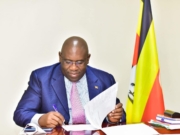
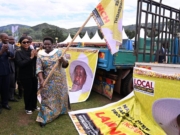
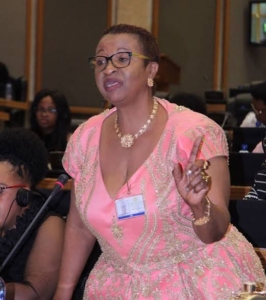
Our own minister who went to Arua Regional Referral Hospital on 15 October 2026 is Hon. Anifa Bangirana Kawooya, Minister of State for Health in charge of General Duties.
Who Is Dr Robert Candia?
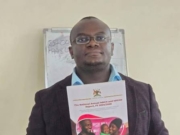
The health worker at the center of that encounter is not an anonymous junior doctor. He is Dr. Robert Candia, Senior Dental Surgeon at Arua Regional Referral Hospital. He is one of the few specialists’ dental surgeons serving the entire West Nile sub-region, covering more than 2.5 million people and receiving referrals from Arua, Yumbe, Koboko, Moyo, Adjumani, Nebbi, Zombo, Maracha and Madi-Okollo.
Dr. Candia’s daily roles illustrate why his presence matters more than his posture. In clinical care, he diagnoses and treats dental and oral-facial conditions, including severe dental infections that can become life-threatening, dental extractions under difficult conditions, minor oral surgery, and management of facial trauma from road accidents.
In emergency and ward cover, he attends to emergencies in a hospital where specialists routinely cover general duties because posts are vacant. In prevention and public health, he conducts oral health education, screens for early oral cancers, and plans referrals for patients who cannot be managed at lower facilities due to stock-outs.
In mentorship and supervision, he supervises dental officers, interns, nurses and clinical officers in a teaching hospital environment where formal recruitment has been frozen for years. In administrative responsibility, he participates in departmental planning, requisition of dental supplies, and clinical audits, despite the persistent gap between approved budgets and actual disbursements.
That is why the Uganda Medical Association (UMA), in its statement of 16 October 2026, described his alleged offence as a breach of etiquette that does not justify summary suspension. The Ministry of Health Permanent Secretary, Dr. Diana Atwine, later clarified that Dr. Candia has not been suspended and continues to perform his duties.
In the video, Hon. Kawooya is heard saying, “How can he pocket… for you, suspension. I have said suspension. You are pocketing here?” before ordering that Dr. Candia be removed from her sight. The moment attracted criticism because it raised a deeper question about what an inspection should focus on.
The Questions That Were Not Asked.
Achebe also wrote in No Longer at Ease about needing a long spoon to eat with a big man. Many Ugandan graduates understand this because they feel they need a long spoon in the form of a godfather, bishop, general, or party chair to eat from a national plate that should be accessible to all.
In our Otwal Trading Centre, we did not have spoons either. We stitched our own socks from our own sweaters and pretended an insect stung us so pulling up trousers looked accidental.
The Questions That Were Not Asked.
That moment attracted criticism because it raised a deeper question about what an inspection should focus on. Beyond pocketing, which could have been handled with a private word rather than a public declaration, is Hon. Kawooya aware about drug stock-outs in Arua Regional Referral Hospital? Does she know the current national recruitment policy and why many hospitals have not been allowed to recruit substantively for years?
Does she know the actual amount disbursed to the hospital versus its approved budget, and the gap between what is approved on paper in Kampala and what arrives in Arua? Does she know about the staff recruitment ceiling imposed centrally, and how that ceiling makes it impossible for a hospital board to fill critical posts? Does she know how that ceiling creates an environment where people suspected of impersonation appear to fill gaps informally? Does she know how much is allocated for primary health care per capita for West Nile?
These questions define a meaningful inspection. If an inspection does not ask them, it is not an inspection of service but an inspection of posture. A hand in a pocket does not stop a drug delivery, does not cause a recruitment ceiling, and does not reduce a budget.
Martha, Mary and the Smoked Meat with Kwon Kal/Luwombo& Hot Coffee.
There is a story many of us heard in many Sunday school classes now called Children’s Church that fits the Arua incident. It is the story of Mary and Martha in Luke 10:38-42.
Jesus visited the home of two sisters, Mary and Martha. Martha was anxious and busy preparing a great meal for an important guest. In our context, we would say she was busy preparing smoked meat with kwon kal, or akaro, or kalo, or luwombo, with coffee for the elders or mango juice for the children, so that everything looks presentable and honorable. Mary, her sister, simply sat at the feet of Jesus and listened to what He was actually saying.
When Martha complained that Mary was not helping, Jesus answered gently, “Martha, Martha, you are worried and upset about many things, but few things are needed — or indeed only one. Mary has chosen what is better, and it will not be taken away from her.”
Hon. Kawooya’s gesture in Arua was a Martha moment. There was a hospital with 23 percent staffing, mothers waiting for hours, drug stock-outs, and a recruitment ceiling that everyone knows about but few want to discuss. Those are the many things that need quiet listening, like Mary. Instead, the focus went to whether Dr. Candia’s hands were in his pockets.
Martha was not a bad host. She wanted to honor her guest. Hon. Kawooya was not necessarily a bad leader. She wanted to enforce discipline. But both were distracted by the presentation — the smoked meat, the kwon, the coffee, the posture, the pockets — and missed the one thing needed in that moment: to sit, listen, and ask why a Senior Dental Surgeon serving 2.5 million people is working in such conditions.
Pockets can be corrected with a private word after the ward round. Staffing ceilings, budget gaps and stock-outs cannot be corrected without listening.
What If We Had All Knelt and Sung?
To illustrate the cost of performed respect, imagine another version of that same Arua inspection. What if all hospital staff, including men, had knelt down and showered Hon. Kawooya with songs of praise like you are the mighty one, you are the incomparable, you are the one who sees what others cannot see, you are the healer of our system, you are the lion who has come to save us?
Picture it. Nurses kneel, clinical officers kneel, doctors including Dr. Candia kneel, laboratory staff kneel, cleaners and askaris kneel, hands are carefully removed from pockets, heads are bowed low, voices rise in rehearsed praise, cameras capture every angle, and the clip trends in Kampala. The minister would leave feeling respected. The gallery would be pleased. But the hospital would remain the same. The 77 percent staffing gap would still be there, the drug stock-out would still be there, and mothers on wooden benches would still be waiting. Kneeling would have delivered pleasure for power, but not a single pair of gloves for theatre or an appointment letter for a volunteer.
That is why the second lens from George Orwell matters. In Animal Farm, Orwell tells of animals who chase away the farmer hoping for equality, only to hear new managers declare that all animals are equal but some animals are more equal than others. When respect becomes something, you order rather than earn, focus shifts from whether patients get medicine to whether people kneel correctly.
The Dye That Colors the Soul.
Marcus Aurelius had a phrase for that seepage of fear into character. He said the soul becomes dyed with the color of its thoughts. Your inner life is like cloth dipped repeatedly into dye. Whatever color you dip it into daily is the color it becomes. If you dip your mind daily in thoughts like I must fear PLU, I must belong to Anita Among, I must have been with JPAM, I must have been with Gen. Kayihura, your soul becomes anxious and constantly scanning for who is powerful next. If you dip it daily in thoughts like I will do my duty today to the best of my ability, your soul becomes calmer and more resilient when power shifts.
This brings us to three axioms that offer practical guidance. First, you have power over your mind, not outside events. Realize this and you will find strength. Anita Among’s rise and shift, JPAM’s dominance and quieter years, Gen. Kayihura’s thirteen-year tenure and abrupt change, PLU’s current visibility, Hon. Kawooya’s moment in Arua are all outside events. You do not control their timing. What you control is your preparation, honesty, work ethic, and kindness. Dr. Robert Candia, even if transferred, still has his skill because that skill lives in his mind and hands, and no directive issued in front of cameras can suspend it.
Second, waste no more time arguing about what a good man should be, be one. For a minister, being good can mean quietly ensuring Arua gets staff by engaging Public Service and Finance about the ceiling, asking about disbursements versus budgets, understanding drug stock-outs, and following fair disciplinary procedures under Article 42 of the Constitution and the Public Service Standing Orders of 2021, which require that a person be heard before being condemned. For a doctor like Dr. Candia, being good can mean staying to treat patients even when tired.
Third, the soul becomes dyed with the color of its thoughts. Whatever you think about repeatedly eventually becomes character. If for years children are dyed with the thought that merit does not work and only belonging works, they become hesitant to trust their own abilities. That is how a nation slowly produces two damaging habits, the anxious flatterer who carries files for a patron and the insecure displayer who, once given a little power, must show it loudly because he knows it is borrowed.
What Remains When Power Fades.
If we pull these threads together, the Arua incident stops being about pockets and becomes about what remains when power fades and cameras stop rolling.
Anita Among’s most visible period is now part of recent history. JPAM’s most visible period is older history. Gen. Kale Kayihura’s long tenure as IGP is now history. PLU’s current period is the present. Hon. Kawooya’s moment in Arua will also become part of that history. Each had and has influence, and each will have a next chapter.
What remains constant is character. What remains is the health worker who stays even when staffing is at 23 percent. What remains is the leader who asks about drug stock-outs, recruitment policy, disbursements, and ceilings before asking about pockets, and who therefore earns respect rather than ordering it.
What remains is the child in Otwal Trading Centre, Otwal Sub- County, Oyam District, who learned to stitch socks from his own relief sweater sleeves and now understands that the same hands that once stitched socks can now suture wounds, and that those hands, like Dr. Robert Candia’s hands, deserve support rather than public shaming.
Marcus wrote that the happiness of your life depends upon the quality of your thoughts. We can extend that to say the quality of our public service depends upon the quality of our thoughts, whether we think like clients waiting anxiously for a patron to notice us, or like citizens who respect each other, own our minds, understand that respect cannot be ordered, and try in small corners to be one good person today without needing to kneel and sing for survival.
In the end, hands in pockets do not harm a patient and do not cause a drug stock-out. Kneeling and singing you are the mighty one does not add a single drug to the store or a single nurse to the ward. Lack of drugs, lack of staff, lack of fair funding, and lack of steady, fair, and humble leadership can do immense harm every day.